Futures Trading
Futures Trading for Hedgers & Institutions

Protecting an investment portfolio requires more than selecting attractive assets. Equity markets decline, interest rates shift, currencies fluctuate, and operating costs change. Futures trading can help investors and institutions reduce specific exposures while maintaining investments, business relationships, and long-term objectives.
A successful hedge connects a measurable financial risk with an offsetting position. Its purpose is greater predictability, whether protecting portfolio value, stabilizing purchasing costs, or managing future receipts. It does not eliminate every risk or guarantee a profit.
For institutions, execution is only part of the process. Position sizing, cash reserves, oversight, and brokerage support determine whether protection remains practical when markets move sharply.
Understanding the Role of a Futures Trading Hedger
A futures trading hedger uses exchange-traded contracts to offset an existing or reasonably anticipated exposure. The underlying investment or commercial obligation gives the position its economic purpose.
Three common applications illustrate the distinction:
- Investment protection: An asset manager sells stock index contracts to reduce broad market exposure while retaining selected shares.
- Purchase protection: A manufacturer buys commodity contracts to offset the risk that essential materials become more expensive.
- Revenue protection: An agricultural producer sells contracts to help stabilize the price received for an expected harvest.
The direction matters. Selling generally protects an existing asset against falling prices; buying can protect a future purchase against rising prices. Trading futures becomes a hedge through this relationship, not simply because someone labels the position defensive.
Hedging a Stock Portfolio Without Selling Its Holdings
An institution may want temporary protection around an economic announcement while preserving its investment selections. Stock index contracts can adjust market exposure without requiring the manager to liquidate every holding.
Consider this hypothetical example, using the CME E-mini S&P 500 contract multiplier of $50 per index point:
- Measure exposure: A $12 million portfolio has an estimated beta of 1.0 relative to the S&P 500. The manager wants to hedge half its broad market exposure.
- Calculate contracts: At an assumed futures level of 6,000, each contract represents $300,000. Dividing the $6 million target by $300,000 produces a short position of 20 contracts.
- Evaluate the result: If the index and futures decline 10%, the portfolio might lose approximately $1.2 million. The short contracts gain $600,000, reducing the combined loss to approximately $600,000 before costs.
If markets rise 10%, the hedge instead loses approximately $600,000, offsetting half the assumed portfolio gain. Protection reduces participation in favorable moves too.
Actual results depend on portfolio behavior, changing beta, execution costs, and differences between cash and futures prices. A concentrated technology portfolio may require a different benchmark or hedge ratio.
Managing Bond Portfolio Interest Rate Risk
Bond investors face potential price declines when yields rise. Treasury contracts can help reduce that exposure, but matching the portfolio’s dollar value alone is insufficient. Institutions should measure sensitivity to interest rates.
DV01 represents the approximate dollar change in value for a one-basis-point yield movement. One basis point equals 0.01 percentage point. A responsible futures trading hedger compares the portfolio’s relevant sensitivity with the sensitivity of the chosen contract.
Suppose a bond portfolio has $40,000 of DV01, and the manager wants to offset half. If the selected Treasury contract has an assumed DV01 of $80, selling 250 contracts targets a $20,000 reduction in sensitivity.
For More Info on Futures Hedging with Cannon Trading, click here.
Under a simplified parallel 25-basis-point yield increase, the portfolio could lose approximately $1 million while the hedge gains approximately $500,000. These are first-order estimates, excluding convexity and other changes.
Treasury contract sensitivity depends on the cheapest-to-deliver bond and its conversion factor. Different yield-curve segments can also move differently. Hedging Treasury-rate exposure in corporate bonds does not remove credit-spread or default risk.
Pension funds should assess assets and liabilities together. Falling yields may increase the value of promised payments as well as bond holdings. Reducing asset duration without considering liability sensitivity could worsen the funding position, even if the bond portfolio appears less volatile.
Protecting Foreign Investments Against Currency Movements
An investment can perform well locally while losing value in an investor’s home currency. Currency contracts allow institutions to manage that additional exposure separately.
Assume a U.S. institution holds European investments worth €5 million and wants to hedge their current euro exposure. CME Euro FX contracts represent €125,000 each, making 40 short contracts an illustrative starting point.
If the euro falls from $1.10 to $1.05 while the investments’ euro value stays unchanged, their dollar value declines by $250,000. If futures move by the same $0.05, the short position gains approximately $250,000 before costs.
This simplifies the relationship between spot and futures prices. Interest-rate differentials, maturity, and changing investment values can alter the result. Managers must rebalance as exposure changes.
Trading futures addresses the currency component; it does not protect against falling European share prices. Conversely, an institution expecting to purchase euros may need a long position.
Stabilizing Commodity Costs and Commercial Revenue
Commercial hedging protects operating economics as well as financial investments. A food processor, for example, may have fixed selling prices but uncertain input costs.
Assume the processor expects to purchase 100,000 bushels of corn. Standard CBOT Corn contracts cover 5,000 bushels, so 20 long contracts match that quantity.
- Rising prices: A $0.50 increase in both local corn prices and futures raises purchasing costs by $50,000, while the contracts gain $50,000 before costs.
- Falling prices: A $0.50 decline saves $50,000 on the physical purchase, but the contracts lose $50,000. The hedge exchanges potential savings for greater cost predictability.
- Changing basis: If local prices rise $0.60 while futures rise $0.50, the processor still faces $10,000 of additional expense beyond the futures offset.
Basis is the difference between the cash price and the relevant futures price. Location, quality, transportation, and timing can prevent a perfect match.
A producer expecting to sell corn would generally use the opposite position. However, production shortfalls can leave the producer overhedged if the expected harvest fails to materialize.
Recognizing What a Hedge Cannot Accomplish
Futures trading works best when the contract closely matches the economic exposure. Buying gold contracts simply because a stock portfolio feels vulnerable is a less direct approach: gold and equities can decline together.
A hedge also creates obligations. Futures differ from purchased options because adverse price moves require funding and losses can exceed the initial margin deposit. Long options may offer a different protection profile, but require a premium.
For More Info on Futures Hedging with Cannon Trading, click here.
Institutions should compare alternatives against their objectives, holding periods, liquidity, and willingness to sacrifice upside. The most suitable instrument is the one that addresses the identified risk within those constraints.
Building a Responsible Institutional Hedging Policy
Responsible trading futures begins with a written mandate. A pension fund, corporate treasury, or investment manager should define what it seeks to protect and how much uncertainty it can accept.
- Document the exposure: Identify the asset, liability, forecast transaction, currency, quantity, and time horizon. Explain why the selected contract should offset the relevant risk.
- Set measurable limits: Establish permitted markets, maximum hedge percentages, maturity limits, cash requirements, and approval authority. Size positions from economic exposure rather than the available margin balance.
- Require independent oversight: Separate order execution from risk review and reconciliation. Assess the underlying exposure and hedge together, with clear escalation procedures for exceptions.
For every futures trading hedger, documentation should explain what happens when the original exposure changes. A canceled purchase or asset sale may require reducing or closing the hedge promptly.
An economically effective hedge does not automatically qualify for hedge accounting. Accounting treatment, investment mandates, and applicable position limits should be reviewed before implementation with the institution’s advisers and control teams.
Funding Margin Calls Through Adverse Conditions
A profitable underlying investment cannot always supply cash when a hedge needs it. This timing mismatch deserves explicit attention.
In the stock portfolio example, a 10% market rally produces a $600,000 loss on the short contracts. The shares may appreciate, but those gains remain unrealized unless assets are sold or other funding is available.
CME Clearing marks positions to market and collects settlement variation through its clearing members. Institutions must understand their clearing firm’s funding deadlines and potential additional requirements.
Stress testing should combine market moves, higher margin requirements, weaker correlations, and delayed access to cash. Available collateral should cover plausible adverse scenarios, not just the initial deposit.
The institution should also assess whether funding a hedge could disrupt payroll, operating purchases, benefit payments, or other essential commitments.
Managing Execution, Expiration, and Hedge Effectiveness
Effective oversight continues throughout the hedge’s life. Three operational priorities deserve regular review:
- Execution quality: Check market depth, spreads, order size, and trading hours. Splitting a large order may reduce market impact, but introduces execution timing risk.
- Contract deadlines: Monitor expiration, first notice dates where applicable, and clearing-firm deadlines. Close or roll positions before delivery obligations arise unless delivery is intended and supported.
- Performance measurement: Compare combined results with an unhedged benchmark. Track residual exposure, transaction expenses, financing costs, and deviations from the original hedge assumptions.
A rolling program should account for price differences between contract months and repeated transaction costs. Trading futures responsibly also requires procedures for outages, unavailable staff, rejected orders, and reconciliation discrepancies.
Rebalancing should follow defined triggers. For example, a manager could review the position when portfolio value or estimated beta changes materially. Constant adjustment adds costs; infrequent adjustment allows exposure to drift. The policy should establish a deliberate balance and assign responsibility for monitoring.
Why Cannon Trading Company Is a Top Choice
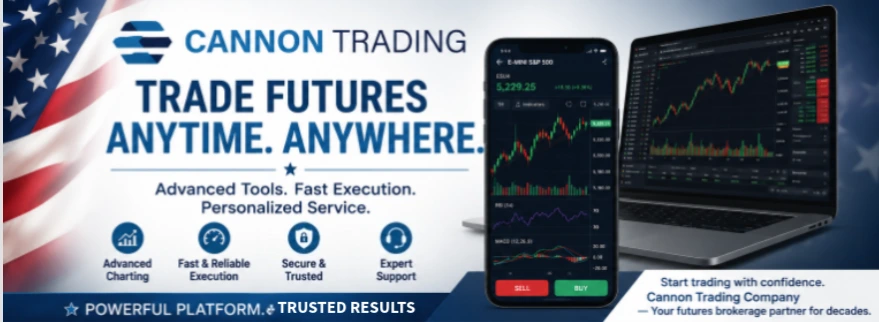
Cannon Trading Company’s combination of longevity, personal service, and institutional flexibility makes it a compelling brokerage choice for traders and commercial hedgers.
- Experience since 1988: Cannon has served clients across decades of market and technology changes. That history provides useful context when evaluating a relationship intended to support recurring hedging needs.
- Institutional service options: Cannon describes multiple clearing arrangements, trade allocation capabilities, API access, and customized back-office solutions. These capabilities matter when a trading program must fit existing operational processes.
- Support across client types: Its institutional offering specifically includes hedge funds, commodity trading advisers, physical commodity hedgers, financial hedgers, overseas funds, and foreign brokers.
For a futures trading hedger, these features support a practical conversation about account structure, execution, reporting, and service. Confirm specific platform functions, clearing arrangements, and jurisdictional eligibility before opening an account.
Institutional due diligence should also identify the futures commission merchant holding customer funds and carrying positions. Clarify which firm provides statements, collects margin, and handles liquidation, while establishing Cannon’s responsibilities for brokerage support and account coordination. Document these responsibilities before the first hedge is executed.
Negotiable Commissions and Customized Client Services
Cannon Trading Company’s brokerage commissions and service arrangements are negotiable, allowing clients to discuss pricing and support that reflect their requirements. Account size, expected trading volume, platform selection, and the level of broker involvement can influence the proposed arrangement.
For institutions and commercial hedgers, that flexibility matters. A useful brokerage relationship should accommodate the organization’s execution methods, reporting needs, and operational workload. Clients can discuss services and request a customized quote before committing to an account structure.
For example, an investment fund placing frequent electronic hedges may request volume-based commissions and trade allocation capabilities. A producer executing fewer seasonal hedges may prioritize broker-assisted orders, platform training, and assistance understanding contract deadlines.
Negotiation should address the total cost of the relationship. Request an itemized explanation of commissions, platform subscriptions, market data, clearing charges, exchange fees, and NFA fees. Exchange and regulatory charges are distinct from Cannon’s negotiable brokerage compensation.
Ask which charges can be adjusted, which are set by third parties, and what services the quoted rate includes. Discuss reviewing the arrangement as activity or support requirements change, and obtain agreed pricing and service terms in writing.
Personal Support and Client Feedback
Cannon emphasizes direct access to licensed brokers during market hours. For an institution, having a knowledgeable contact can help resolve platform questions, clarify procedures, and coordinate operational needs.
Its Trustpilot profile displayed a 4.9 out of 5 rating when checked on October 21, 2026. Positive reviews describe helpful setup assistance and professional broker relationships. Reviews reflect customer experiences rather than evidence of future investment performance.
For organizations evaluating futures trading, Cannon’s service model provides a reason to begin a detailed discussion about exposures, funding capacity, and reporting requirements. Ask for a proposed account and service configuration tied to the actual hedging mandate.
Frequently Asked Questions
Can a hedge eliminate investment losses?
No. It can reduce a specified exposure, but imperfect correlations, costs, and risks outside the hedge’s scope can still produce losses.
Should an institution hedge its entire portfolio?
Not necessarily. Partial protection may better balance downside concerns, expected returns, liquidity needs, and investment mandates.
How should hedge performance be judged?
Evaluate the hedge together with the protected exposure. A losing hedge can be effective when offset by gains or savings elsewhere.
Is the initial margin the maximum possible loss?
No. Losses can exceed the initial deposit, and additional funding may be required. Examples here are hypothetical and educational, excluding costs unless stated.
For More Info on Futures Hedging with Cannon Trading, click here.
Ready to start trading futures? Call us at 1(800)454-9572 (US) or (310)859-9572 (International), or email info@cannontrading.com to speak with one of our experienced, Series-3 licensed futures brokers and begin your futures trading journey with Cannon Trading Company today.
Disclaimer: Trading Futures, Options on Futures, and retail off-exchange foreign currency transactions involve substantial risk of loss and are not suitable for all investors. Past performance is not indicative of future results. Carefully consider if trading is suitable for you in light of your circumstances, knowledge, and financial resources. You may lose all or more of your initial investment. Opinions, market data, and recommendations are subject to change at any time.
Important: Trading commodity futures and options involves a substantial risk of loss. The recommendations contained in this article are opinions only and do not guarantee any profits. This article is for educational purposes. Past performances are not necessarily indicative of future results.
This article has been generated with the help of AI Technology and modified for accuracy and compliance.
Follow us on all socials: @cannontrading