| The Supreme Court decision striking down the IEEPA tariffs did not close the case on tariffs, which are still subject to implementation under Section 232. Those are considered legal if a Department of Commerce investigation finds that those imports threaten to impair U.S. national security.
A “simplification” of the tariff policy regarding copper was made five weeks ago on April 6, which implements a 50% tariff on articles made almost entirely with copper such as coils, wire and sheets. There are four additional classifications and tariff levels for derivative articles depending on how much copper they contain and whether the copper was made in the US, and they tariff the full value of the product rather than just the copper portion.
Metal-intensive industrial equipment and electrical grid equipment will pay 15% of the product’s value through 2027, when a new set of tariffs on refined copper may be implemented. A decision on those tariffs is expected to be made in July 2026.
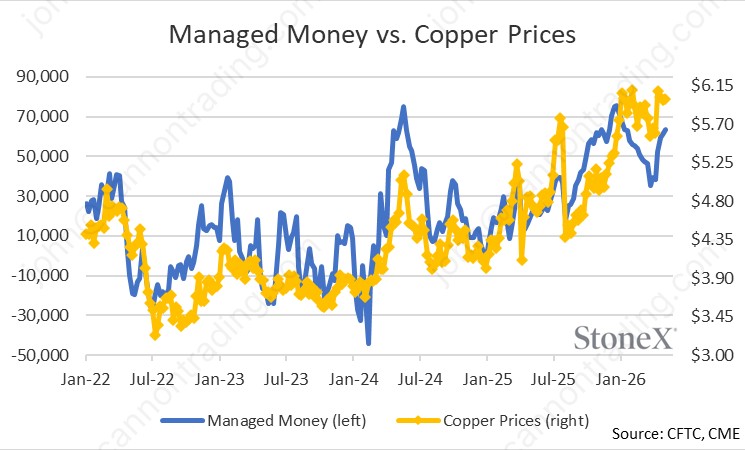
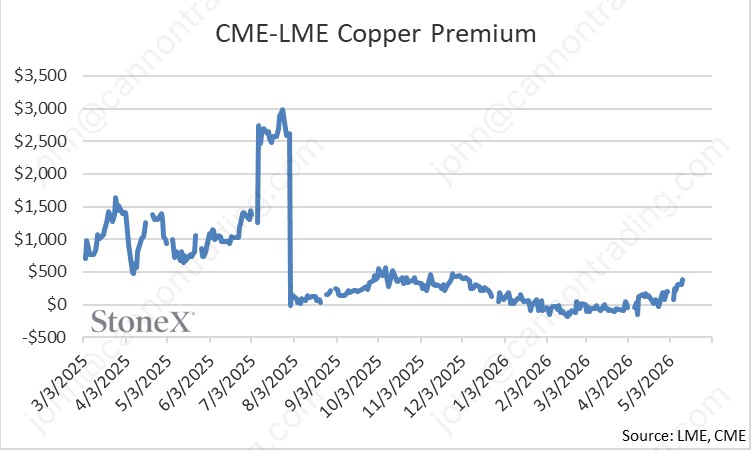
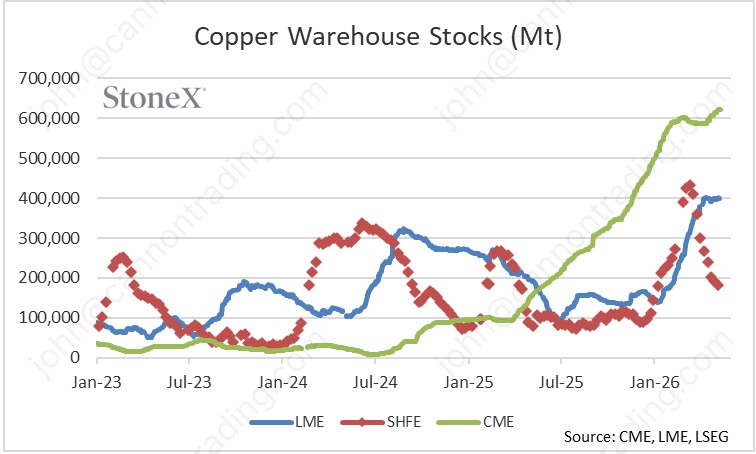
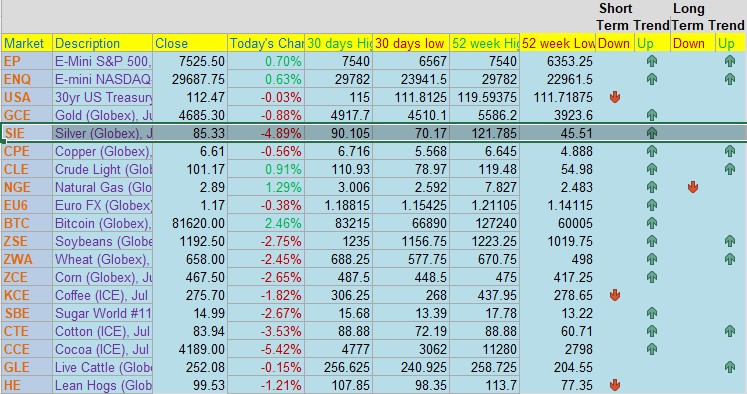
With uncertainty about future tariffs still dominant, markets continue to draw the metal to CME warehouses in an attempt to avoid any future levies. That could keep prices supported on a long-term basis, and CFTC data on commitments of traders shows that happening.
There was some liquidation by the managed money group from January to March surrounding the Supreme Court decision, but traders have been moving back into the long side of copper futures since late-March. The net long has risen 28,200 contracts since then or an increase of about 80%. |