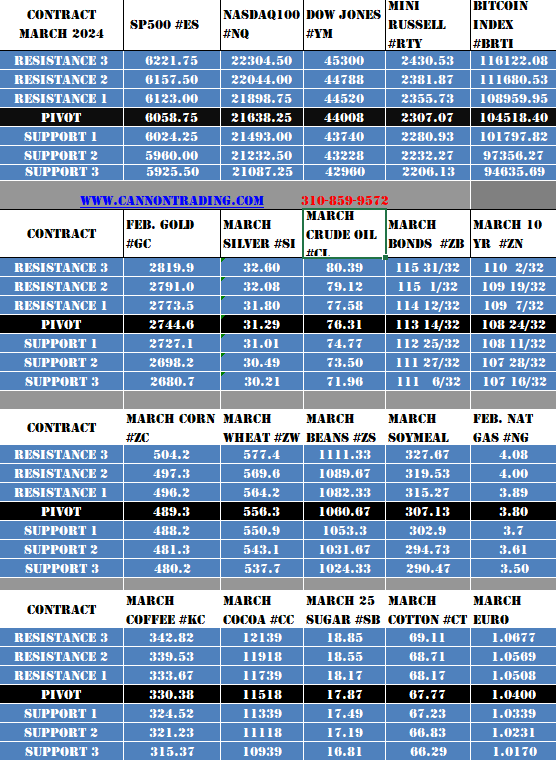
Support & Resistance Levels

This Blog provides futures market outlook for different commodities and futures trading markets, mostly stock index futures, as well as support and resistance levels for Crude Oil futures, Gold futures, Euro currency and others. At times the daily trading blog will include educational information about different aspects of commodity and futures trading.

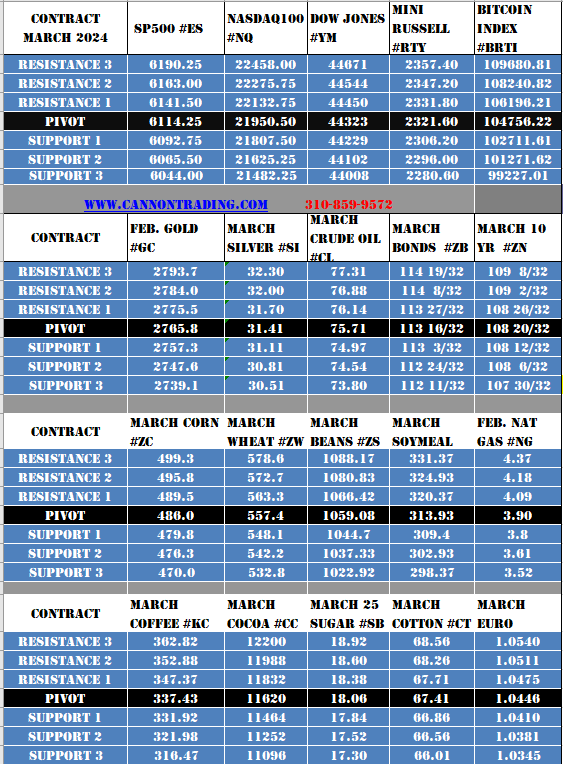
Futures Trading Levels for Oct. 11th, 2024

Join our Private Facebook group

Subscribe to our YouTube Channel

Listen to our podcast: Subscribe on AppleSpotify, Amazon, or wherever you listen to podcasts!

C65 1

PPI numbers, University of Michigan survey and two FOMC members speaking tomorrow, Friday, Oct. 11th!

Ask a Broker: Futures Spreads Trading

Ask a Broker: Futures Spreads Trading
stars
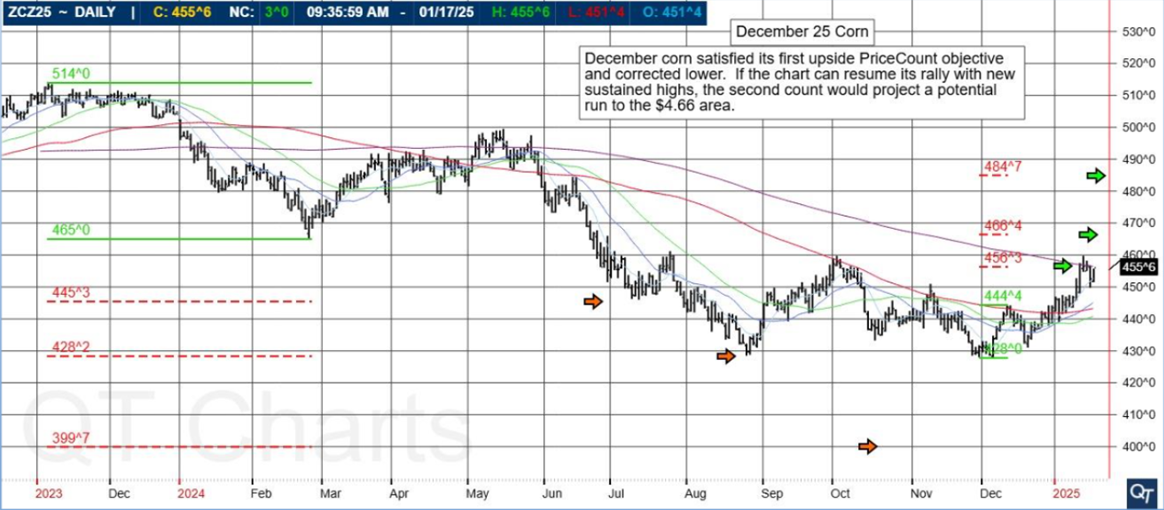
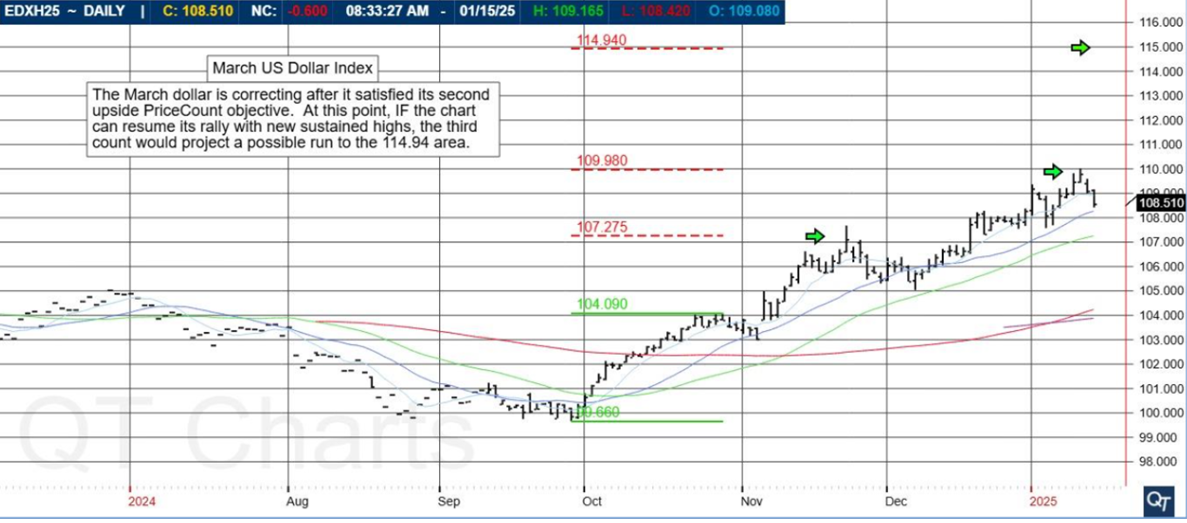
December Heating Oil

December heating oil Rallied to its second upside PriceCount objective before correcting. At this point if the chart can resume its rally with new sustained highs, the 3rd count would project a possible run into the 2.59 area.

3e432813 f844 4f3b 9eb8 2c6d12e29226


The PriceCount study is a tool that can help to project the distance of a move in price. The counts are not intended to be an ‘exact’ science but rather offer a target area for the four objectives which are based off the first leg of a move with each subsequent count having a smaller percentage of being achieved. It is normal for the chart to react by correcting or consolidating at an objective and then either resuming its move or reversing trend. Best utilized in conjunction with other technical tools, PriceCounts offer one more way to analyze charts and help to manage your positions and risk. Learn more at www.qtchartoftheday.com

Trading in futures, options, securities, derivatives or OTC products entails significant risks which must be understood prior to trading and may not be appropriate for all investors. Past performance of actual trades or strategies is not necessarily indicative of future results.

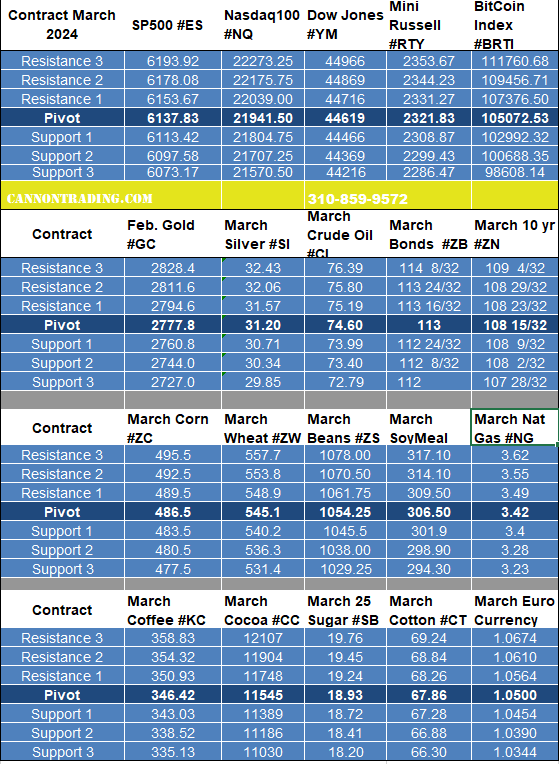
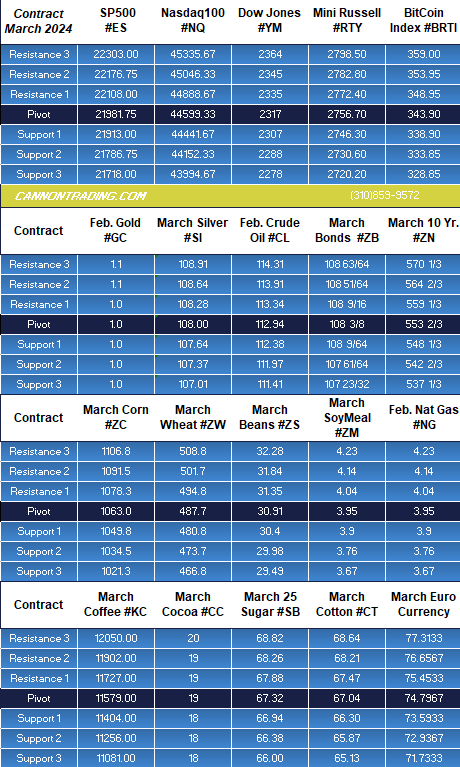
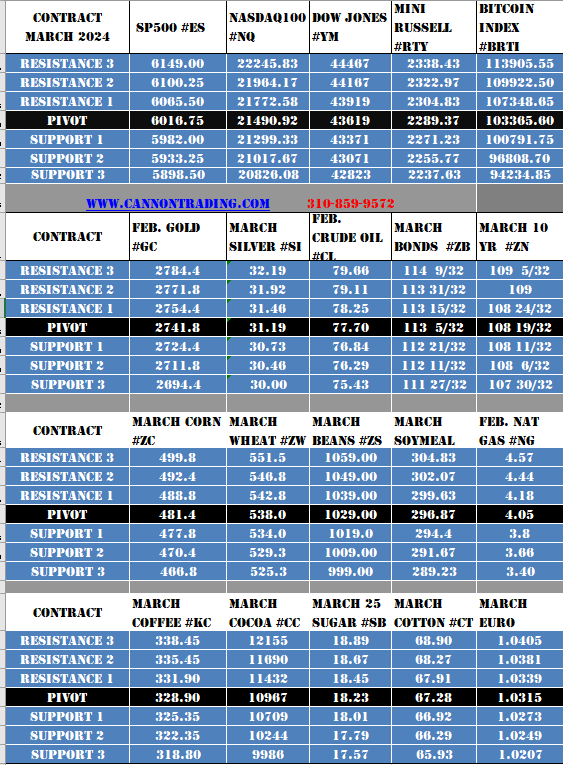
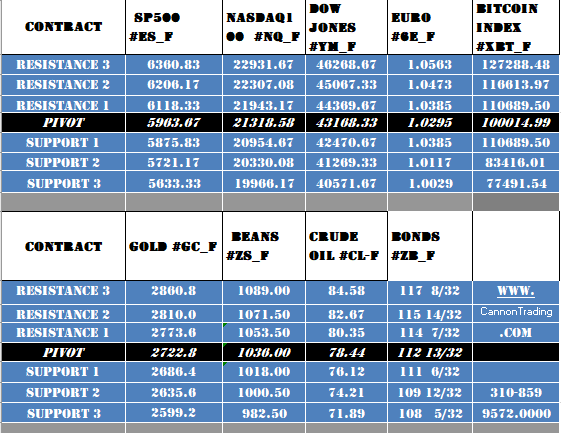
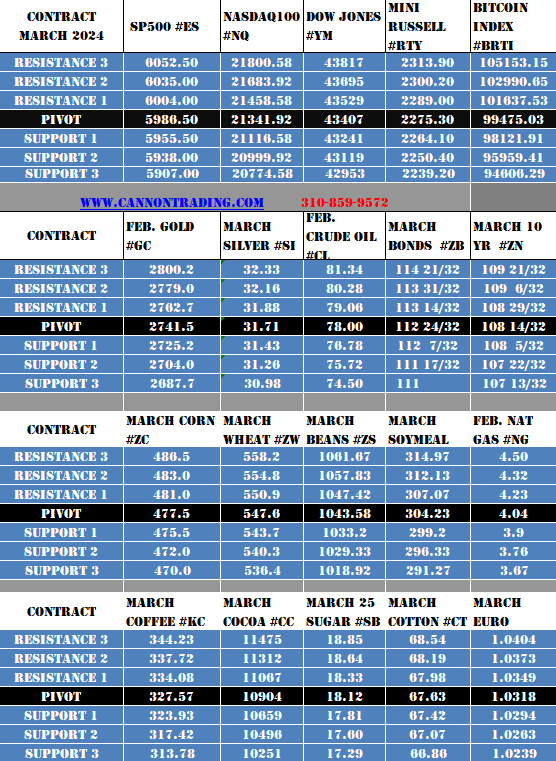
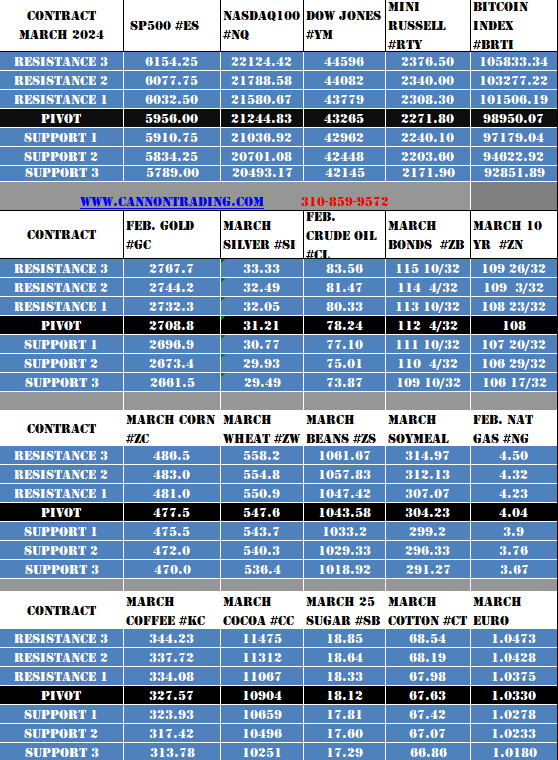
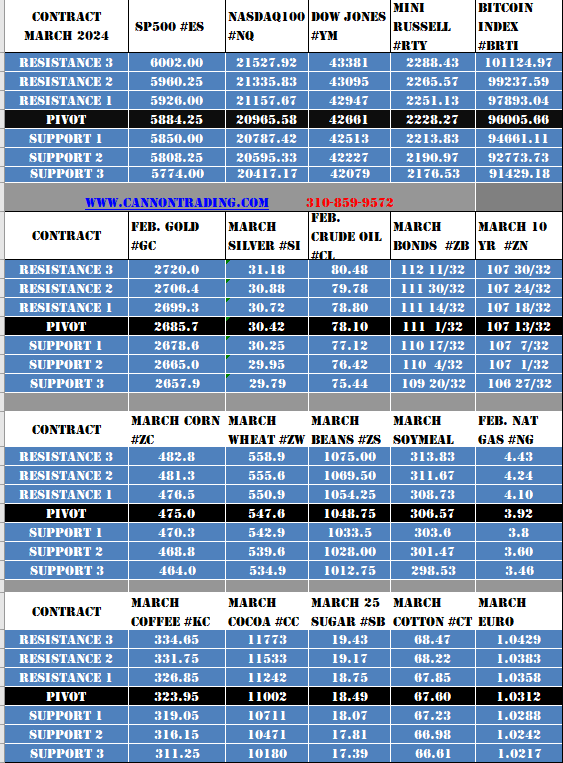
Daily Levels for Oct. 11th 2024

1e923d47 5535 402d afa3 a7b9282d9284

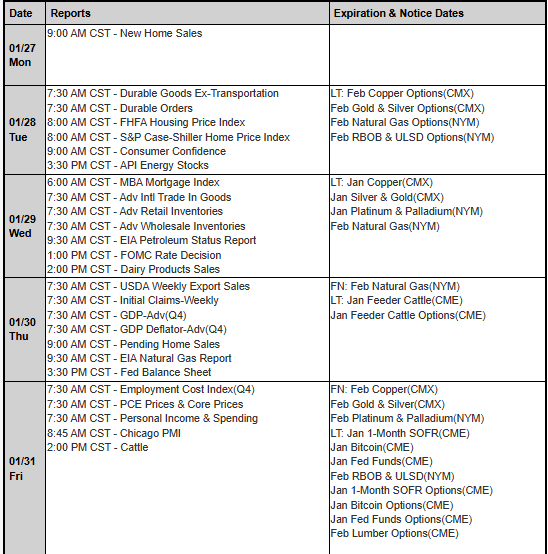
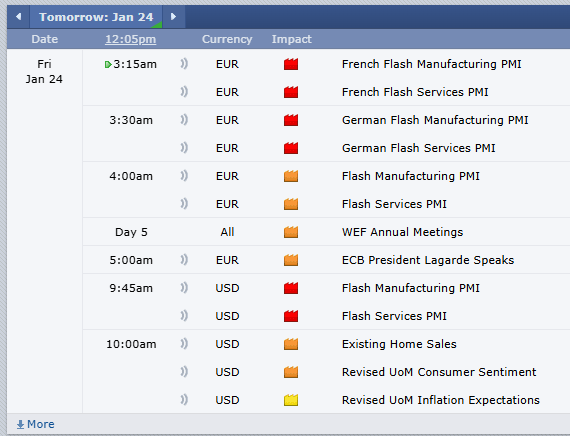
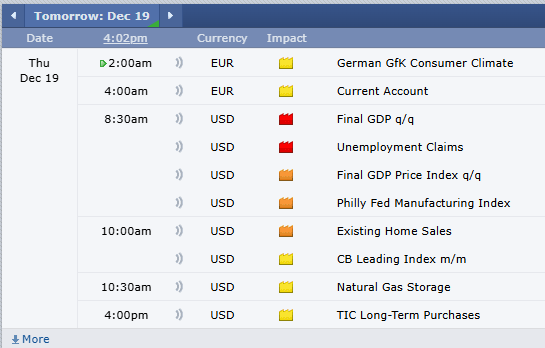
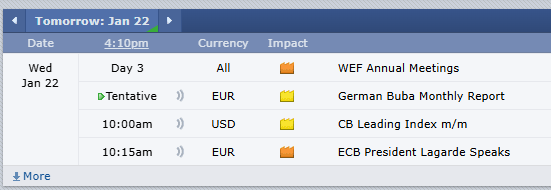
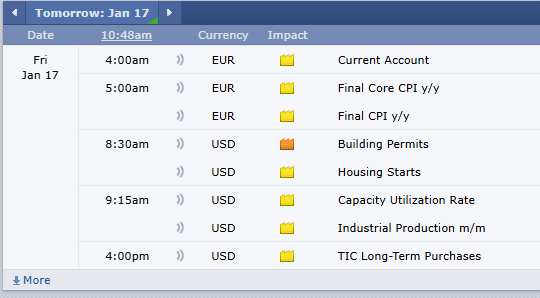
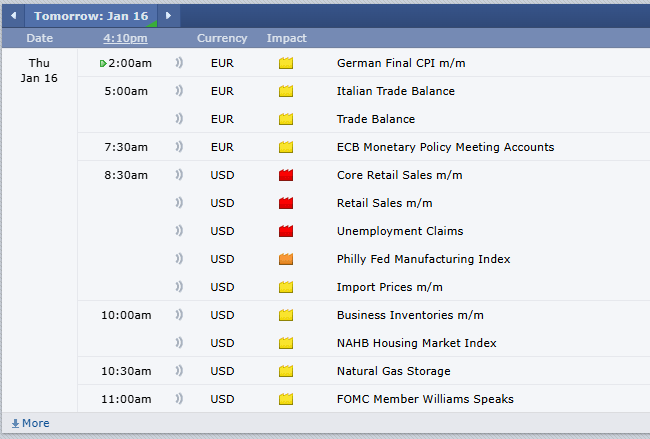
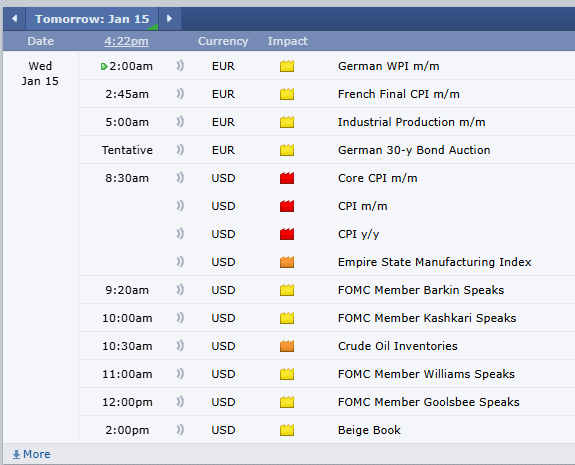
Economic Reports
provided by: ForexFactory.com
All times are Eastern Time ( New York)
d3bf98cf 49f5 4904 a779 8d568069353e
Good Trading!
About: Cannon Trading is an independent futures brokerage firm established in 1988 in Los Angeles. Our mission is to provide reliable service along with the latest technological advances and choices while keeping our clients informed and educated in the field of futures and commodities trading.
Trading Futures, Options on Futures, and retail off-exchange foreign currency transactions involves substantial risk of loss and is not suitable for all investors. You should carefully consider whether trading is suitable for you in light of your circumstances, knowledge, and financial resources. You may lose all or more of your initial investment. Opinions, market data, and recommendations are subject to change at any time.
Contact
S
Cannon Trading Company
12100 Wilshire Boulevard
Suite 1640
Los Angeles, CA 90025
(800) 454-9572
Follow Us
Facebook  Twitter  Instagram
Visit Our Website


Crude Oil Rally Targets Amidst Busy Day of CPI, Natural Gas, and 30-Year Auction

Get Real Time updates and more by joining our Private Facebook Group!

Subscribe to our YouTube Channel

Listen to our Market Recap Podcasts on Apple Podcasts


C41

CPI numbers, Natural gas numbers, 30 year auction and more on a busy day tomorrow!  

Ask a Broker: What is Day Trading Futures? watch below!

image 13
stars

November Crude Oil

November crude oil completed its first upside PriceCount objective to the $78 area and is correcting with a reversal trade. IF the chart can resume its rally with new sustained highs, the second count would project a possible run to the 82.76 area.

image 14

The PriceCount study is a tool that can help to project the distance of a move in price. The counts are not intended to be an ‘exact’ science but rather offer a target area for the four objectives which are based off the first leg of a move with each subsequent count having a smaller percentage of being achieved. It is normal for the chart to react by correcting or consolidating at an objective and then either resuming its move or reversing trend. Best utilized in conjunction with other technical tools, PriceCounts offer one more way to analyze charts and help to manage your positions and risk. Learn more at www.qtchartoftheday.com

Trading in futures, options, securities, derivatives or OTC products entails significant risks which must be understood prior to trading and may not be appropriate for all investors. Past performance of actual trades or strategies is not necessarily indicative of future results.

Daily Levels for October 10, 2024

image 15

Economic Reports

provided by: ForexFactory.com

All times are Eastern Time ( New York)

image 16

Improve Your Trading Skills

Get access to proprietary indicators and trading methods, consult with an experienced broker at 1-800-454-9572.

Explore trading methods. Register Here

3b644da2 2bee 4d39 8d98 5208a20bec39

* This is not a solicitation of any order to buy or sell, but a current market view provided by Cannon Trading Inc. Any statement of facts here in contained are derived from sources believed to be reliable, but are not guaranteed as to accuracy, nor they purport to be complete. No responsibility is assumed with respect to any such statement or with respect to any expression of opinion herein contained. Readers are urged to exercise their own judgement in trading.   #Equities, #Consolidation phase, #Interest rates, #Precious metals, #Gold, #Silver, #US Dollar, #Crude oil prices, #HurricaneHelene, #Middle East tensions, #Chinese stimulus, #Redbook US Retail Sales, #Case Schiller US Metro-Area Home Prices, #Richmond Fed Manufacturing Index, #Service Sector Index, #Consumer Confidence, #New Home Sales, #Micron Technology

Market Consolidation Amidst Volatile Metals, Energy Declines, and Hurricane Milton

Get Real Time updates and more by joining our Private Facebook Group!

Subscribe to our YouTube Channel

Listen to our Market Recap Podcasts on Apple Podcasts


Hurricane

Movers and Shakers

By John Thorpe, Senior Broker

With Equities quietly trading in a consolidation phase since September 19th, Interest rates following, the precious metals ,once again surprised many traders with their mid-day selloff after last week’s Highest weekly Silver close since May of this year Silver down $1.30 or $6500.00 from yesterdays close per contract.

Gold lower by $33.00 @ 2634.00,

The US Dollar continuing to firm up after it’s end of Q3 Low, trading over 2 cents higher at 1.0227 ending it’s 2.5 month long slide after flirting with 14 month lows of 99.22. .

The Energy complex Dropping significantly today Crude off 4.25 %, the products off 3.5 to 4 %  as the menace that’s called Milton is racing East toward the Florida Gulf Coast,

Atlanta Fed Pres. Bostic was quoted “ Hurricanes have significant potential implications for US economy over the next couple quarters”

          So, with the Fed Funds, Interest rate markets and Equities range bound waiting for tomorrows FOMC Minutes @ 11:00 am CDT, and the looming Cat 5 potential Catastrophe, In addition to Heightened middle east tensions, Vigilance is the word and may be an opportunity to use options to enhance or protect your trading portfolio. Here is a fresh take by the EIA on short term price expectations in the winter months for the entire energy complex, freshly produced today! Take a look!.  https://www.eia.gov/outlooks/steo/report/perspectives/2024/10-winterfuels/article.php

 FOMC Minutes tomorrow as well as Crude Oil Inventories

stars

Daily Levels for October 9, 2024

image 11

Economic Reports

provided by: ForexFactory.com

All times are Eastern Time ( New York)

image 12

Improve Your Trading Skills

Get access to proprietary indicators and trading methods, consult with an experienced broker at 1-800-454-9572.

Explore trading methods. Register Here

3b644da2 2bee 4d39 8d98 5208a20bec39

* This is not a solicitation of any order to buy or sell, but a current market view provided by Cannon Trading Inc. Any statement of facts here in contained are derived from sources believed to be reliable, but are not guaranteed as to accuracy, nor they purport to be complete. No responsibility is assumed with respect to any such statement or with respect to any expression of opinion herein contained. Readers are urged to exercise their own judgement in trading.   #Equities, #Consolidation phase, #Interest rates, #Precious metals, #Gold, #Silver, #US Dollar, #Crude oil prices, #HurricaneHelene, #Middle East tensions, #Chinese stimulus, #Redbook US Retail Sales, #Case Schiller US Metro-Area Home Prices, #Richmond Fed Manufacturing Index, #Service Sector Index, #Consumer Confidence, #New Home Sales, #Micron Technology

Market Rises Alongside 10-Year Yield: Navigating Earnings, Inflation, and Geopolitical Risks

Get Real Time updates and more by joining our Private Facebook Group!

Subscribe to our YouTube Channel

Listen to our Market Recap Podcasts on Apple Podcasts


C96

Market is going up but so is the 10-year yield

7 October 2024

By GalTrades.com

Market is going up but so is the 10-year yield***

Advancing shares outnumbered declining ones by three-to-one this week through midday Friday, and seven of 11 S&Psectors trade with 80% or more of their components above their 50-day moving averages. This wide breadth indicates the cyclical trade into sectors beyond mega caps remains intact and markets aren’t moving toward defensive trades at the equity level.

On a technical basis, the SPXheld it’s ground this week above the prior all-time closing high from July despite geopolitical uncertainty . The uptrend remains intact, and the bulls still appear to be in control. 

Less bullish note, the SPX now trades at a nearly 22 price-to-earnings (P/E) ratio, historically high. This might damper investor enthusiasm for now, though solid earnings growth could help ease valuations.

Unfortunately for anyone banking on improved earnings growth, analysts keep backing up the truck. The average third quarter S&P 500 earnings per share estimate slipped to 4.2% today from 4.6% a week ago, according to research firm FactSet. That’s down from 7.8% at the end of June. 

The FED is easing, and the path of least resistance is intact. The S&P 500 is less than 1% below all-time highs, following September’s strong Nonfarm Payrolls report. 

Federal Reserve Chair Jerome Powell said, the U.S. economy is in solid shape and the Federal Reserve intends to keep it that way, Consumer household debt is very high. If the economy performs as expected, that would mean a total of 50 basis points of cuts for the remainder of this year, Powell said.

Stronger-than-expected September jobs data by the Bureau of Labor Statistics on Friday added fuel to arguments in favor of a soft landing, inflation closing in on the Federal Reserve’s 2% target. A gain of 254,000 nonfarm jobs last month paired with easing unemployment, it signals that the labor market remains on solid footing. And should help reduce calls for another big rate cut. Fed officials, however, will also have a couple more inflation readings to review before the meeting, as well as weekly jobless claims data and consumer spending updates. All of that could shift the economic outlook in the coming weeks.

The market now expects 25-basis-point interest rate cuts at the Fed’s November and December meetings following September’s 50-basis-point cut. That would equal 100 basis points, or 1 percentage point, worth of rate cuts before year-end. measured, methodical rate cuts. The U.S. economy is based on services, and we want consumers to stay robust as the Fed brings borrowing costs down. 

Friday’s jump in the 10-year Treasury yield on the jobs report. Home loans loosely follow the 10-year and rates on a 30-year fixed jumped Friday morning to 6.53%, according to Mortgage News Daily.

While the port strike ended, labor strikes have become more common, which likely translates into higher wages (wage gains from Fridays nonfarm payrolls report were +0.4% vs. +0.3% expected. For now, inflation data has been trending toward the Fed’s target. 

Analysts are saying this is Goldilocks scenario for the markets. Others are saying we might see some upside for inflation, crude prices are up 10% due to Middle East tensions. Wage inflation can play a role. The election can be a risk. But good news is good news. The positive forces should propel the market higher. 

Any money manager that’s been bearish this year is behind the index if they were in cash and now, they have to jump in. Who wants to sell now and have tax gains. Nine months into the year and we’re up 20%. plus, money that comes out of the declining money-market funds and expiring U.S. government bonds should make its way into equities, 

NOTE: The commodities futures trader report last week shows that large speculators and leveraged funds have the largest net short position in the 10 year treasury futures. they see long term interest rate going up. 

Why aren’t small caps rallying? Small caps and value trade together and value started to outperform growth, perhaps small caps will play catch up. typically, you see small caps outperform a year after the first cut. 

Next week we’ve got several potential market moving catalysts, highlighted by monthly Inflation data: The September consumer price index (CPI) report is out Thursday. Economists are expecting a 2.2% year-over-year increase at the headline level, and a 3.1% year-over-year increase at the core level, which strips out volatile food and energy prices. watch the CPI’s shelter index, which has been a key underlying source of overall inflation. slowing of year-over-year price increases in shelter would be welcome.September producer price index (PPI) is out Friday. While the Fed is more concerned about consumer prices, the PPI is still important because if wholesale prices go up more than expected it might mean higher retail prices down the line as companies look to protect their margins. These inflation numbers will certainly figure into the Fed’s calculations concerning future rate cuts.

We also have the Robotaxi event for Tesla and Advanced Micro Devices holds an important artificial intelligence event.

Look out for next Friday’s big bank earnings reports (JPM, WFC, BK).

FactSet is currently forecasting Q3 earnings growth for the S&P 500 to be up a healthy 4.6%, down from the 7.8% at the start of the quarter.

Sectors worth watching; tech, cyclical, Housing, cybersecurity, aviation, power & grid. 

Summary: The intermediate technicals are bullish, but near-term price action has been choppy to sideways over the past few weeks. Geopolitical risk remains high, and the Fed may not be as accommodative as previously expected, the stronger than expected U.S. economic data appears to be the primary driver of the near-term direction for stocks, and that direction is higher for now. any upside surprises in the CPI report may cause for a correction. Earnings should help navigate market direction. 

The outlook contained in this article are of opinion only and do not guarantee any profits. Futures trading is risky and suitable for everyone.

stars
image 9

Daily Levels for October 4, 2024

image 8

Economic Reports

provided by: ForexFactory.com

All times are Eastern Time ( New York)

image 10

Improve Your Trading Skills

Get access to proprietary indicators and trading methods, consult with an experienced broker at 1-800-454-9572.

Explore trading methods. Register Here

3b644da2 2bee 4d39 8d98 5208a20bec39

* This is not a solicitation of any order to buy or sell, but a current market view provided by Cannon Trading Inc. Any statement of facts here in contained are derived from sources believed to be reliable, but are not guaranteed as to accuracy, nor they purport to be complete. No responsibility is assumed with respect to any such statement or with respect to any expression of opinion herein contained. Readers are urged to exercise their own judgement in trading.   #Equities, #Consolidation phase, #Interest rates, #Precious metals, #Gold, #Silver, #US Dollar, #Crude oil prices, #HurricaneHelene, #Middle East tensions, #Chinese stimulus, #Redbook US Retail Sales, #Case Schiller US Metro-Area Home Prices, #Richmond Fed Manufacturing Index, #Service Sector Index, #Consumer Confidence, #New Home Sales, #Micron Technology

Micro S&P 500 Futures

The Micro S&P 500 Futures contract (also known as standard & poor’s 500 index futures, sp500 index futures, futures sp, standard and poor’s 500 future, futures sp500), introduced by the CME Group in May 2019, represents a significant innovation in the world of derivatives trading. It was designed to provide smaller retail traders access to the S&P 500 index, one of the most critical benchmarks in global markets. This futures contract has since revolutionized how traders interact with the Standard & Poor’s 500 Index (S&P 500), broadening market accessibility and enhancing liquidity in a highly capital-intensive market.

This article will explore the rationale behind the creation of the Micro S&P 500 Futures contract, examine how it helps traders, review its history, and discuss the positive impact it has had on markets. Additionally, we will highlight Cannon Trading Company as a prime broker choice for trading these contracts.

Rationale Behind the Micro S&P 500 Futures Contract

The creation of the Micro standard & poor’s 500 index futures contract was driven by a few crucial considerations: accessibility, risk management, and increasing demand for fractional exposure to large indices. Let’s break down these factors:

1. Accessibility for Smaller Investors

The S&P 500, comprising 500 large-cap U.S. companies, is one of the most widely tracked indices globally. It represents about 80% of the total U.S. stock market by market capitalization. Traditionally, traders could gain exposure to this index through the standard & poor’s 500 index futures contract, often referred to as the E-mini S&P 500. However, this contract, with its higher margin requirements and significant exposure size, was inaccessible for many retail traders and smaller institutional players.

The E-mini S&P 500 contract, for example, represents $50 per point move in the index, creating a large notional value. Many retail traders found the contract too large for their capital and risk appetite. This barrier meant that small or medium-sized traders were unable to participate fully in the futures market tied to one of the world’s most important indices.

The Micro sp500 index futures contract, with a value of $5 per index point, offers one-tenth the size of the E-mini. By scaling down the contract, the CME Group made the S&P 500 index much more accessible to a broader range of participants, from beginner traders to those looking to hedge smaller portfolios.

2. Risk Management

Large contracts often create disproportionate risks for smaller traders who have limited capital. The introduction of the micro contract allows for more precise risk management, enabling traders to fine-tune their exposure to the market without taking on excessive financial burden. A trader can use multiple micro contracts to build the desired position size instead of being forced into the larger exposure of a single E-mini or full-sized contract.

The flexibility afforded by micro contracts means that smaller traders can still hedge their portfolios, speculate on market movements, or engage in day trading without overexposing themselves. Traders can better align their futures trading strategies with their capital and risk tolerance.

3. Fractional Exposure to Large Indices

The demand for fractional exposure across various asset classes has been growing, not just in futures markets but also in equity markets and cryptocurrencies. Micro contracts are the futures market’s response to this trend, allowing traders to gain exposure to the same price movements in a large index like the S&P 500 but on a smaller, fractional scale.

How the Micro S&P 500 Futures Contract Helps Traders

The introduction of the Micro sp500 index futures contract has provided several advantages to traders, offering flexibility and enhanced market participation. Here are a few critical ways in which the contract benefits traders:

1. Lower Margin Requirements

One of the primary benefits of the Micro futures sp contract is the lower margin requirement compared to its larger counterparts. Margin is the amount of capital required to open and maintain a futures position, and smaller contracts naturally come with lower margin requirements. For retail traders, lower margin requirements mean that they can participate in the market without needing substantial capital reserves.

For example, if the initial margin for an E-mini S&P 500 contract is around $16,060, the micro contract’s margin would be approximately one-tenth of that, around $1,606. This reduction in margin requirements opens the door for more traders to participate in the futures markets without requiring a large account balance.

2. Increased Liquidity

The introduction of the Micro futures sp Futures contract has led to increased liquidity in the S&P 500 futures markets. As more retail traders enter the market, the volume of contracts traded increases, which generally improves market efficiency and reduces the bid-ask spreads. Tighter spreads mean that traders can enter and exit positions with lower transaction costs, further benefiting those who trade frequently, such as day traders or swing traders.

3. Fine-Tuned Position Sizing

Traders often want to control the size of their positions carefully to manage risk or to hedge a specific portion of a portfolio. The larger contract size of the E-mini can be too big for traders who want to make smaller trades, or who want to hedge small amounts of equity. The micro contract allows for a more granular approach to position sizing. Traders can scale up or down based on their risk profile by simply buying more or fewer micro contracts.

4. Diversified Strategies

With the availability of micro contracts, traders can employ more diversified trading strategies. For example, instead of committing all their capital to one E-mini contract, traders can spread their capital across multiple micro contracts or even across different indices and futures markets. This diversification can help mitigate risk and increase potential returns.

History of the Micro S&P 500 Futures Contract

The S&P 500 futures market began in 1982, when the Chicago Mercantile Exchange (now the CME Group) first introduced the full-sized S&P 500 futures contract. This contract quickly gained popularity among institutional investors as a way to gain exposure to the U.S. stock market. Over the years, the S&P 500 futures market grew, but it remained primarily accessible to institutional traders because of its large contract size and capital requirements.

In 1997, CME introduced the E-mini standard and poor’s 500 future contract, which represented one-fifth the size of the full contract. The E-mini revolutionized the S&P 500 futures market by making it accessible to smaller traders while still retaining appeal for institutions. The E-mini became the most popular futures contract globally, with daily volumes exceeding one million contracts at times.

As market participation continued to evolve, the demand for even smaller contract sizes became apparent. With retail trading platforms booming and the rise of smaller traders, the Micro E-mini standard and poor’s 500 future contract was launched in May 2019. This contract was designed specifically to meet the growing demand for a more accessible product with lower margin requirements, smaller contract sizes, and greater flexibility for a wider range of market participants.

Cannon Trading Company: A Good Broker Choice for Micro S&P 500 Futures

For traders looking to participate in the Micro standard and poor’s 500 future market, Cannon Trading Company is a top-tier brokerage option. With over 35 years of experience in the futures market, Cannon Trading is known for its customer service, comprehensive platform offerings, and competitive pricing structures. Their expertise in the futures industry, including in the micro contracts market, makes them an excellent choice for both novice and seasoned traders.

Cannon Trading provides access to a range of platforms suitable for futures trading, including platforms optimized for Micro S&P 500 futures. Their commission structure is competitive, and they offer various educational resources to help traders succeed in the futures market.

Some benefits of using Cannon Trading for trading Micro S&P 500 Futures include:

  • Low margins and fees: Competitive rates for micro contracts.
  • Excellent customer support: Personalized service for traders of all levels.
  • Education and research: Access to market insights, trading tools, and educational materials.
  • Technology and platforms: Access to a variety of trading platforms tailored for futures trading, including advanced charting tools.

Positive Impact of the Micro S&P 500 Futures Contract on the Markets

The introduction of the Micro futures sp500 contract has had a profoundly positive impact on the markets, benefiting traders and the broader economy. Here’s how:

1. Increased Participation

The smaller contract size has democratized the futures market, allowing more retail investors to participate. The increased participation has led to higher liquidity in the futures market, particularly in the S&P 500 segment. Greater liquidity means that prices can be determined more efficiently, reflecting the true supply and demand in the market.

2. Enhanced Risk Management

Smaller contracts have also made it easier for retail investors to hedge their portfolios. Since the Micro  futures sp500 are one-tenth the size of the E-mini, traders can take more precise hedge positions without over-committing their capital.

3. Improved Market Efficiency

With more participants and increased trading volume, market efficiency has improved. Higher liquidity generally leads to tighter bid-ask spreads, reducing trading costs for everyone involved. Moreover, the increased number of smaller trades can lead to a more accurate reflection of investor sentiment, helping to stabilize markets.

4. Opportunities for Learning and Growth

The micro contract also provides an excellent learning platform for new traders. With smaller notional value and margin requirements, traders can experiment with strategies, learn the mechanics of futures trading, and develop their skills without risking substantial amounts of capital. This opportunity for skill development benefits not only individual traders but also the broader market by cultivating a more informed and active trading community.

The Micro S&P 500 Futures contract has been a game-changer for the futures industry, opening up access to one of the most important stock market indices in the world. Its smaller contract size has made it easier for retail traders to participate, manage risk, and diversify their strategies. Brokers like Cannon Trading Company have become essential partners in facilitating this participation, offering the platforms, tools, and education needed to succeed in the micro futures market.

With the Micro  futures sp500, both new and seasoned traders can enjoy the benefits of futures trading on a more accessible and manageable scale, driving greater liquidity, participation, and efficiency in the market as a whole.

For more information, click here.

Ready to start trading futures? Call us at 1(800)454-9572 – Int’l (310)859-9572 (International), or email info@cannontrading.com to speak with one of our experienced, Series-3 licensed futures brokers and begin your futures trading journey with Cannon Trading Company today.

Disclaimer: Trading Futures, Options on Futures, and retail off-exchange foreign currency transactions involve substantial risk of loss and are not suitable for all investors. Past performance is not indicative of future results. Carefully consider if trading is suitable for you in light of your circumstances, knowledge, and financial resources. You may lose all or more of your initial investment. Opinions, market data, and recommendations are subject to change at any time.

Important: Trading commodity futures and options involves a substantial risk of loss. The recommendations contained in this article are opinions only and do not guarantee any profits. This article is for educational purposes. Past performances are not necessarily indicative of future results.

This article has been generated with the help of AI Technology and modified for accuracy and compliance.

Follow us on all socials: @cannontrading

Standard & Poor’s 500 Index Futures

Standard & Poor’s 500 Index futures—commonly referred to as S&P 500 futures, SP500 index futures, futures sp, standard and poor’s 500 future, futures sp500, or simply SP futures—are one of the most actively traded financial derivatives globally. These contracts provide market participants with a way to speculate on or hedge against movements in the S&P 500, which is a broad index encompassing 500 of the largest publicly traded companies in the United States. Given its depth, liquidity, and representativeness of the overall U.S. economy, the S&P 500 index is a favored benchmark for institutional, retail, and hedging market participants alike.

This guide will explore the components of S&P 500 futures contracts, delve into their use cases by various market participants, chart their history, and explain their evolution, especially since futures trading went online. Special emphasis will be given to the E-Mini S&P 500 futures, Micro E-Mini S&P 500 futures, and other key contracts tied to the index.

Components of the S&P 500 Futures Contract

At its core, a Standard & Poor’s 500 Index futures contract is an agreement to buy or sell the underlying Standard & Poor’s 500 Index futures contract at a predetermined price on a specific future date. However, there are several specific components that traders must understand when trading these contracts.

  • Underlying Asset

The underlying asset of standard and poor’s 500 future contract is the S&P 500 Index itself. Unlike a stock or a commodity, which has physical representation, the index is an abstract entity representing the performance of 500 of the largest U.S. companies. The price of the futures contract is derived from the index’s value.

  • Contract Size

The contract size refers to the dollar amount of the underlying asset that one futures contract controls. The standard and poor’s 500 future contracts have multiple variations in terms of size, including the E-Mini and Micro E-Mini futures:

  • E-Mini S&P 500 futures (ES): Each contract represents 50 times the value of the S&P 500 index. For example, if the index is trading at 4,500 points, the notional value of one E-Mini sp500 index futures contract is 4,500 × 50 = $225,000.
  • Micro E-Mini S&P 500 futures (MES): A much smaller version of the E-Mini, the Micro contract represents 1/10th of the E-Mini contract, or 5 times the index. If the index is trading at 4,500 points, the notional value of one Micro sp500 index futures contract is 4,500 × 5 = $22,500.
  • Expiration Date

Each S&P 500 futures contract has a specific expiration date. Most commonly, these contracts expire quarterly in the months of March, June, September, and December. The date is important because at expiration, the contract must be settled, either through cash settlement or the rolling over of the contract to a new expiration.

  • Pricing

S&P 500 futures pricing is driven by supply and demand, similar to other futures. However, because the futures contract is based on an index, it’s also influenced by factors like interest rates, dividends from the underlying stocks, and time to expiration. The formula for determining the fair value of the futures contract is:

Futures Price = Spot Price × [1 + (Risk-free Interest Rate – Dividend Yield)]

  • Settlement

S&P 500 futures are settled in cash, meaning there is no physical delivery of the index components. Instead, at expiration, any profit or loss is settled based on the difference between the contract price and the actual index level at that time.

  • Margins

When trading futures sp500, traders are not required to pay the full notional value upfront. Instead, they post an initial margin, which is a fraction of the total contract value, usually around 5-10%. Margins are subject to change based on market conditions, with brokers typically adjusting the requirements based on volatility.

Institutional Use of S&P 500 Futures

Institutional traders—including hedge funds, pension funds, mutual funds, and large asset managers—are the primary users of S&P 500 futures. They utilize these contracts for various purposes:

  • Portfolio Hedging

Institutions holding large portfolios of U.S. stocks use S&P 500 futures to hedge against potential downturns. For example, a fund that mirrors the S&P 500 can sell (short) futures sp500 contracts as a way to protect its portfolio if the market declines.

  • Asset Allocation

Institutions use futures as a tool for efficient asset allocation. By entering into futures contracts, they can quickly and cost-effectively adjust their portfolio’s exposure to U.S. equities without having to buy or sell the underlying stocks.

  • Leverage

Institutional investors often use futures to gain leveraged exposure to the S&P 500. By trading futures, they can control a large notional value of the index with only a fraction of the capital required to buy the actual stocks.

  • Arbitrage

Arbitrageurs use futures sp to take advantage of price discrepancies between the futures contract and the underlying index. This activity helps keep the price of the futures contract in line with the spot value of the S&P 500 index.

Retail Use of S&P 500 Futures

S&P 500 futures are also popular among retail traders, though their use differs significantly from that of institutional traders.

  • Speculation

Many retail traders use futures sp to speculate on the direction of the market. Because futures provide leverage, a small price movement in the underlying index can result in significant gains or losses, making it a favored instrument for active traders looking to profit from short-term moves.

  • Leverage

Retail traders, like institutions, are attracted to the leverage that futures contracts offer. By putting down a margin that is a fraction of the contract’s notional value, retail traders can control large positions with relatively small amounts of capital.

  • Day Trading

Due to the liquidity and volatility of S&P 500 futures, they are a popular vehicle for day traders. The futures market operates nearly 24 hours a day, allowing traders to participate during extended hours, including times when the stock market is closed.

  • Micro E-Mini S&P 500 Futures

Introduced in 2019, the Micro E-Mini S&P 500 futures were designed specifically for retail traders. With a smaller contract size (1/10th of an E-Mini), retail traders can participate in the S&P 500 futures market with less capital and reduced risk.

Hedging with S&P 500 Futures

Hedgers, whether institutional or individual, use S&P 500 futures to manage their exposure to market risk. The flexibility of these contracts makes them an ideal tool for hedging purposes across a range of scenarios:

  • Equity Portfolio Hedging

Investors holding a portfolio of U.S. equities can hedge against potential market declines by selling (shorting) S&P 500 futures. If the market falls, the losses in the portfolio can be offset by gains in the futures position.

  • Corporate Hedging

Corporations that have significant exposure to the U.S. equity market, either through pension funds or stock-based compensation plans, also use S&P 500 futures to hedge against adverse market movements.

  • Sector-Specific Hedging

While S&P 500 futures reflect the broader U.S. market, some sectors within the index have more weight than others (such as technology or financials). Hedgers can use S&P 500 futures to manage sector-specific risks, depending on the composition of their portfolios.

A Brief History of S&P 500 Futures

The history of S&P 500 futures dates back to 1982 when the Chicago Mercantile Exchange (CME) introduced the first futures contracts on the S&P 500 index. This event marked a significant evolution in financial markets, as it provided a liquid and efficient way for traders to speculate on or hedge against movements in the U.S. stock market.

1982: Inception of S&P 500 Futures

Initially, the contracts were large, with a high notional value that primarily attracted institutional traders. The futures contract quickly gained popularity due to the flexibility and liquidity it offered.

1997: Introduction of E-Mini S&P 500 Futures

The E-Mini S&P 500 futures were introduced in 1997 to appeal to smaller traders, both institutional and retail. With a contract size of 1/5th of the original S&P 500 futures contract, the E-Mini was a game changer. The reduced margin requirements and lower notional value opened the door for a wider array of market participants.

2019: Introduction of Micro E-Mini S&P 500 Futures

Further lowering the barrier to entry, the CME launched the Micro E-Mini S&P 500 futures in 2019. These contracts are 1/10th the size of the E-Mini, making them an ideal choice for retail traders who want to participate in the S&P 500 futures market but with less exposure and lower margin requirements.

The Digital Revolution

The growth of online trading platforms and the advent of electronic trading has transformed the futures market. Electronic trading allows near-instant execution of trades, providing liquidity and transparency around the clock. Online platforms have made it easier than ever for retail traders to access the futures market, leading to a democratization of trading that continues to this day.

Evolution of S&P 500 Futures Since the Onset of Online Trading

Since futures trading went online in the late 1990s and early 2000s, there has been a dramatic shift in how futures are traded and accessed. Online trading platforms now allow traders, from retail to institutional, to access real-time quotes, execute trades instantly, and manage risk using advanced order types like stop losses and limit orders.

  • Increased Participation

The accessibility of online platforms has led to increased participation in the S&P 500 futures market. What was once a tool primarily used by institutional traders has now become an essential component of many retail portfolios.

  • Reduced Transaction Costs

With the rise of online trading, transaction costs for trading S&P 500 futures have fallen significantly. The elimination of manual order processing and increased competition among brokers have resulted in lower commissions and fees.

  • 24-Hour Market Access

One of the major benefits of electronic trading is the ability to trade nearly 24 hours a day, five days a week. This is particularly important for global traders and those who want to react to events that happen outside of regular market hours.

Key S&P 500 Futures Contracts: E-Mini and Micro E-Mini

Two of the most important S&P 500 futures contracts today are the E-Mini S&P 500 futures and the Micro E-Mini S&P 500 futures.

E-Mini S&P 500 Futures (ES)

  • Launched: 1997
  • Contract Size: 50 times the value of the S&P 500 index
  • Minimum Tick Size: 0.25 index points, or $12.50 per tick
  • Trading Hours: Nearly 24 hours a day on CME’s Globex platform

Micro E-Mini S&P 500 Futures (MES)

  • Launched: 2019
  • Contract Size: 5 times the value of the S&P 500 index
  • Minimum Tick Size: 0.25 index points, or $1.25 per tick
  • Trading Hours: Nearly 24 hours a day on CME’s Globex platform

S&P 500 futures have evolved into one of the most versatile and widely traded financial instruments in the world. They provide institutions, retail traders, and hedgers with an efficient way to gain exposure to, speculate on, or hedge against movements in the U.S. stock market. With the advent of E-Mini and Micro E-Mini contracts, as well as the growth of online trading platforms, participation in the S&P 500 futures market has expanded dramatically, making it more accessible than ever before. Whether used for hedging, speculation, or asset allocation, S&P 500 futures remain a cornerstone of modern financial markets.

For more information, click here.

Ready to start trading futures? Call us at 1(800)454-9572 – Int’l (310)859-9572 (International), or email info@cannontrading.com to speak with one of our experienced, Series-3 licensed futures brokers and begin your futures trading journey with Cannon Trading Company today.

Disclaimer: Trading Futures, Options on Futures, and retail off-exchange foreign currency transactions involve substantial risk of loss and are not suitable for all investors. Past performance is not indicative of future results. Carefully consider if trading is suitable for you in light of your circumstances, knowledge, and financial resources. You may lose all or more of your initial investment. Opinions, market data, and recommendations are subject to change at any time.

Important: Trading commodity futures and options involves a substantial risk of loss. The recommendations contained in this article are opinions only and do not guarantee any profits. This article is for educational purposes. Past performances are not necessarily indicative of future results.

This article has been generated with the help of AI Technology and modified for accuracy and compliance.

Follow us on all socials: @cannontrading
The Week Ahead in Futures Trading – What to Expect + Silver Trading system & More!

C65 1

Get Real Time updates and more by joining our Private Facebook Group!

Subscribe to our YouTube Channel


Cannon Futures Weekly Letter Issue # 1211

In this issue:

  • Important Notices – FOMC Minutes, CPI, PPI, WASDE & Middle East.
  • Futures 101 – SP 500 what’s Next
  • Hot Market of the Week – December Wheat
  • Broker’s Trading System of the Week – Silver Day Trading System
  • Trading Levels for Next Week
  • Trading Reports for Next Week

Important Notices – Next Week Highlights:

The Week Ahead

By John Thorpe, Senior Broker

Earnings season begins in earnest. Major Inflation indicators. FOMC Minutes. 17 Fed Speeches by all 12 Fed Governors. So, we have a little bit of everything, in what is expected to be a huge week, adding to the current Middle East volatility.

Prominent Earnings this Week:

  • Tues, pre-open Pepsi
  • Thur, Progressive
  • Fri. Pre-open Blackrock, Wells Fargo and J.P. Morgan Chase

FOMC Minutes Wednesday. 1:00PM Central 

FED SPEECHES:

  • Mon. Bowman, Kaskari, Bostic, Musalem
  • Tue. Kugler, Bostic, Collins, Jefferson
  • Wed. Logan, Williams, Barkin, Jefferson, Collins, Daly- FOMC MINUTES
  • Thu. Cook
  • Fri. Goolsbee, Bowman

Big Economic Data week:

  • Mon.
  • Tues. Balance of Trade, Redbook
  • Wed. FOMC MINUTES
  • Thur. Jobless Claims, CPI, Fed Balance Sheet
  • Fri. PPI, Michigan Consumer Sentiment, WASDE 

Futures 101: SP500 – What’s in Store for the next 2 Weeks?

Click Image Below for Larger View

image 2

Would you like to have access to research like shown above and MORE?

Here is what you will receive DAILY:

  • Specific price points for shorter term, medium term and longer term
  • Detailed chart analysis
  • Audio brief summary as well as more detailed PDF summary
  • View insight into Gold, Mini SP, Crude Oil, Corn, feeder Cattle, Live Cattle, Wheat, Hogs and more!

To sign up and get two weeks FULL access, start by requesting the free trial below.

START YOUR FREE TRIAL

Questions? We are happy to help!

stars

  • Hot Market of the Week – December Wheat

Hot market of the week is provided by QT Market Center, A Swiss army knife charting package that’s not just for Hedgers, Cooperatives and Farmers alike but also for Spread traders, Swing traders and shorter time frame application for intraday traders with a unique proprietary indicator that can be applied to your specific trading needs.


FREE TRIAL AVAILABLE

December Wheat

The extended decline in December wheat stabilized after completing the third downside PriceCount objective in August. Now, on the correction, the chart has activated upside PriceCounts and we are taking aim at the first target in the $6.27 area.

PriceCounts – Not about where we’ve been , but where we might be going next!

image 3

The PriceCount study is a tool that can help to project the distance of a move in price. The counts are not intended to be an ‘exact’ science but rather offer a target area for the four objectives which are based off the first leg of a move with each subsequent count having a smaller percentage of being achieved. It is normal for the chart to react by correcting or consolidating at an objective and then either resuming its move or reversing trend. Best utilized in conjunction with other technical tools, PriceCounts offer one more way to analyze charts and help to manage your positions and risk. Learn more at www.qtchartoftheday.com

Trading in futures, options, securities, derivatives or OTC products entails significant risks which must be understood prior to trading and may not be appropriate for all investors. Past performance of actual trades or strategies is not necessarily indicative of future results.

   Broker’s Trading System of the Week

With algorithmic trading systems becoming more prevalent in portfolio diversification, the following system has been selected as the broker’s choice for this month.

Anansi 5

PRODUCT

SI – Silver

SYSTEM TYPE

Day Trading

Recommended Cannon Trading Starting Capital

$25,000

COST

USD 115 / monthly

Recommended Cannon Trading Starting Capital

$25,000.00

COST

USD 150 / monthly

Get Started

Learn More

image 4

The performance shown above is hypothetical in that the chart represents returns in a model account. The model account rises or falls by the average single contract profit and loss achieved by clients trading actual money pursuant to the listed system’s trading signals on the appropriate dates (client fills), or if no actual client profit or loss available – by the hypothetical single contract profit and loss of trades generated by the system’s trading signals on that day in real time (real‐time) less slippage, or if no real time profit or loss available – by the hypothetical single contract profit and loss of trades generated by running the system logic backwards on back adjusted data. Please read full disclaimer HERE.

Would you like to receive daily support & resistance levels?
Yes Select
No Select

Daily Levels for October 7th, 2024

image 6

Trading Reports for Next Week

image 7
bf9b3e0d 9c23 44e8 980c a8c01bfbe2cf

Trading Reports for Next Week

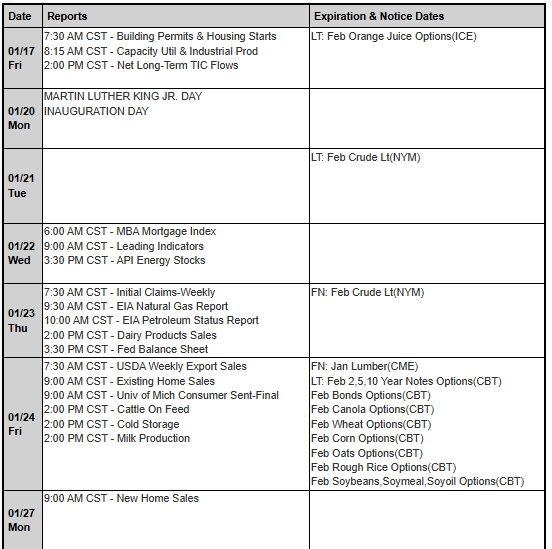
First Notice (FN), Last trading (LT) Days for the Week:

www.mrci.com 

image 5

Improve Your Trading Skills

Get access to proprietary indicators and trading methods, consult with an experienced broker at 1-800-454-9572.

Explore trading methods. Register Here

* This is not a solicitation of any order to buy or sell, but a current market view provided by Cannon Trading Inc. Any statement of facts here in contained are derived from sources believed to be reliable, but are not guaranteed as to accuracy, nor they purport to be complete. No responsibility is assumed with respect to any such statement or with respect to any expression of opinion herein contained. Readers are urged to exercise their own judgement in trading.

Market Alert: Non-Farm Payrolls Tomorrow and Key Contract Deadlines for the Month

Get Real Time updates and more by joining our Private Facebook Group!

Subscribe to our YouTube Channel

Listen to our Market Recap Podcasts on Apple Podcasts


C65

NFP tomorrow at 7:30 AM Central time! Non Farm Payrolls is a market moving event that takes place the first Friday of every month. Be aware and understand this report can impact market behavior. 

Below are the contracts entering First Notice or Last Trading Day for the upcoming month. Be advised that for contracts that are deliverable, it is requested that all LONG positions be exited two days prior to First Notice and ALL positions be exited the day prior to Last Trading Day. If you have any questions, please contact your broker.

stars
7b245251 4ea2 4970 8652 b6e5b91ded92
5dcc87d1 e011 491c aeb2 c757199a4b9f

Daily Levels for October 4, 2024

image

Economic Reports

provided by: ForexFactory.com

All times are Eastern Time ( New York)

image 1

Improve Your Trading Skills

Get access to proprietary indicators and trading methods, consult with an experienced broker at 1-800-454-9572.

Explore trading methods. Register Here

3b644da2 2bee 4d39 8d98 5208a20bec39

* This is not a solicitation of any order to buy or sell, but a current market view provided by Cannon Trading Inc. Any statement of facts here in contained are derived from sources believed to be reliable, but are not guaranteed as to accuracy, nor they purport to be complete. No responsibility is assumed with respect to any such statement or with respect to any expression of opinion herein contained. Readers are urged to exercise their own judgement in trading.   #Equities, #Consolidation phase, #Interest rates, #Precious metals, #Gold, #Silver, #US Dollar, #Crude oil prices, #HurricaneHelene, #Middle East tensions, #Chinese stimulus, #Redbook US Retail Sales, #Case Schiller US Metro-Area Home Prices, #Richmond Fed Manufacturing Index, #Service Sector Index, #Consumer Confidence, #New Home Sales, #Micron Technology

E-Mini S&P 500 Futures

E-Mini S&P 500 Futures—a smaller-sized derivative contract based on the Standard & Poor’s 500 Index (also known as standard & poor’s 500 index futures, sp500 index futures, futures sp, standard and poor’s 500 future, futures sp500)—have revolutionized the world of futures trading since their inception. This guide will explore the origins, evolution, and technological advancements surrounding the E-Mini S&P 500 contract. Furthermore, we will examine how cutting-edge tools such as artificial intelligence (AI) are shaping the future of futures trading and why Cannon Trading Company is an excellent choice for those seeking to trade these contracts.

The Origins of E-Mini S&P 500 Futures

A New Era for Futures Contracts

In 1997, the Chicago Mercantile Exchange (CME) introduced the E-Mini S&P 500 Futures (ES) contract to make futures trading more accessible to a broader range of market participants. At the time, traditional S&P 500 futures contracts were large and carried high margins, making them primarily a tool for institutional investors. The introduction of the E-Mini contract significantly reduced the notional value of the contract to a fraction of its full-sized counterpart, allowing both institutional and retail traders to participate.

Key Features of E-Mini Contracts

The E-Mini contract quickly gained popularity due to several core features:

  • Reduced Contract Size: Unlike the full-size sp500 index futures, which had a contract value of 250 times the index, the E-Mini was just 50 times the index. This lower notional value made the contract more manageable for smaller traders.
  • Lower Margin Requirements: With a smaller contract size came lower margin requirements, reducing the capital needed to trade sp500 index futures. This opened the doors for retail traders who had previously been unable to participate in the larger contracts.
  • High Liquidity: From its early days, the E-Mini contract quickly gained liquidity. The S&P 500 is a widely followed index, representing 500 of the largest U.S. companies. Traders were eager to trade a smaller version of the index, which meant deep liquidity and narrow bid-ask spreads.

The Role of Technology in the Growth of E-Mini Futures

As E-Mini futures gained traction, the rise of electronic trading played a crucial role in their growth. The E-Mini futures sp were among the first contracts to be traded electronically, using the CME’s Globex trading platform. Electronic trading provided several advantages over traditional pit trading:

  • 24-Hour Market Access: Traders could access the market nearly 24 hours a day, allowing them to trade futures during global events or after-hours stock market movements.
  • Increased Transparency: Electronic trading brought more transparency to the market, with real-time quotes and market data available to all participants.
  • Faster Execution: The shift from manual order processing in the trading pits to electronic execution reduced the time it took to execute trades, minimizing the risk of slippage and improving trade outcomes for participants.

Evolution of E-Mini Futures with the Internet and AI

The Internet Revolution in Futures Trading

The explosion of internet-based trading platforms in the late 1990s and early 2000s democratized access to the E-Mini standard and poor’s 500 future market. No longer did traders have to be physically present at the exchange or rely on floor brokers to execute their trades. Online brokers emerged, offering individuals and institutions alike a way to trade these contracts from anywhere in the world with just an internet connection.

Some key impacts of the internet on E-Mini futures trading include:

  • Accessibility: Traders of all experience levels gained access to professional-grade trading platforms. Previously, only institutions could afford the technology and resources to access global markets. With online platforms, retail traders could access S&P 500 futures contracts at competitive fees and trade on the same exchanges as institutional players.
  • Market Data and Research: Access to real-time data, news, and technical analysis became available to anyone with an internet connection. The once-secretive tools of institutional traders were now available for retail traders to make informed decisions.
  • Automated Trading: The internet allowed the development of automated trading systems and algorithms. Traders could now automate their strategies, reducing the manual effort required to manage positions in fast-moving markets like S&P 500 futures.

The Role of Artificial Intelligence in Modern Futures Trading

With the rise of artificial intelligence (AI) and machine learning, the futures trading landscape has continued to evolve, and E-Mini standard and poor’s 500 future are no exception. AI’s influence on futures trading has manifested in several ways:

  1. Predictive Analytics

    • AI systems can analyze vast datasets, such as historical price movements, market sentiment, news, and economic indicators, to identify potential patterns in the market. Predictive models help traders gain a better understanding of future market directions and adjust their strategies accordingly.
    • In the context of E-Mini S&P 500 futures, AI algorithms can recognize patterns in stock price correlations, economic data releases, and even global macro events, providing traders with insights on how these factors may impact the broader U.S. equity market.
  2. Automated Strategy Execution

    • AI-powered trading bots and algorithms can manage trades based on pre-set rules and strategies, eliminating human error and emotion from the equation. These bots can identify buy or sell opportunities based on specific criteria such as price levels, volatility, or market sentiment.
    • In fast-moving markets like E-Mini futures, where price changes can happen in milliseconds, AI-based execution ensures that traders do not miss out on opportunities due to latency or slow decision-making.
  3. Sentiment Analysis

    • AI tools have advanced to the point where they can analyze news articles, social media posts, and other forms of digital content to gauge market sentiment. Sentiment analysis allows traders to incorporate this data into their decision-making process.
    • By monitoring social media trends, financial news, and public opinion, AI systems can predict how market sentiment might impact S&P 500 futures. This data-driven approach is especially useful for large-scale investors and hedge funds that need a macro-level view of the market.
  4. Risk Management and Optimization

    • AI’s ability to process and analyze vast quantities of data allows for more precise risk management strategies. Algorithms can assess the risk of open positions in real-time and automatically make adjustments to protect against adverse market movements.

Predictions on How Technology Will Expedite Trade Execution

Looking forward, we can expect further advancements in how technology shapes the execution of E-Mini S&P 500 futures trades. These include:

  • Latency Reduction: As technology improves, trade execution speeds will continue to decrease, reducing the time between placing an order and having it executed on the exchange. Quantum computing may play a role in this as algorithms and data processing speeds are pushed to their limits.
  • AI-Driven Decision Making: Traders will increasingly rely on AI and machine learning algorithms to scan market data, news, and sentiment in real-time, helping them to make more informed decisions at a faster pace.
  • Blockchain and Smart Contracts: The integration of blockchain technology into futures markets could automate the clearing and settlement process, further reducing friction in trade execution. Smart contracts could also ensure that trades are settled instantly without relying on traditional clearinghouses.
  • Cloud-Based Infrastructure: With more trading platforms leveraging cloud computing, traders will have greater access to scalable computing resources, enabling more sophisticated strategies and faster order execution.

Why Cannon Trading Company Is a Wise Choice for Trading E-Mini S&P 500 Futures

Choosing the right broker is crucial for successful futures trading, and Cannon Trading Company stands out as a premier option for trading futures sp500 and related contracts such as E-Mini S&P 500 Futures. Here’s why:

1. Experience and Reputation

Cannon Trading Company has been a reliable name in the futures trading industry for over three decades. With a track record of serving institutional, retail, and professional traders, Cannon has built a strong reputation for delivering excellent service and tailored trading solutions.

2. Advanced Trading Platforms

Cannon Trading provides access to a wide array of top-tier trading platforms, including the CME’s Globex for trading E-Mini futures sp500. The platforms offered include features such as:

  • Advanced Charting Tools: Traders can perform detailed technical analysis using a suite of charting tools to make informed decisions.
  • Automated Trading Capabilities: For those interested in algorithmic trading, Cannon offers platforms that support strategy automation, back-testing, and real-time execution.
  • Customizable User Interface: Tailor the platform to fit your trading style, whether you are day trading or managing longer-term strategies in E-Mini contracts.

3. Competitive Margins and Fees

One of the most important aspects of trading futures is margin requirements. Cannon Trading offers competitive margins for E-Mini S&P 500 futures, allowing traders to enter the market with less capital while still benefiting from significant leverage. Additionally, Cannon provides transparent and competitive commission structures, ensuring that traders don’t face excessive costs when trading high-frequency strategies.

4. Educational Resources

Cannon Trading prides itself on supporting traders with educational resources that enhance their knowledge of the futures market. Whether you are new to trading or an experienced futures trader, Cannon offers webinars, blogs, and market analysis to keep you informed about current market trends and trading strategies.

5. Customer Support

Cannon Trading is renowned for its personalized customer service. Their team of experienced brokers and support staff are available to assist clients with trading questions, platform support, and market insights. This level of service is invaluable, especially for those trading in fast-moving markets like the S&P 500 futures.

6. Regulatory Compliance

As a fully regulated futures brokerage, Cannon Trading adheres to the highest standards of compliance and transparency. This ensures that traders can trust the firm with their capital, knowing that they are operating within a regulated and secure environment.

7. Technology Integration

Cannon Trading has embraced the advancements in trading technology, including algorithmic trading, high-frequency trading, and AI-driven systems. By providing access to platforms that integrate these technologies, Cannon allows traders to stay ahead in an increasingly competitive market.

E-Mini S&P 500 Futures have revolutionized the futures market since their inception in 1997, making the S&P 500 index more accessible to a broader range of traders. The rise of internet-based trading platforms and AI-driven tools has further democratized access, offering retail traders and institutions alike the ability to trade these highly liquid contracts in a fast and efficient manner.

As technology continues to evolve, the future of E-Mini trading will likely see improvements in trade execution speeds, AI-driven market analysis, and the adoption of blockchain technology to streamline clearing and settlement processes. For traders looking to enter this exciting market, Cannon Trading Company provides an ideal platform, offering a combination of advanced technology, personalized support, and competitive pricing.

With Cannon Trading’s resources and expertise, traders of all levels can effectively navigate the ever-evolving world of Standard & Poor’s 500 index futures, taking full advantage of the opportunities offered by E-Mini S&P 500 futures contracts. Whether you are hedging your portfolio, speculating on short-term price movements, or automating your trading strategies, Cannon Trading Company stands out as a wise and reliable choice for your futures trading needs.

For more information, click here.

Ready to start trading futures? Call us at 1(800)454-9572 – Int’l (310)859-9572 (International), or email info@cannontrading.com to speak with one of our experienced, Series-3 licensed futures brokers and begin your futures trading journey with Cannon Trading Company today.

Disclaimer: Trading Futures, Options on Futures, and retail off-exchange foreign currency transactions involve substantial risk of loss and are not suitable for all investors. Past performance is not indicative of future results. Carefully consider if trading is suitable for you in light of your circumstances, knowledge, and financial resources. You may lose all or more of your initial investment. Opinions, market data, and recommendations are subject to change at any time.

Important: Trading commodity futures and options involves a substantial risk of loss. The recommendations contained in this article are opinions only and do not guarantee any profits. This article is for educational purposes. Past performances are not necessarily indicative of future results.

This article has been generated with the help of AI Technology and modified for accuracy and compliance.

Follow us on all socials: @cannontrading

Market Watch: Key Commodities Impacted by Geopolitical Tensions, Longshoremen Strike, and China’s Stimulus

Get Real Time updates and more by joining our Private Facebook Group! Subscribe to our YouTube Channel Listen to our Market Recap Podcasts on Apple Podcasts
C2
 

Bullet Points, Highlights, Announcements

By Mark O’Brien, Senior Broker General:    Keep an eye out for commodity futures broadly, for bullish moves.  Geopolitical tensions and the Iranian missile strike on Israel are dominating the commodity news so far this week.  The most visible reaction was seen in crude oil prices, which pushed higher as fears of supply disruptions escalated. In other news causing unease to a range of commodities futures, the first strike by the International Longshoremen’s Association since 1977 is potentially closing ports from Houston to Boston and once again threatening supply chains. Another key development adding some fundamental bullishness to commodities: China’s largest stimulus package since the pandemic, with the promise of more to come.  Last week, China unleashed a package of monetary and fiscal easing measures, launching China’s benchmark CSI 300 Index 27% from its September lows into fresh bull market territory.  These aggressive actions are already reverberating through global commodity markets.  Iron ore futures have surged over 20% in China. Metals:  After closing above $2,700 per ounce for the first time – an all-time high – last Thursday, December gold eased to $2,677 per ounce at the time of writing.  Overall, gold’s near 7-month price increase reflects traders’ bullishness amid the current geopolitical tensions and the prospect of more interest rate cuts in the U.S. Energies:  Despite the recent reaction by crude oil related to the aforementioned geopolitical tensions, in a monthly Reuters poll released Monday, 41 analysts and economists cut their 2024 oil price forecasts for a fifth consecutive month.  Weaker demand and uncertainty over OPEC’s plans were cited.  In April, driven by Middle East tensions and OPEC+ supply cuts, oil prices surged past $90 a barrel.   Since then, declining demand trends have led to an supply overhang and crude oil has reversed course, dipping below $70 per barrel this month. Important heads up:   it’s that time of the month again: we’re a couple of days from when the Labor Dept. releases its monthly Non-farm payrolls report.  It’s widely considered to be one of the most important and influential measures of the U.S. economy and the report is released at 7:30 A.M., Central Time on the first Friday of the month. To review, the Labor Dept.’s Bureau of Labor Statistics surveys about 141,000 businesses and government agencies, representing approximately 486,000 individual work sites.  The report excludes farm workers, private household employees, domestic household workers and non-profit organization employees.  The report also includes other detailed industry data including the overall unemployment rate as a percentage of the total labor force that is unemployed but actively seeking work, wages, wage growth and average workday hours.   Side note:  Power is only one of the worries for the survivors of Hurricane Helene – in so many of the Appalachian towns and other hard-hit areas.  Those in the hurricane’s wake are struggling to access clean water, safe shelter, clear roads, gasoline and food, among other necessities.  With that said, as of Wednesday morning, more than 1.2 million outages remain across the region.   Here are some of the latest figures on the number of reported outages:  
  • Florida 42,321
  • Virginia 44,850
  • North Carolina 347,118
  • Georgia 363,340
  • South Carolina: 491,105
 
stars
   

Daily Levels for October 3, 2024

9680bb1c 039c 476b 9288 2036ace661ac   Economic Reports provided by: ForexFactory.com All times are Eastern Time ( New York)
eaca73c4 5ec4 43a6 973b 6bb115e48b03

Improve Your Trading Skills

Get access to proprietary indicators and trading methods, consult with an experienced broker at 1-800-454-9572. Explore trading methods. Register Here

3b644da2 2bee 4d39 8d98 5208a20bec39
* This is not a solicitation of any order to buy or sell, but a current market view provided by Cannon Trading Inc. Any statement of facts here in contained are derived from sources believed to be reliable, but are not guaranteed as to accuracy, nor they purport to be complete. No responsibility is assumed with respect to any such statement or with respect to any expression of opinion herein contained. Readers are urged to exercise their own judgement in trading.   #Equities, #Consolidation phase, #Interest rates, #Precious metals, #Gold, #Silver, #US Dollar, #Crude oil prices, #HurricaneHelene, #Middle East tensions, #Chinese stimulus, #Redbook US Retail Sales, #Case Schiller US Metro-Area Home Prices, #Richmond Fed Manufacturing Index, #Service Sector Index, #Consumer Confidence, #New Home Sales, #Micron Technology