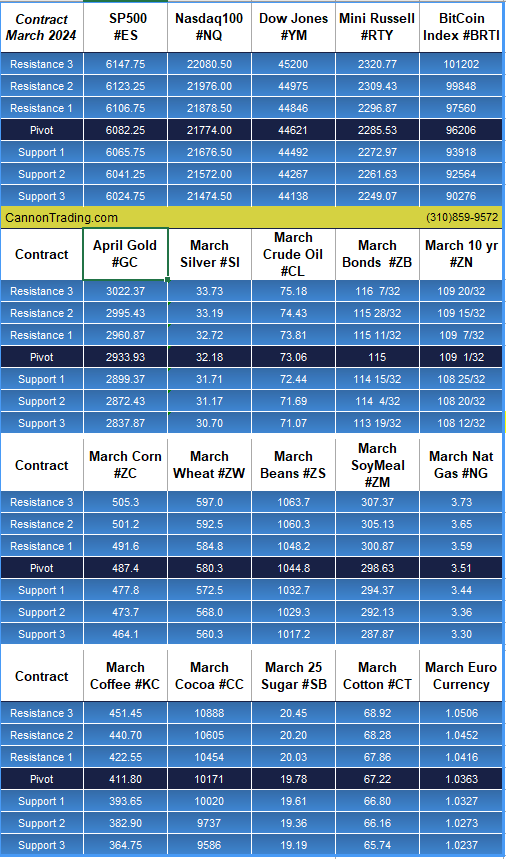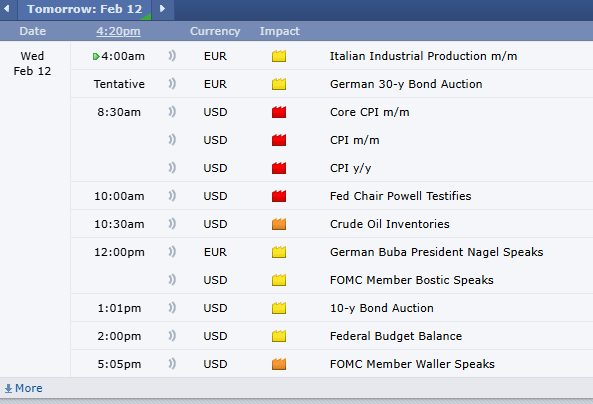
Support & Resistance Levels

This Blog provides futures market outlook for different commodities and futures trading markets, mostly stock index futures, as well as support and resistance levels for Crude Oil futures, Gold futures, Euro currency and others. At times the daily trading blog will include educational information about different aspects of commodity and futures trading.

Stay Ahead of Market Movers: Key Reports and Real-Time Audio Alerts with TradeTheNews

Join our Private Facebook group

Subscribe to our YouTube Channel

Listen to our podcast: Subscribe on AppleSpotify, Amazon, or wherever you listen to podcasts!

C99

We have a few reports tomorrow to be ware of:

Crude oil numbers

GDP

Home sales

ADP ….

We have a service called TradeTheNews here in the office.

We can hear breaking news by audio through out the day.

That also includes the market imbalance before the close ( in case you were wondering what caused the sharp sell off 10 minutes before the close?), like you can see in the screen shot below:


682d45d8 9a4c 4cdf a35f a85dcfb327a1
GET a FREE Trial to TradeTheNews.com squawk box service and see why many professionals subscribe.

  • Fast News
  • Insight
  • Reliable
  • In Depth Coverage

Sign up here


stars

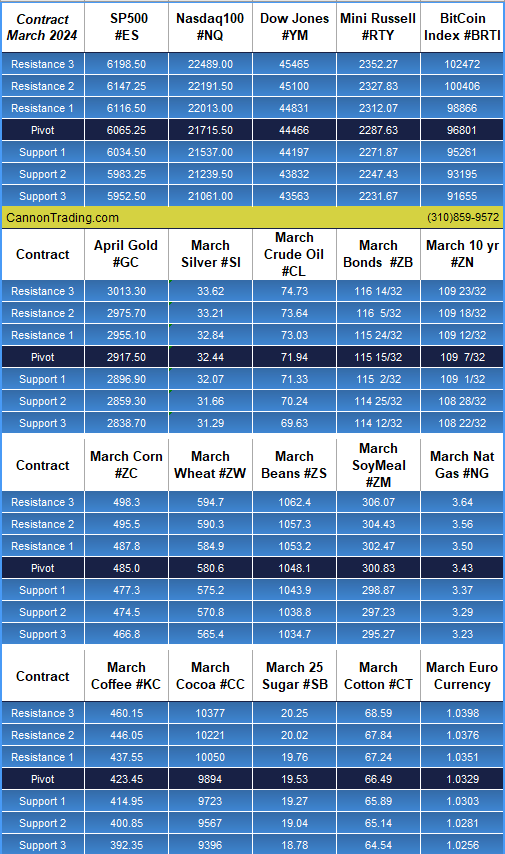
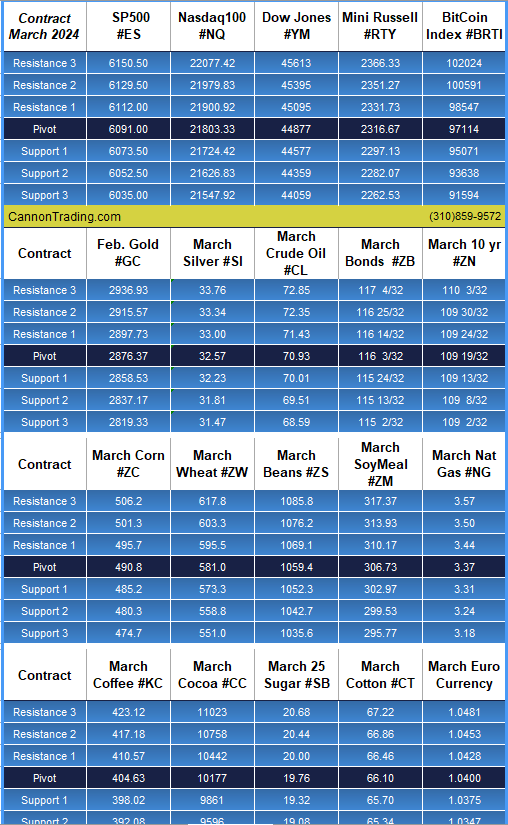
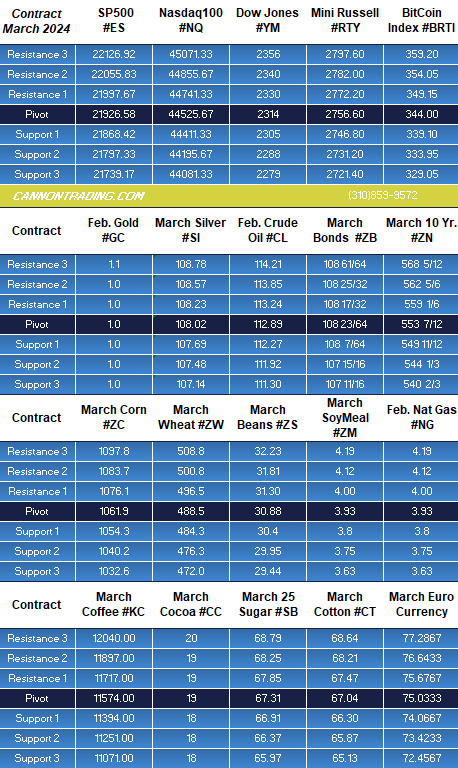
Daily Levels for Oct. 30th 2024

4a2beb1e fc1b 4b8c 8c0c 5e5680dbea50

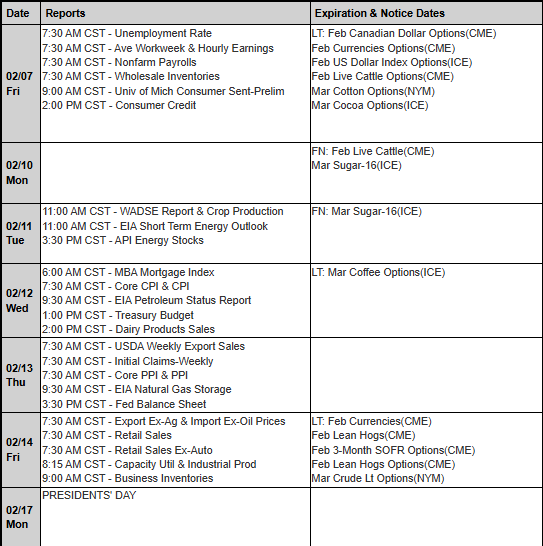
Economic Reports
provided by:ForexFactory.com
All times are Eastern Time ( New York)
7ee82e3c cdb5 4958 8225 608e03b336dc
Good Trading!
About: Cannon Trading is an independent futures brokerage firm established in 1988 in Los Angeles. Our mission is to provide reliable service along with the latest technological advances and choices while keeping our clients informed and educated in the field of futures and commodities trading.
Trading Futures, Options on Futures, and retail off-exchange foreign currency transactions involves substantial risk of loss and is not suitable for all investors. You should carefully consider whether trading is suitable for you in light of your circumstances, knowledge, and financial resources. You may lose all or more of your initial investment. Opinions, market data, and recommendations are subject to change at any time.
Contact
S
Cannon Trading Company
12100 Wilshire Boulevard
Suite 1640
Los Angeles, CA 90025
(800) 454-9572
Follow Us
Facebook  Twitter  Instagram
Visit Our Website


Crude Oil Futures Contracts

Crude oil has long been the lifeblood of the global economy, powering industries, transportation, and even influencing geopolitics. Given its critical importance, it’s no surprise that crude oil futures contracts have become one of the most traded instruments in the global futures markets. These contracts allow traders to speculate on the future price of crude oil, hedge against price volatility, and provide liquidity to the market. This piece delves into the history of crude oil futures, their pricing mechanisms, why they are so popular, and why Cannon Trading Company, with its stellar reputation, is a great choice for trading crude oil futures contracts.

A Brief History of Crude Oil Futures Contracts

The concept of futures trading dates back to ancient civilizations, where farmers and merchants would agree to exchange goods at a predetermined future date and price. The modern era of futures trading, however, began in the 19th century with agricultural commodities. The Chicago Board of Trade (CBOT) was one of the first exchanges to offer standardized futures contracts.

Crude oil, being a vital commodity, entered the futures markets relatively late. The first crude oil futures contracts were introduced by the New York Mercantile Exchange (NYMEX) in 1983. These contracts were designed for light, sweet crude oil, a high-quality grade of oil that is easy to refine. The benchmark contract for crude oil is the West Texas Intermediate (WTI) futures contract, traded primarily on the NYMEX. The introduction of WTI future contracts marked a significant turning point in the financial markets, as it allowed investors, traders, and corporations to hedge against fluctuations in crude oil prices. Today, WTI future contracts are considered one of the most liquid and heavily traded futures contracts in the world.

Pricing of Crude Oil Futures Contracts

Crude oil futures contracts are standardized agreements to buy or sell a specific quantity of crude oil at a predetermined price on a future date. The two most common grades of crude oil traded on futures exchanges are WTI and Brent crude. WTI future contracts are considered the benchmark for U.S. oil prices, while Brent crude is the global benchmark.

The price of crude oil futures is influenced by a variety of factors, including:

  • Supply and Demand: Like any commodity, the price of crude oil is primarily driven by the global supply and demand balance. Factors like geopolitical tensions, OPEC production decisions, and economic growth can cause significant fluctuations in crude oil futures prices.
  • Geopolitical Events: Political instability in oil-producing regions, such as the Middle East, can disrupt the supply of crude oil, driving prices higher. Conversely, periods of peace or increased production can cause prices to fall.
  • Inventory Levels: Weekly reports on U.S. crude oil inventories, released by the Energy Information Administration (EIA), can have a significant impact on crude oil futures live prices. Higher-than-expected inventories can signal lower demand or oversupply, leading to a drop in prices.
  • Technological Advancements: Innovations in extraction techniques, such as hydraulic fracturing (fracking), have revolutionized the supply of crude oil, particularly in the United States, leading to changes in crude oil futures prices.

The live pricing of crude oil futures is updated in real-time across trading platforms, with traders constantly monitoring fluctuations via crude oil futures live charts. These charts display the most current prices, allowing traders to react quickly to market changes. The price of crude oil futures today is a reflection of these real-time updates and market sentiment, making it one of the most actively followed markets globally.

Why Are Crude Oil Futures Contracts So Popular?

Crude oil futures trading is highly popular among futures traders for several reasons:

  • Liquidity: The crude oil futures market is one of the most liquid markets in the world. WTI future contracts, in particular, are traded in high volumes, providing ample liquidity for both small and large traders. High liquidity ensures that traders can enter and exit positions quickly without significant price slippage.
  • Volatility: Crude oil futures prices can be highly volatile due to the numerous factors influencing the market, such as geopolitical tensions, natural disasters, and macroeconomic data releases. This volatility provides trading opportunities for speculators looking to profit from price swings.
  • Hedging: Crude oil futures contracts are widely used by corporations, such as airlines and oil companies, to hedge against adverse price movements. For instance, an airline might use crude oil futures to lock in future fuel costs, protecting itself from rising oil prices. This hedging activity contributes to the overall liquidity of the market.
  • Global Influence: Crude oil is a globally traded commodity, and its price influences a wide range of industries. This global reach makes crude oil futures an attractive instrument for traders who want exposure to macroeconomic trends, such as global growth, inflation, and currency movements.
  • Diverse Trading Strategies: Crude oil futures trading allows for a variety of trading strategies, from short-term scalping to long-term trend following. Traders can take both long and short positions, making crude oil futures suitable for different market conditions.
  • Transparency and Standardization: WTI future contracts, like other futures contracts, are standardized, meaning that they specify the quantity, quality, and delivery date of the underlying commodity. This standardization reduces the risk of misunderstandings or disputes, making crude oil futures trading more transparent and accessible.

Cannon Trading Company: A Trusted Partner for Crude Oil Futures Trading

Cannon Trading Company, a leading brokerage firm with decades of experience in the futures markets, has earned a 5-star rating on TrustPilot for good reason. When it comes to crude oil futures trading, Cannon Trading offers several advantages that make it an excellent choice for traders.

  • Decades of Experience: Cannon Trading Company has been in the futures industry for over 30 years, providing clients with reliable, professional, and knowledgeable service. Their experience in the crude oil futures markets allows them to offer tailored advice, helping traders navigate the complexities of crude oil futures contracts.
  • Excellent Trading Platforms: Cannon Trading offers access to multiple trading platforms, allowing traders to view crude oil futures live prices and charts. Their platforms are designed for ease of use, enabling traders to make informed decisions based on real-time data. With access to the latest crude oil futures charts, traders can analyze trends and execute trades efficiently.
  • Exceptional Customer Support: Cannon Trading is known for its high level of customer service. Whether you are new to crude oil futures trading or an experienced trader, their team of seasoned professionals is available to provide assistance and answer questions, ensuring a smooth trading experience.
  • Comprehensive Market Research: Cannon Trading provides clients with up-to-date market research and analysis, including insights into crude oil futures prices, geopolitical events, and technical analysis. Their research services are valuable for traders who want to stay informed about market trends and make better-informed decisions.
  • Competitive Commissions: Cannon Trading offers competitive commission rates, allowing traders to maximize their profitability when trading crude oil futures. Their transparent fee structure ensures that clients know exactly what they are paying for, with no hidden charges.
  • Advanced Tools and Resources: Cannon Trading provides its clients with access to advanced trading tools, including crude oil futures charts, technical analysis tools, and risk management software. These resources are essential for traders looking to manage risk effectively and make well-timed trading decisions.

For traders interested in crude oil futures today, choosing a brokerage firm with a solid track record is critical. Cannon Trading’s 5 out of 5-star ranking on TrustPilot reflects its commitment to providing excellent service and support to its clients. Their decades of experience in the futures markets, combined with access to advanced trading platforms, make Cannon Trading a great choice for traders looking to enter the crude oil futures market.

Crude oil futures contracts play a vital role in the global financial markets, offering liquidity, transparency, and trading opportunities for both speculators and hedgers. The evolution of WTI future contracts has cemented crude oil’s position as a key commodity in the futures markets. With factors like supply and demand, geopolitical tensions, and inventory levels constantly influencing crude oil futures prices, these contracts remain among the most actively traded instruments.

For traders looking to trade crude oil futures today, Cannon Trading Company stands out as a reliable and experienced broker. With decades of experience, a 5-star TrustPilot ranking, and a wealth of trading resources, Cannon Trading is well-equipped to help traders navigate the volatile and fast-paced world of crude oil futures trading.

Whether you’re analyzing crude oil futures live prices or studying historical trends through crude oil futures charts, having a trusted brokerage like Cannon Trading is essential for success in this market. The combination of cutting-edge tools, excellent customer service, and a deep understanding of the futures markets makes Cannon Trading a top choice for those looking to trade WTI future contracts and other crude oil futures instruments.

For more information, click here.

Ready to start trading futures? Call us at 1(800)454-9572 – Int’l (310)859-9572 (International), or email info@cannontrading.com to speak with one of our experienced, Series-3 licensed futures brokers and begin your futures trading journey with Cannon Trading Company today.

Disclaimer: Trading Futures, Options on Futures, and retail off-exchange foreign currency transactions involve substantial risk of loss and are not suitable for all investors. Past performance is not indicative of future results. Carefully consider if trading is suitable for you in light of your circumstances, knowledge, and financial resources. You may lose all or more of your initial investment. Opinions, market data, and recommendations are subject to change at any time.

Important: Trading commodity futures and options involves a substantial risk of loss. The recommendations contained in this article are opinions only and do not guarantee any profits. This article is for educational purposes. Past performances are not necessarily indicative of future results.

This article has been generated with the help of AI Technology and modified for accuracy and compliance.

Follow us on all socials: @cannontrading

AI Dominates Market Focus as Earnings & Economic Data Await – NVDA Chips in the Spotlight

Join our Private Facebook group

Subscribe to our YouTube Channel

Listen to our podcast: Subscribe on AppleSpotify, Amazon, or wherever you listen to podcasts!

AI Trading

All roads lead to AI and AI leads to NVDA

28 October 2024

By GalTrades.com

This week we will hear earnings from 5 of the Mag 7 stocks. As they will talk about how much they are spending on NVDA chips. The potential for intra-week volatility is there. If yields continue to move higher next week this could generate selling pressure, regardless of mega-cap tech earnings. Pre-election selling late next week is a possibility as well.

  • SPX fell 1.74 points (–0.03%) to 5,808.12     to end the week down 0.96%;
  • $DJI lost 259.96 points (–0.61%) to     42,114.40 to end the week down 2.68%;
  • $COMP rose 103.12 points (0.56%) to     18,518.61 to end the week up 0.16%.
  • 10-year Treasury note yield (TNX) added     three basis points to 4.23%.
  • Cboe Volatility Index® (VIX)     climbed sharply to 19.95, nearing recent highs. The 20 level is an area to     watch next week, as it traditionally signals more volatile markets.

The rise in yields puts the small caps trade on hold; high yields are not a positive for small caps. Which puts the rotation trade in question. When the FED started cutting rates the sentiment position for portfolio managers went in the direction of small and mid-cap and away from mega caps. Then we had TSLA report a good quarter, and the stock went up 20%.

S&P 500 posted weekly loss for the first time in seven weeks as rising bond yields trigger some profit taking. Yields have been on the rise recently, mostly driven by strong economic data and higher treasury issuance expectations. The last time we came out of a soft landing in 1995 software and financials were leading the market.

We didn’t see the standard seasonal market weakness in September or October to this point, so we have some jitters in the market which are becoming evident such as the VIX above 20 when the S&P is at record highs.

Futures:

Oil prices plunge 6% after Israel’s attack spares Iran’s energy facilities

During the week Crude oil volatility from the previous week has subsided as traders re-evaluate geopolitical events and conflict escalations threatening oil supplies in the Middle East. Over the weekend Israel attacked Iran’s defense systems and other facilities but did not target any oil infrastructure. As of this writing light sweet crude is trading at $67.31 the last lows for the past 3 months were $66.33 and $65.27. Oil is currently trading below both the 50- and 200-day simple moving averages, which is bearish.

“The recent Israel military action is unlikely to be seen by the market as leading to an escalation that impacts oil supply,” Citi analysts wrote in a note on Monday, cutting the bank’s Brent oil forecast by $4 to $70 per barrel over the next three months.

whether Iran will counter the attack in the coming weeks, which should lead to risk premiums rising again.

China: expectations for improved Chinese physical commodities demand have moderated despite an aggressive stimulus package and a reduction in interest rates.

Gold: chasing $3,000. other precious metals started playing catch up and might be an alternative. Silver, platinum, palladium.

Month to date leaders and laggers.

Bonds & Rates:

As of late today, traders see a 95% chance rates will fall 25 basis points at the Federal Open Market Committee(FOMC) meeting on November 6–7, based on the CME FedWatch Tool. There’s a 5% chance of no change from current rates.

10-year yield keeps going up, Analysts are saying if we get past 4.5% it may be a problem for stocks.

Paul Tudor Jones said this week “I am clearly not going to own any fixed income and am going to be short the back end of fixed income”.

What’s shorting the back end of fixed income?

“Shorting” the backend of fixed income refers to taking a short position in longer-term bonds or other fixed-income securities. In bond markets, “backend” refers to the longer maturity end of the yield curve—typically bonds with maturities of 10 years or more.

When investors short the backend of fixed income, they are betting that the prices of these longer-term bonds will decrease, which usually happens when interest rates rise. Bond prices and interest rates have an inverse relationship, so if rates increase, the value of existing bonds with lower yields drops.

This strategy might be used when investors expect long-term interest rates to rise, possibly due to inflation concerns or a tightening of monetary policy by central banks.

David Einhorn said “it is by many measures the most expensive stock market we have seen since the founding of Green Light” he also noticed what Warren Buffet has been doing, that he sold a bunch of stock and has been sitting on a mountain of cash, which express a long term view that right now is not the a great time to have a lot of equity exposure, and the opportunity set is expected to be better at some point in the not so distant future”.

Technical Analysis:

Technical perspective, uptrends largely remain intact, the COMP made new all-time highs but did not register a fresh all-time closing high.

SPX technical support remains near its 20-day moving average, now 5,787. That served as support earlier this month and again this week, with the index bouncing off it both times. However, market breadth, which had been rising, contracted a bit this week. About 73% of SPX stocks now trade above their respective 200-day moving averages, down from 80% a week ago. Typically, broader participation suggests healthy investor sentiment and supportive technicals.

The Russell 2000 was the relative underperformer this week, and higher yields are the culprit. Last Wednesday (October 16th) the index finally notched a fresh two-year closing high, but subsequently turned lower as 10-year yields moved up 20 basis points since that day. The good news for the bulls is that the uptrend which began in early August remains intact, but the index could be challenged if bond yields continue to push higher.

Hot sectors: Cyber: Cybersecurity stocks are holding their own. The group is reacting to Morgan Stanley’s upbeat note on the industry. The analyst is bullish on network security stocks on the thesis of strong firewall refresh activity in the second half of 2025 and 2026 based on a four-to-five year replacement cycle, rising network traffic, and record levels of threat activity. Supporting this view is a recent Value-Added Reseller (VAR) and Chief Investment Officer survey by the analyst that showed network security as the top spending priority over the next twelve months.

Economic Reports:

The stronger than expected economic data over the past month will likely translate into a more patient Federal Reserve stance, but investors seem to be ok with tempered rate cut expectations assuming it is due to a strong economy versus re-inflationary trends.

This Friday’s reading on nonfarm payrolls, the unemployment rate, and wage inflation, among other key metrics, could influence the direction of yields.

  • Monday (10/28): -no reports-
  • Tuesday (10/29): Consumer Confidence, FHFA     Housing Price Index, S&P Case-Shiller Home Price Index
  • Wednesday (10/30): ADP Employment Change,     Advanced International Trade in Goods, Advanced Retail Inventories,     Advanced Wholesale Inventories, EIA Crude Oil Inventories, Q3 GDP –     Advanced, MBA Mortgage Applications Index, Pending Home Sales
  • Thursday (10/31): Continuing Claims, EIA     Natural Gas Inventories, Employment Cost Index, Initial Claims, PCE     Prices, Personal Income, Personal Spending
  • Friday (11/1): Nonfarm Payrolls, Average     Workweek, Average Hourly Earnings, Unemployment Rate, ISM Manufacturing     Index

Earnings:

For the full S&P 500, FactSet’s third-quarter EPS growth consensus is now 3.6%, down from 4.3% at the start of earnings season. As of Friday, 37% of S&P 500 companies have reported third-quarter earnings and 75% topped analyst’s EPS estimates, FactSet said. That’s below the five-year average of 77%. Info tech and communication services enjoy the strongest growth so far.

  • Monday (10/28): ON Semiconductor (ON),     CenterPoint Energy (CNP), Waste Management (WM), Welltower (WELL), Cadence     Design Systems (CDNS), Ford Motor Co. (F), SBA Communications (SBAC), F5     Inc. (FFIV), Crane Co. (CR)
  • Tuesday (10/29): Novartis (NVS), McDonald’s     Corp. (MCD), Pfizer (PFE), American Tower Corp. (AMT), BP PLC (BP), PayPal     Holdings (PYPL), D.R. Horton (DHI), Alphabet (GOOGL), Visa (V), Advanced     Micro Devices (AMD), Stryker Corp. (SYK), Chubb Ltd. (CB), Chipotle     Mexican Grill (CMG)
  • Wednesday (10/30): Eli Lilly & Co.     (LLY), AbbVie (ABBV), Caterpillar (CAT), Automatic Data Processing (ADP),     Trade Technologies (TT), Microsoft Corp. (MSFT), Meta Platforms (META),     Amgen (AMGN), Booking Holdings (BKNG), Starbucks (SBUX), KLA Corp. (KLAC),     Aflac (AFL)
  • Thursday (10/31): Matercard Inc. (MA),     Merck & Co. (MRK), Line PLC (LIN), Uber Technologies (UBER), Eaton     Corp. (ETN), ConocoPhillips (COP), Apple Inc. (AAPL), Amazon.com Inc.     (AMZN), Intel corp. (INTC), Atlassian Corp. (TEAM)
  • Friday (11/1): Exxon Mobil Corp. (XOM),     Chevron Corp. (CVX), Enbridge (ENB), Dominion Energy (D), Charter     Communications (CHTR), Cardinal Health (CAH)

Memoirs of a trader: Whether trading futures or stocks I always try to trade with the trend therefore look to trade the futures and sectors that had the best week and look for continuation or pull backs. Remember not to chase, buying support usually works out better than buying resistance. TIP- fundamental news can change the trend on a dime.

Trading stocks, commodity futures and options involves a substantial risk of loss. The information here is of opinion only and do not guarantee any profits. Past performances are not necessarily indicative of future results.


stars
67f01d99 8bde 4f50 a397 d9cf3ecae03c

Daily Levels for Oct. 29th 2024

485769c0 e664 4209 acab 746cb04a1afd

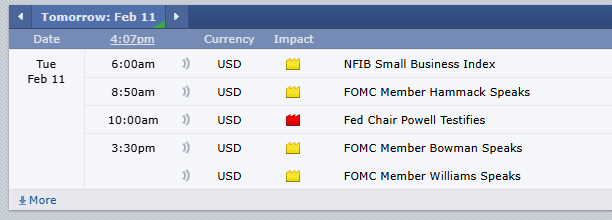
Economic Reports
provided by:ForexFactory.com
All times are Eastern Time ( New York)
e80c6744 4e47 4621 9ecf 7bae2b7ffa96
Good Trading!
About: Cannon Trading is an independent futures brokerage firm established in 1988 in Los Angeles. Our mission is to provide reliable service along with the latest technological advances and choices while keeping our clients informed and educated in the field of futures and commodities trading.
Trading Futures, Options on Futures, and retail off-exchange foreign currency transactions involves substantial risk of loss and is not suitable for all investors. You should carefully consider whether trading is suitable for you in light of your circumstances, knowledge, and financial resources. You may lose all or more of your initial investment. Opinions, market data, and recommendations are subject to change at any time.
Contact
S
Cannon Trading Company
12100 Wilshire Boulevard
Suite 1640
Los Angeles, CA 90025
(800) 454-9572
Follow Us
Facebook  Twitter  Instagram
Visit Our Website


Weekly Newsletter: Bean Oil Outlook, Crude Oil System+ Trading Levels for Oct. 28th

Get Real Time updates and more by joining our Private Facebook Group!
Subscribe to our YouTube Channel

C86

Cannon Futures Weekly Letter Issue # 1214

In this issue:

  • Important Notices – Earnings & NFP, Consumer Confidence
  • Futures 102 – Recognizing Chart Patterns
  • Hot Market of the Week – December Bean Oil
  • Broker’s Trading System of the Week – Crude Oil Swing Trading System
  • Trading Levels for Next Week
  • Trading Reports for Next Week


Important Notices – Next Week Highlights:


The Week Ahead

By Mark O’Brien, Senior Broker


We’re a week away from the Labor Dept.’s release of its monthly Non-farm payrolls report. It’s widely considered to be one of the most important and influential measures of the U.S. economy. The report is released at 7:30 A.M., Central Time on the first Friday of the month.

U.S. Election Day (Nov. 5th) countdown: 11 days


Next week’s earnings include some of the largest U.S. companies by market cap.:


Apple, Microsoft, Alphabet (Google), Amazon, Meta (old Facebook), Berkshire Hathaway, Visa, Exxon Mobile, Chevron, Merck, McDonalds, Caterpillar, Uber


Apple and Microsoft each boast a market cap. of over $3 trillion. That’s 3,000,000,000,000. Google and Amazon come in at about $2 trillion.


Tuesday, Oct. 29th:


9:00: Consumer Confidence


Wednesday, Oct 30th:


7:30: Gross Domestic Product (3rd qtr.)

ADP Employment


Thursday, Oct. 31st:


7:30: Personal Income / Spending

7:30: Personal Consumption & Expenditures – Index & year-over-year

8:45: Chicago Purchasing Managers Index


Friday, Nov. 1st:


Non-Farm Payrolls / U.S. Unemployment Report


Futures 101: Ask a Broker!!

Ask a Broker: Why Trade Bitcoin Futures?

thumbnail?url=https%3A%2F%2Fi.ytimg.com%2Fvi%2FtQSPiEDjKkc%2Fhqdefault


Before Your next Trade, learn to recognize charts and patterns!

Learning the different types of charts and patterns will be another arsenal in your Trading Tools!

  • What is an Ascending Triangle Futures Chart Pattern?

What is an Ascending Triangle Futures Chart Pattern?

An ascending triangle is a bullish futures pattern that can indicate a breakout in the upwards direction.

How do I Recognize an Ascending Triangle Futures Chart Pattern?

An ascending triangle is formed when resistance remains flat and support rises.

What Does a Ascending Triangle Chart Pattern Mean?

The price will rise and fall within the triangle until support and resistance converge. At that point, the apex, breakout occurs, usually upwards.

  • What is a Broadening Top Futures Chart Pattern?
  • Head & Shoulders?
  • Bull Flags?
  • Bear Flags?
  • Rectangle Bottoms?
  • Rectangle Tops?
  • See ACTUAL Charts Patterns images AND many more patterns you should know as a trader!

LEARN THE REST


stars

3b644da2 2bee 4d39 8d98 5208a20bec39


    • Hot Market of the Week – December Hogs

    Hot market of the week is provided by QT Market Center, A Swiss army knife charting package that’s not just for Hedgers, Cooperatives and Farmers alike but also for Spread traders, Swing traders and shorter time frame application for intraday traders with a unique proprietary indicator that can be applied to your specific trading needs.

    FREE TRIAL AVAILABLE

    December Bean Oil

    December bean oil is attempting to break out as it challenges the October highs. New sustained highs would open up the chart to take aim at its upside PriceCount objectives where the first count would project a run to the 46.29 area.


    PriceCounts – Not about where we’ve been , but where we might be going next!

    990a6ed8 2749 4858 898b 84a2b2e631a6

The PriceCount study is a tool that can help to project the distance of a move in price. The counts are not intended to be an ‘exact’ science but rather offer a target area for the four objectives which are based off the first leg of a move with each subsequent count having a smaller percentage of being achieved. It is normal for the chart to react by correcting or consolidating at an objective and then either resuming its move or reversing trend. Best utilized in conjunction with other technical tools, PriceCounts offer one more way to analyze charts and help to manage your positions and risk. Learn more at www.qtchartoftheday.com
Trading in futures, options, securities, derivatives or OTC products entails significant risks which must be understood prior to trading and may not be appropriate for all investors. Past performance of actual trades or strategies is not necessarily indicative of future results.

   Broker’s Trading System of the Week

With algorithmic trading systems becoming more prevalent in portfolio diversification, the following system has been selected as the broker’s choice for this month.

Position Trading Cont v.22 _ CRUDE

PRODUCT

CL – Crude Oil


SYSTEM TYPE

Swing Trading


Recommended Cannon Trading Starting Capital

$25,000


COST

USD 165 / monthly


Get Started

Learn More

4ed8344a e876 415f 927a 7e1c58431eb7

The performance shown above is hypothetical in that the chart represents returns in a model account. The model account rises or falls by the average single contract profit and loss achieved by clients trading actual money pursuant to the listed system’s trading signals on the appropriate dates (client fills), or if no actual client profit or loss available – by the hypothetical single contract profit and loss of trades generated by the system’s trading signals on that day in real time (real‐time) less slippage, or if no real time profit or loss available – by the hypothetical single contract profit and loss of trades generated by running the system logic backwards on back adjusted data. Please read full disclaimer HERE.
Would you like to receive daily support & resistance levels?
Yes
S
No
S

Daily Levels for October 28th, 2024

5c4c45df 5996 416a acd5 57181a871cdd

Weekly Levels for the week of October 28th, 2024

3494a9d9 17cc 46ee 98b1 64648344cea7


bf9b3e0d 9c23 44e8 980c a8c01bfbe2cf

Trading Reports for Next Week

First Notice (FN), Last trading (LT) Days for the Week:
db4c281c 3c99 4515 8a25 1894ec24da04

Improve Your Trading Skills

Get access to proprietary indicators and trading methods, consult with an experienced broker at 1-800-454-9572.

Explore trading methods. Register Here

* This is not a solicitation of any order to buy or sell, but a current market view provided by Cannon Trading Inc. Any statement of facts here in contained are derived from sources believed to be reliable, but are not guaranteed as to accuracy, nor they purport to be complete. No responsibility is assumed with respect to any such statement or with respect to any expression of opinion herein contained. Readers are urged to exercise their own judgement in trading.

Introducing Micro Nikkei 225 Futures: Expanding CME’s Global Equity Index Suite with Japan’s Benchmark

Join our Private Facebook group

Subscribe to our YouTube Channel

Listen to our podcast: Subscribe on AppleSpotify, Amazon, or wherever you listen to podcasts!

C98

NEW Micro Nikkei 225 contracts!

The Why:

· Nikkei225 index level is above 35K for the first time since early 1990 due to the weak currency, virtuous circle from rising prices/CPI, Japan Exchange’s effort to improve corp governance which is having a positive impact on stock prices and attracting foreign inflows to their domestic equity market. All of which are drawing fresh interest to this index from professional traders in addition to the institutions

· Nikkei Futures are the most liquid International Equity Index Product CME has launched in partnership with Nikkei Inc,. and CME has been building a successful product suite on Japan’s benchmark equity index Nikkei225 which includes Yen- and Dollar- Nikkei futures

· We anticipate this new Micro to be additive to CME’s micro e-mini equity index product suite: The product will be the first step building Micro International Equity Index futures suite at CME. It will also offer a great opportunity to the clients to trade both US and Japan indices in a cost efficient way at the same venue, expressing the view on the first and fourth largest economy in the world any time of the day


Contract Specs: 

Effective Sunday 27 October 2024 for trade date Monday 28 October 2024, and pending all relevant regulatory review periods, please be advised that CME will launch Micro Nikkei (USD) Futures.

Contract Unit

0.50 USD x Nikkei Stock Average

Price Quotation

USD per Index Point

Trading Hours

Sunday – Friday 6:00 p.m. – 5:00 p.m. ET (5:00 p.m. – 4:00 p.m. CT) with a 60-minute break each day beginning at 5:00 p.m. ET (4:00 p.m. CT)

Minimum Price Fluctuation

5.00 index points=$2.50

Product Code

CME Globex: MNK

CME ClearPort: MNK

Clearing: MNK

Listed Contracts

Quarterly contracts (Mar, Jun, Sep, Dec) listed for 2 consecutive quarters

Settlement Method

Financially Settled

Termination of Trading

5:00 p.m. Eastern Time (ET) on Business Day prior to 2nd Friday of the contract month


stars

Daily Levels for Oct. 25th 2024

3b4783bf eb1c 4221 9093 51da24bfd990

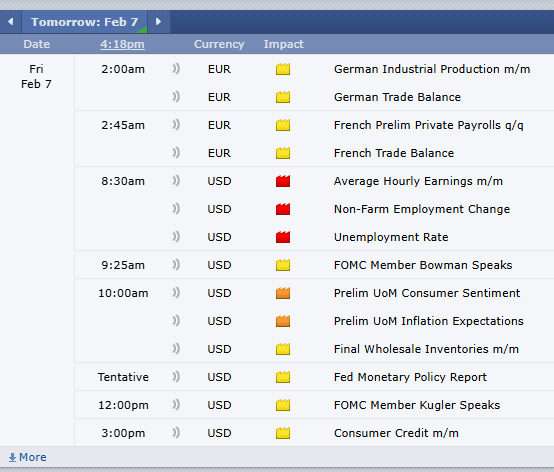
Economic Reports
provided by:ForexFactory.com
All times are Eastern Time ( New York)
2811cf06 36bd 448f bbe3 2c13aa29262d
Good Trading!
About: Cannon Trading is an independent futures brokerage firm established in 1988 in Los Angeles. Our mission is to provide reliable service along with the latest technological advances and choices while keeping our clients informed and educated in the field of futures and commodities trading.
Trading Futures, Options on Futures, and retail off-exchange foreign currency transactions involves substantial risk of loss and is not suitable for all investors. You should carefully consider whether trading is suitable for you in light of your circumstances, knowledge, and financial resources. You may lose all or more of your initial investment. Opinions, market data, and recommendations are subject to change at any time.
Contact
S
Cannon Trading Company
12100 Wilshire Boulevard
Suite 1640
Los Angeles, CA 90025
(800) 454-9572
Follow Us
Facebook  Twitter  Instagram
Visit Our Website


Dow Jones Futures

The Dow Jones Industrial Average (DJIA), one of the most recognizable stock market indices in the world, has long been a barometer of the American economy. Over the years, the index has evolved from a simple listing of 12 industrial companies into a benchmark for the broader market, making its way into the futures market as a valuable instrument for traders, hedgers, and institutions alike.

In this article, we will delve into the history of the Dow Jones Industrial Average (DJIA), its transition into the futures market, and the specific advantages and disadvantages of trading Dow Jones Industrial Average Index Futures for different types of market participants. Additionally, we will explore why Cannon Trading Company stands out as a premier broker for trading these futures contracts, particularly in light of its high rankings on TrustPilot.

A Brief History of the Dow Jones Industrial Average

The Dow Jones Industrial Average was first introduced on May 26, 1896, by Charles Dow, co-founder of Dow Jones & Company, and statistician Edward Jones. The index originally tracked 12 large industrial companies, which included firms in sectors like railroads, cotton, gas, sugar, and tobacco. The aim of the index was to reflect the overall health of the U.S. economy through the performance of its largest industrial enterprises.

Over the years, the composition of the DJIA evolved, and today it includes 30 of the largest, most influential companies across various sectors. It is important to note that the DJIA is a price-weighted index, meaning that companies with higher stock prices have a more significant impact on the index’s movement. Unlike market-capitalization-weighted indices like the S&P 500, where companies are weighted based on their total market value, the DJIA is heavily influenced by changes in the stock prices of its constituent companies.

The growing significance of the Dow Jones Industrial Average in global financial markets eventually led to its incorporation into the futures markets, where it became a popular tool for speculation, hedging, and risk management.

Transition to the Futures Market

Futures contracts allow market participants to agree on the future price of an asset or financial instrument, thus enabling speculation and hedging. The Dow Jones Industrial Average Index Futures were introduced to offer traders the opportunity to speculate on or hedge against the future performance of the DJIA without directly owning the stocks in the index. The Chicago Board of Trade (CBOT), now a part of CME Group, began trading DJIA index futures in 1997.

Dow Jones Industrial Index Futures quickly became popular due to the DJIA’s status as a key market barometer. It allowed traders to gain broad exposure to the U.S. stock market through a single futures contract. The futures contracts are based on the value of the DJIA and can be traded electronically on platforms like CME’s Globex.

These futures contracts offer leverage, meaning that traders can control a large notional value of the DJIA with a relatively small initial margin deposit. This has made them attractive to both retail and institutional traders looking to capitalize on movements in the broader stock market without the need to buy or sell the individual stocks within the index.

Advantages of Trading Dow Jones Futures for Retail Traders

  • Leverage and Capital Efficiency
    One of the biggest advantages of trading Dow Jones Industrial Average Index Futures for retail traders is the leverage that futures markets offer. Futures contracts allow traders to control a large notional value of the DJIA for a fraction of its cost. This provides the opportunity for significant gains (or losses) with only a small initial capital outlay. With margin requirements lower than buying individual stocks or even index-based exchange-traded funds (ETFs), retail traders can make more efficient use of their capital.
  • Liquidity and Tight Spreads
    The DJIA index futures market is highly liquid, ensuring that retail traders can easily enter and exit positions with minimal slippage. Tight bid-ask spreads mean that retail traders can transact at competitive prices, reducing the cost of trading.
  • Diversification Through a Single Contract
    Retail traders gain exposure to 30 of the largest companies in the U.S. economy with a single Dow Jones Industrial Index Futures contract. This diversification allows traders to speculate on the overall market trend rather than focusing on the performance of individual stocks, which may carry higher risk due to company-specific factors.
  • Hedging Against Other Equity Positions
    Retail traders who already hold positions in U.S. equities can use Dow futures Jones as a hedging tool to protect against adverse market moves. For example, if a trader owns a portfolio of stocks and anticipates a market downturn, they can short DJIA index futures to hedge against potential losses in their equity portfolio.

Any Questions? Call 1(800)454-9572

Advantages for Hedgers

  • Risk Management
    For hedgers, Dow Jones Industrial Average Index Futures offer a highly effective means of managing risk. By taking opposite positions in the futures market, companies or investors can protect themselves from adverse market movements. For example, if a company anticipates a decline in the overall stock market, it can short DJIA index futures to lock in current prices and mitigate the impact of a market downturn.
  • Cost-Effective Hedging
    Compared to other hedging instruments like options, Dow Jones Industrial Index Futures tend to be more cost-effective due to their lower transaction costs and the absence of premium payments. This makes them particularly attractive for businesses and institutional investors looking to hedge large equity exposures.
  • Flexibility
    Dow futures Jones contracts provide hedgers with the flexibility to take positions based on different time horizons, ranging from near-term contracts to long-term positions. This allows companies to hedge specific risks based on their operational or financial timelines.

Advantages for Institutions

  • Efficient Exposure to the U.S. Equity Market
    Institutional investors, such as hedge funds, mutual funds, and pension funds, often use Dow Jones Industrial Average Index Futures to quickly gain or reduce exposure to the broader U.S. equity market. Futures contracts enable institutions to efficiently adjust their portfolio allocations without the need to buy or sell the individual stocks within the index.
  • Liquidity and Scalability
    The high liquidity of DJIA index futures ensures that institutional investors can trade large volumes without significantly impacting the market price. This is crucial for institutions that need to move large sums of money quickly, especially during times of market volatility.
  • Leverage and Capital Efficiency
    Like retail traders, institutions can benefit from the leverage provided by Dow futures Jones. This allows them to control large positions with a relatively small initial margin, freeing up capital for other investments or strategies.

Disadvantages of Trading Dow Jones Futures

  • Leverage Risk
    While leverage can magnify gains, it also amplifies losses. Retail traders, in particular, need to be cautious about the risks associated with trading Dow Jones Industrial Index Futures. A small adverse move in the index can lead to significant losses, potentially wiping out an entire trading account if proper risk management techniques are not used.
  • Complexity for New Traders
    Dow futures Jones contracts can be complex financial instruments, especially for novice traders. The mechanics of futures trading, including margin requirements, contract expiration, and the potential for margin calls, can be challenging to navigate without a solid understanding of how the futures markets work.
  • Expiration and Rollover Costs
    Futures contracts have expiration dates, which means traders need to “roll over” their positions by closing the expiring contract and opening a new one if they wish to maintain their exposure. This process can involve additional transaction costs and complexity, particularly for retail traders.
  • Volatility
    The DJIA index futures market can be highly volatile, especially during times of economic uncertainty or unexpected market events. While volatility can create trading opportunities, it also increases the risk of significant losses, particularly for traders who do not have a solid risk management strategy in place.

Why Cannon Trading Company is a Leading Broker for Dow Jones Futures

Founded in 1988, Cannon Trading Company has established itself as one of the most reputable futures brokers in the industry. With a long track record of providing top-tier services to both retail and institutional clients, Cannon Trading has consistently earned some of the highest rankings on TrustPilot.

  • Experience and Expertise
    With over three decades in the industry, Cannon Trading has developed a deep understanding of the futures markets, including Dow Jones Industrial Average Index Futures. The firm offers expert guidance, ensuring that clients have access to the resources and support they need to succeed in the market.
  • Wide Range of Trading Platforms
    Cannon Trading provides access to a variety of trading platforms, allowing clients to choose the one that best suits their needs. Whether you are a retail trader looking for a simple interface or an institutional client requiring advanced features, Cannon Trading offers solutions tailored to your requirements.
  • High Customer Satisfaction
    Cannon Trading’s strong ratings on TrustPilot reflect its commitment to customer satisfaction. Clients consistently praise the firm for its transparency, reliability, and responsiveness. For traders of DJIA index futures, having a broker with a proven track record of excellent customer service can be crucial, particularly during volatile market conditions.
  • Competitive Fees and Commission Structure
    In addition to offering superior service, Cannon Trading is known for its competitive fee structure. The firm provides low-cost access to Dow Jones Industrial Index Futures, allowing traders to maximize their returns by minimizing their transaction costs.

Dow Jones Futures offer a powerful tool for retail traders, hedgers, and institutional investors alike. With benefits like leverage, liquidity, and broad market exposure, these futures contracts are a versatile addition to any trading or investment strategy. However, the risks of leverage, volatility, and complexity should not be overlooked, especially for novice traders.

For those looking to trade DJIA index futures, Cannon Trading Company stands out as a top-tier broker, offering years of experience, a wide range of trading platforms, and exceptional customer service. With a strong reputation backed by high TrustPilot rankings, Cannon Trading is well-positioned to meet the needs of both retail and institutional clients in the competitive world of futures trading.


For more information, click here.

Ready to start trading futures? Call us at 1(800)454-9572 – Int’l (310)859-9572 (International), or email info@cannontrading.com to speak with one of our experienced, Series-3 licensed futures brokers and begin your futures trading journey with Cannon Trading Company today.

Disclaimer: Trading Futures, Options on Futures, and retail off-exchange foreign currency transactions involve substantial risk of loss and are not suitable for all investors. Past performance is not indicative of future results. Carefully consider if trading is suitable for you in light of your circumstances, knowledge, and financial resources. You may lose all or more of your initial investment. Opinions, market data, and recommendations are subject to change at any time.

Important: Trading commodity futures and options involves a substantial risk of loss. The recommendations contained in this article are opinions only and do not guarantee any profits. This article is for educational purposes. Past performances are not necessarily indicative of future results.

This article has been generated with the help of AI Technology and modified for accuracy and compliance.

Follow us on all socials: @cannontrading

Dow Futures

Dow Jones Industrial Index Futures, often referred to as Dow Futures, represent a contract that allows traders and investors to speculate or hedge on the future price movement of the Dow Jones Industrial Average (DJIA). The DJIA, established in 1896, is a stock market index that tracks 30 large publicly-owned companies listed on the New York Stock Exchange (NYSE) and NASDAQ. It is one of the most recognized and tracked stock indices globally, serving as a benchmark for the performance of the U.S. economy.

What are Dow Futures?

Dow Jones Industrial Index Futures are derivative contracts that mirror the price movement of the DJIA but are traded on futures exchanges like the Chicago Mercantile Exchange (CME). These contracts offer investors the ability to speculate on the future value of the index, either profiting from upward price movement (long positions) or downward movement (short positions). The primary contract size is often referred to as the “E-mini Dow Futures” and “Micro Dow Futures,” providing varying levels of leverage for traders.

How Does One Make Money Trading Dow Futures?

Making money trading Dow Jones Industrial Index Futures (or Dow Futures) involves understanding the dynamics of futures markets, price movements, and leveraging timing to one’s advantage. There are several approaches traders can take:

  • Speculation: Traders can buy (go long) or sell (go short) Dow Jones futures based on their expectation of the index’s movement. If a trader believes the Dow Jones index will rise, they may go long on Dow futures, and profit if the index rises above the entry price. Conversely, if they anticipate a decline, they may short the futures contract and profit if the index falls.
  • Hedging: Institutional investors and portfolio managers use Dow Jones futures as a hedging tool to protect against adverse movements in the stock market. For example, a fund heavily invested in large-cap stocks might hedge against potential market downturns by selling Dow Jones Industrial Index futures. If the stock market declines, the losses in the stock portfolio would be partially or wholly offset by gains in the futures position.
  • Leverage: One of the attractive features of futures trading is leverage. Futures contracts allow traders to control a large amount of the underlying asset (in this case, the Dow Jones index) with a relatively small margin deposit. This increases potential returns but also magnifies risk, which is something traders must manage carefully.
  • Arbitrage: Some sophisticated traders employ arbitrage strategies to exploit price discrepancies between the Dow Jones index, futures contracts, and other related instruments. This involves simultaneous buying and selling of assets to profit from temporary differences in price.

History of Dow Jones Futures and How the Contract Came to Be Traded

The introduction of Dow Jones Industrial Index Futures on the futures markets is part of a broader historical evolution of financial futures. Stock index futures, including Dow futures, began trading in the 1980s, largely due to an increasing demand for instruments that allowed institutions and traders to hedge and speculate on market-wide price movements rather than individual stocks.

The launch of futures contracts tied to the Dow Jones Industrial Average, such as the E-mini Dow and later the Micro Dow, allowed traders to efficiently gain exposure to the broader market, enabling smaller investors to participate due to the more accessible contract sizes. The Chicago Board of Trade (CBOT), which later became part of the CME Group, introduced Dow futures contracts to provide more liquidity and flexibility to traders looking for exposure to the U.S. stock market in a standardized, regulated, and transparent marketplace.

The growing demand for diversified trading tools, combined with the need to manage portfolio risks, further cemented the popularity of Dow Jones Industrial Index futures. The role of Dow futures expanded beyond just speculative trading and became an integral part of risk management for institutional investors, portfolio managers, and corporations.

Advantages and Disadvantages of Trading Dow Jones Futures

Both retail traders and institutional investors participate in Dow Jones futures, but they approach these markets differently, each facing distinct advantages and disadvantages.

For Retail Traders:

  • Advantages:
    • Access to Leverage: Dow futures provide retail traders the ability to control large positions with a relatively small capital outlay, amplifying potential returns. For instance, the E-mini Dow and Micro Dow contracts offer different levels of exposure, allowing traders to tailor their risk.
    • 24-Hour Market: Unlike the underlying stock index, Dow Jones futures trade nearly 24 hours a day, allowing traders to react to global events that may affect market sentiment. This is especially valuable in periods of high volatility.
    • Diversification: Retail traders can diversify their portfolios by trading Dow Jones futures alongside individual stocks, commodities, and other financial instruments.
  • Disadvantages

    :

    • High Risk Due to Leverage: While leverage can multiply profits, it also increases potential losses. Retail traders need to be cautious and have a risk management strategy, such as using stop-loss orders.
    • Complexity: Futures trading can be complex and may require a steep learning curve, particularly for beginners. The volatility of index futures can lead to rapid price changes, making it difficult to manage positions without significant experience.
    • Margin Calls: If the market moves against a trader’s position, they may face margin calls, requiring additional funds to maintain their position, potentially leading to forced liquidation.

For Institutional Traders:

  • Advantages:
    • Efficient Hedging: Institutional investors, such as pension funds or mutual funds, can use Dow Jones futures to hedge their large equity portfolios, providing protection against adverse market moves without the need to sell their underlying stocks.
    • Liquidity: The Dow Jones futures market is highly liquid, allowing institutional traders to enter and exit large positions without significant price slippage. This is a critical factor when managing multi-million or even billion-dollar portfolios.
    • Arbitrage Opportunities: Institutional traders with sophisticated systems can exploit inefficiencies between cash markets, Dow Jones futures, and other related instruments, generating profits from small price discrepancies.
  • Disadvantages:
    • Market Volatility: While institutional traders are well-equipped to handle market volatility, sharp and sudden price movements can still cause disruptions in carefully hedged positions. Moreover, volatility spikes can make it more expensive to maintain hedges.
    • Complexity and Transaction Costs: Institutional traders must account for transaction costs and fees associated with trading large futures positions, which can erode profits, particularly when trading frequently.

For Hedgers:

  • Advantages:
    • Risk Management: Hedgers, such as corporations with significant exposure to the equity markets, can use Dow futures to manage risk effectively, locking in future prices and reducing exposure to adverse market movements.
    • Flexibility: Dow Jones futures allow for the flexible adjustment of hedging positions in response to market changes, providing a cost-effective way to manage portfolio risk.
  • Disadvantages:
    • Opportunity Costs: While hedging with Dow futures can protect against losses, it can also limit upside potential if the market moves favorably. Hedgers must weigh the benefits of protection against the potential opportunity costs of missed gains.

Why is Cannon Trading Company a Great Choice for Trading Dow Jones Futures?

Cannon Trading Company has built a reputation as a leading broker in the futures trading industry, providing superior services to both retail and institutional traders. Here are several reasons why Cannon Trading is an excellent choice for trading Dow Jones Industrial Index Futures:

  • Expertise and Experience: Cannon Trading has been a prominent player in the futures trading world for over three decades. Their team of experienced brokers is well-versed in the intricacies of Dow Jones futures and can offer tailored advice and trading strategies to clients.
  • Advanced Trading Platforms: Cannon Trading provides access to top-tier trading platforms designed for both retail and institutional clients. These platforms offer fast execution speeds, advanced charting tools, and the flexibility to trade Dow futures efficiently. This is particularly important for Dow Jones Industrial Futures traders who require timely access to markets and data.
  • Competitive Commission Structure: For those trading Dow Jones futures, Cannon Trading offers competitive commission rates, allowing traders to maximize their returns without being weighed down by excessive fees. This is particularly beneficial for high-frequency traders and institutional investors managing large portfolios.
  • Personalized Service: Cannon Trading stands out for its personalized approach, offering one-on-one support to traders of all levels. Whether a client is a retail trader new to Dow Jones futures or an institutional hedger managing large sums, Cannon’s team provides direct and knowledgeable assistance, ensuring that trading decisions align with the client’s goals.
  • Risk Management Tools: For those trading leveraged instruments like Dow futures, risk management is crucial. Cannon Trading offers various risk management tools, such as stop-loss orders and sophisticated platform features, enabling traders to protect their capital in volatile markets.
  • Education and Resources: Cannon Trading also invests in client education, providing access to market research, webinars, and other educational resources. This commitment to educating clients ensures that they are well-equipped to navigate the complexities of trading Dow Jones Industrial Index Futures.

Trading Dow Jones futures offers a range of opportunities for both retail and institutional investors, providing access to leverage, diversification, and risk management tools. However, these benefits come with significant risks, especially for retail traders who must carefully manage leverage and market volatility. For institutional traders and hedgers, Dow futures offer efficient means of portfolio management and risk mitigation. Cannon Trading Company, with its long history, advanced platforms, personalized service, and commitment to education, stands as an excellent choice for those looking to trade Dow Jones Industrial Index Futures. Whether speculating on market trends or hedging against potential downturns, Dow Jones futures remain a critical tool in the modern trading landscape.

For more information, click here.

Ready to start trading futures? Call us at 1(800)454-9572 – Int’l (310)859-9572(International), or email info@cannontrading.com to speak with one of our experienced, Series-3 licensed futures brokers and begin your futures trading journey with Cannon Trading Company today.

Disclaimer: Trading Futures, Options on Futures, and retail off-exchange foreign currency transactions involve substantial risk of loss and are not suitable for all investors. Past performance is not indicative of future results. Carefully consider if trading is suitable for you in light of your circumstances, knowledge, and financial resources. You may lose all or more of your initial investment. Opinions, market data, and recommendations are subject to change at any time.

Important: Trading commodity futures and options involves a substantial risk of loss. The recommendations contained in this article are opinions only and do not guarantee any profits. This article is for educational purposes. Past performances are not necessarily indicative of future results.

This article has been generated with the help of AI Technology and modified for accuracy and compliance.

Follow us on all socials: @cannontrading

Metals Retreat, Stocks Drop 1.6%: Market Slump Amid Rate Speculation – Gold Hits Record High Before Pullback

Join our Private Facebook group

Subscribe to our YouTube Channel

Listen to our podcast: Subscribe on AppleSpotify, Amazon, or wherever you listen to podcasts!

Gold T

Metals Off Highs, Stocks Fall 1.6%

By Mark O’Brien, Senior Broker

General / Indexes:


Stock index futures slumped today with the Dec. E-mini Dow Jones futures contract losing over 650 points (a ±$3,250 per contract move) at its intraday low around 1:00 Central Time.  The E-mini S&P 500 shed over 90 points (a ±$4,500 per contract move) at its lows and the E-mini Nasdaq lost over 450 points (a $9,000 move) intraday.  The latter erased two weeks of higher closing prices.

The rally in stocks has stalled as investors debate how quickly the Federal Reserve will cut interest rates over the next year and sowed worry of rates staying higher for longer.


Metals:


Gold futures are getting shinier by the day.  The price of the front month December contract touched another all-time record high overnight, trading briefly at $2,772.60 per ounce before heading on a ±$50 pull-back into its old 10:30 A.M., Central Time pit session close this morning.


Since the start of this year, gold prices have risen by a third, hovering over the $2,700 per ounce mark in the last few trading sessions.  Much of the credit for the increased demand can be tied to simmering tensions in the Middle East and the uncertainty over the upcoming presidential elections in the U.S.


The 2024 gains have unfolded after uninspiring price movement over the last ten years.  The price of gold reached the vicinity of $1,900 per ounce in 2011, swooned for nearly eight years trading not far from $1,000 per ounce much of the time, then started advancing back to ±$1,900 around mid-2020 where it vacillated little into 2022.  After being subdued for so long, gold prices shot up, delivering a 70% jump in the past two years.  Looking at the institutional interest in gold several large commercial banks have forecast the current upward price move continuing into next year.

Analysts at Citi raised their three-month forecast for gold prices to $2,800 per ounce.  They look for a move to $3,000 over the next 6–12 months.  J.P. Morgan has also proposed that gold’s fundamentals point to further upside.


stars

Daily Levels for Oct. 24th 2024

614e103a 360c 4fe9 802f a8f36668fe33

Economic Reports
provided by:ForexFactory.com
All times are Eastern Time ( New York)
255af178 0d49 493d ba71 2493a555370c
Good Trading!
About: Cannon Trading is an independent futures brokerage firm established in 1988 in Los Angeles. Our mission is to provide reliable service along with the latest technological advances and choices while keeping our clients informed and educated in the field of futures and commodities trading.
Trading Futures, Options on Futures, and retail off-exchange foreign currency transactions involves substantial risk of loss and is not suitable for all investors. You should carefully consider whether trading is suitable for you in light of your circumstances, knowledge, and financial resources. You may lose all or more of your initial investment. Opinions, market data, and recommendations are subject to change at any time.
Contact
S
Cannon Trading Company
12100 Wilshire Boulevard
Suite 1640
Los Angeles, CA 90025
(800) 454-9572
Follow Us
Facebook  Twitter  Instagram
Visit Our Website


Tomorrow’s Market Lineup: Existing Home Sales, Beige Book, and Crude Oil Reports

Join our Private Facebook group

Subscribe to our YouTube Channel

Listen to our podcast: Subscribe on AppleSpotify, Amazon, or wherever you listen to podcasts!

C79

Existing Home Sales, Beige Book, Crude Oil numbers heading tomorrow’s line up!

Ask a Broker: Futures Spreads Trading


stars
December 30 Year Treasury Bonds

December treasury bonds broke down into a new low where the chart satisfied its third PriceCount objective to the 118^14 area. It would be normal to get a near term reaction from this level in the form of a consolidation or corrective trade, at least. From here, IF you can susustain furuther weakness, we are left with a low percentage fourth count to aim for to the 114 area.


f6d55f9c a187 401f 8160 e9db99aa47f7

The PriceCount study is a tool that can help to project the distance of a move in price. The counts are not intended to be an ‘exact’ science but rather offer a target area for the four objectives which are based off the first leg of a move with each subsequent count having a smaller percentage of being achieved. It is normal for the chart to react by correcting or consolidating at an objective and then either resuming its move or reversing trend. Best utilized in conjunction with other technical tools, PriceCounts offer one more way to analyze charts and help to manage your positions and risk. Learn more at www.qtchartoftheday.com

Trading in futures, options, securities, derivatives or OTC products entails significant risks which must be understood prior to trading and may not be appropriate for all investors. Past performance of actual trades or strategies is not necessarily indicative of future results.

Daily Levels for Oct. 23rd 2024

ebc6c784 226d 45eb 9864 fe3bb888ec19

Economic Reports
provided by:ForexFactory.com
All times are Eastern Time ( New York)
36362de1 5c22 4a99 934e 13d4550fe838
Good Trading!
About: Cannon Trading is an independent futures brokerage firm established in 1988 in Los Angeles. Our mission is to provide reliable service along with the latest technological advances and choices while keeping our clients informed and educated in the field of futures and commodities trading.
Trading Futures, Options on Futures, and retail off-exchange foreign currency transactions involves substantial risk of loss and is not suitable for all investors. You should carefully consider whether trading is suitable for you in light of your circumstances, knowledge, and financial resources. You may lose all or more of your initial investment. Opinions, market data, and recommendations are subject to change at any time.
Contact
S
Cannon Trading Company
12100 Wilshire Boulevard
Suite 1640
Los Angeles, CA 90025
(800) 454-9572
Follow Us
Facebook  Twitter  Instagram
Visit Our Website


Introduction to Futures SP

Futures SP

Introduction to Futures SP

Standard & Poor’s 500 index futures, commonly referred to as SP futures, are financial contracts that allow traders to speculate on the future value of the S&P 500 Index, one of the most widely followed benchmarks of the U.S. stock market. These contracts are used by a diverse group of market participants, ranging from individual investors to institutional traders and hedgers. The S&P 500 Index itself consists of 500 of the largest publicly traded companies in the U.S., representing a wide array of industries, making it a comprehensive reflection of the U.S. economy.

The creation of S&P 500 futures contracts was revolutionary because it allowed for easier, more flexible participation in the market, enabling traders to leverage the value of the index to hedge against market volatility or speculate on market movements. Over time, several variations of these contracts have been introduced to cater to different trading needs and scales. This article will explore the various SP futures contracts, who trades them, and why they remain critical instruments in the futures market. Furthermore, we will discuss Cannon Trading Company, Inc., a futures brokerage firm known for its stellar reputation, and why institutional traders and hedgers should consider them as a top choice.

Any Questions? Call 1(800)454-9572

Types of SP Futures Contracts

Several variations of S&P 500 futures are traded on futures exchanges like the Chicago Mercantile Exchange (CME). These contracts differ in size, trading hours, and utility but serve the same purpose: allowing market participants to trade on the future direction of the S&P 500 Index. The main SP futures contracts include:

  1. Standard S&P 500 Futures (SP)
    The standard S&P 500 futures contract, known by its ticker symbol “SP,” was the largest and most widely traded version of the contract. Each contract was valued at 250 times the value of the S&P 500 Index. For example, if the S&P 500 Index is trading at 4,000, the value of one SP contract would be 250 x 4,000 = $1,000,000. This large notional value made the contract more suited for institutional traders, hedge funds, and large portfolio managers who need to hedge substantial stock portfolios or make significant market moves. This contract no longer exists because its value was too large since the S&P was moving higher and higher. The new contracts are below:
  2. E-mini S&P 500 Futures (ES)
    E-mini futures were introduced to make futures trading more accessible to a broader range of traders. The E-mini S&P 500 futures contract (ES) is a smaller version of the standard S&P 500 futures, with a contract value of 50 times the index value. So, if the S&P 500 Index is trading at 4,000, the value of one E-mini contract would be 50 x 4,000 = $200,000. This smaller size makes the contract more accessible to individual traders and smaller institutions while still offering the same benefits as the standard futures contract.The E-mini contract has become one of the most popular futures contracts globally, offering high liquidity, tight spreads, and around-the-clock trading hours. Its popularity stems from its flexibility, allowing traders to easily enter and exit positions with smaller capital requirements than the full-sized SP contract.
  3. Micro E-mini S&P 500 Futures (MES)
    In 2019, CME introduced the Micro E-mini S&P 500 futures contract to cater to retail traders and smaller investors. The Micro E-mini contract (MES) is one-tenth the size of the E-mini contract, with a contract value of just 5 times the index. If the S&P 500 Index is trading at 4,000, the value of one Micro E-mini contract would be 5 x 4,000 = $20,000.The Micro E-mini futures provide a way for traders with limited capital to gain exposure to the S&P 500 Index with less risk compared to the E-mini and standard contracts. Additionally, they are ideal for those who want to scale into positions gradually or hedge smaller portfolios.
  4. S&P 500 Total Return Index Futures (SPXT)
    The S&P 500 Total Return Index (SPXT) futures are designed to track the total return performance of the S&P 500 Index, including dividends. These contracts appeal to institutional investors looking for a more comprehensive measure of the index, as they consider both price changes and the income generated from dividends. While less popular than the SP or ES contracts, SPXT futures provide a unique opportunity for those specifically interested in dividend-inclusive performance.
  5. S&P 500 Dividend Index Futures
    This futures contract allows investors to trade based on the dividends of the S&P 500 companies. While not as widely traded as the price-based futures contracts, these contracts are valuable for income-focused institutional investors and portfolio managers seeking to hedge dividend exposures or speculate on future dividend changes.
  6. S&P 500 VIX Futures
    Although not directly based on the S&P 500 Index, VIX futures are closely related as they track market volatility and are often used in conjunction with S&P 500 futures. VIX futures allow traders to hedge or speculate on the future level of market volatility, which tends to be inversely correlated with the S&P 500 Index itself.

Why Trade SP Futures?

SP futures provide several key benefits that make them attractive to a wide range of market participants:

  1. Liquidity SP futures are among the most liquid futures contracts in the world, especially the E-mini and Micro E-mini contracts. High liquidity ensures tight bid-ask spreads, meaning traders can enter and exit positions with minimal cost and slippage. This liquidity is particularly valuable for institutional traders managing large positions and for high-frequency traders executing numerous trades daily.
  2. Leverage One of the main attractions of futures contracts is the ability to trade with leverage. With SP futures, traders only need to post a fraction of the total contract value as margin, enabling them to control large positions with relatively little capital. This leverage magnifies both potential gains and losses, making SP futures a high-risk, high-reward investment vehicle.
  3. Hedging SP futures are popular among institutional investors, portfolio managers, and hedgers due to their effectiveness in managing risk. By holding long or short positions in SP futures, investors can protect their portfolios from adverse market movements. For example, if an institution expects a market downturn, it can short S&P 500 futures to offset potential losses in its equity holdings.
  4. Speculation Many traders use SP futures to speculate on the direction of the S&P 500 Index. Since the S&P 500 is a broad market index, SP futures offer a straightforward way to bet on the overall performance of the U.S. economy. Traders can go long if they expect the market to rise or short if they anticipate a decline. The leverage offered by futures contracts enhances the potential for profit (or loss), making SP futures a popular choice for speculative traders.
  5. Portfolio Diversification Futures contracts based on broad market indices, such as the S&P 500, provide a way to diversify portfolios across different asset classes. Institutional investors often allocate a portion of their portfolios to SP futures to balance equity exposure or to implement specific trading strategies that reduce correlation with other assets.

Who Trades Futures SP?

SP futures are traded by a diverse group of market participants, each with unique objectives and strategies. The main groups include:

  1. Institutional Investors Institutional investors, such as hedge funds, pension funds, and mutual funds, are some of the largest participants in the SP futures market. They use these contracts primarily for hedging purposes, to offset risks in their equity portfolios, or to speculate on market movements.
  2. Hedge Funds Hedge funds, in particular, are active traders of SP futures due to their ability to utilize leverage. These funds often employ complex strategies involving long and short positions, arbitrage, and other derivatives. SP futures allow them to execute large trades efficiently and adjust portfolio exposure quickly.
  3. Retail Traders Retail traders, ranging from day traders to longer-term speculators, frequently trade the E-mini and Micro E-mini contracts. These contracts are more accessible to individual traders due to their smaller size and lower margin requirements. Retail traders often use SP futures to capitalize on short-term market movements, taking advantage of volatility to generate profits.
  4. Market Makers Market makers provide liquidity in the SP futures market by continuously quoting bid and ask prices. They facilitate trading by ensuring that there is always a counterparty for those wishing to buy or sell contracts. Market makers typically earn profits from the spread between the bid and ask prices and are crucial for maintaining market liquidity.
  5. Arbitrageurs Arbitrageurs exploit price discrepancies between the S&P 500 Index and its futures contracts, or between different SP futures contracts. By taking advantage of these small inefficiencies, arbitrageurs contribute to market efficiency while earning low-risk profits.

Cannon Trading Company, Inc.: The Broker of Choice

Established in 1988, Cannon Trading Company, Inc. has been a leader in the futures brokerage industry for over three decades. With a stellar 5 out of 5-star rating on TrustPilot, Cannon Trading has earned its reputation for providing top-tier service, reliability, and expertise in the futures market. The firm has consistently catered to a wide range of traders, from retail investors to institutional hedgers and professional traders. Here’s why Cannon Trading is considered a top choice, especially for institutional traders and hedgers:

  1. Experience and Expertise With over 35 years of experience in the industry, Cannon Trading has built a deep understanding of the futures market. The firm’s brokers are seasoned professionals who offer valuable insights and personalized advice to clients, helping them navigate the complexities of futures trading. Their expertise is particularly valuable for institutional traders, who require sophisticated strategies and execution to manage large positions and complex portfolios.
  2. Tailored Services for Institutional Traders Cannon Trading excels in providing tailored services for institutional traders, offering customized solutions that meet the specific needs of hedge funds, asset managers, and large financial institutions. The firm understands the unique challenges faced by institutional clients, such as the need for precise execution, risk management, and access to deep liquidity. By offering direct market access and advanced trading platforms, Cannon Trading enables institutional traders to execute large orders with minimal slippage and maximum efficiency.
  3. Trust and Transparency Cannon Trading has built a reputation for trust and transparency in an industry where these qualities are critical. The firm’s commitment to clear communication and ethical business practices has earned it the loyalty of clients over the years. Institutional traders and hedgers, in particular, value a broker they can trust with large sums of capital and complex transactions, making Cannon Trading a reliable partner for high-stakes trading.
  4. Technological Excellence In the fast-paced world of futures trading, having access to cutting-edge technology is essential. Cannon Trading offers state-of-the-art trading platforms that provide direct market access, advanced charting tools, real-time data, and automated trading capabilities. These platforms are designed to meet the needs of both retail and institutional traders, ensuring that clients have the tools they need to succeed in today’s competitive market environment.
  5. Outstanding Customer Support One of the standout features of Cannon Trading is its commitment to customer support. The firm’s brokers are available to assist clients at all stages of the trading process, from account setup to trade execution and beyond. Institutional clients benefit from dedicated account managers who provide personalized service and ensure that their trading needs are met. This high level of support is reflected in the firm’s top ratings on platforms like TrustPilot.
  6. Focus on Education Cannon Trading is committed to empowering its clients through education. The firm offers a wide range of educational resources, including webinars, trading guides, and market analysis, designed to help traders improve their skills and make informed decisions. Institutional traders and hedgers appreciate this focus on education, as it enhances their ability to manage risk and execute sophisticated strategies.
  7. Regulatory Compliance Cannon Trading is a fully licensed and regulated futures brokerage firm, adhering to strict regulatory standards set by the Commodity Futures Trading Commission (CFTC) and the National Futures Association (NFA). Institutional traders and hedgers require a broker that operates with the highest levels of integrity and compliance, and Cannon Trading consistently meets these expectations.

SP futures, including the standard, E-mini, and Micro E-mini contracts, offer a versatile and powerful tool for traders of all types. Whether you’re an institutional investor looking to hedge a large portfolio or a retail trader speculating on short-term market movements, SP futures provide liquidity, leverage, and flexibility.

Cannon Trading Company, Inc. stands out as a premier broker for trading SP futures, particularly for institutional traders and hedgers. With decades of experience, a stellar reputation, and a commitment to delivering tailored services, advanced technology, and unparalleled customer support, Cannon Trading has earned its place as a trusted partner for those navigating the futures market.

For more information, click here.

Ready to start trading futures? Call us at 1(800)454-9572 – Int’l (310)859-9572 (International), or email info@cannontrading.com to speak with one of our experienced, Series-3 licensed futures brokers and begin your futures trading journey with Cannon Trading Company today.


Disclaimer: Trading Futures, Options on Futures, and retail off-exchange foreign currency transactions involve substantial risk of loss and are not suitable for all investors. Past performance is not indicative of future results. Carefully consider if trading is suitable for you in light of your circumstances, knowledge, and financial resources. You may lose all or more of your initial investment. Opinions, market data, and recommendations are subject to change at any time.

Important: Trading commodity futures and options involves a substantial risk of loss. The recommendations contained in this article are opinions only and do not guarantee any profits. This article is for educational purposes. Past performances are not necessarily indicative of future results.

This article has been generated with the help of AI Technology and modified for accuracy and compliance.

Follow us on all socials: @cannontrading