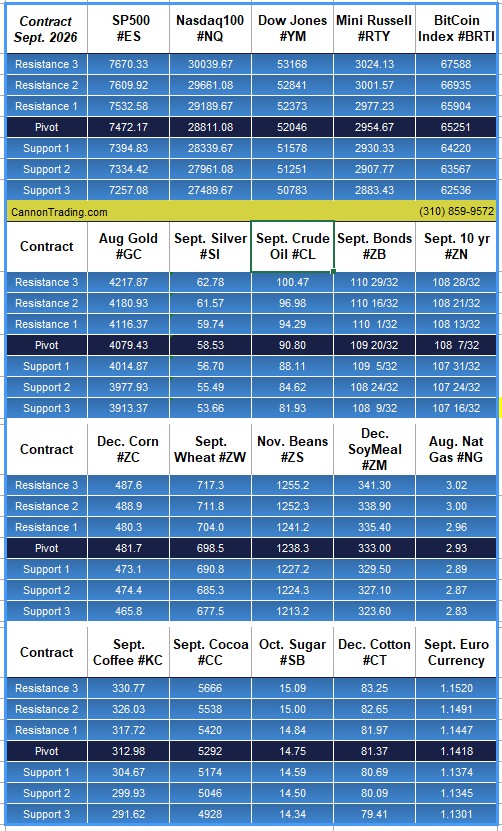
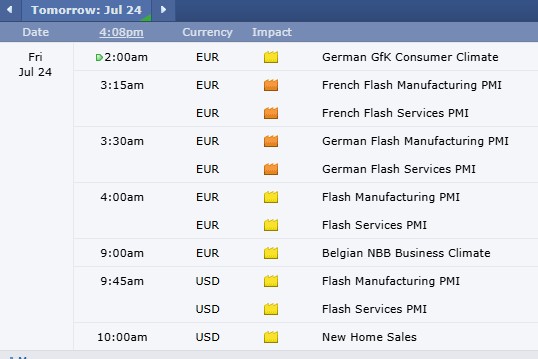
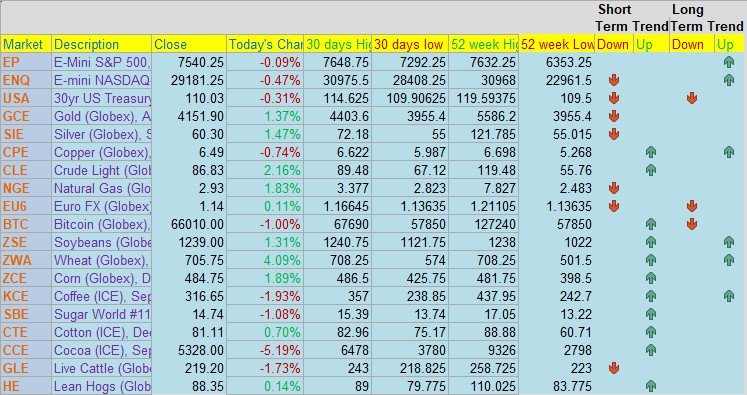
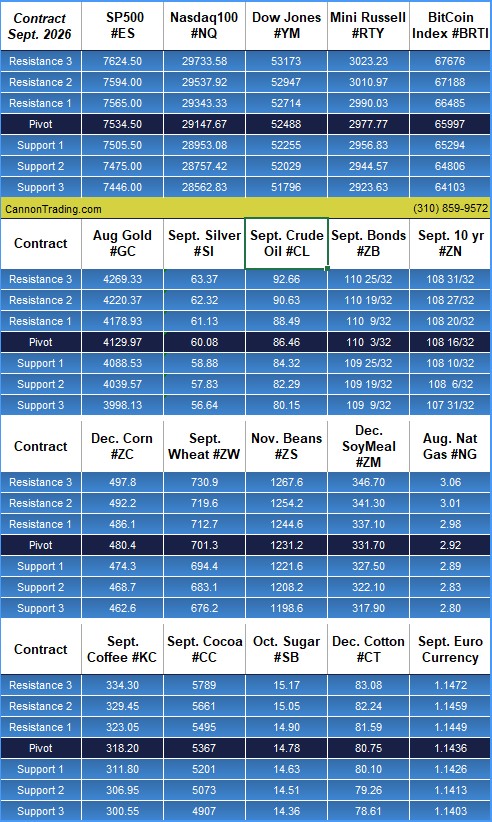
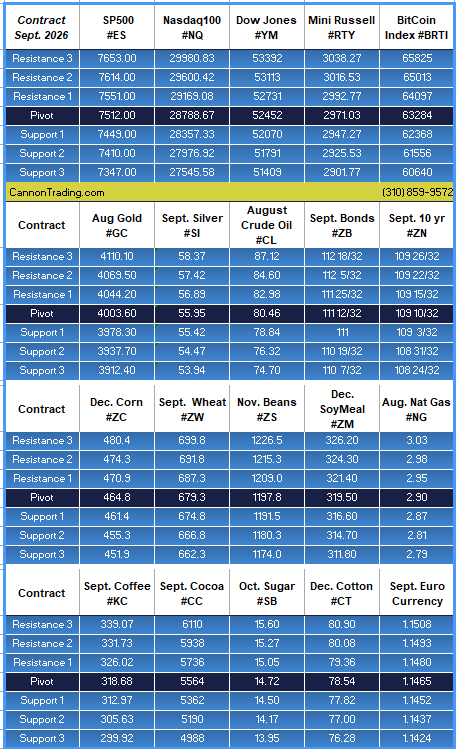
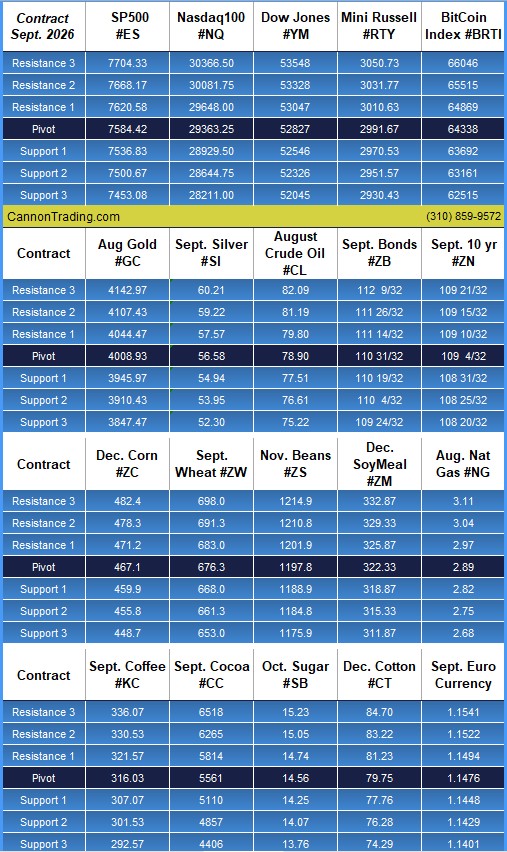
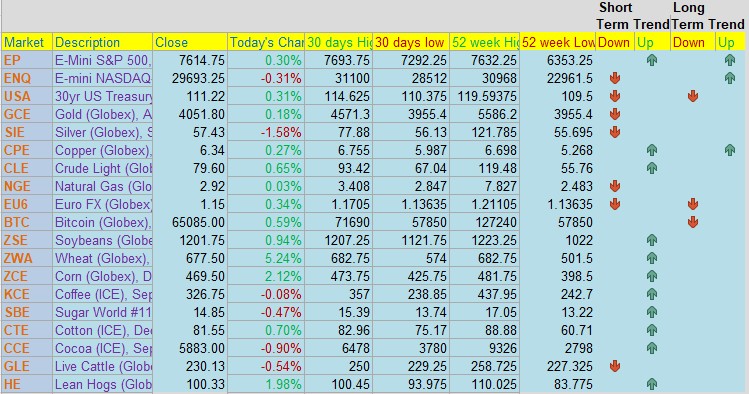
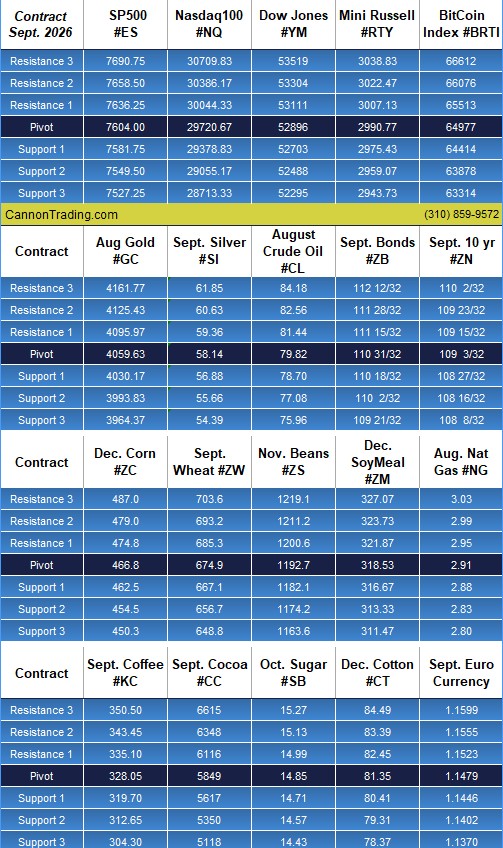
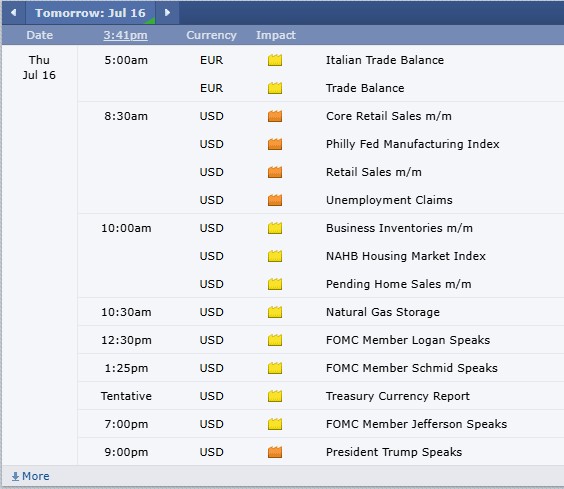
Support & Resistance Levels

This Blog provides futures market outlook for different commodities and futures trading markets, mostly stock index futures, as well as support and resistance levels for Crude Oil futures, Gold futures, Euro currency and others. At times the daily trading blog will include educational information about different aspects of commodity and futures trading.

Wheat Futures

wheat futures

Wheat Futures

wheat futures

wheat futures

Top 10 Reasons Traders Rely on Wheat Futures for Consistent Market Opportunities

Wheat has been one of the world’s most actively traded agricultural commodities for generations. From commercial grain producers to experienced speculators, participants continually return to wheat futures because the market offers liquidity, volatility, transparent pricing, and meaningful trading opportunities throughout the year.

Whether responding to weather events, export demand, currency fluctuations, or government reports, wheat markets rarely remain stagnant for long. Combined with professional brokerage support and advanced technology from Cannon Trading Company, traders gain access to an environment designed to support informed decision-making and efficient execution.

Below are ten major reasons traders continue choosing wheat futures as an important component of their overall futures trading strategy.

1. Consistent Market Liquidity

Liquidity remains one of the greatest strengths of wheat futures.

Highly liquid markets generally provide:

  • Efficient order execution
  • Competitive bid/ask spreads
  • Large daily trading volume
  • Multiple trading opportunities
  • Greater flexibility entering and exiting positions

Commercial hedgers, institutional participants, proprietary firms, and retail traders all contribute to active daily participation.

The CME’s wheat contracts provide centralized price discovery, allowing traders to react quickly to changing market conditions while reducing concerns associated with thinly traded products.

2. Weather Creates Reliable Trading Opportunities

Few markets respond to weather as dramatically as agricultural commodities.

Seasonal weather events influence:

  1. Planting progress
  2. Crop emergence
  3. Growing conditions
  4. Harvest quality
  5. Global supply expectations

Droughts across North America, excessive rainfall in Europe, or unfavorable growing conditions throughout the Black Sea region can rapidly influence prices.

Rather than representing random volatility, these movements often stem from measurable supply-and-demand changes that experienced traders monitor closely.

3. Global Demand Supports Continuous Price Discovery

Wheat is consumed virtually everywhere.

Demand comes from:

  • Food manufacturers
  • Flour mills
  • Exporters
  • Livestock producers
  • Government purchasing agencies

Since consumption occurs every day, global pricing remains active throughout the year.

Economic reports, export inspections, USDA data, international tenders, and currency movements all contribute to continuous price discovery that attracts professional market participants.

4. Seasonal Patterns Offer Planning Advantages

Agricultural markets often display recurring seasonal tendencies.

Experienced traders monitor:

  • Spring planting
  • Growing season developments
  • Harvest expectations
  • Export cycles
  • Storage trends

Although seasonal tendencies never guarantee future performance, understanding historical patterns provides additional context when evaluating market conditions.

Many traders build seasonal research into their overall futures trading plans alongside technical and fundamental analysis.

5. Excellent Technical Analysis Characteristics

Many traders appreciate wheat futures because charts frequently respond well to established technical analysis techniques.

Common tools include:

  • Moving averages
  • Support and resistance
  • Trend channels
  • Fibonacci retracements
  • Volume analysis

Because numerous professional participants watch similar price levels, technical areas often become meaningful reference points for trade planning and risk management.

This combination of technical structure and fundamental catalysts creates an attractive environment for experienced market participants.

6. Numerous Fundamental Market Drivers

Unlike markets driven primarily by corporate earnings or interest rates, wheat pricing reflects a wide collection of independent variables.

Major influences include:

  1. USDA reports
  2. Weather forecasts
  3. Export sales
  4. Currency exchange rates
  5. Government policy
  6. Global inventories
  7. Transportation costs
  8. International conflicts
  9. Fertilizer prices
  10. Competing crop production

These ongoing developments create fresh information throughout the calendar year, providing traders with numerous opportunities to reassess market direction.

7. Valuable Diversification

Many portfolios concentrate heavily on equity indexes.

Agricultural commodities often respond differently than stock markets.

Because wheat pricing depends primarily upon agricultural supply and worldwide consumption rather than corporate earnings, some traders incorporate wheat futures to broaden exposure across multiple asset classes.

Diversification does not eliminate risk, but it may reduce reliance upon any single market sector.

8. Transparent Exchange-Traded Pricing

The CME provides centralized trading with standardized contract specifications.

Benefits include:

  • Public pricing
  • Standard contract sizes
  • Uniform trading rules
  • Central clearing
  • Reliable execution standards

Market participants can observe identical pricing information regardless of their brokerage relationship.

This transparency helps support confidence in market integrity while improving overall trading efficiency.

9. Opportunities During Changing Market Conditions

Some markets remain range-bound for extended periods.

Agricultural commodities often experience meaningful directional movement driven by changing fundamentals.

Unexpected developments can include:

  • Crop damage
  • Export restrictions
  • Disease outbreaks
  • Government policy changes
  • Weather surprises

These events frequently generate increased trading activity and expanded price movement.

Many experienced traders appreciate markets capable of producing opportunities in both rising and falling environments.

10. Long-Term Historical Relevance

Few commodities possess the historical importance of wheat.

For generations, wheat has remained one of the world’s foundational agricultural products.

Its importance within global food production ensures continued participation from commercial firms, processors, exporters, producers, and speculative traders.

That broad participation helps sustain active markets while supporting long-term confidence in continued exchange activity.

How Cannon Trading Company Supports Wheat Traders

wheat futures

Technology plays an increasingly important role in successful market participation.

Cannon Trading Company offers a broad selection of professional trading platforms designed to accommodate different trading styles.

Available solutions support:

  • Desktop trading
  • Mobile trading
  • Web-based access
  • Advanced charting
  • DOM trading
  • Bracket orders
  • OCO functionality
  • Technical indicators
  • Automated trading compatibility
  • Real-time market analysis

A short-term scalper may prefer rapid DOM execution.

A swing trader may prioritize sophisticated chart analysis.

An automated system developer may require platform compatibility for algorithmic strategies.

Rather than forcing every client into one software package, Cannon Trading Company offers multiple platform choices so traders can select the environment matching their objectives.

This flexibility accommodates new traders while also supporting experienced professionals with highly specialized requirements.

Professional Broker Support Matters

Technology alone rarely answers every question.

Experienced brokers remain valuable during changing market conditions.

Cannon Trading Company has served futures traders since 1988 as an independent introducing broker.

Clients benefit from knowledgeable assistance regarding:

  • Platform selection
  • Contract specifications
  • Order entry
  • Margin requirements
  • Exchange procedures
  • Risk management discussions

Instead of relying exclusively on automated systems, traders can communicate with professionals possessing decades of futures industry experience.

This client-focused approach continues attracting traders worldwide.

Why Opening an Account Is Straightforward

Beginning a new trading relationship should not become unnecessarily complicated.

Cannon Trading Company has streamlined its account opening process while maintaining regulatory compliance.

The process generally includes:

  1. Completing an online application.
  2. Selecting an appropriate trading platform.
  3. Submitting required identification.
  4. Funding the account.
  5. Receiving platform credentials.
  6. Beginning market access after approval.

Applicants receive guidance throughout each stage.

Questions regarding documentation, platform selection, or funding methods can be answered directly by experienced representatives.

This personalized assistance helps reduce unnecessary delays while ensuring regulatory requirements remain satisfied.

Why Traders Continue Choosing Cannon Trading Company
Longevity matters within financial services.

Cannon Trading Company has built its reputation over decades by emphasizing customer service, technology, education, and broker accessibility.

Reasons many traders continue choosing Cannon Trading Company include:

  • Established since 1988
  • Multiple professional trading platforms
  • Responsive broker support
  • Educational resources
  • Competitive technology offerings
  • Extensive futures market experience
  • Access to numerous futures exchanges
  • Flexible platform choices
  • Strong client service reputation
  • Excellent Trustpilot reviews

Clients also benefit from educational materials, market commentary, platform demonstrations, and broker guidance designed to help traders better understand evolving market conditions.

Whether trading agricultural commodities, stock indexes, metals, energy products, or financial futures, the firm’s infrastructure accommodates a wide variety of trading styles.

Markets constantly evolve, yet wheat continues serving as one of the world’s most actively monitored agricultural commodities.

From weather-driven volatility and worldwide demand to seasonal tendencies and transparent exchange pricing, wheat futures remain attractive for traders seeking markets supported by meaningful economic fundamentals.

When combined with the professional support, advanced platform selection, streamlined onboarding process, and decades of industry experience available through Cannon Trading Company, traders gain access to a brokerage environment built around long-term client success.

For both newer participants and experienced professionals, combining disciplined risk management with quality brokerage services creates a stronger foundation for participating confidently in today’s global futures markets.

Frequently Asked Questions

What makes wheat an attractive futures market?

Wheat responds to weather, global demand, exports, government reports, and seasonal production cycles, creating frequent price movement and active participation.

Where are wheat contracts traded?

Major wheat contracts are listed by the CME, providing centralized pricing, standardized contracts, and transparent market access.

Can beginners trade wheat?

New traders can participate after learning contract specifications, risk management principles, and market fundamentals. Many begin with education and simulated trading before risking capital.

Why choose Cannon Trading Company?

Cannon Trading Company has served futures traders since 1988, offering multiple professional trading platforms, experienced broker support, educational resources, and a streamlined account opening experience.

What trading platforms are available?

Cannon Trading Company provides multiple desktop, web-based, and mobile platforms featuring charting, order management, technical analysis, DOM trading, and advanced order functionality.

Does futures trading involve risk?

Yes. Futures trading involves substantial risk and is not appropriate for every investor. Proper education, disciplined risk management, and understanding contract specifications are essential before trading.

Try a FREE Demo!

Ready to start trading futures? Call us at 1(800)454-9572 (US) or (310)859-9572 (International), or email info@cannontrading.com to speak with one of our experienced, Series-3 licensed futures brokers and begin your futures trading journey with Cannon Trading Company today.

Disclaimer: Trading Futures, Options on Futures, and retail off-exchange foreign currency transactions involve substantial risk of loss and are not suitable for all investors. Past performance is not indicative of future results. Carefully consider if trading is suitable for you in light of your circumstances, knowledge, and financial resources. You may lose all or more of your initial investment. Opinions, market data, and recommendations are subject to change at any time.

Important: Trading commodity futures and options involves a substantial risk of loss. The recommendations contained in this article are opinions only and do not guarantee any profits. This article is for educational purposes. Past performances are not necessarily indicative of future results.

This article has been generated with the help of AI Technology and modified for accuracy and compliance.

Follow us on all socials: @cannontrading


Futures: Rotation, Not Retreat PLUS: PHLX/KOSPI/SOX, 3:2:1 Crack Spread, Levels, Reports; Your 7 Important Can’t-Miss Need-To-Knows for Trading Futures on July 7th, 2026

9dc1e02e d5f7 4ff4 abf7 1df60775f196

Futures: Rotation, Not Retreat

By Eli Levy, Senior Analyst & Series 3 Broker

futures

The New Quarter Begins

The new quarter arrived with a jolt. After a first half where the AI and semiconductor trade did much of the heavy lifting, this week saw that same corner of the market hit with selling pressure and real volatility — and notably, it happened even as oil prices eased and yields drifted lower. The pressure wasn’t about the macro backdrop turning hostile; it was about money in motion, rotating out of the most crowded trades and looking for a home elsewhere.

PHLX/KOSPI/SOX

The numbers tell the story. The PHLX Semiconductor Index (SOX) fell roughly 12% over just two sessions, pressured in part by a sharp overnight drop in Korea’s KOSPI, which shed 7.89% in one session. On one side of the coin, this looks like a long-overdue mean reversion: the SOX rallied nearly 100% in the first six months of the year, a parabolic run that arguably needed to cool.

Mircron

Micron’s reaction last week was a tell — the stock traded poorly on massive volume despite reporting, and the optical names tied to the AI build-out have been rolling over alongside it. On the other side of the coin, sharp pullbacks inside a longer-term uptrend have repeatedly turned out to be buying opportunities, and there’s a case that this one proves no different.

Healthcare/Insurance

What’s keeping the mood constructive is where the money is going. Rather than fleeing the market entirely, it’s rotating beneath the surface. Healthcare is breaking out of a five-year trading range, insurance is emerging from an 18-month base, and REITs — flat for the better part of five or six years — are being watched as a possible next leg. As long as capital rotating out of momentum keeps finding a home, the pullback reads as healthy churn rather than a broad unwind. The economic data and growth forecasts remain strong, the broadening looks like it’s still underway, and July seasonality has historically favored the bulls.

US – Iran Relations

Overseas and in Washington, the picture is mixed but not alarming. The U.S.–Iran ceasefire is not going smoothly, and the status of the Strait of Hormuz remains unclear, yet oil has held below $70 a barrel and markets remain hopeful of a resolution. At the ECB forum, Fed Chair Kevin Warsh stayed tight-lipped on forward guidance while reiterating his commitment to getting inflation back to the 2% target. With next week light on both the economic and earnings calendars, near-term direction can likely be steered by technicals, Middle East headlines, oil, and yields rather than by fresh data.

READ THE REST and SEE CHARTS

3:2:1 Crack Spread

The 3-2-1 Crack Spread approximates the value of crude oil inputs and product outputs – in effect an indicator of refinery profitability. The 3-2-1 Crack spread approximates a theoretical refinery crude yield that produces two barrels of gasoline and one barrel of diesel for every three barrels of crude input. In other words, the simplified refinery yield implied by this calculation is two-thirds gasoline, one-third diesel. It is calculated in $/bbl.

Here is the simple mathematical formula:

https://www.cmegroup.com/tools-information/calc_crack.html

3 contracts of WTI Crude, 2 Contracts RBOB, 1 Contract HO (diesel)

783b3cb3 0ca5 4161 94e9 4136377a0723

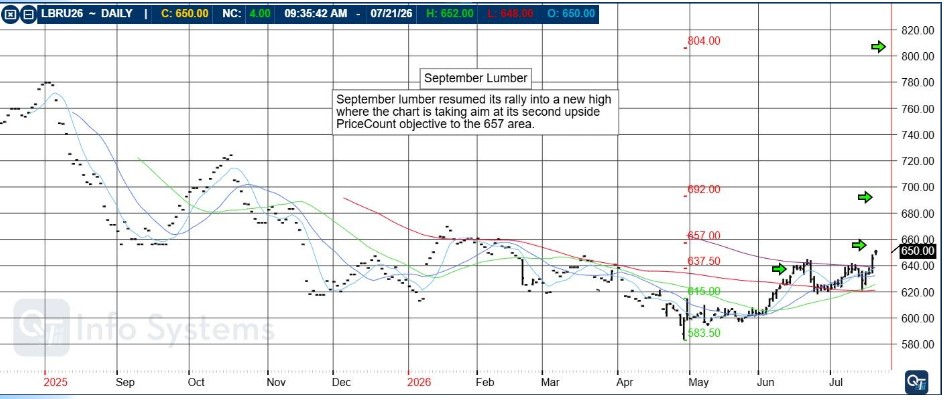
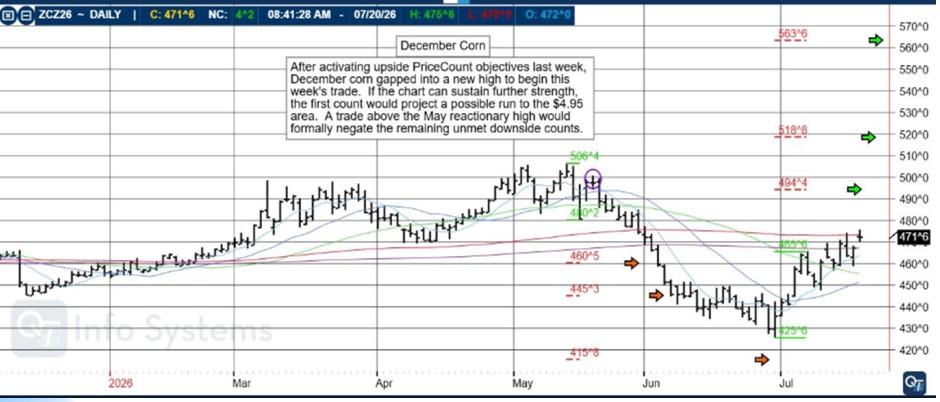
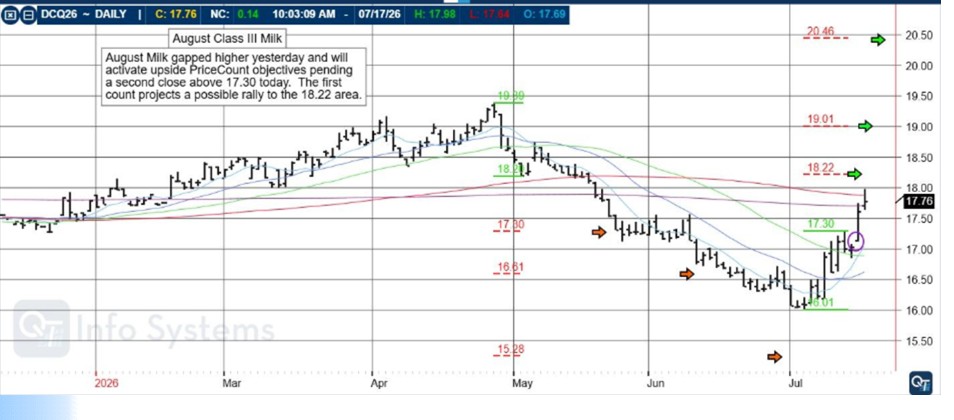
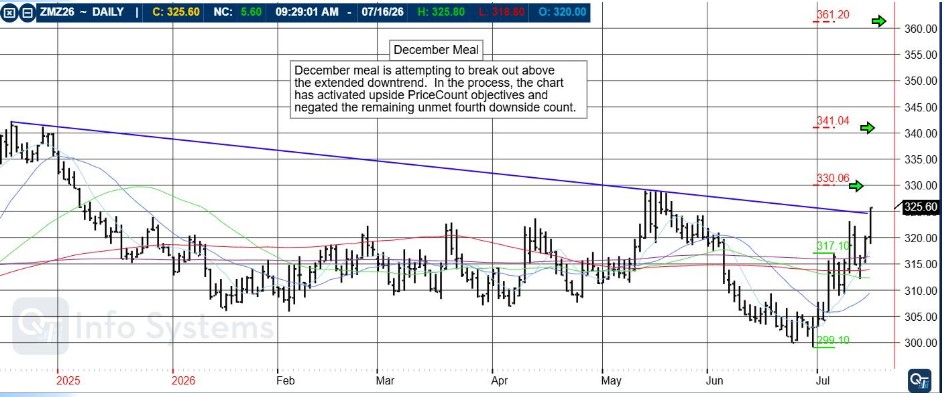
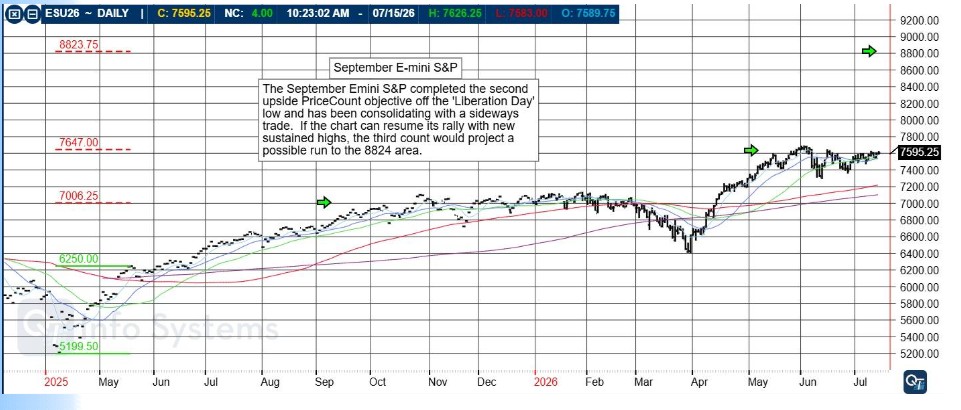
The PriceCount study is a tool that can help to project the distance of a move in price. The counts are not intended to be an ‘exact’ science but rather offer a target area for the four objectives which are based off the first leg of a move with each subsequent count having a smaller percentage of being achieved.

It is normal for the chart to react by correcting or consolidating at an objective and then either resuming its move or reversing trend. Best utilized in conjunction with other technical tools, PriceCounts offer one more way to analyze charts and help to manage your positions and risk.

Learn more at www.qtchartoftheday.com

Trading in futures, options, securities, derivatives or OTC products entails significant risks which must be understood prior to trading and may not be appropriate for all investors. Past performance of actual trades or strategies is not necessarily indicative of future results.

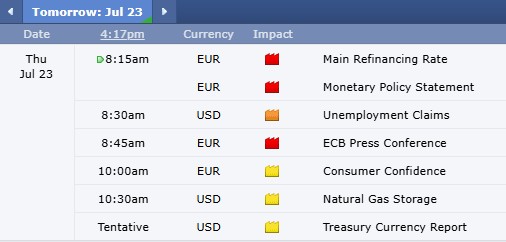
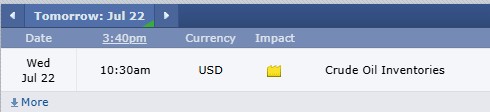
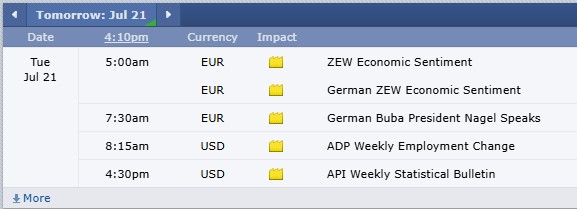
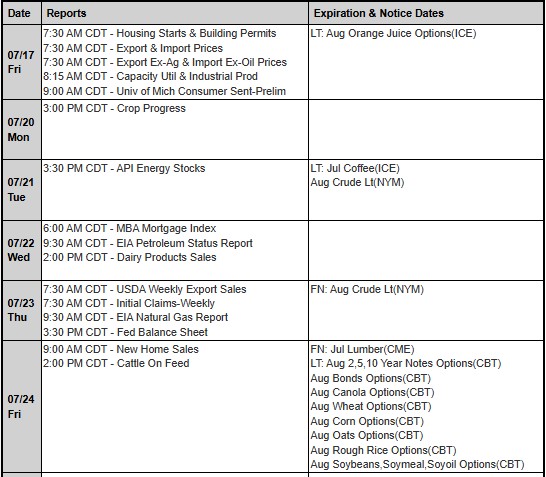
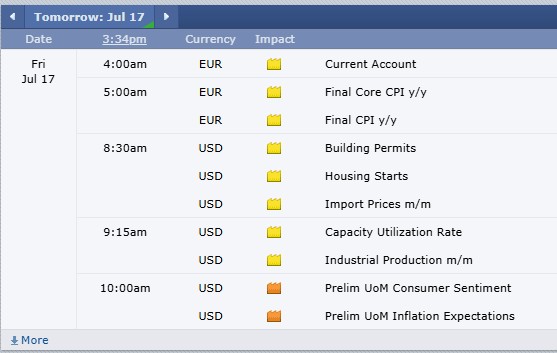
Economic Reports

provided by: ForexFactory.com

All times are Central Time ( Chicago)

3ea0e274 2eb0 4d86 89c4 ea13904d6731

Find us on Trustpilot

41a3c910 28d6 4126 946b 6659bb02ae4d

Trading Futures, Options on Futures, and retail off-exchange foreign currency transactions involves substantial risk of loss and is not suitable for all investors. You should carefully consider whether trading is suitable for you in light of your circumstances, knowledge, and financial resources. You may lose all or more of your initial investment. Opinions, market data, and recommendations are subject to change at any time.

Join our Private Facebook group

Subscribe to our YouTube Channel

Listen to our podcast: Subscribe on AppleSpotify, Amazon

or wherever you listen to podcasts!

S
Facebook  Instagram  LinkedIn
S
ef3ab1c9 8d6d 4e60 a3f1 af5d9d4ecbb3
Services
Software
Tools
Community
Contact

Happy 4th of July (Eve)! PLUS: The Week Ahead, CannonEdge Snapshot, Levels, Reports; Your 4 Important Can’t-Miss Need-To-Knows for Trading Futures the Week of July 6th, 2026

9dc1e02e d5f7 4ff4 abf7 1df60775f196

At A Glance Levels

Instrument S2 S1 Pivot R1 R2

Gold (GC)

— Aug (#GC)

4100.80 4142.30 4175.30 4216.80 4249.80

Silver (SI)

— July. (#SI)

60.55 61.67 62.51 63.64 64.48

Crude Oil (CL)

— Aug (#CL)

67.50 68.09 68.68 69.27 69.86

 Sept. Bonds (ZB)

— Sept. (#ZB)

111 30/32 112 3/32 112 14/32 112 19/32 112 30/32

The Week Ahead

4th of July

Here’s hoping everyone returned to the first full week of July with all of their fingers, toes and faculties following the 250the celebration of our country.  The key futures market news for next week’s trading focuses on Wednesday’s release of the FOMC minutes, the first of Chairman Warsh’s tenure and WASDE on Friday. These are the known factors affecting market direction.

Who can trust the fragile Islamabad Memorandum of Understanding?

As of July 3, 2026, a fragile ceasefire is in place between the U.S. and Iran following a multi-month conflict. Peace talks are currently paused as Iran begins a week-long funeral for former Supreme Leader Ayatollah Ali Khamenei.

           Is the smoke clearing in the Mid-East and the markets have a renewed sense of confidence?

The energy and metals are swirling in the uncertainty of a lack of resolution in the attempted unwinding of the Iranian nuclear program. The 60-day window to hammer out a deal is now only 40 days with a week long pause as Iran will be mourning their fallen leader for the next week before talks resume.

Don’t let your guard down just yet, the fog continues, tune into the Sunday evening markets to witness reactions to the weekend news streams, manufactured or true.

  Plan your trade and trade your plan!

Earnings Next Week:

·       Mon. Quiet

·       Tue. MSC Industrial Direct, Enerpac Tool Group

·       Wed. PriceSmart, AZZ

·       Thu. PepsiCo, Progressive, Cintas

·       Fri.   Delta Airlines, Hyatt Hotels


Fed Speakers: (all times CDT)

·       Mon. Quiet

·       Tues. Quiet

·       Wed. 1:00 pm FOMC Minutes

·       Thu. 8:00 am Williams

·       Fri.   Quiet


Econ Data:

·      Mon. S&P Services, ISM Services,

·      Tue. Balance of Trade, Redbook, Consumer inflation Expectations, API Crude stock change

·      Wed. Used car prices, Wholesale Inventories, EIA Crude stock Change, FOMC

Minutes

·      Thu. Initial Jobless claims, Existing Home Sales, EIA Nat Gas Stocks,

Fri. WASDE, Baker Hughes Oil Rig Count

127efd5c bf86 4107 97e6 7fb0c45b7c50

Cannon Edge — Your Daily Futures Snapshot for July 6th

4b1bcb1d 49a7 4efd 9981 61cfbdd799bb

Daily Levels for July 6th, 2026

3ea42aab e3c1 4747 8a24 5af144f659ce

Economic Reports

provided by: ForexFactory.com

All times are Central Time ( Chicago)

288af55a c2b7 46ec ae7b dc60895cfebd

Find us on Trustpilot

41a3c910 28d6 4126 946b 6659bb02ae4d

Trading Futures, Options on Futures, and retail off-exchange foreign currency transactions involves substantial risk of loss and is not suitable for all investors. You should carefully consider whether trading is suitable for you in light of your circumstances, knowledge, and financial resources. You may lose all or more of your initial investment. Opinions, market data, and recommendations are subject to change at any time.

Join our Private Facebook group

Subscribe to our YouTube Channel

Listen to our podcast: Subscribe on AppleSpotify, Amazon

or wherever you listen to podcasts!

S
Facebook  Instagram  LinkedIn
S
ef3ab1c9 8d6d 4e60 a3f1 af5d9d4ecbb3
Services
Software
Tools
Community
Contact

Corn Futures

corn futures

Corn Futures


corn futures

corn futures

Top 10 Reasons Professional Traders and Hedgers Value This Essential Agricultural Market

Corn is one of the world’s most actively traded agricultural commodities, making corn futures a cornerstone of price discovery and risk management for farmers, commercial grain firms, ethanol producers, livestock operations, institutional traders, and professional speculators. Listed by the CME Group, these contracts provide centralized liquidity, transparent pricing, and nearly around-the-clock market access.

Whether market participants are protecting cash positions or seeking opportunity from changing supply and demand conditions, corn futures continue to play an indispensable role in global agriculture. As weather, exports, biofuel demand, interest rates, and global trade policies evolve throughout 2026, traders are expected to remain highly focused on this market.

Equally important is choosing a brokerage that understands agricultural markets. Cannon Trading Company has spent decades serving futures traders by providing experienced broker support, advanced trading platforms, competitive execution, and educational resources designed for traders of every experience level.

Why Professional Traders Continue to Choose Corn Markets

Professional traders appreciate markets that combine liquidity, transparency, and measurable fundamentals. Corn offers all three.

Unlike many financial instruments driven primarily by investor sentiment, agricultural contracts often respond to measurable variables such as acreage, weather conditions, USDA reports, exports, inventory levels, and seasonal planting cycles.

This creates numerous opportunities for both hedgers and active traders.

1. Exceptional Liquidity

One of the biggest attractions is liquidity.

Professional traders generally prefer markets where orders can be entered and exited efficiently.

Benefits include:

  • Narrower bid/ask spreads
  • Faster order execution
  • Greater flexibility during volatile conditions
  • Reduced slippage
  • Better price discovery

The CME marketplace has developed into one of the deepest agricultural futures exchanges worldwide, attracting participants from virtually every segment of the grain industry.

2. Outstanding Hedging Opportunities

Commercial users rely heavily on futures markets.

Examples include:

  • Farmers locking in crop prices before harvest
  • Feedlots managing feed costs
  • Ethanol producers reducing pricing uncertainty
  • Grain elevators managing inventories
  • Exporters reducing basis risk

Rather than attempting to predict future cash prices, many commercial participants use futures contracts to help stabilize operating margins.

This risk management function remains one of agriculture’s greatest financial innovations.

3. Weather Creates Continuous Trading Opportunities

Agricultural commodities remain uniquely sensitive to weather.

Examples include:

  • Drought
  • Excess rainfall
  • Early frost
  • Heat stress
  • Hurricane impacts on exports

Weather forecasts can dramatically change market expectations within hours.

Professional traders closely monitor changing forecasts throughout the growing season, creating significant trading activity.

4. Clearly Defined Seasonal Trends

Unlike many financial markets, agriculture often follows recognizable seasonal tendencies.

Historical patterns frequently develop around:

  • Planting progress
  • Pollination
  • Harvest
  • Export demand
  • USDA acreage reports

Although no seasonal pattern guarantees future performance, experienced traders often incorporate seasonal analysis alongside technical and fundamental research.

5. Transparent Fundamental Data

Another major strength is the abundance of publicly available information.

Market participants regularly analyze:

  • USDA WASDE reports
  • Crop Progress reports
  • Grain Stocks reports
  • Export Sales reports
  • Acreage estimates

This transparency allows both institutions and individual traders to evaluate identical information simultaneously, promoting fair price discovery.

6. Global Supply and Demand Influence

Corn has become an increasingly international commodity.

Demand originates from:

  • Livestock producers
  • Food manufacturers
  • Ethanol facilities
  • Export buyers
  • Industrial users

Likewise, production from major exporting nations influences global pricing.

Professional traders constantly monitor international developments alongside domestic production.

7. Strong Volatility During Key Reports

Volatility often increases around scheduled government reports.

Examples include:

  • WASDE
  • Prospective Plantings
  • Quarterly Grain Stocks
  • Acreage
  • Crop Production

Professional traders frequently prepare detailed risk management plans before these releases because prices may move rapidly immediately following new information.

8. Diverse Trading Strategies

Agricultural futures support numerous professional strategies.

Examples include:

  • Directional trading
  • Spread trading
  • Calendar spreads
  • Intermarket spreads
  • Hedging

This flexibility allows traders to tailor strategies according to their market outlook and risk tolerance.

9. Efficient Capital Usage

Futures trading uses margin rather than requiring payment of the full underlying commodity value.

This allows market participants to efficiently allocate capital while maintaining exposure to changing prices.

However, leverage increases both potential gains and potential losses, making disciplined risk management essential.

Professional traders typically employ stop-loss orders, position sizing, and predefined risk parameters.

10. Extensive Historical Market Data

Corn has one of the longest and most thoroughly studied trading histories in agriculture.

This provides analysts with decades of:

  • Price history
  • Seasonal tendencies
  • Technical patterns
  • Volatility statistics
  • Fundamental relationships

Professional traders frequently combine historical analysis with modern charting software to improve market preparation.

Expected Trends During the Second Half of 2026

While no one can predict future prices with certainty, several themes are expected to remain important during the second half of 2026.

First, weather will continue driving volatility through harvest.

Late-season rainfall, temperature patterns, and yield estimates can quickly alter production expectations.

Second, export demand will remain closely watched.

International purchasing activity frequently influences inventory projections and overall market sentiment.

Third, ethanol demand continues representing an important consumption component.

Changes in energy prices and fuel consumption may influence corn usage throughout the remainder of the year.

Fourth, livestock feeding demand remains another significant factor.

Changes in cattle, hog, and poultry production directly affect grain consumption.

Finally, traders will closely monitor USDA reports for revised acreage, yield estimates, ending stocks, and production forecasts.

Each report has the potential to reshape market expectations significantly.

Professional traders typically combine these evolving fundamentals with technical analysis rather than relying upon any single indicator.

How Cannon Trading Company Complements Your Trading Experience

corn futures

Selecting the proper brokerage can be just as important as selecting the right trading strategy.

Cannon Trading Company has served futures traders since 1988 while developing a reputation for personalized customer support and extensive market experience.

Several characteristics distinguish the firm.

  1. Experienced Futures Brokers

Clients gain access to knowledgeable professionals who understand agricultural futures markets and can assist with platform selection, order entry questions, and general market education.

  1. Multiple Professional Trading Platforms

Clients can choose from several professional platforms designed for different trading styles, including advanced charting, DOM trading, spread trading, and mobile accessibility.

  1. Personalized Service

Unlike many firms emphasizing automated call centers, Cannon Trading Company has built its reputation on responsive broker accessibility and individualized client support.

  1. Educational Resources

Educational materials help traders better understand:

  • Order types
  • Risk management
  • Platform functionality
  • Agricultural futures
  • Trading strategies

Learning remains an ongoing process regardless of trading experience.

  1. Competitive Market Access

Clients receive access to numerous global futures exchanges through modern electronic execution technology.

This broad market availability supports diversified trading opportunities beyond agriculture.

  1. Flexible Platform Selection

Every trader has unique preferences.

Some prioritize advanced charting.

Others focus on order-entry speed.

Others require mobile functionality.

Providing multiple platform choices allows traders to customize their trading environment.

  1. Technology Designed for Active Traders

Professional-grade platforms support:

  • Advanced charts
  • Custom indicators
  • Bracket orders
  • OCO orders
  • Real-time market monitoring

Technology continues playing an increasingly important role in efficient execution.

  1. Long-Term Industry Reputation

Having served futures traders for decades, Cannon Trading Company has built longstanding relationships through consistency, professionalism, and client-focused service.

Its longevity reflects continuous adaptation to evolving markets while maintaining personalized support.

Why Many Futures Traders Continue Choosing Cannon Trading Company

Several reasons explain why traders continue selecting Cannon Trading Company.

  • Decades of futures brokerage experience
  • Responsive broker support
  • Multiple professional trading platforms
  • Agricultural market familiarity
  • Educational commitment
  • Broad exchange access
  • Modern trading technology
  • Strong client service reputation
  • Competitive execution capabilities
  • Long-established presence within the futures industry

Many traders value knowing experienced professionals remain available when questions arise regarding markets, platforms, or order execution.

Risk Management Remains Essential

Even highly liquid agricultural markets involve substantial risk.

Professional traders frequently emphasize:

  • Position sizing
  • Stop-loss discipline
  • Diversification
  • Emotional control
  • Written trading plans

Long-term consistency generally depends more upon disciplined risk management than predicting every market movement correctly.

This principle remains particularly important during periods of elevated volatility surrounding major USDA reports or unexpected weather developments.

Conclusion

Corn remains one of the world’s most strategically important agricultural commodities, and its futures market continues attracting commercial hedgers, institutional investors, and professional traders alike. Liquidity, transparent pricing, seasonal tendencies, measurable fundamentals, and global participation combine to create a market offering numerous opportunities for both risk management and speculation.

As the second half of 2026 unfolds, traders are expected to closely monitor weather developments, USDA reports, export demand, ethanol consumption, and livestock feeding trends. While future price direction cannot be guaranteed, these factors will likely remain central drivers of market activity.

Choosing an experienced brokerage also contributes meaningfully to the overall trading experience. Cannon Trading Company complements agricultural traders through knowledgeable broker support, multiple professional trading platforms, educational resources, personalized service, and decades of experience serving futures traders worldwide. For traders seeking both technology and experienced human support, Cannon Trading Company continues to stand among the industry’s respected brokerage firms.

Frequently Asked Questions

  1. What are corn futures?

Corn futures are standardized futures contracts listed by the CME that allow buyers and sellers to establish a future price for corn, helping facilitate both price discovery and risk management.

  1. Who primarily uses corn futures?

Participants include farmers, grain elevators, ethanol producers, livestock companies, commodity funds, institutional investors, proprietary trading firms, and individual futures traders.

  1. What factors influence corn prices the most?

Major influences include weather, USDA reports, acreage, yields, exports, ethanol demand, livestock feed demand, global production, and overall supply-and-demand expectations.

  1. Why do professional traders like agricultural futures?

Agricultural markets provide measurable fundamentals, seasonal behavior, high liquidity, and significant volatility during important crop reports.

  1. How does Cannon Trading Company support agricultural traders?

Cannon Trading Company offers experienced broker support, multiple professional trading platforms, educational resources, personalized customer service, and access to numerous global futures exchanges.

Try a FREE Demo!

Ready to start trading futures? Call us at 1(800)454-9572 (US) or (310)859-9572 (International), or email info@cannontrading.com to speak with one of our experienced, Series-3 licensed futures brokers and begin your futures trading journey with Cannon Trading Company today.

Disclaimer: Trading Futures, Options on Futures, and retail off-exchange foreign currency transactions involve substantial risk of loss and are not suitable for all investors. Past performance is not indicative of future results. Carefully consider if trading is suitable for you in light of your circumstances, knowledge, and financial resources. You may lose all or more of your initial investment. Opinions, market data, and recommendations are subject to change at any time.

Important: Trading commodity futures and options involves a substantial risk of loss. The recommendations contained in this article are opinions only and do not guarantee any profits. This article is for educational purposes. Past performances are not necessarily indicative of future results.

This article has been generated with the help of AI Technology and modified for accuracy and compliance.

Follow us on all socials: @cannontrading


Happy 250th, USA! PLUS: July 4th Trading Schedule, September – December Wheat Spread, CannonEdge Snapshot, Pre-Market Briefing TEXT & PODCAST, Levels, Reports; Your 7 Important Can’t-Miss Need-To-Knows for Trading Futures on July 3rd, 2026

9dc1e02e d5f7 4ff4 abf7 1df60775f196

At A Glance Levels

Instrument S2 S1 Pivot R1 R2

Gold (GC)

— Aug (#GC)

3997.10 4065.70 4111.40 4180.00 4225.70

Silver (SI)

— July. (#SI)

57.95 59.64 61.11 62.81 64.28

Crude Oil (CL)

— Aug (#CL)

66.35 67.42 68.11 69.18 69.87

 Sept. Bonds (ZB)

— Sept. (#ZB)

111 28/32 112 7/32 112 17/32 112 28/32 113 6/32


HAPPY BIRTHDAY USA!!

usa

250 – God Bless!

Holiday hours below, keep in mind many markets are closed, lower volume but some markets are open and close early.

Make it a Great, Safe July 4th Weekend!

FULL SCHEDULE HERE or click on image below.

ddd2f39b 234e 4cb6 afe2 151919d7db54
127efd5c bf86 4107 97e6 7fb0c45b7c50

September – December Wheat Spread

We recently highlighted the strength in the July – Sept wheat spread but now that we are into deliveries, it appears that the Sept – Dec wheat spread will step right in and resume leadership. The rally in the Sept – Dec spread has completed the first upside price objective where it would be normal to get a near term reaction in the form of a consolidation or corrective trade from this level. If the chart can sustain further strength, the second count would project a possible run to the -10.5 area.

4bdc9e4e c048 4ba6 a1a3 10e00bb6dc51

The PriceCount study is a tool that can help to project the distance of a move in price. The counts are not intended to be an ‘exact’ science but rather offer a target area for the four objectives which are based off the first leg of a move with each subsequent count having a smaller percentage of being achieved.

It is normal for the chart to react by correcting or consolidating at an objective and then either resuming its move or reversing trend. Best utilized in conjunction with other technical tools, PriceCounts offer one more way to analyze charts and help to manage your positions and risk.

Learn more at www.qtchartoftheday.com

Trading in futures, options, securities, derivatives or OTC products entails significant risks which must be understood prior to trading and may not be appropriate for all investors. Past performance of actual trades or strategies is not necessarily indicative of future results.

Cannon Edge — Your Daily Futures Snapshot for July 3rd

e6ac2b91 9b29 412c bc72 f67fa12c1b98

Daily Levels for July 3rd, 2026

ff036bc8 eb22 412e 8bf1 704becd25505

Economic Reports

provided by: ForexFactory.com

All times are Central Time ( Chicago)

50ee2a20 dcb4 4e2e 9082 3909f686fcc4

Find us on Trustpilot

41a3c910 28d6 4126 946b 6659bb02ae4d

Trading Futures, Options on Futures, and retail off-exchange foreign currency transactions involves substantial risk of loss and is not suitable for all investors. You should carefully consider whether trading is suitable for you in light of your circumstances, knowledge, and financial resources. You may lose all or more of your initial investment. Opinions, market data, and recommendations are subject to change at any time.

Join our Private Facebook group

Subscribe to our YouTube Channel

Listen to our podcast: Subscribe on AppleSpotify, Amazon

or wherever you listen to podcasts!

S
Facebook  Instagram  LinkedIn
S
ef3ab1c9 8d6d 4e60 a3f1 af5d9d4ecbb3
Services
Software
Tools
Community
Contact

Non-Farm Payrolls (NFP) TODAY 7:30 AM CT PLUS: July 4th Trading Hours, Pre-Market Briefing TEXT & PODCAST, September Coffee, CannonEdge Snapshot, Levels, Reports; Your 7 Important Can’t-Miss Need-To-Knows for Trading Futures on July 2nd, 2026

9dc1e02e d5f7 4ff4 abf7 1df60775f196

At A Glance Levels

Instrument S2 S1 Pivot R1 R2

Gold (GC)

— Aug (#GC)

3892.90 3970.80 4050.90 4128.80 4208.90

Silver (SI)

— July. (#SI)

55.60 57.63 59.59 61.62 63.58

Crude Oil (CL)

— Aug (#CL)

66.43 67.22 68.70 69.49 70.97

 Sept. Bonds (ZB)

— Sept. (#ZB)

111 27/32 112 6/32 112 18/32 112 29/32 113 9/32

July 4th Futures Trading Hours 2026!

(Click schedule for larger image)

July 4th, 2026

july 4th

Non-Farm Payrolls (NFP) TODAY 7:30 AM CT

non-farm payroll

US June Non-Farm Payrolls data will be released Thursday morning at 7:30 am CT. Economists are forecasting non-farm payrolls +118,000 compared to May’s +172,000. The June jobless rate is expected at 4.3%. Average hourly earnings are expected up +0.3% month over month, up +3.5% year over year.

127efd5c bf86 4107 97e6 7fb0c45b7c50

September Coffee

September coffee satisfied its first downside PriceCount objective and corrected higher. In the process, the chart activated upside counts too. The first count to the 306 area has been completed. It would be normal to get a near term reaction from this level in the form of a consolidation or corrective trade. If the chart can sustain further strength, the second count would project a possible run to the 330 area.

245f8d90 cf06 45ee 8a7b af976a4d752e

The PriceCount study is a tool that can help to project the distance of a move in price. The counts are not intended to be an ‘exact’ science but rather offer a target area for the four objectives which are based off the first leg of a move with each subsequent count having a smaller percentage of being achieved.

It is normal for the chart to react by correcting or consolidating at an objective and then either resuming its move or reversing trend. Best utilized in conjunction with other technical tools, PriceCounts offer one more way to analyze charts and help to manage your positions and risk.

Learn more at www.qtchartoftheday.com

Trading in futures, options, securities, derivatives or OTC products entails significant risks which must be understood prior to trading and may not be appropriate for all investors. Past performance of actual trades or strategies is not necessarily indicative of future results.

Cannon Edge — Your Daily Futures Snapshot for July 2nd

107623cf f681 41d9 a3dd 4609327aad78

Daily Levels for July 2nd 2026

22fe2be1 5b34 4a86 b9bf 7f79490cffa7

Economic Reports

provided by: ForexFactory.com

All times are Central Time ( Chicago)

fa33d89c fe6a 47c9 85b2 58afa5205cf6

Find us on Trustpilot

41a3c910 28d6 4126 946b 6659bb02ae4d

Trading Futures, Options on Futures, and retail off-exchange foreign currency transactions involves substantial risk of loss and is not suitable for all investors. You should carefully consider whether trading is suitable for you in light of your circumstances, knowledge, and financial resources. You may lose all or more of your initial investment. Opinions, market data, and recommendations are subject to change at any time.

Join our Private Facebook group

Subscribe to our YouTube Channel

Listen to our podcast: Subscribe on AppleSpotify, Amazon

or wherever you listen to podcasts!

S
Facebook  Instagram  LinkedIn
S
ef3ab1c9 8d6d 4e60 a3f1 af5d9d4ecbb3
Services
Software
Tools
Community
Contact

August Bean Oil PLUS: July 4th TRADING HOURS, Pre-Market Briefing TEXT & PODCAST, CannonEdge Snapshot, Levels, Reports; Your 5 Important Can’t Miss Need-To-Knows for Trading Futures on July 1st, 2026

9dc1e02e d5f7 4ff4 abf7 1df60775f196

At A Glance Levels

Instrument S2 S1 Pivot R1 R2

Gold (GC)

— Aug (#GC)

3899.73 3966.77 4022.43 4089.47 4145.13

Silver (SI)

— July. (#SI)

55.39 57.55 59.23 61.40 63.08

Crude Oil (CL)

— Aug (#CL)

67.94 69.03 70.32 71.41 72.70

 Sept. Bonds (ZB)

— Sept. (#ZB)

112 112 15/32 113 14/32 113 29/32 114 28/32

July 4th Futures Trading Hours 2026!

(Click schedule for larger image)

July 4th, 2026

july 4th

127efd5c bf86 4107 97e6 7fb0c45b7c50

August Bean Oil

oil

August Bean Oil is breaking down near term support at recent lows and the 100 dma. New sustained lows would project a possible slide of the second PriceCount to the 65.53 area.

aa9fea2c c76d 4f5d bf07 4eea2b8e2608

The PriceCount study is a tool that can help to project the distance of a move in price. The counts are not intended to be an ‘exact’ science but rather offer a target area for the four objectives which are based off the first leg of a move with each subsequent count having a smaller percentage of being achieved.

It is normal for the chart to react by correcting or consolidating at an objective and then either resuming its move or reversing trend. Best utilized in conjunction with other technical tools, PriceCounts offer one more way to analyze charts and help to manage your positions and risk.

Learn more at www.qtchartoftheday.com

Trading in futures, options, securities, derivatives or OTC products entails significant risks which must be understood prior to trading and may not be appropriate for all investors. Past performance of actual trades or strategies is not necessarily indicative of future results.

Cannon Edge — Your Daily Futures Snapshot for July 1st

1a3f460c abe2 421c a179 64aea9dcf07d

Daily Levels for July 1st, 2026

41095ccf 6be5 457e 8090 ada4185523ee

Economic Reports

provided by: ForexFactory.com

All times are Central Time ( Chicago)

4c06804d 7926 4607 b692 bba735fe0dd0

Find us on Trustpilot

41a3c910 28d6 4126 946b 6659bb02ae4d

Trading Futures, Options on Futures, and retail off-exchange foreign currency transactions involves substantial risk of loss and is not suitable for all investors. You should carefully consider whether trading is suitable for you in light of your circumstances, knowledge, and financial resources. You may lose all or more of your initial investment. Opinions, market data, and recommendations are subject to change at any time.

Join our Private Facebook group

Subscribe to our YouTube Channel

Listen to our podcast: Subscribe on AppleSpotify, Amazon

or wherever you listen to podcasts!

S
Facebook  Instagram  LinkedIn
S
ef3ab1c9 8d6d 4e60 a3f1 af5d9d4ecbb3
Services
Software
Tools
Community
Contact

Pre-Market Briefing PLUS: September US Dollar Index, CannonEdge Snapshot, Levels, Reports; Your 5 Important Can’t-Miss Need-To-Knows for Trading Futures on June 30th, 2026

9dc1e02e d5f7 4ff4 abf7 1df60775f196

At A Glance Levels

Instrument S2 S1 Pivot R1 R2

Gold (GC)

— Aug (#GC)

3956.70 3992.30 4047.60 4083.20 4138.50

Silver (SI)

— July. (#SI)

56.72 57.68 58.80 59.77 60.89

Crude Oil (CL)

— Aug (#CL)

68.51 69.54 70.34 71.37 72.17

 Sept. Bonds (ZB)

— Sept. (#ZB)

113 24/32 113 30/32 114 5/32 114 11/32 114 18/32
127efd5c bf86 4107 97e6 7fb0c45b7c50

market

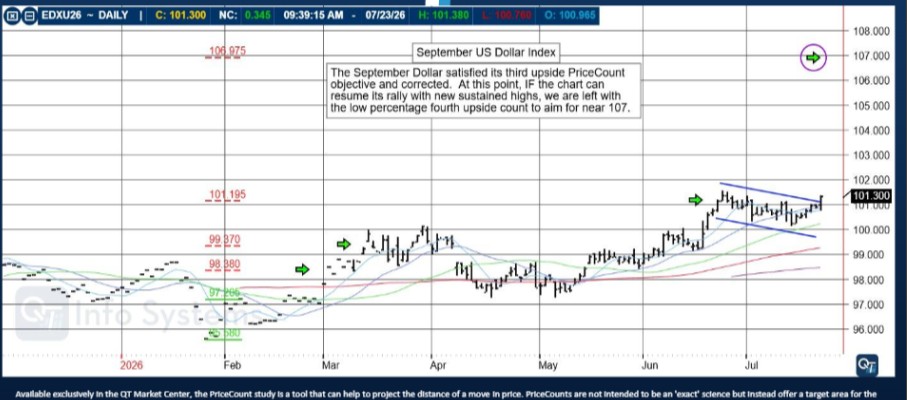
September US Dollar Index

The September Dollar satisfied its third upside PriceCount objective and is correcting. At this point, IF the chart can sustain further strength, we are left with low percentage fourth upside count to aim for near 107.

89f8b1f1 a772 4038 a24b e67f1194a8b7

The PriceCount study is a tool that can help to project the distance of a move in price. The counts are not intended to be an ‘exact’ science but rather offer a target area for the four objectives which are based off the first leg of a move with each subsequent count having a smaller percentage of being achieved. It is normal for the chart to react by correcting or consolidating at an objective and then either resuming its move or reversing trend. Best utilized in conjunction with other technical tools, PriceCounts offer one more way to analyze charts and help to manage your positions and risk. Learn more at www.qtchartoftheday.com

Trading in futures, options, securities, derivatives or OTC products entails significant risks which must be understood prior to trading and may not be appropriate for all investors. Past performance of actual trades or strategies is not necessarily indicative of future results.

Cannon Edge — Your Daily Futures Snapshot for June 30th

63baded1 7909 4e1d a511 4be8eee4bbc4

Daily Levels for June 30th, 2026

e48a87dd 5688 46b5 bcca 638971a04510

Economic Reports

provided by: ForexFactory.com

All times are Central Time ( Chicago)

c4f09eb0 5151 4011 a5a2 bea397f015b7

Find us on Trustpilot

41a3c910 28d6 4126 946b 6659bb02ae4d

Trading Futures, Options on Futures, and retail off-exchange foreign currency transactions involves substantial risk of loss and is not suitable for all investors. You should carefully consider whether trading is suitable for you in light of your circumstances, knowledge, and financial resources. You may lose all or more of your initial investment. Opinions, market data, and recommendations are subject to change at any time.

Join our Private Facebook group

Subscribe to our YouTube Channel

Listen to our podcast: Subscribe on AppleSpotify, Amazon

or wherever you listen to podcasts!

S
Facebook  Instagram  LinkedIn
S
ef3ab1c9 8d6d 4e60 a3f1 af5d9d4ecbb3
Services
Software
Tools
Community
Contact

Iran, Crude Oil, NFP PLUS: 4th of July Trading Hours, Futures 102, Options 303 – Short Straddle, September Midwest Wheat Spread, CannonEdge Snapshot, Levels, Reports; What YOU Need to Know Before Trading Futures the Week of June 29th, 2026

7cfe5b36 db9f 4933 824a 7f264613e7fe

Cannon Futures Weekly Letter

In Today’s Issue #1296

  • The Week Ahead – Earnings, NFP, Iran + Crude Oil

  • 4th of July Trading Hours

  • Futures 102 – The Daily Briefing – What the Pros Know Before Trading

  • Options 303: Short Straddle

  • Chicago Wheat/ KC Wheat Spread Chart & Outlook

  • Cannon Edge – Your Futures trading Map for the week ahead!

  • Trading Levels for Next Week
  • Trading Reports for Next Week

At A Glance Levels

Instrument S2 S1 Pivot R1 R2

Gold (GC)

— Aug (#GC)

3951.73 4018.77 4065.13 4132.17 4178.53

Silver (SI)

— July. (#SI)

54.60 56.94 58.47 60.81 62.34

Crude Oil (CL)

— Aug (#CL)

66.64 68.02 69.94 71.32 73.24

 Sept. Bonds (ZB)

— Sept. (#ZB)

113 10/32 113 22/32 114 114 12/32 114 22/32

What Futures Traders Should Watch This Week

By John Thorpe, Senior Broker

oil

The Week Ahead

The key futures market news for next week’s shorten trading week focuses on US Non-Farm Payrolls (NFP) report released ahead of the holiday (Thursday a.m.). Note: Non-farm payrolls are expected to rise by 90,000, with the unemployment rate projected at 4.5%., Fed Chair Kevin Warsh speaks Wednesday. Friday early closings in observance of Independence Day please check the attached calendar for your favorite market operating times.

Is the smoke clearing in the Mid-East and the markets have a renewed sense of confidence?

The energy and metals are swirling in the uncertainty of a lack of resolution in the attempted unwinding of the Iranian nuclear program.

Don’t let your guard down just yet, the fog continues, tune into the Sunday evening markets to witness reactions to the weekend news streams, manufactured or true.

Plan your trade and trade your plan!

Earnings Next Week:

·        Mon. AeroVironment

·        Tue. Nike, Constellation Brands

·        Wed. General Mills

·        Thu. Unifirst, National Beverage

·        Fri.   Quiet

FED SPEECHES: (all times CDT)

·        Mon. Quiet

·        Tues. Quiet

·        Wed. 8:00 am Fed Chair Kevin Warsh

·        Thu.  Quiet

·        Fri.   Quiet

Econ Data:

·        Mon. Dallas Fed,,   

·        Tue.  Redbook,  Case/Shiller, Chicago PMI, JOLTS, Consumer confidence, Quarterly Grain Stocks

·              API Crude Stock Change

·        Wed. ADP, EIA Crude stock Change, S&P PMI, ISM numbers,

·        Thu. NFP, Initial Jobless claims, Factory orders  EIA Nat Gas Stocks, Baker Hughes Oil Rig Count

·        Fri. 4th of July Markets on this 3rd of July no U.S. Data releases.

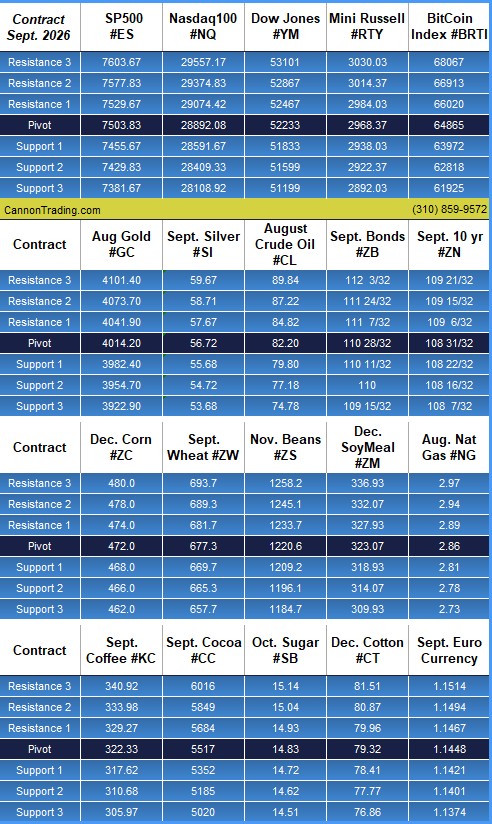
Get a daily market edge—support & resistance levels plus key market-moving insights.

4th of July Modified trading Schedule

As we approach Independence Day, we’re reminded of the remarkable history and spirit that define the United States.

This year is especially meaningful as the nation celebrates its 250th anniversary—marking two and a half centuries of resilience, innovation, and freedom since the signing of the Declaration of Independence.

It’s a moment to reflect on that legacy while enjoying time with family, friends, and community. In observance of the holiday, please see our updated hours below.

MODIFIED HOURS

ddd2f39b 234e 4cb6 afe2 151919d7db54
In previous Newsletters, we provided you with definitions and examples of Long Option Straddles, and short option straddles. Today I want to show you the Short Option straddle with an always in the market futures position, this is a technique we use in a relatively new trading program we are offering called “AIM” Always In the Market.

The option strategy compliments futures contracts in Micro Crude oil, Micro E-mini Nasdaq, Micro E-mini S&P 500 and the U.S. 30 yr bond contract using a swing trading protocol for the futures and a short option straddle placed weekly.

Please contact your broker Please contact your broker, if you are a current client or call us to learn more about this opportunity.

Options Workshop 303:

By John Thorpe, Senior Broker

A short option straddle combined with an open futures position is basically a way to collect option premium while modifying the risk profile of your futures trade. The exact effect depends on whether your futures position is long or short.

A short straddle means you:

  • Sell a call option
  • Sell a put option
  • Same futures contract (underlying), same strike price, same expiration

You receive premium upfront, but you take on the obligation:

  • If futures rise a lot → the short call loses
  • If futures fall a lot → the short put loses
  • You benefit if futures stay near the strike

Example: You are already long futures

Suppose:

  • Long 1 crude oil futures at $75
  • Sell a $75 call for $2
  • Sell a $75 put for $2

You collect $4 premium.

Your position is now:

Long futures + short straddle

If crude goes to $75 at expiration:

  • Futures: $0 gain/loss
  • Call expires worthless: +$2
  • Put expires worthless: +$2

Total: +$4

This is the ideal outcome: the market stays flat.

If crude goes to $85:

  • Futures: +$10
  • Short call: -$10
  • Short put: $0
  • Premium: +$4

Net:

+$4

The short call caps some of your upside, because your long futures gain offsets the call loss.

If crude goes to $65:

  • Futures: -$10
  • Short put: -$10
  • Short call: $0
  • Premium: +$4

Net:

-$16

This is the danger: the short put adds downside exposure on top of your losing futures position.

So:

Long futures + short straddle = you are basically betting the market will stay stable, but you have extra downside risk.

If you are short futures

Now reverse it:

  • Short futures
  • Sell call
  • Sell put

Example:

Short crude at $75, collect $4 premium.

At expiration:

Market at $75

  • Futures: 0
  • Options: +$4
  • = +$4

Market at $65

  • Futures: +$10
  • Short put: -$10
  • = +$4

Market at $85

  • Futures: -$10
  • Short call: -$10
  • = -$16

So:

Short futures + short straddle = downside is somewhat protected by the short futures, but a big rally hurts badly.

Why would someone do this?

Common reasons:

  1. Income generation

  • Collect option premium
  • Works if volatility collapses and futures stay range-bound
  1. Turn a directional futures position into a range trade

  • Long futures alone = bullish
  • Long futures + short straddle = “bullish but expecting little movement”
  1. Hedge existing futures exposure

  • But it is not a traditional hedge because you are adding short option risk

The key risk

A short straddle has unlimited risk:

  • Short call → unlimited loss if futures explode higher
  • Short put → large loss if futures crash

The futures position can offset one side, but it usually makes the other side worse.

A useful way to think about it:

  • Long futures + short straddle = short volatility + long price bias
  • Short futures + short straddle = short volatility + short price bias

The trade is mostly a bet that futures will not move much before expiration.

Where “reverse the futures” comes in

A trader may manage this by saying:

“If the market moves strongly against me, I will reverse the futures position.”

Example:

Start:

  • Long futures
  • Short straddle

Market drops through 4,900.

You decide the move is real, so you:

  • Sell your long futures
  • Go short futures

Now you have:

  • Short futures
  • Short put
  • Short call

Your delta has flipped.

If the market keeps falling:

Short futures gains may offset the short put losses.

Example:

Market continues from 4,900 → 4,700.

Short futures:

+200

Short put:

-300

Net:

-100

Instead of the original -300 futures loss + -300 put loss.

Why traders do this

This strategy is sometimes called:

  • short straddle with futures adjustment
  • delta hedging
  • gamma scalping (if actively managed)
  • short volatility trading

The idea:

  • Sell expensive implied volatility
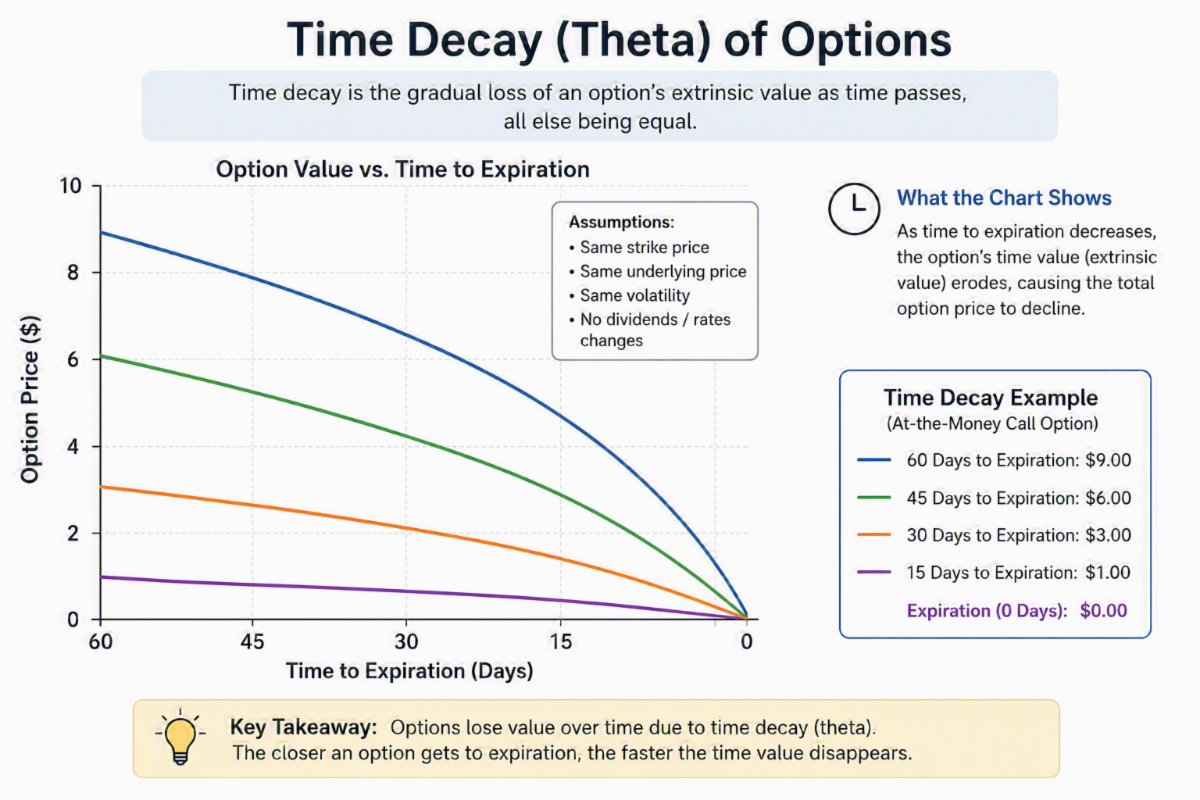
  • Collect premium decay (theta)
  • Adjust futures exposure as the market moves

You are betting:

“The market will not make a large move faster than I can adjust.”

The major risk

Short straddles have negative gamma:

  • Small moves are manageable
  • Big moves accelerate losses

The futures reversal helps, but timing matters. If the market gaps overnight, moves violently, or liquidity disappears, the adjustment may come too late.

A useful way to think about the position:

Market behavior

Result

Stays flat

Best outcome

Slowly trends

Manageable with futures adjustments

Violent move

Dangerous

Gap move

Highest risk

So, the futures position is not a “hedge” in the traditional sense — it is a dynamic directional adjustment tool that changes the straddle’s exposure as the market moves.

Cannon has a product that trades this strategy called AIM “Always in the Market” call us to learn more.


Futures 102: The Daily Briefing by Cannon

Every morning, the world’s biggest banks and macro strategists publish where markets are headed. The rest of the world waits for the headline.

That intelligence stays locked inside trading desks, institutional terminals, and private client portals — accessible only to the few who pay for the privilege, and even they only get what they pay for.

This briefing changes that (100% FREE on Cannon’s website!!). Every morning we scour the open web and aggregate everything that matters — pulling from publicly available sources so you never have to — and distill it into one clear, readable edition you can get through before your first coffee is finished.

No terminals. No subscriptions. No private portals. Just everything the market is saying, gathered in one place, every morning before the bell.

Read the Latest Briefing HERE and make sure to Bookmark this page!

September KC – Chicago Wheat Spread


The September KC – Chicago Wheat Spread is threatening to break down and resume its slide. New sustained lows would project a possible move to the second downside PriceCount objective to the 15.5 area.

Some professional futures traders prefer trading spreads—both intraday and swing—because spreads can reduce outright market risk while still offering opportunities for consistent returns. By trading the price relationship between two related contracts rather than a single direction, traders can benefit from relative value inefficiencies, seasonal patterns, and supply-demand imbalances. Intraday spread trading often provides smoother price action and tighter risk control, while swing trading spreads can capitalize on longer-term structural trends with lower volatility compared to outright positions. Additionally, spreads typically require lower margin and can be less sensitive to macro shocks, making them an appealing strategy for disciplined risk management and more stable performance.


That being said – spread trading is risky just like futures trading and past performance is not indicative of future results.


In today’s chart review, you will see an idea/ outlook of a swing trade between the Chicago Wheat and Kansas City wheat.


Some INTRA day traders will day trade gold vs silver, MNQ versus MES, ten years vs the 30 years and more….


Curious?


Learn more here or even better schedule a one on one consultation with a licensed series 3 broker HERE


undefined

The PriceCount study is a tool that can help to project the distance of a move in price. The counts are not intended to be an ‘exact’ science but rather offer a target area for the four objectives which are based off the first leg of a move with each subsequent count having a smaller percentage of being achieved.

It is normal for the chart to react by correcting or consolidating at an objective and then either resuming its move or reversing trend. Best utilized in conjunction with other technical tools, PriceCounts offer one more way to analyze charts and help to manage your positions and risk.

Learn more at www.qtchartoftheday.com

Trading in futures, options, securities, derivatives or OTC products entails significant risks which must be understood prior to trading and may not be appropriate for all investors. Past performance of actual trades or strategies is not necessarily indicative of future results.

FREE TRIAL TO QT MARKET Center – Access to analysis, tools, news & Much more!

Highly recommended for HEDGERS!

1ab82322 3fe6 467c 8a06 58a08d52f845

Cannon Edge — Your Daily Futures Insight for the Next Trading Day! Cannon Edge for June 29th 2026

8fb9046d d655 423c b200 54798d401cc2

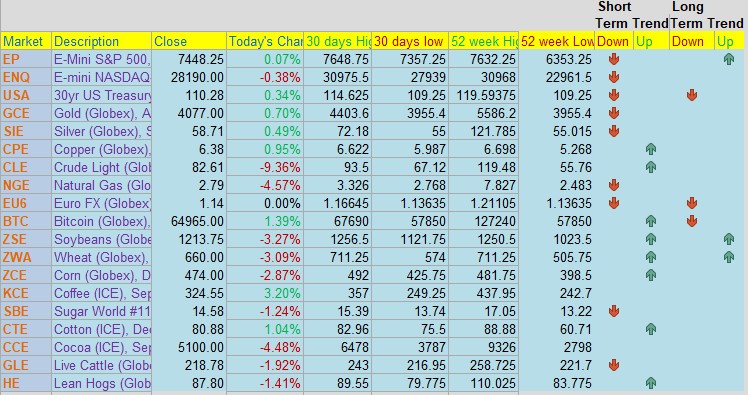
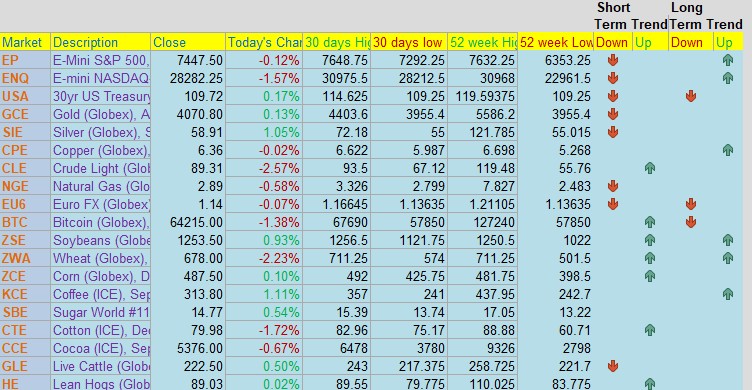
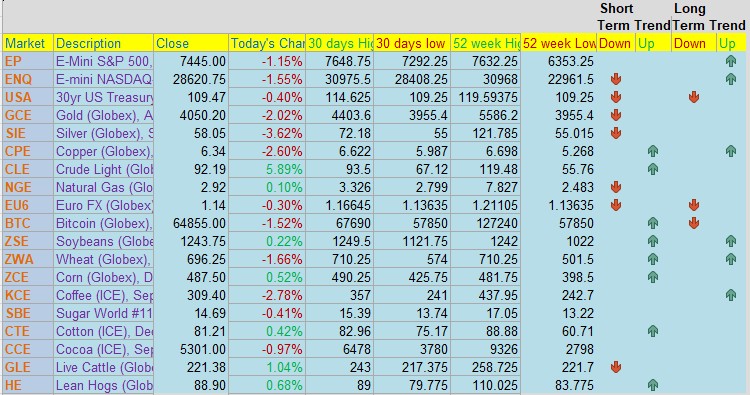
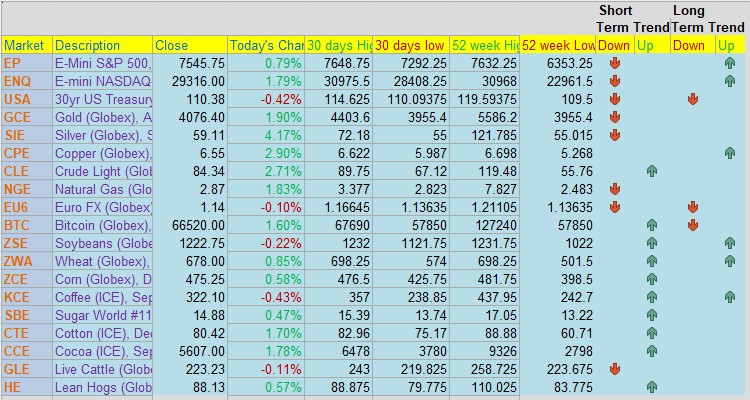
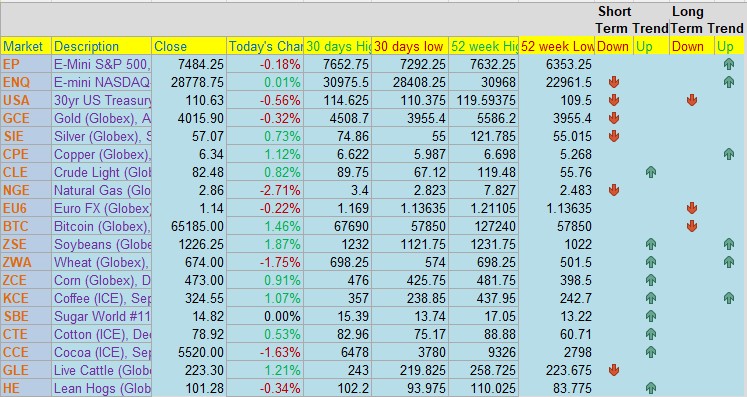
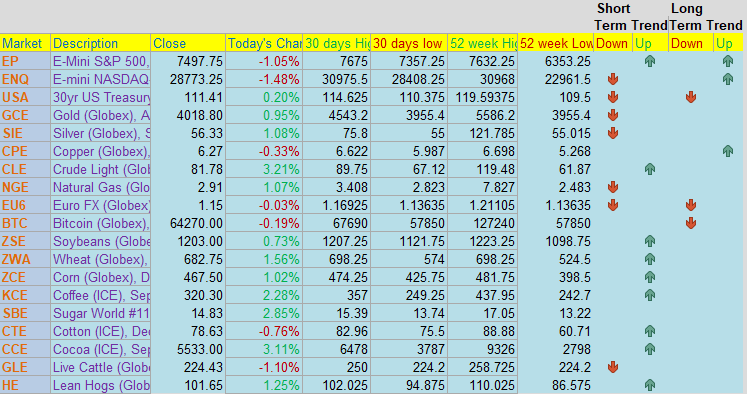
Cannon Edge is our new daily feature designed to give traders a fast, actionable overview of key futures markets. Each post delivers:

  • Current price and daily % change
  • 30‑day and 52‑week highs/lows
  • PROPRIETARY Short‑term and long‑term trend signals
  • Coverage across equity indices, metals, energies, currencies, and ags

Whether you’re scanning for breakout setups, trend reversals, or just staying informed — Cannon Edge puts the data in your hands before the open.

Built for speed. Backed by insight. Powered by CQG.

Would you like to get weekly updates on real-time, results of Automated trading systems ?

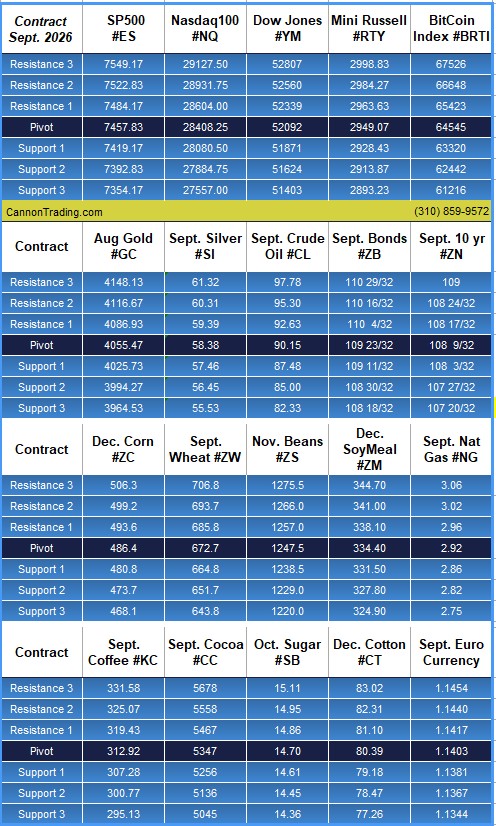
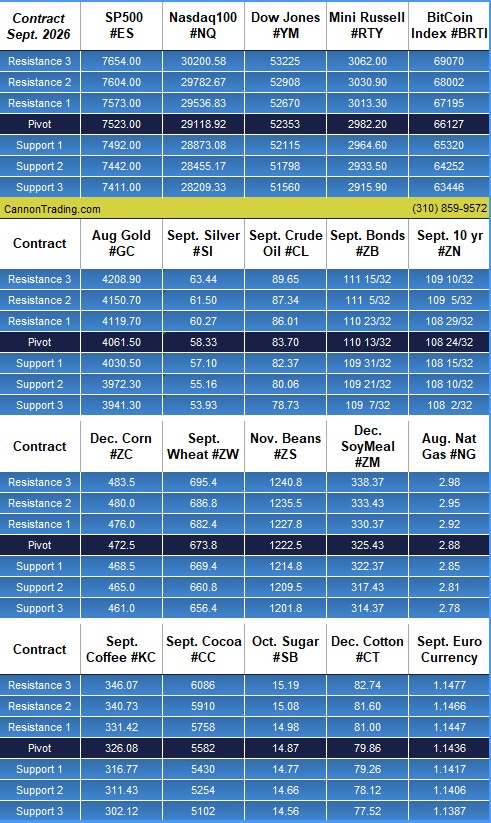
Daily Levels for June 29th, 2026

a09a5a03 b081 484a 93a8 6385c0469730

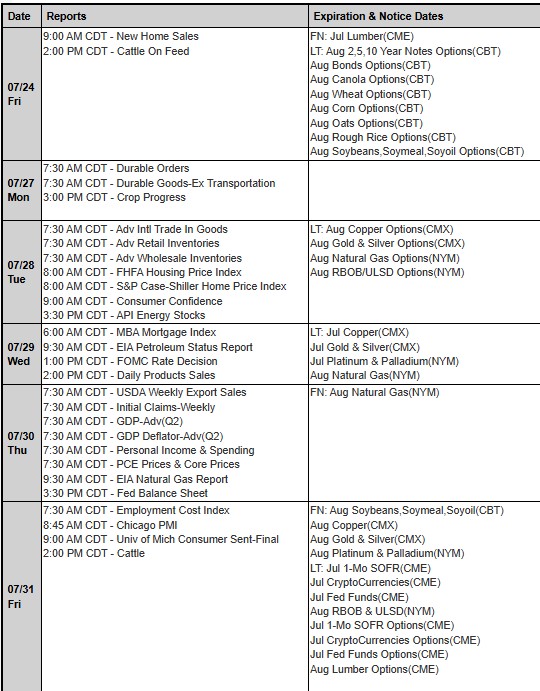
Trading Reports for Next Week

First Notice (FN), Last trading (LT) Days for the Week:

www.mrci.com

ea71630e c045 40ff abcf 8afc0e332b4a

Find us on Trustpilot

4ad8134c aa57 4adb a428 7cc476773107

Trading Futures, Options on Futures, and retail off-exchange foreign currency transactions involves substantial risk of loss and is not suitable for all investors. You should carefully consider whether trading is suitable for you in light of your circumstances, knowledge, and financial resources. You may lose all or more of your initial investment. Opinions, market data, and recommendations are subject to change at any time.

Join our Private Facebook group

Subscribe to our YouTube Channel

Listen to our podcast: Subscribe on AppleSpotify, Amazon

or wherever you listen to podcasts!

S
Facebook  Instagram  LinkedIn
S
ef3ab1c9 8d6d 4e60 a3f1 af5d9d4ecbb3
Services
Software
Tools
Community
Contact

July 4th Futures Trading Hours 2026! The Important Times YOU Need to Know for Trading Futures on the 4th of July!

9dc1e02e d5f7 4ff4 abf7 1df60775f196


July 4th Futures Trading Hours 2026!

(Click schedule for larger image)

July 4th, 2026

july 4th

Find us on Trustpilot

41a3c910 28d6 4126 946b 6659bb02ae4d

Trading Futures, Options on Futures, and retail off-exchange foreign currency transactions involves substantial risk of loss and is not suitable for all investors. You should carefully consider whether trading is suitable for you in light of your circumstances, knowledge, and financial resources. You may lose all or more of your initial investment. Opinions, market data, and recommendations are subject to change at any time.

Join our Private Facebook group

Subscribe to our YouTube Channel

Listen to our podcast: Subscribe on AppleSpotify, Amazon

or wherever you listen to podcasts!

S
Facebook  Instagram  LinkedIn
S
ef3ab1c9 8d6d 4e60 a3f1 af5d9d4ecbb3
Services
Software
Tools
Community
Contact
Cannon Trading Co., Inc.

12100 Wilshire Blvd.

Suite 1640

Los Angeles, CA 90025 US