Fed Governors Speak, Will commodities Markets Move? +Futures Trading Levels 5.16.2023

Get Real Time updates and more on our private FB group!
The Week Ahead!
By John Thorpe, Senior broker
Fed Governor speeches, Retail Sales, Industrial production, Housing starts, Jobless Claims, More Fed Governor speeches, Existing home sales, and, the big one, Jerome Powell speaking on Friday….

Tomorrow Fed Members Mester and Bostic are speaking @ 7:15 and 7:55 am CDT respectively.   Retail sales numbers will be released during Mester’s words @ 7:30 am CDT. Analysts expect Retail sales to rise .07 % from March’s numbers that were negative for auto’s and gasoline. Industrial production will be released shortly thereafter and during Bostic’s speaking engagement @ 8:15am CDT. Analysts expect a flat IP number with capacity utilization lower by a few percentage points as layoffs may accelerate in the manufacturing sector. Wednesday we will see Housing Starts and permits. Analysts have revealed “Housing starts in March edged lower to a 1.420 million annualized rate; April is expected to slip further to 1.405 million. Permits, at 1.413 million in March and, though lower than expected, very near the starts rate, is expected to rise to 1.430 million.”  per Econoday. Jobless claims will be Thursday’s highlighted report and expected to fall within the 250-270K range. Existing Home Sales top of the week’s reports @ 9am CDT  sandwiched in between Fed governor speech’s , Jefferson @ 8:05 am CDT and Logan @ 9 am CDT,,  remember that markets like to discount expectations and only move when the data is out of line with expectations..   we wrap up the Fed Governor’s speeches for the week when the big Kahuna , Fed Chair Jerome Powell will be speaking publically Friday @ 10am CDT!..

As always, plan your trade and trade your plan!

has context menu

Are you ready to go for gold?


Then here is your golden opportunity. CME Group will be launching the Go for Gold Precious Metals Trading Challenge coming this June.


You’ll have the opportunity to practice trading highly liquid Precious Metals products while competing against other traders for the chance to win the grand prize of a 1 oz. bar of gold*.


During the challenge, you’ll explore our suite of precious metals contracts and test-drive strategies in a simulated environment. We’ll send you exclusive, daily education materials on precious metals contracts in order for you to feel prepared to trade and confidently compete against your peers.


Get ready to strike gold.


*Participants will only be eligible to receive a 1 oz. gold bar if permitted in accordance with the applicable laws of their jurisdiction.

START DATE: June 4, 2023


END DATE: June 9, 2023

e5a8694f 94ed 4340 91ff e9ad366cdc83

af43c241 87fd 492f 9e5b c409cce23ae1


Plan your trade and trade your plan. 


Trading Futures, Options on Futures, and retail off-exchange foreign currency transactions involves substantial risk of loss and is not suitable for all investors.  You should carefully consider whether trading is suitable for you in light of your circumstances, knowledge, and financial resources. You may lose all or more of your initial investment. Opinions, market data, and recommendations are subject to change at any time when it comes to Futures Trading.

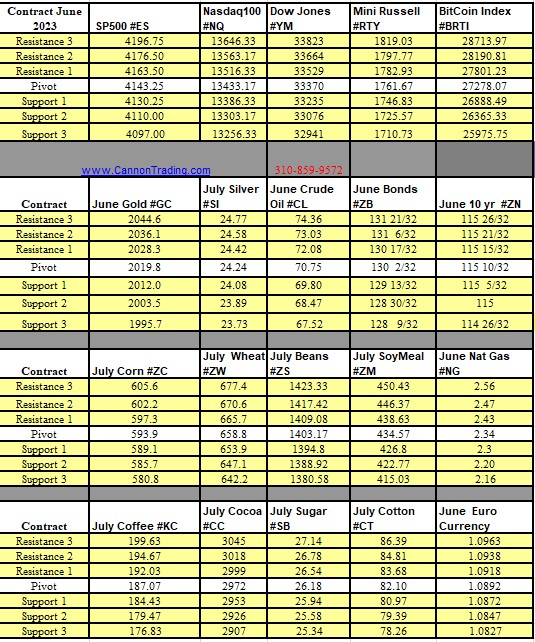
Futures Trading Levels

for 05-16-2023
9c6f6626 ce7b 4aff b412 7118f551a81e

3b644da2 2bee 4d39 8d98 5208a20bec39

Economic Reports, Source: 

Forexfactory.com

09894062 e83b 43b9 ad7a d1e5e50ca7f9
Economic reports for future traders


This is not a solicitation of any order to buy or sell, but a current market view provided by Cannon Trading Inc. Any statement of facts here in contained are derived from sources believed to be reliable, but are not guaranteed as to accuracy, nor they purport to be complete. No responsibility is assumed with respect to any such statement or with respect to any expression of opinion herein contained. Readers are urged to exercise their own judgement in trading.
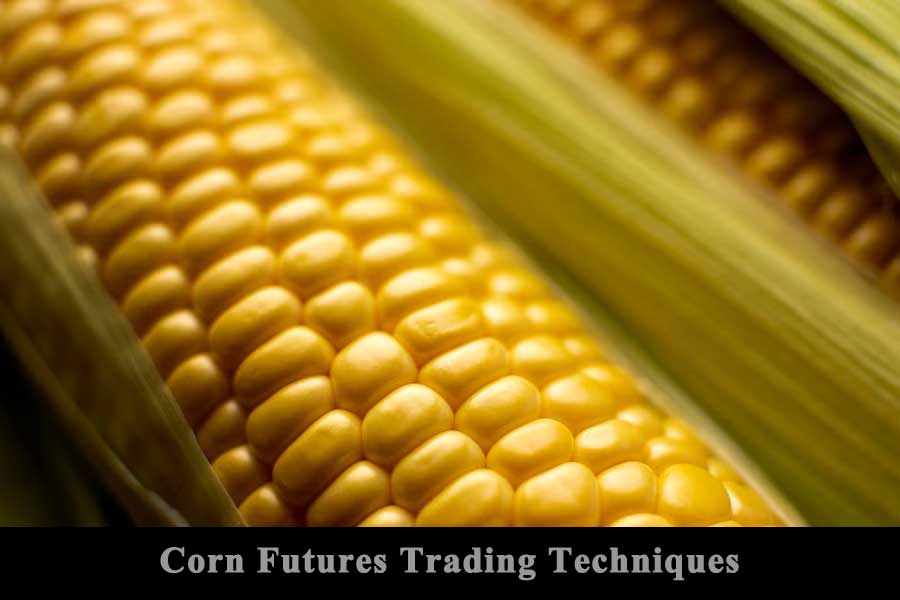
Corn Futures Trading Techniques

Corn Futures

Find out more about corn futures here.

Corn futures are contracts traded on commodities exchanges, which allow investors to speculate on the price movements of corn at a future date. Trading corn futures can be a lucrative investment opportunity for those who have a good understanding of the market and employ the right trading techniques. Here are some techniques that traders can use to trade corn futures:

  1. Fundamental Analysis: Fundamental analysis is the study of economic and financial factors that can impact the price of corn futures. Traders who use this technique typically examine factors such as supply and demand, weather patterns, and government policies that affect the production and distribution of corn. By analyzing these factors, traders can make informed decisions about whether to buy or sell corn futures.
  2. Technical Analysis: Technical analysis involves the use of charts and other technical indicators to analyze the historical price movements of corn futures. Traders who use this technique study trends, patterns, and support and resistance levels to identify potential trading opportunities. Technical analysis can be used in conjunction with fundamental analysis to improve the accuracy of trading decisions.
  3. Seasonal Patterns: Corn production and demand is seasonal, with specific periods of planting, harvesting, and storage. Understanding the seasonal patterns in corn can help traders predict price movements and identify potential trading opportunities. For example, traders might buy corn futures in anticipation of a fall harvest when prices are typically low and sell them in the spring when prices are higher.
  4. Options Trading: Options trading involves the use of derivative contracts that give traders the right to buy or sell corn futures at a specific price on or before a particular date. Options trading can be an effective way to limit risk and increase profits, as traders can use options contracts to hedge against potential losses or to take advantage of market fluctuations.
  5. Spread Trading: Spread trading involves the simultaneous purchase and sale of two or more corn futures contracts. The goal of spread trading is to profit from the price difference between the contracts. For example, a trader might buy a corn futures contract for May delivery and sell a contract for December delivery, anticipating that the price difference between the two contracts will increase.
  6. Scalping Scalping: Scalping Scalping is a short-term trading technique that involves buying and selling corn futures contracts quickly to profit from small price movements. Scalping requires a great deal of skill and experience, as well as quick reflexes and the ability to make split-second decisions.
  7. Position Trading: Position trading is a longer-term trading strategy that involves buying and holding corn futures contracts for weeks or even months. Position traders typically use fundamental analysis to identify trends and make informed decisions about when to enter and exit positions.
  8. News Trading: News trading involves using news events and economic data releases to predict price movements in corn futures. Traders who use this technique monitor news sources and economic calendars to stay abreast of events that could impact the price of corn futures.
  9. Algorithmic Trading: Algorithmic trading involves using computer programs and algorithms to execute trades based on pre-defined rules and parameters. Algorithmic trading can be used to automate trading strategies such as scalping or position trading, as well as to analyze large amounts of data and identify potential trading opportunities.

In conclusion, trading corn futures requires a combination of technical and fundamental analysis, as well as an understanding of seasonal patterns and market dynamics. Traders can use a variety of techniques, including options trading, spread trading, scalping, position trading, news trading, and algorithmic trading, to profit from the price movements of corn futures. Successful trading requires discipline, risk management, and a commitment to continuous learning and improvement.

Ready to start trading futures? Call 1(800)454-9572 and speak to one of our experienced, Series-3 licensed futures brokers and start your futures trading journey at CannonTrading.com today.

DisclaimerTrading Futures, Options on Futures, and retail off-exchange foreign currency transactions involves substantial risk of loss and is not suitable for all investors.  Past performance is not indicative of future results. You should carefully consider whether trading is suitable for you in light of your circumstances, knowledge, and financial resources. You may lose all or more of your initial investment. Opinions, market data, and recommendations are subject to change at any time.

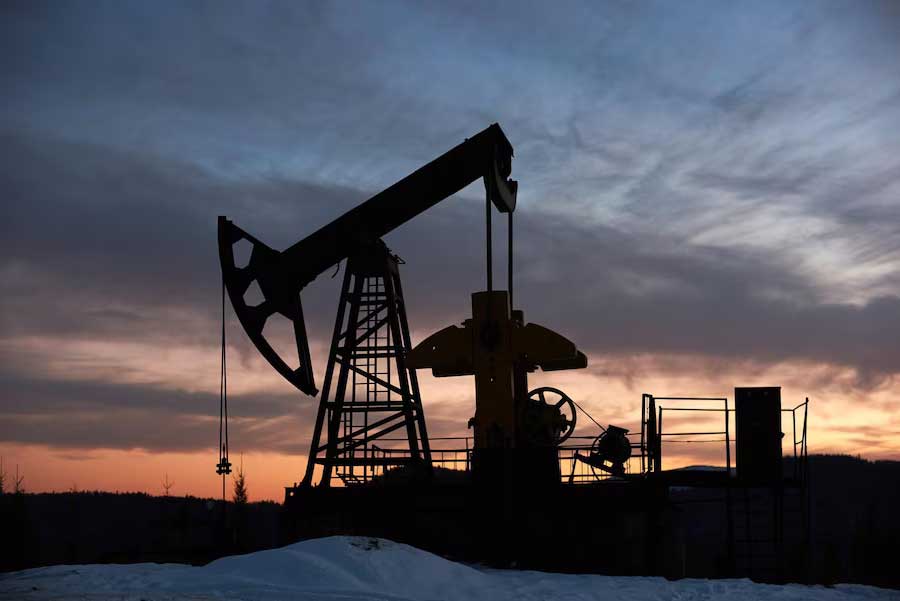
Trading Techniques for Oil Futures

oil futures

Learn more about crude oil futures here.

Oil futures are a type of financial contract that allows traders to speculate on the future price of crude oil. Trading oil futures can be an effective way to capitalize on the volatility of oil prices, but it requires a comprehensive understanding of the market and the techniques that can be used to make informed trading decisions.

Here are some techniques that can be used to trade oil futures effectively:

  1. Technical Analysis: Technical analysis is a popular technique used in the trading of oil futures. It involves studying price charts to identify trends and patterns that can indicate potential trading opportunities. Technical analysts use a variety of tools such as moving averages, trend lines, and oscillators to help them identify potential entry and exit points for trades.
  2. Fundamental Analysis: Fundamental analysis is another technique used to trade oil futures. This technique involves studying the underlying economic factors that can impact the price of crude oil, such as supply and demand, geopolitical tensions, and weather patterns. By understanding these factors, traders can make more informed trading decisions based on the current and future outlook for oil prices.
  3. News Trading: News trading involves taking positions in oil futures based on breaking news events that can impact the oil market. For example, if there is a sudden supply disruption or political tensions in a major oil-producing country, the price of oil futures may rise rapidly. Traders who are able to react quickly to these events can potentially profit from these price movements.
  4. Scalping: Scalping is a short-term trading strategy that involves taking multiple small profits from quick trades. This technique can be effective for trading oil futures because of the market’s volatility. Traders who use scalping techniques often look for short-term price movements and take quick profits when they see them.
  5. Swing Trading: Swing trading is a technique that involves taking positions in oil futures based on longer-term price trends. This technique is often used by traders who are looking to capture larger price movements over a period of several days or weeks. Swing traders often use technical analysis to identify potential entry and exit points for trades.
  6. Position Trading: Position trading is a long-term trading technique that involves holding positions in oil futures for several months or even years. This technique is often used by traders who are looking to capitalize on major trends in the oil market. Position traders often use fundamental analysis to identify the underlying economic factors that can impact the price of oil futures over the long term.
  7. Options Trading: Options trading is another technique used to trade oil futures. This technique involves buying or selling options contracts that give the trader the right, but not the obligation, to buy or sell oil futures at a specified price at a future date. Options trading can be a complex technique, but it can be effective for managing risk and maximizing profits in the volatile oil market.
  8. Hedging: Hedging is a risk management technique that involves taking positions in oil futures to offset potential losses in other investments. For example, if a company relies on oil as a major input in its production process, it may choose to hedge its exposure to oil price fluctuations by taking positions in oil futures. Hedging can be an effective way to reduce risk in the volatile oil market.

Trading oil futures can be a challenging but potentially lucrative activity for traders who are willing to put in the effort to develop a comprehensive understanding of the market and the techniques that can be used to trade effectively. By using a combination of technical and fundamental analysis, news trading, scalping, swing trading, position trading, options trading, and hedging, traders can potentially maximize profits and manage risk in the volatile oil futures market.

Ready to start trading futures? Call 1(800)454-9572 and speak to one of our experienced, Series-3 licensed futures brokers and start your futures trading journey at CannonTrading.com today.

DisclaimerTrading Futures, Options on Futures, and retail off-exchange foreign currency transactions involves substantial risk of loss and is not suitable for all investors.  Past performance is not indicative of future results. You should carefully consider whether trading is suitable for you in light of your circumstances, knowledge, and financial resources. You may lose all or more of your initial investment. Opinions, market data, and recommendations are subject to change at any time.