Futures Trading vs Options: What’s the Difference?

dollar exchange rate 544949 1920


Futures Trading vs Options: What’s the Difference?

Written by Mark O’Brien, Senior Broker

The answer to this piece’s title question is: there are quite a few differences between futures and futures options. Let’s get right to it. There are two types of options – call options and put options. Their risks and opportunity potential differ depending on whether you’re analyzing purchased / long calls and puts or sold / short calls and puts. So, we’re really comparing futures with four different types of options: long call options, short call options, long put options and short put options. If you’re already chafing at the confusion you see coming, hold steady and we’ll try to clear things up.

The easiest starting point is to look first at the risks and opportunities in trading a straight futures contract. This is so because there are only two positions you can take in a futures contract. You can buy a futures contract, often termed “going long,” or you can sell a futures contract, described as “going short.” Regardless of whether you’re long or short a futures contract, the risk of loss and the opportunity for profit is equally measureable by the price change in that futures contract. If each single price change in a futures contract – called a tick – is equal to $10, then a 10-tick move up and a 10-tick move down are both equal to a $100 move. The result of a 10-tick move up for a long futures contract would be a gain of $100. The result of a 10-tick move down for a long futures contract would be a loss of $100. Conversely, the result of a 10-tick move down for a short futures contract would be a gain of $100. The result of a 10-tick move up for a short futures contract would be a loss of $100. So, whether you’re long or short a futures contract, you’re risk and opportunity potentials are the same.

Probably one of the more imposing aspects of trading straight futures contracts – at least at first – is that there are about fifty different principal futures contracts available for trading – in categories such as metals, grains, currencies, energies, livestock and more – and their tick values can differ. Each tick in the British Pound is equal to $6.25; each tick in Unleaded Gas is $4.20; each tick in Coffee is $3.75; each tick in Gold is $10. Further, some futures contracts’ minimum incremental price moves can be more than one tick at a time. The minimum price move for Sugar is one tick; the minimum price move for Copper is five ticks; the minimum price move for Live Cattle is 2 ½ ticks. How confounding is that?

Yet, like any new information you’re attempting to stockpile in your brain – especially when your trading account’s money is at stake, with exposure comes familiarity. So, whether you’re actively taking positions in dozens of markets each day, or concentrating your trading on one or two sectors or even one or two markets, you’ll want to become familiar with the contract specifications of what you’re trading.

If you’re looking to trade options, you have more homework. The first important distinction between futures contracts and futures options lies in their risks and opportunities. Remember, whether you’re long or short a futures contract, you’re risk and opportunity potentials are the same. Not so with futures options. The risks and opportunities are very different depending on whether you’re the option buyer (long) or the option seller (short).

In terms of risk, for the option buyer, the loss risk is limited to the purchase price of the option. So, if the price of the option loses value, it can only lose all its value – no more than that. On the opportunity side of the ledger, purchased options can increase in value based on the underlying asset it might eventually become if it was exercised. A purchased (long) call option will increase in value if its underlying asset (a long position in the market) increases in value. A purchased (long) put option will increase in value if its underlying asset (a short position in the market) decreases in value.

For the option seller, the risk/opportunity parameters are flipped. The limited loss assumed by the option buyer is also the limited opportunity afforded the option seller. The amount received in the sale of the option is as much as the option seller can ultimately collect. Conversely, sold options can increase in value based on the underlying asset it might eventually become if it was exercised. A sold (short) call option will increase in value if its underlying asset (a long position in the market) increases in value. A sold (short) put option will increase in value if its underlying asset (a short position in the market) decreases in value.

To encapsulate, the risk to purchased (long) options – both call options and put options – is limited to their purchase price. Their opportunities lie in the degree to which the underlying assets move favorably, that they could be converted to if they were exercised. The opportunity for sold (short) options – both call and put options – is the original price at which they are sold – the amount of premium – collected at the sale. Their risks lie in the degree to which the underlying assets move unfavorably and that they could be converted to if they were exercised.

This brings up another important power given to the option buyer not given to the option seller. The option buyer has the right to exercise the option and convert it to a position in its underlying asset. The option seller, on the other hand, is at the whim of the option buyer to see their option converted to a position in the market. So, only the option buyer can – if they wish – exercise their option and convert it to a futures contract

All these risks and opportunities come with two universal components that influence the value of every option: 1.) the option’s strike price and 2.) time. All options have a strike price. An option’s strike price represents the price to which the option is tied if it’s ever exercised and becomes a futures contract. A call option’s strike price is equal to the price at which a long position in the underlying futures contract is taken if the call option is exercised. A put option’s strike price is equal to the price at which a short position in the underlying futures contract is taken if the put option is exercised.

All options – no matter when they are purchased or sold – have lifespans. They all have expiration dates. And during their lifespans up until their expiration dates, their underlying assets are constantly changing price – fluctuations up and down, moving toward and away from strike prices up and down the market’s price range. Options whose expiration dates lie in the far distant future possess greater amounts of time with which to witness the underlying futures contract trade and potentially move toward its strike price or away from it. For this reason, they are valued more highly than those with closer-in-time expiration dates. So, as the saying goes, “time is money,” the term “time value,” is used to describe that part of an option’s overall value as it relates to the option’s expiration date. The farther away the option’s expiration date, the more time value is possesses.

The rules vary among exchanges that trade options, but generally an option buyer, if they ever choose to do so, can exercise their option at any time during the option’s lifespan – right up to its expiration date – and convert it to a position in the underlying futures contract. Conversely, the exercise of the long option causes a short option holder – an option seller – to be “assigned” the opposite position in the underlying futures contract.

At an option’s expiration date, a new set of rules comes into play. This is the date when – depending on the price of the underlying asset – an option is either “in the money,” or “at the money,” or it’s “out of the money.” If it’s a call option, it’s at or in the money if at expiration the underlying futures contract is trading at or above its strike price. If it’s a put option, it’s in the money if the underlying futures contract is trading at or below its strike price. This is the point in time and price when all options in or at the money are automatically converted and become positions in the underlying futures contract. All out-of-the-money options are not converted and become nothing. They expire worthless.

When you combine the selection of option strike prices up and down an underlying futures contract’s price range, with a range of expiration dates from nearby in time to far out, then offer long call options, short call options, long put options and short put options, the range of risk and opportunity in trading futures options is literally limitless. Never mind the added range of risk and opportunity available when trading any combination of futures options, or a combination of futures options and futures contracts (a discussion for a future article).

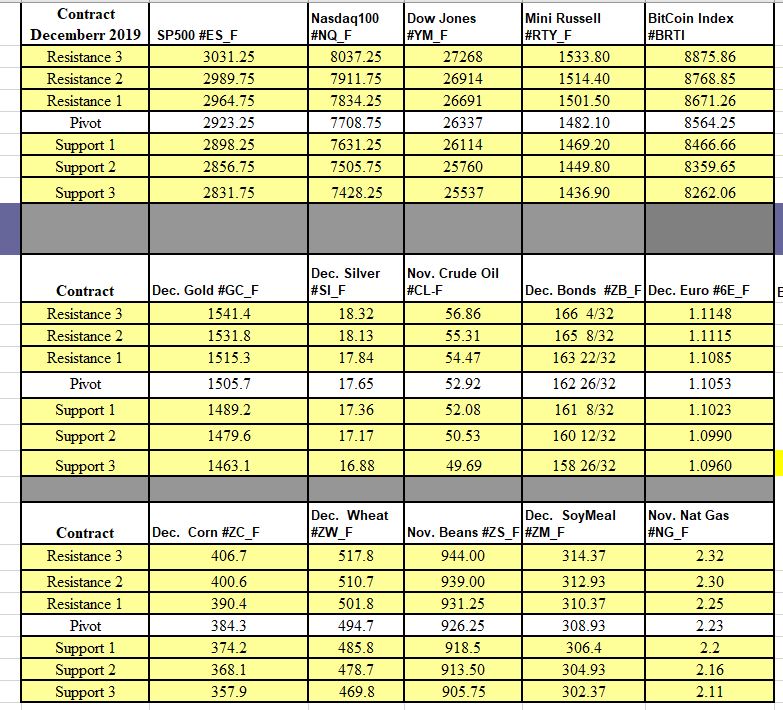
Crude Oil Numbers Tomorrow & Trading Levels 9.05.2019

_________________________________________________

Voted #1 Blog and #1 Brokerage Services on TraderPlanet for 2016!!  

____________________________________________________________________

Dear Traders,

Like us on FaceBook!
Crude oil numbers are tomorrow at 11 AM EST
Natural Gas numbers are at 10:30 AM EST
Lots of see-saw action in various markets and volatility is increasing.
Know your risk BEFORE entering the trade…..don’t enter with out having a game plan in mind: what are you looking for? how much will you risk?
trade size? possible targets?
bdf6db09 7692 48a4 8450 9a8d7d5f2d31

Good Trading

Trading Futures, Options on Futures, and retail off-exchange foreign currency transactions involves substantial risk of loss and is not suitable for all investors.  You should carefully consider whether trading is suitable for you in light of your circumstances, knowledge, and financial resources. You may lose all or more of your initial investment. Opinions, market data, and recommendations are subject to change at any time.


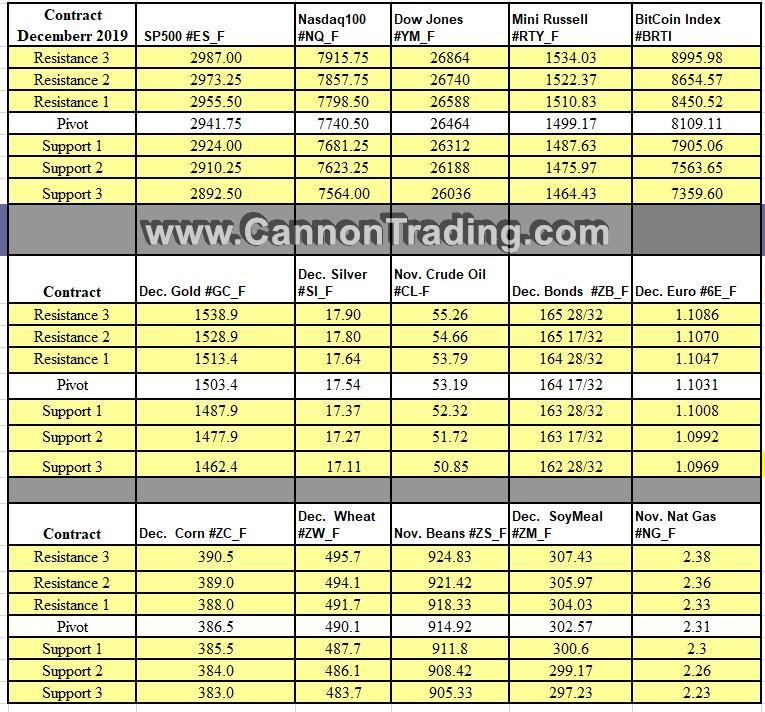
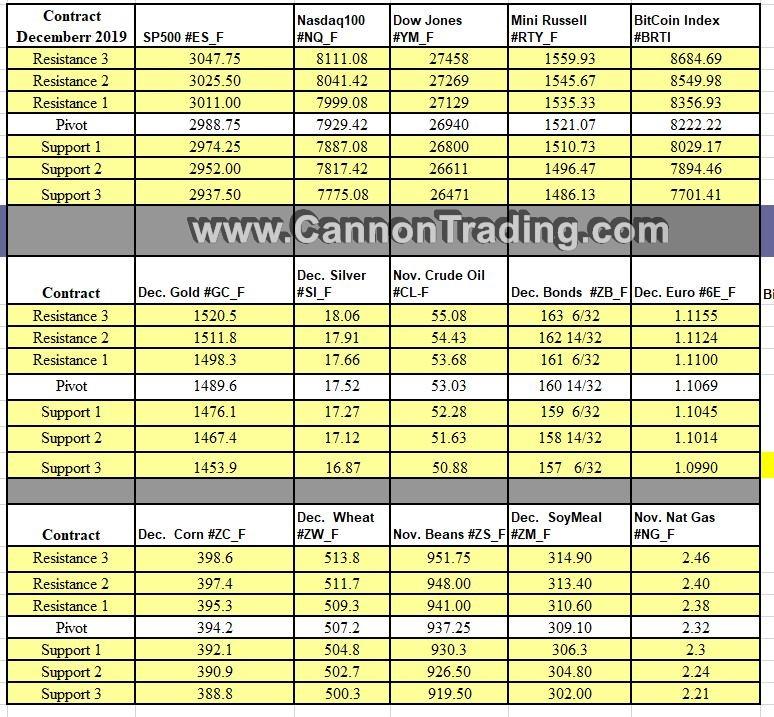
Futures Trading Levels

09-05-2019

5d0bacf0 ede2 418a a1a1 d50dad8e8df9


9ecc8c69 acbc 4ad7 b186 7c8352129bc8


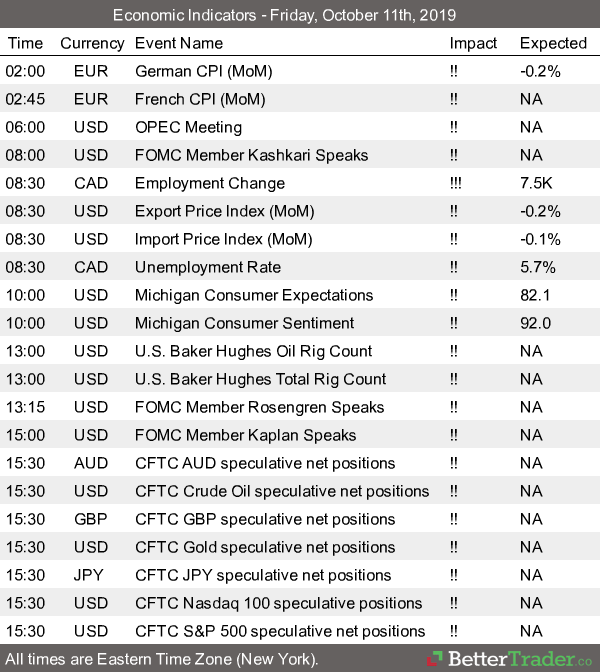
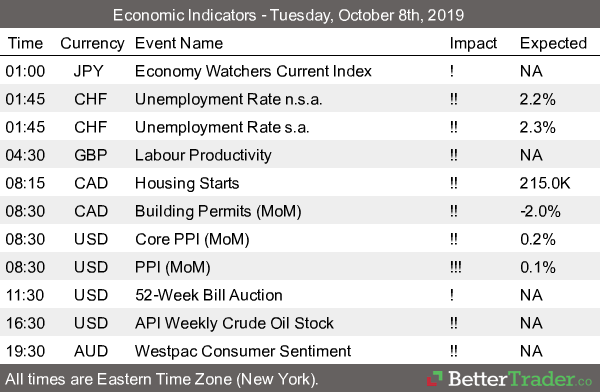
Economic Reports, source: 

bettertrader.co


This is not a solicitation of any order to buy or sell, but a current market view provided by Cannon Trading Inc. Any statement of facts here in contained are derived from sources believed to be reliable, but are not guaranteed as to accuracy, nor they purport to be complete. No responsibility is assumed with respect to any such statement or with respect to any expression of opinion herein contained. Readers are urged to exercise their own judgement in trading.

Futures Levels 9.04.2019

_________________________________________________

Voted #1 Blog and #1 Brokerage Services on TraderPlanet for 2016!!  

____________________________________________________________________

Dear Traders,

Like us on FaceBook!
Below are the contracts which are entering First Notice or Last Trading Day for the upcoming month. Be advised, for contracts that are deliverable, it is our policy that all LONG positions be exited the day prior to First Notice and ALL positions be exited the day prior to Last Trading Day. If you have any questions please contact your broker.
ec279af3 89af 4039 98ea 4b48ea7c140b
bdf6db09 7692 48a4 8450 9a8d7d5f2d31

Good Trading

Trading Futures, Options on Futures, and retail off-exchange foreign currency transactions involves substantial risk of loss and is not suitable for all investors.  You should carefully consider whether trading is suitable for you in light of your circumstances, knowledge, and financial resources. You may lose all or more of your initial investment. Opinions, market data, and recommendations are subject to change at any time.


Futures Trading Levels

09-04-2019

d8aa47db 21f9 44ac bb57 8e90e247ba7f


9ecc8c69 acbc 4ad7 b186 7c8352129bc8


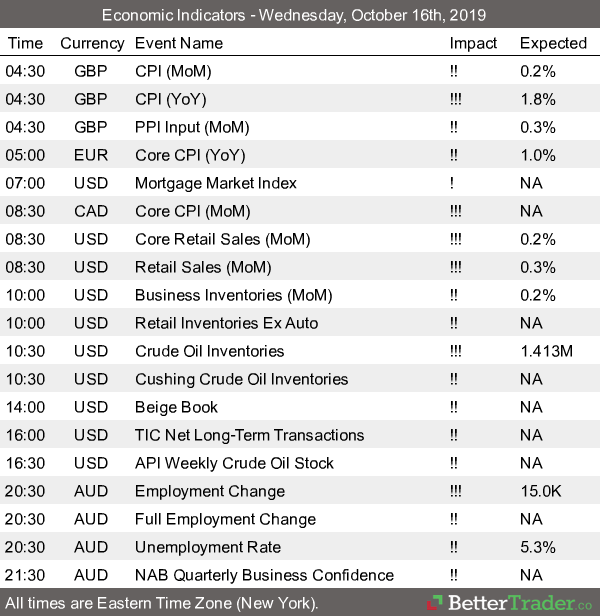
Economic Reports, source: 

bettertrader.co

7544a3f5 c34b 4b66 a6d5 eab4db2d8558

This is not a solicitation of any order to buy or sell, but a current market view provided by Cannon Trading Inc. Any statement of facts here in contained are derived from sources believed to be reliable, but are not guaranteed as to accuracy, nor they purport to be complete. No responsibility is assumed with respect to any such statement or with respect to any expression of opinion herein contained. Readers are urged to exercise their own judgement in trading.

Labor Day Trading Hours & Levels 8.30.2019

_________________________________________________

Voted #1 Blog and #1 Brokerage Services on TraderPlanet for 2016!!  

____________________________________________________________________

Dear Traders,

Like us on FaceBook!
Tomorrow is the last trading day of the month, a day full of reports and ahead of Labor Day Weekend here in the US!
Should be a very interesting trading day and my guess is will be volatile….but I have been wrong before….
Labor Day Trading Hours below, have a safe and enjoyable holiday!
48d089f9 e814 4e07 a18d 1f127c034ab6
bdf6db09 7692 48a4 8450 9a8d7d5f2d31

Good Trading

Trading Futures, Options on Futures, and retail off-exchange foreign currency transactions involves substantial risk of loss and is not suitable for all investors.  You should carefully consider whether trading is suitable for you in light of your circumstances, knowledge, and financial resources. You may lose all or more of your initial investment. Opinions, market data, and recommendations are subject to change at any time.


Futures Trading Levels

08-30-2019

d8aa47db 21f9 44ac bb57 8e90e247ba7f


9ecc8c69 acbc 4ad7 b186 7c8352129bc8


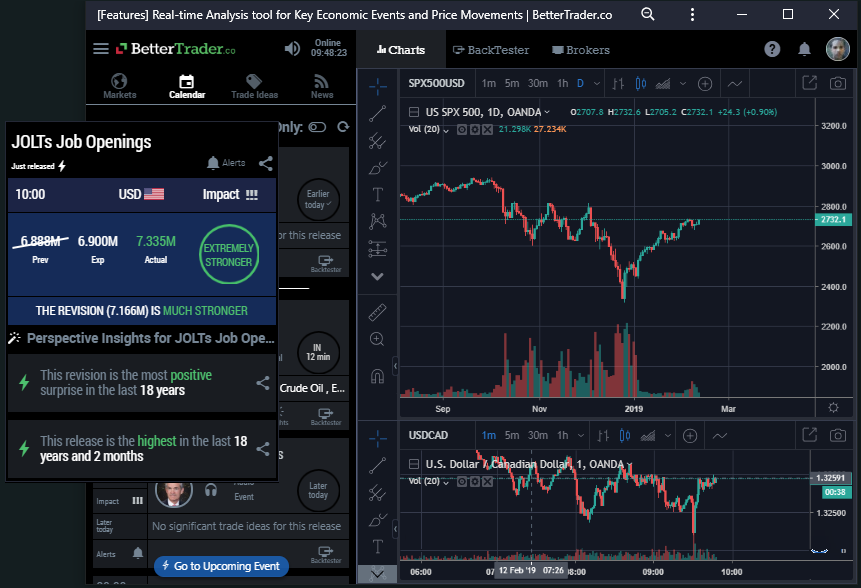
Economic Reports, source: 

bettertrader.co

93a969c6 5309 4343 a89a 19769b7488e2


This is not a solicitation of any order to buy or sell, but a current market view provided by Cannon Trading Inc. Any statement of facts here in contained are derived from sources believed to be reliable, but are not guaranteed as to accuracy, nor they purport to be complete. No responsibility is assumed with respect to any such statement or with respect to any expression of opinion herein contained. Readers are urged to exercise their own judgement in trading.
Should you day-trade Bonds? + Levels/Reports for August 29th

_________________________________________________

Voted #1 Blog and #1 Brokerage Services on TraderPlanet for 2016!!  

____________________________________________________________________

Dear Traders,

Like us on FaceBook!
If you are trading bonds, grains, silver, copper then it is time for you to move out of the September contract and into the next active month, in most cases it is December.
For example, US bonds would be ZBZ19.
Talking bonds…..I personally really like bonds and I think many short term traders overlook this market. Here is what I like about bonds:
  1. large tick size at $31.50
  2. Large volume at the bid-ask
  3. Lower trading costs since the exchange fees are about $0.80 round turn lower than the ES for example
  4. Different personality of market, trades differently than the ES or CL for that matter.
Worth exploring and trying in demo mode if you have not traded this market yet.
bdf6db09 7692 48a4 8450 9a8d7d5f2d31

Good Trading

Trading Futures, Options on Futures, and retail off-exchange foreign currency transactions involves substantial risk of loss and is not suitable for all investors.  You should carefully consider whether trading is suitable for you in light of your circumstances, knowledge, and financial resources. You may lose all or more of your initial investment. Opinions, market data, and recommendations are subject to change at any time.


Futures Trading Levels

08-29-2019

dc3a1599 07c4 447b 8f8c 5c8beacce9f8


9bc7688a c378 4d73 a8b4 4884da770536


Economic Reports, source: 

bettertrader.co

283a53c6 be86 4bd7 9fed 509d8ac6cbb8


This is not a solicitation of any order to buy or sell, but a current market view provided by Cannon Trading Inc. Any statement of facts here in contained are derived from sources believed to be reliable, but are not guaranteed as to accuracy, nor they purport to be complete. No responsibility is assumed with respect to any such statement or with respect to any expression of opinion herein contained. Readers are urged to exercise their own judgement in trading.
REAL TIME Text Alerts & Futures Levels 8.28.2019

_________________________________________________

Voted #1 Blog and #1 Brokerage Services on TraderPlanet for 2016!!  

____________________________________________________________________

Dear Traders,

Like us on FaceBook!
Trading Alerts via Text Directly to Your Phone
The real time trade alerts FREE 3-week trial uses a combination of proprietary information technical studies, trading ALGOS and a few popular indicators for confirmation.
All trades are intended to be day trades and will be complimented with text exits at any time after entry and at the latest by the end of the trading day.
You will receive a text and email each time there is an entry or exit in a simple language along with the current price for that specific market.
Text alerts available to US and Canada residents. Int’l clients will receive the alerts via email.
Real-time trade signals via text available for the following markets:
* Gold, silver, copper, platinum
* mini SP, mini Nasdaq, mini Dow, mini Russell
* Major currency pairs
* Wheat, Beans, Soymeal, Bean oil
* Crude oil, RBOB, Heating oil, Natural gas
* 30 year Bonds and 10 year Notes
* Hogs, Cattle
555ed24b 15ec 4b74 bd32 045824882260
bdf6db09 7692 48a4 8450 9a8d7d5f2d31

Good Trading

Trading Futures, Options on Futures, and retail off-exchange foreign currency transactions involves substantial risk of loss and is not suitable for all investors.  You should carefully consider whether trading is suitable for you in light of your circumstances, knowledge, and financial resources. You may lose all or more of your initial investment. Opinions, market data, and recommendations are subject to change at any time.


Futures Trading Levels

08-28-2019


729502dd 984a 45bc be93 fafa687dff6b

9bc7688a c378 4d73 a8b4 4884da770536


Economic Reports, source: 

bettertrader.co

230425c9 67d9 4902 bb55 83055a42b91b

This is not a solicitation of any order to buy or sell, but a current market view provided by Cannon Trading Inc. Any statement of facts here in contained are derived from sources believed to be reliable, but are not guaranteed as to accuracy, nor they purport to be complete. No responsibility is assumed with respect to any such statement or with respect to any expression of opinion herein contained. Readers are urged to exercise their own judgement in trading.
Labor Day 2019 Holiday Schedule for CME / Globex and ICE Exchange

Labor Day 2019 Holiday Schedule for CME / Globex and ICE Exchange


48d089f9 e814 4e07 a18d 1f127c034ab6


*Dates and times are subject to change

If you have any questions, please call the CME Global Command Center at +1 800 438 8616, in Europe at +44 800 898 013 or in Asia at +65 6532 5010

Globex®  Labor Day 2019 Holiday Schedule

More details at: http://www.cmegroup.com/tools-information/holiday-calendar.html 

Ice Futures Labor Day 2019 Holiday Schedule

Detailed holiday hours: https://www.theice.com/holiday-hours

The above sources were compiled from sources believed to be reliable. Cannon Trading assumes no responsibility for any errors or omissions.  It is meant as an alert to events that may affect trading strategies and is not necessarily complete.  The closing times for certain contracts may have been rescheduled.

Trade War & Futures Trading Levels 8.27.2019

_________________________________________________

Voted #1 Blog and #1 Brokerage Services on TraderPlanet for 2016!!  

____________________________________________________________________

Dear Traders,

Like us on FaceBook!
Trade War: Adding up the costs
By Erik Norland, Senior Economist, CME Group
  • Consumers get tariff relief before holiday shopping season
  • But tariffs will still amount to at least $50 billion on Sept 1
  • Another $30 billion in tariffs will be staggered between Sept 1 and Dec 15
  • US trade policy on China is evolving rapidly with trade war escalating
69adddc1 caf6 4b29 8bb8 ad77bb3e9855
The risk of loss in trading futures and options can be substantial, therefore only genuine “risk” funds should be used in such trading. Futures and options may not be a suitable investment for all individuals and individuals should carefully consider their financial condition in deciding whether to trade. Option traders should be aware that the exercise of a long option will result in a futures position. Past performance is not indicative of future results. All opinions, trade recommendations, and data disseminated by the provider are subject to change at any time, with no obligation to inform recipients. Customers subscribing to alerts via email, text, or other means of electronic communication may experience materially different performance due to factors such as, but not limited to: timeliness of order placement, slippage, commissions and fees, and order routing delays.
bdf6db09 7692 48a4 8450 9a8d7d5f2d31

Good Trading

Trading Futures, Options on Futures, and retail off-exchange foreign currency transactions involves substantial risk of loss and is not suitable for all investors.  You should carefully consider whether trading is suitable for you in light of your circumstances, knowledge, and financial resources. You may lose all or more of your initial investment. Opinions, market data, and recommendations are subject to change at any time.


Futures Trading Levels

08-27-2019

db8f0a7f b1e8 4664 b520 6a41f3415737


9bc7688a c378 4d73 a8b4 4884da770536


Economic Reports, source: 

bettertrader.co

c07881b1 36d7 49a6 a8e4 481d59d5c0f4

This is not a solicitation of any order to buy or sell, but a current market view provided by Cannon Trading Inc. Any statement of facts here in contained are derived from sources believed to be reliable, but are not guaranteed as to accuracy, nor they purport to be complete. No responsibility is assumed with respect to any such statement or with respect to any expression of opinion herein contained. Readers are urged to exercise their own judgement in trading.
The Origin of the S&P 500 Futures

Written By John Thorpe, Senior Broker

In 1957 the American financial company, Standard & Poor’s established the S&P 500, a market index that tracks the value of 500 corporations on the NYSE and NASDAQ that are determined to reflect the overall shape of the United States Economy. Since then, the S&P 500 has stood as a trendsetter that indicates the ebbs and flows of the U.S. economy during both steady periods defined by incremental growth, and erratic periods of market unrest. 

The S&P 500’s unflappable performance has made it a popular destination for passive index traders, who buy and sell at a minimum and swear by the strategy of “slow and steady wins the race”. However, this does not mean the S&P is completely immune to large fluctuations, in 2009 the housing crisis dropped the S&P 500 by 57%.   

In 1982, the first S&P 500 futures contracts were introduced. The S&P 500 Futures Contract is priced by multiplying the S&P 500 value by $250. As with all futures contracts, the investor is required to front a fraction of the contract in order to take a position. This is also known as the “margin” of the contract. Unlike stock margins, futures margins increase a trader’s risk because they must be settled.  

Because of the substantial investment required to trade S&P 500 Futures Contracts, in 1997 the CME introduced the E-mini (electronic mini) S&P 500 Futures Contract. This contract is only priced by multiplying the S&P 500 value by $50, making it one-fifth the price of a standard S&P 500 Futures Contract. This introduction opened up the S&P 500 Futures market to a large number of new investors who perhaps did not possess the risk capital to invest in the standard contract. 

Advantages of Trading in S&P 500 Futures

An investor in the S&P 500 benefits from many advantages. First, it trades almost 24 hours a day, 5 days a week on financial exchanges across the globe, allowing the investor a substantial amount of flexibility. Next, the S&P 500 is widely covered and reported on by analysts, giving the investor the advantage of a large amount of analytics to go over to decide how to proceed in their trades. In addition, the S&P 500 has clear technical chart patterns, it’s easy to find clear exit and entrance points.

Another huge benefit of the S&P 500 futures contract is that you can day trade it and NOT be subject to the “Pattern Day Trader” rule which limits the amount you can trade unless you have greater than $25,000.00 in your trading account. With futures contracts, you can trade an unlimited number of times within the day. You can Day trade by yourself, you can employ an algorithm, and you can employ an automated system or hire a CTA (Commodity Trading Advisor).

The NEW Micro S&P 500 Futures Contract

With all of its advantages, it’s easy to see why so many investors have added the S&P 500 Futures Contract to their portfolios. And due to popular demand, CME made the contract even more accessible with the introduction of the S&P Micro Futures Contract in May of 2019. The S&P Micro Futures Contract is priced at the bargain rate of multiplying $5 by the S&P 500 market value, making it a whopping 1/50th the price of a standard contract.

The move to Micro by CME has opened the S&P 500 futures market to a wide range of new individual investors. With an average annual gain of 10% over the past 90 years, the S&P 500 is perhaps one of the steadiest contracts on the futures market. And on the futures side, an investor can control a large amount of the value of the contract with a relatively small initial deposit. One of the most common traders to take advantage of the brand-new micro contract is the self-directed trader. 

Trading on the S&P 500 

A self-directed trader can use many different trading platforms to trade S&P 500 Futures Contracts, from simple and free to more sophisticated and still free, to very sophisticated and at a cost, on a month-to-month basis. Self-directed traders can find any tool they need to trade in S&P 500 Futures Contracts at Cannon Trading. At www.cannontrading.com , an investor can download a live simulated account with live data to see if these contracts are right for their portfolio. 

Trading options on the S&P 500 is a possibility for many investors. Traders with a proclivity to trade options on the S&P 500 have an incredible number of ways to invest in the futures contracts using only options. Most people buy and sell the options strictly by themselves, but trading platforms offered at Cannon Trading can also enter complex options strategies. 

An investor with a large stock portfolio may want to Hedge their stocks portfolio with S&P 500 Futures. Investors can hedge their gains against price risk from a potential market sell off. They can even inexpensively use a number of Futures contracts to hedge their portfolio. 

There are many ways to trade in the S&P 500 Futures Market, here are some examples of how trading works on this market:

S&P 500 Futures Trading Math

The E-Mini S&P’s value is determined by multiplying the current index value x $50.00

On August 8-2019 the ESU19 futures contract was trading around 2,900.00

The notional value was $145,000.00

In a futures account, you are asked to place a small (relative to the notional value) “Good Faith” deposit (margin) for each contract you buy or sell. Currently, that Overnight “Good Faith” deposit or margin requirement is $6,930.00.

Assume you bought the ESU19 at $2,900.25 and it is currently trading at $2,920.25, you have made 20 points if you sell it at $2,920.25.  

You post a $6,930.00 good faith deposit 

You Buy 1 ESU19 @ $2900.25 X 50 =$14,5012.50

You Sell 1 ESU19 @ $2920.25 x 50 = $14,6012.50

The difference you keep: $1,000.00*

Your account balance is now $7,930.00*

*Not including clearing, regulatory fees and commissions

The E-Microi S&P’s value is determined by multiplying the current index value by $5.00

On August 8, 2019 the ESU19 futures contract was trading around 2900.00

The notional value was $14,500.00

In a futures account, you are asked to place a small (relative to the notional value) “Good Faith” deposit (margin) for each contract you buy or sell. Currently, that Overnight “Good Faith” deposit or margin requirement $693.00


Assume you bought the ESU19 @ $2900.25 and it is currently trading at $2,920.25 you have made 20 points if you sell it at $2,920.25.  

You post a $693.00 good faith deposit 

You Buy 1 ESU19 @ $2900.25 X 5 =$14,501.25

You Sell 1 ESU19 @ $2920.25 x 50 = $14,601.25

The difference you keep. $100.00*

Your account balance is now $793.00*

*Not including clearing, regulatory fees and commissions

Conclusion

The S&P 500 has, by its very nature, been exponentially smoothed over the years. It represents over 500 of the most highly capitalized stocks in the United States. Trading in the index rather than individual stocks makes it a wise and less volatile investment over time. Traders on the S&P 500 benefit from many advantages, the most important of which may be the steadiness of the S&P market itself. Now, with the introduction of E-mini and Micro versions of the S&P Futures Contract, more and more traders are able to take advantage of this time-tested staple of the U.S. economy. Remember, on the futures side, you can control a large amount of the value of the Contract with a relatively small, initial deposit ( which increase both risk and potential reward).

At Cannon Trading, our professionals can point you in the right direction, and help you determine if becoming a trader in S&P Futures Contracts is right for you. . Contact us at www.cannontrading.com to talk to a professional, start a live demo, or learn more about trading in S&P Futures today!

Disclaimer – Trading Futures, Options on Futures, and retail off-exchange foreign currency transactions involves substantial risk of loss and is not suitable for all investors. Past performance is not indicative of future results. You should carefully consider whether trading is suitable for you in light of your circumstances, knowledge, and financial resources. You may lose all or more of your initial investment. Opinions, market data, and recommendations are subject to change at any time.

Futures Trading Levels for August 23rd, 2019

_________________________________________________

Voted #1 Blog and #1 Brokerage Services on TraderPlanet for 2016!!  

____________________________________________________________________

Dear Traders,

Like us on FaceBook!
The risk of loss in trading futures and options can be substantial, therefore only genuine “risk” funds should be used in such trading. Futures and options may not be a suitable investment for all individuals and individuals should carefully consider their financial condition in deciding whether to trade. Option traders should be aware that the exercise of a long option will result in a futures position. Past performance is not indicative of future results. All opinions, trade recommendations, and data disseminated by the provider are subject to change at any time, with no obligation to inform recipients. Customers subscribing to alerts via email, text, or other means of electronic communication may experience materially different performance due to factors such as, but not limited to: timeliness of order placement, slippage, commissions and fees, and order routing delays.
bdf6db09 7692 48a4 8450 9a8d7d5f2d31

Good Trading

Trading Futures, Options on Futures, and retail off-exchange foreign currency transactions involves substantial risk of loss and is not suitable for all investors.  You should carefully consider whether trading is suitable for you in light of your circumstances, knowledge, and financial resources. You may lose all or more of your initial investment. Opinions, market data, and recommendations are subject to change at any time.


Futures Trading Levels

08-23-2019

db8f0a7f b1e8 4664 b520 6a41f3415737


9bc7688a c378 4d73 a8b4 4884da770536


Economic Reports, source: 

bettertrader.co

3b8d4ad9 db7e 4be0 a4a0 8bbadb029992


This is not a solicitation of any order to buy or sell, but a current market view provided by Cannon Trading Inc. Any statement of facts here in contained are derived from sources believed to be reliable, but are not guaranteed as to accuracy, nor they purport to be complete. No responsibility is assumed with respect to any such statement or with respect to any expression of opinion herein contained. Readers are urged to exercise their own judgement in trading.