Wheat Futures

wheat futures

Wheat Futures

wheat futures

wheat futures

Top 10 Reasons Traders Rely on Wheat Futures for Consistent Market Opportunities

Wheat has been one of the world’s most actively traded agricultural commodities for generations. From commercial grain producers to experienced speculators, participants continually return to wheat futures because the market offers liquidity, volatility, transparent pricing, and meaningful trading opportunities throughout the year.

Whether responding to weather events, export demand, currency fluctuations, or government reports, wheat markets rarely remain stagnant for long. Combined with professional brokerage support and advanced technology from Cannon Trading Company, traders gain access to an environment designed to support informed decision-making and efficient execution.

Below are ten major reasons traders continue choosing wheat futures as an important component of their overall futures trading strategy.

1. Consistent Market Liquidity

Liquidity remains one of the greatest strengths of wheat futures.

Highly liquid markets generally provide:

  • Efficient order execution
  • Competitive bid/ask spreads
  • Large daily trading volume
  • Multiple trading opportunities
  • Greater flexibility entering and exiting positions

Commercial hedgers, institutional participants, proprietary firms, and retail traders all contribute to active daily participation.

The CME’s wheat contracts provide centralized price discovery, allowing traders to react quickly to changing market conditions while reducing concerns associated with thinly traded products.

2. Weather Creates Reliable Trading Opportunities

Few markets respond to weather as dramatically as agricultural commodities.

Seasonal weather events influence:

  1. Planting progress
  2. Crop emergence
  3. Growing conditions
  4. Harvest quality
  5. Global supply expectations

Droughts across North America, excessive rainfall in Europe, or unfavorable growing conditions throughout the Black Sea region can rapidly influence prices.

Rather than representing random volatility, these movements often stem from measurable supply-and-demand changes that experienced traders monitor closely.

3. Global Demand Supports Continuous Price Discovery

Wheat is consumed virtually everywhere.

Demand comes from:

  • Food manufacturers
  • Flour mills
  • Exporters
  • Livestock producers
  • Government purchasing agencies

Since consumption occurs every day, global pricing remains active throughout the year.

Economic reports, export inspections, USDA data, international tenders, and currency movements all contribute to continuous price discovery that attracts professional market participants.

4. Seasonal Patterns Offer Planning Advantages

Agricultural markets often display recurring seasonal tendencies.

Experienced traders monitor:

  • Spring planting
  • Growing season developments
  • Harvest expectations
  • Export cycles
  • Storage trends

Although seasonal tendencies never guarantee future performance, understanding historical patterns provides additional context when evaluating market conditions.

Many traders build seasonal research into their overall futures trading plans alongside technical and fundamental analysis.

5. Excellent Technical Analysis Characteristics

Many traders appreciate wheat futures because charts frequently respond well to established technical analysis techniques.

Common tools include:

  • Moving averages
  • Support and resistance
  • Trend channels
  • Fibonacci retracements
  • Volume analysis

Because numerous professional participants watch similar price levels, technical areas often become meaningful reference points for trade planning and risk management.

This combination of technical structure and fundamental catalysts creates an attractive environment for experienced market participants.

6. Numerous Fundamental Market Drivers

Unlike markets driven primarily by corporate earnings or interest rates, wheat pricing reflects a wide collection of independent variables.

Major influences include:

  1. USDA reports
  2. Weather forecasts
  3. Export sales
  4. Currency exchange rates
  5. Government policy
  6. Global inventories
  7. Transportation costs
  8. International conflicts
  9. Fertilizer prices
  10. Competing crop production

These ongoing developments create fresh information throughout the calendar year, providing traders with numerous opportunities to reassess market direction.

7. Valuable Diversification

Many portfolios concentrate heavily on equity indexes.

Agricultural commodities often respond differently than stock markets.

Because wheat pricing depends primarily upon agricultural supply and worldwide consumption rather than corporate earnings, some traders incorporate wheat futures to broaden exposure across multiple asset classes.

Diversification does not eliminate risk, but it may reduce reliance upon any single market sector.

8. Transparent Exchange-Traded Pricing

The CME provides centralized trading with standardized contract specifications.

Benefits include:

  • Public pricing
  • Standard contract sizes
  • Uniform trading rules
  • Central clearing
  • Reliable execution standards

Market participants can observe identical pricing information regardless of their brokerage relationship.

This transparency helps support confidence in market integrity while improving overall trading efficiency.

9. Opportunities During Changing Market Conditions

Some markets remain range-bound for extended periods.

Agricultural commodities often experience meaningful directional movement driven by changing fundamentals.

Unexpected developments can include:

  • Crop damage
  • Export restrictions
  • Disease outbreaks
  • Government policy changes
  • Weather surprises

These events frequently generate increased trading activity and expanded price movement.

Many experienced traders appreciate markets capable of producing opportunities in both rising and falling environments.

10. Long-Term Historical Relevance

Few commodities possess the historical importance of wheat.

For generations, wheat has remained one of the world’s foundational agricultural products.

Its importance within global food production ensures continued participation from commercial firms, processors, exporters, producers, and speculative traders.

That broad participation helps sustain active markets while supporting long-term confidence in continued exchange activity.

How Cannon Trading Company Supports Wheat Traders
wheat futures

Technology plays an increasingly important role in successful market participation.

Cannon Trading Company offers a broad selection of professional trading platforms designed to accommodate different trading styles.

Available solutions support:

  • Desktop trading
  • Mobile trading
  • Web-based access
  • Advanced charting
  • DOM trading
  • Bracket orders
  • OCO functionality
  • Technical indicators
  • Automated trading compatibility
  • Real-time market analysis

A short-term scalper may prefer rapid DOM execution.

A swing trader may prioritize sophisticated chart analysis.

An automated system developer may require platform compatibility for algorithmic strategies.

Rather than forcing every client into one software package, Cannon Trading Company offers multiple platform choices so traders can select the environment matching their objectives.

This flexibility accommodates new traders while also supporting experienced professionals with highly specialized requirements.

Professional Broker Support Matters

Technology alone rarely answers every question.

Experienced brokers remain valuable during changing market conditions.

Cannon Trading Company has served futures traders since 1988 as an independent introducing broker.

Clients benefit from knowledgeable assistance regarding:

  • Platform selection
  • Contract specifications
  • Order entry
  • Margin requirements
  • Exchange procedures
  • Risk management discussions

Instead of relying exclusively on automated systems, traders can communicate with professionals possessing decades of futures industry experience.

This client-focused approach continues attracting traders worldwide.

Why Opening an Account Is Straightforward

Beginning a new trading relationship should not become unnecessarily complicated.

Cannon Trading Company has streamlined its account opening process while maintaining regulatory compliance.

The process generally includes:

  1. Completing an online application.
  2. Selecting an appropriate trading platform.
  3. Submitting required identification.
  4. Funding the account.
  5. Receiving platform credentials.
  6. Beginning market access after approval.

Applicants receive guidance throughout each stage.

Questions regarding documentation, platform selection, or funding methods can be answered directly by experienced representatives.

This personalized assistance helps reduce unnecessary delays while ensuring regulatory requirements remain satisfied.

Why Traders Continue Choosing Cannon Trading Company

Longevity matters within financial services.

Cannon Trading Company has built its reputation over decades by emphasizing customer service, technology, education, and broker accessibility.

Reasons many traders continue choosing Cannon Trading Company include:

  • Established since 1988
  • Multiple professional trading platforms
  • Responsive broker support
  • Educational resources
  • Competitive technology offerings
  • Extensive futures market experience
  • Access to numerous futures exchanges
  • Flexible platform choices
  • Strong client service reputation
  • Excellent Trustpilot reviews

Clients also benefit from educational materials, market commentary, platform demonstrations, and broker guidance designed to help traders better understand evolving market conditions.

Whether trading agricultural commodities, stock indexes, metals, energy products, or financial futures, the firm’s infrastructure accommodates a wide variety of trading styles.

Markets constantly evolve, yet wheat continues serving as one of the world’s most actively monitored agricultural commodities.

From weather-driven volatility and worldwide demand to seasonal tendencies and transparent exchange pricing, wheat futures remain attractive for traders seeking markets supported by meaningful economic fundamentals.

When combined with the professional support, advanced platform selection, streamlined onboarding process, and decades of industry experience available through Cannon Trading Company, traders gain access to a brokerage environment built around long-term client success.

For both newer participants and experienced professionals, combining disciplined risk management with quality brokerage services creates a stronger foundation for participating confidently in today’s global futures markets.

Frequently Asked Questions

What makes wheat an attractive futures market?

Wheat responds to weather, global demand, exports, government reports, and seasonal production cycles, creating frequent price movement and active participation.

Where are wheat contracts traded?

Major wheat contracts are listed by the CME, providing centralized pricing, standardized contracts, and transparent market access.

Can beginners trade wheat?

New traders can participate after learning contract specifications, risk management principles, and market fundamentals. Many begin with education and simulated trading before risking capital.

Why choose Cannon Trading Company?

Cannon Trading Company has served futures traders since 1988, offering multiple professional trading platforms, experienced broker support, educational resources, and a streamlined account opening experience.

What trading platforms are available?

Cannon Trading Company provides multiple desktop, web-based, and mobile platforms featuring charting, order management, technical analysis, DOM trading, and advanced order functionality.

Does futures trading involve risk?

Yes. Futures trading involves substantial risk and is not appropriate for every investor. Proper education, disciplined risk management, and understanding contract specifications are essential before trading.

Try a FREE Demo!

Ready to start trading futures? Call us at 1(800)454-9572 (US) or (310)859-9572 (International), or email info@cannontrading.com to speak with one of our experienced, Series-3 licensed futures brokers and begin your futures trading journey with Cannon Trading Company today.

Disclaimer: Trading Futures, Options on Futures, and retail off-exchange foreign currency transactions involve substantial risk of loss and are not suitable for all investors. Past performance is not indicative of future results. Carefully consider if trading is suitable for you in light of your circumstances, knowledge, and financial resources. You may lose all or more of your initial investment. Opinions, market data, and recommendations are subject to change at any time.

Important: Trading commodity futures and options involves a substantial risk of loss. The recommendations contained in this article are opinions only and do not guarantee any profits. This article is for educational purposes. Past performances are not necessarily indicative of future results.

This article has been generated with the help of AI Technology and modified for accuracy and compliance.

Follow us on all socials: @cannontrading

 

The Week Ahead: Key Market Moves, May Wheat Futures, & Futures Trading Insights

Cannon Weekly Newsletter #1228

May Wheat Futures

Join our Private Facebook group

Subscribe to our YouTube Channel

Listen to our podcast: Subscribe on AppleSpotify, Amazon, or wherever you listen to podcasts!

Grains


In this issue:

  • StoneX/E-Futures Platform Updates
  •  The Week Ahead – NFP, GOOG and AMZN, Fed Speeches, Full Week!
  • Futures 102 – FREE Trading Course – Option Greeks
  • Hot Market of the Week – May Wheat
  • Broker’s Trading System of the Week – ES intraday System
  • Trading Levels for Next Week
  • Trading Reports for Next Week
To our clients whose accounts are with StoneX and currently using the E-Futures Platform:

  • The new StoneX Futures platform is up and running.


  • Your existing LIVE user name and password will be accepted.


  • Your existing exchange data subscriptions will migrate to the new platform.
  • To login to the new trading interface please login here:

https://m.cqg.com/stonexfutures

  • If you are a current client with funds in your account, you can login to the live platform and have access to simulated account so you can practice. Simply login, click on the account number ( top right corner) and select the Demo/Sim account in yellow!
  • If you are not a client and like a demo ( and did not have a demo of StoneX Futures yet) CLICK HERE
  • Please note that the E-Futures platform will be set to READ-ONLY and will no longer support trade execution after January 31st.
Important Notices – Next Week Highlights:

The Week Ahead

By John Thorpe, Senior Broker

A full trading week ahead Non-Farm Payrolls Friday, the most impactful of the data reports the FED considers, 12 Fed Speakers, 2 more Trillion dollar market cap babies report earnings, 518 corporate earnings reports total as the meat of the season continues with GOOG, AMZN, and a cast of others listed below including other High Market cap companies reporting past earnings and futures guidance.

Economic releases are relatively light this week with one exception: Non-Farm Payrolls pre-market Friday. The Fed Speakers will return to the podium for the foreseeable future as we don’t have another Fed rate decision until late March.


Earnings Next Week:

  • Mon. lite earnings
  • Tue. GOOGLE, Merck, Pepsi, Advanced Micro Devices, Pfizer
  • Wed. Disney, Qualcomm, ARM, Boston Scientific
  • Thu.  AMAZON, Eil Lilly, Phillip Morris, Honeywell
  • Fri. CBOE Global Markets


FED SPEECHES:

  • Mon. Bostic 11:30 AM CST, Musalem 5:30 PM CST
  • Tues. Bostic 10am CST, Daly 1 PM CST
  • Wed. Barkin 8 am CST, Goolsbee 12:00 PM CST, Bowman 2:00 PM, Jefferson 6:30 PM CST
  • Thu. Waller 11:30 CST, Daly 2:30 CST
  • Fri. Bowman, 7:25 am CST, Kugler 11:00 am CST

Economic Data week:

  • Mon. ISM Manufacturing, Construction Spending
  • Tues. Redbook, JOLTS,
  • Wed. ISM Svcs
  • Thur. Initial Jobless Claims,
  • Fri. Non-Farm Payrolls, Michigan Consumer Sentiment
S

Futures 102: Option Greeks

Course Overview

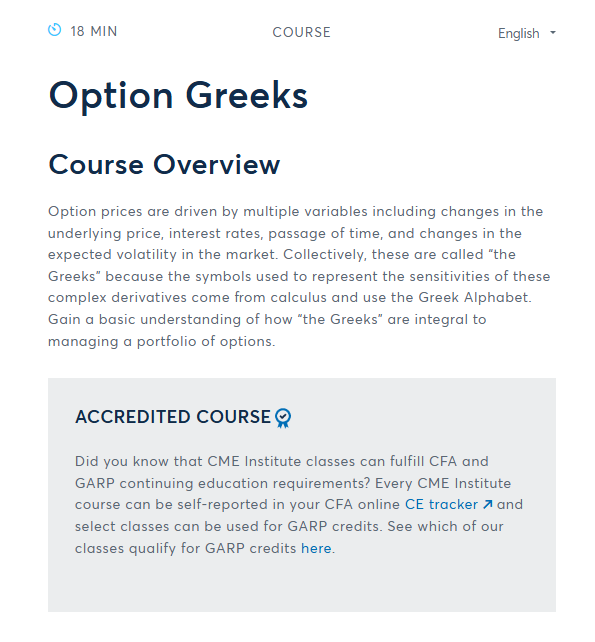
Option prices are driven by multiple variables including changes in the underlying price, interest rates, passage of time, and changes in the expected volatility in the market. Collectively, these are called “the Greeks” because the symbols used to represent the sensitivities of these complex derivatives come from calculus and use the Greek Alphabet. Gain a basic understanding of how “the Greeks” are integral to managing a portfolio of options.

Start Course.

66a1ed65 65e8 4c15 96b6 983947a60ecd
a4d902de 7319 4b6f a58f 69a9df6d3b8f
    • Hot Market of the Week

    Hot market of the week is provided by QT Market Center, A Swiss army knife charting package that’s not just for Hedgers, Cooperatives and Farmers alike but also for Spread traders, Swing traders and shorter time frame application for intraday traders with a unique proprietary indicator that can be applied to your specific trading needs.

    FREE TRIAL AVAILABLE

    May Wheat

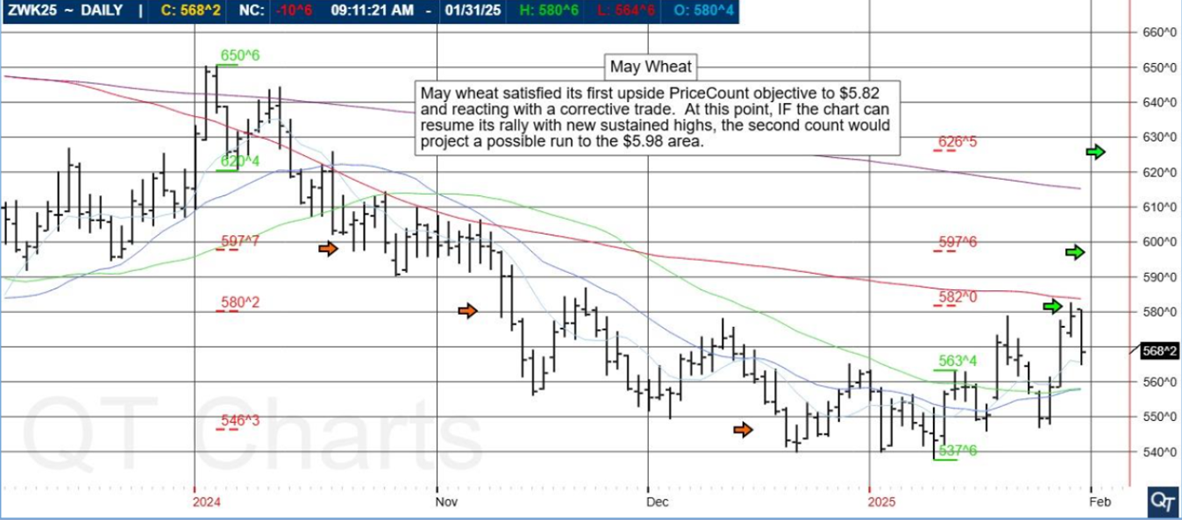
    May wheat futures satisfied its first upside PriceCount objective to $5.82 and reacting with a corrective trade. At this point, IF the chart can resume its rally with new sustained highs, the second count would project a possible run to the $5.98 area.


    PriceCounts – Not about where we’ve been , but where we might be going next!

41808abf 6b39 4f88 a466 ecf4e92a448f

The PriceCount study is a tool that can help to project the distance of a move in price. The counts are not intended to be an ‘exact’ science but rather offer a target area for the four objectives which are based off the first leg of a move with each subsequent count having a smaller percentage of being achieved. It is normal for the chart to react by correcting or consolidating at an objective and then either resuming its move or reversing trend. Best utilized in conjunction with other technical tools, PriceCounts offer one more way to analyze charts and help to manage your positions and risk. Learn more at www.qtchartoftheday.com
Trading in futures, options, securities, derivatives or OTC products entails significant risks which must be understood prior to trading and may not be appropriate for all investors. Past performance of actual trades or strategies is not necessarily indicative of future results.

Broker’s Trading System of the Week

With algorithmic trading systems becoming more prevalent in portfolio diversification, the following system has been selected as the broker’s choice for this month.

ES NZL

PRODUCT

Mini SP500


SYSTEM TYPE

Day Trading


Recommended Cannon Trading Starting Capital

$36,000


COST

USD 199 / monthly


Get Started


Learn More

NET, LIVE results below!

0a609d8c b92b 403b 9e6b 6ac738000ef8
fbf0d7b6 0862 4338 85cf 697f87497f07
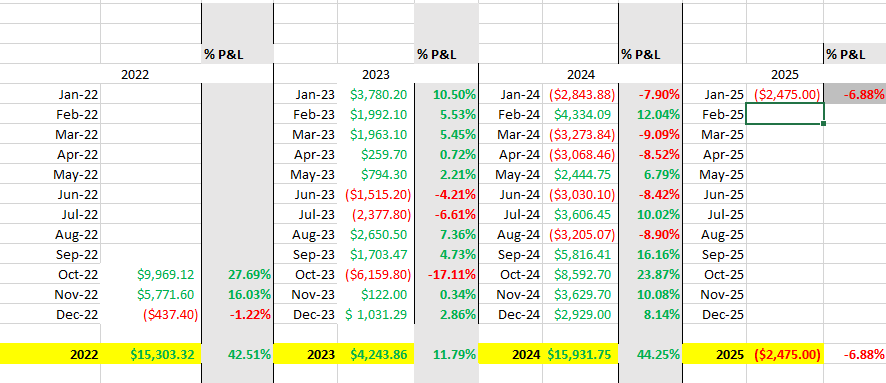
The performance shown above is hypothetical in that the chart represents returns in a model account. The model account rises or falls by the average single contract profit and loss achieved by clients trading actual money pursuant to the listed system’s trading signals on the appropriate dates (client fills), or if no actual client profit or loss available – by the hypothetical single contract profit and loss of trades generated by the system’s trading signals on that day in real time (real‐time) less slippage, or if no real time profit or loss available – by the hypothetical single contract profit and loss of trades generated by running the system logic backwards on back adjusted data. Please read full disclaimer HERE.

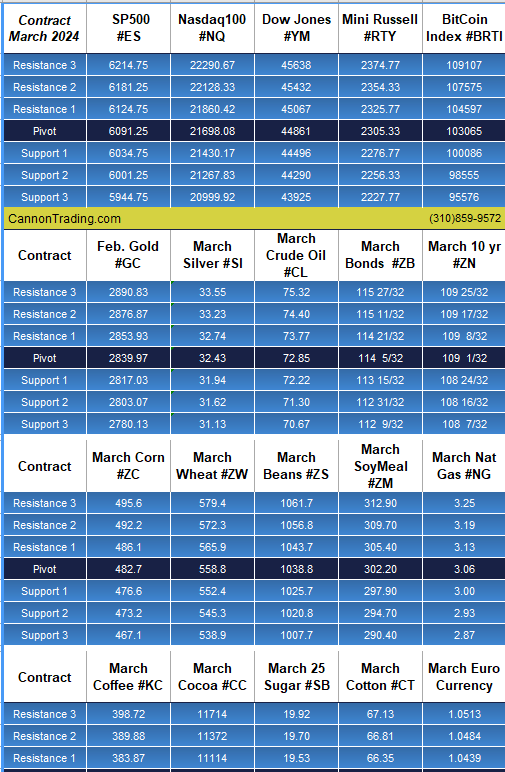
Daily Levels for February 3rd, 2025

773f6381 8a51 4ea3 8993 97d1ec3d55af

820c712f f614 495c 8984 d361bf2d99c3

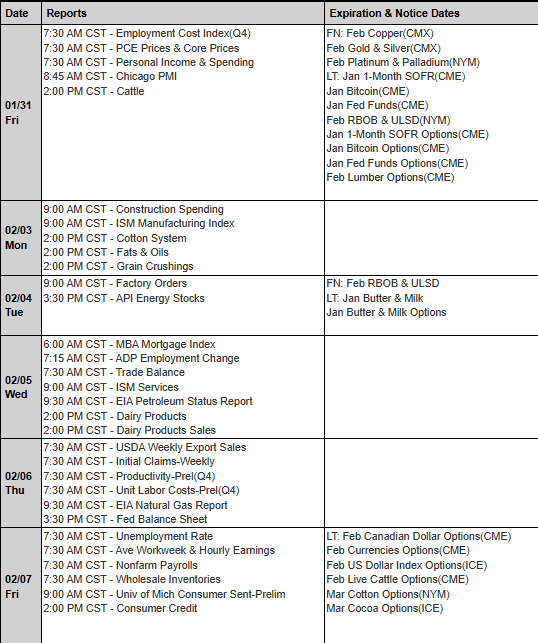
  • Trading Reports for Next Week

First Notice (FN), Last trading (LT) Days for the Week:
f3205079 fdfc 4c31 9a7e c04a86e0de51
377b038f 9e98 4ba9 acc6 157d4e8c9ae8
Good Trading!
About: Cannon Trading is an independent futures brokerage firm established in 1988 in Los Angeles. Our mission is to provide reliable service along with the latest technological advances and choices while keeping our clients informed and educated in the field of futures and commodities trading.
Trading Futures, Options on Futures, and retail off-exchange foreign currency transactions involves substantial risk of loss and is not suitable for all investors. You should carefully consider whether trading is suitable for you in light of your circumstances, knowledge, and financial resources. You may lose all or more of your initial investment. Opinions, market data, and recommendations are subject to change at any time.

Wheat Futures in the US: A Comprehensive Overview

Learn more about trading wheat futures with Cannon Trading Company here.

Wheat futures are an essential aspect of the American agricultural landscape, serving as a vital risk management tool for farmers, traders, and consumers alike. Understanding wheat futures requires an exploration of the growing areas in the United States, futures contract sizes, exchanges where wheat futures are traded, as well as the seasons for planting and harvesting. Additionally, weather patterns, including droughts, significantly impact wheat production and prices. Furthermore, there are various types of wheat grown in the US, such as winter wheat and spring wheat, each with its unique characteristics and uses.

Growing Areas in the United States

The United States is one of the largest producers of wheat in the world, with numerous regions contributing significantly to its cultivation. The primary wheat-growing areas include the Great Plains region, commonly known as the Wheat Belt. This vast expanse encompasses states like Kansas, North Dakota, South Dakota, Nebraska, and Oklahoma. The region’s fertile soils, semi-arid climate, and adequate rainfall provide optimal conditions for wheat cultivation.

Other significant wheat-producing states include Montana, Texas, Colorado, Washington, and Idaho. Each state has distinct climatic and soil conditions that influence the type of wheat grown and its overall yield.

Futures Contract Sizes

Wheat futures contracts are standardized agreements that allow traders to buy or sell a specified quantity of wheat at a predetermined price and delivery date in the future. In the US, wheat futures contracts generally represent 5,000 bushels of wheat. This standardized contract size provides liquidity to the market and enables efficient trading and hedging against price fluctuations.

Exchanges where Futures are Traded

The primary exchange for trading wheat futures in the US is the Chicago Board of Trade (CBOT), which is part of the CME Group. The CBOT, with its long-standing history, provides a robust platform for wheat futures trading, attracting a diverse range of participants, including farmers, millers, and speculators.

Seasons for Planting and Harvesting

Wheat cultivation in the US follows seasonal patterns, with planting and harvesting occurring at specific times of the year. The exact timing varies based on the type of wheat and regional climate conditions.

  1. Winter Wheat: Winter wheat, which is the most widely grown type in the US, is typically planted in the fall, from September to November. The young wheat plants go through a period of dormancy during the winter months and resume growth in the spring. Harvesting takes place in late spring to early summer, between May and July, depending on the region.
  2. Spring Wheat: As the name suggests, spring wheat is planted in the spring, from March to April, once the soil temperatures have warmed sufficiently. This type of wheat requires a shorter growing season and is typically harvested in late summer, between August and September.

The planting and harvesting schedules are carefully planned to optimize the use of resources and align with the climatic conditions that best support each type of wheat.

Weather Patterns and Droughts

Weather patterns have a substantial impact on wheat production and prices. Wheat is a hardy crop, but its yield is greatly influenced by factors such as temperature, rainfall, and soil moisture.

Excessive rainfall during the growing season can lead to waterlogged fields and increase the risk of diseases, potentially reducing the crop’s quality and yield. On the other hand, drought conditions can severely affect wheat production. Insufficient moisture during critical growth stages can cause stunted growth and poor kernel development, resulting in lower yields and diminished grain quality.

Droughts, in particular, pose a significant risk to wheat farmers and can lead to reduced harvests, higher wheat futures prices, and increased volatility in the market.

Types of Wheat

In the US, various types of wheat are grown, each with its distinct characteristics and uses. Some of the major types include:

  1. Hard Red Winter Wheat: This is the most widely grown type in the Wheat Belt. It is known for its high protein content, making it suitable for bread production.
  2. Soft Red Winter Wheat: Primarily cultivated in states like Ohio, Illinois, and Indiana, this type has lower protein content and is commonly used for pastries, cakes, and cookies.
  3. Hard Red Spring Wheat: Grown in northern states like North Dakota and Montana, this wheat has high protein content and is often used for bread and other baked goods.
  4. Soft White Wheat: Cultivated mainly in the Pacific Northwest, this wheat is used for products like cakes, pastries, and crackers.

Wheat futures in the US are a critical component of the agricultural industry, allowing farmers and traders to manage price risk and ensure stability in the wheat supply chain. Understanding the growing areas, contract sizes, trading exchanges, planting, and harvesting seasons is vital for participants in the wheat futures market. Furthermore, the impact of weather patterns, particularly droughts, cannot be overstated, as they significantly influence wheat production and prices. With various types of wheat cultivated in the US, each with its unique characteristics, wheat futures continue to play a pivotal role in ensuring a stable and resilient wheat market in the United States.

Ready to start trading futures? Call 1(800)454-9572 and speak to one of our experienced, Series-3 licensed futures brokers and start your futures trading journey at Cannon Trading Company today.

DisclaimerTrading Futures, Options on Futures, and retail off-exchange foreign currency transactions involves substantial risk of loss and is not suitable for all investors.  Past performance is not indicative of future results. You should carefully consider whether trading is suitable for you in light of your circumstances, knowledge, and financial resources. You may lose all or more of your initial investment. Opinions, market data, and recommendations are subject to change at any time.

7 things to know before trading Wheat Futures 4.19.2018

____________________________________________________________________

Voted #1 Blog and #1 Brokerage Services on  TraderPlanet   for 2016!!

____________________________________________________________________

Author: Joseph Easton, Senior Broker at Cannon Trading

Dear Traders,

  1. The Basics:

There are two types of Wheat most commonly traded…

“Chicago Soft Red Winter (SRW) and KC Hard Red Winter (HRW) are the global industry standards for wheat. Chicago SRW Wheat is the most liquid Wheat futures contract in the world, trading the equivalent of more than 15 million tons each day in 2013-9 ½ times more than the largest European contract. Producers, processors, millers and exporters continue to look to Chicago SRW and KC HRW Wheat for the liquidity that is critical for any risk management solution.

Liquidity means that you can execute positions quickly, effectively and efficiently. Liquidity offers more flexibility in structuring hedging strategies to meet your timing and market needs. And when the world is facing new challenges in Wheat risk management, liquidity provides the security you need in order to respond with confidence” – CME Group

84ed7e45 9d87 4182 ac9a 5b675b331a0e

Continue reading “7 things to know before trading Wheat Futures 4.19.2018”

7 Things to Know Before you Start Trading Wheat Futures

Author: Joseph Easton, Senior Broker at Cannon Trading

  1. The Basics:

There are two types of Wheat most commonly traded…

”Chicago Soft Red Winter (SRW) and KC Hard Red Winter (HRW) are the global industry standards for wheat. Chicago SRW Wheat is the most liquid Wheat futures contract in the world, trading the equivalent of more than 15 million tons each day in 2013–9 ½ times more than the largest European contract. Producers, processors, millers and exporters continue to look to Chicago SRW and KC HRW Wheat for the liquidity that is critical for any risk management solution.

Liquidity means that you can execute positions quickly, effectively and efficiently. Liquidity offers more flexibility in structuring hedging strategies to meet your timing and market needs. And when the world is facing new challenges in Wheat risk management, liquidity provides the security you need in order to respond with confidence” – CME Group

  • Types of  Wheat Futures: Chicago SRW Wheat Futures  and KC HRW Wheat Futures
  • Contract specifications: One contract (5,000 bushels) of deliverable (~ 136 Metric Tons)
  • Common Symbol:  CME Globex: ZW  and CME Globex: KE

Continue reading “7 Things to Know Before you Start Trading Wheat Futures”