|
|

|
|
|
|
|
|
|
|
|
|
Silver futures price is a topic of immense importance for futures traders, both novice and experienced. The ability to predict and trade silver futures effectively requires a deep understanding of historical price trends, the dynamics of futures contract trading, and the factors influencing the value of this precious metal. This article delves into the evolution of trading silver, its price fluctuations over time, and the advantages and disadvantages of silver futures trading. To illustrate key points, we include real-life anecdotes, case studies, and hypothetical scenarios. Additionally, we explore why Cannon Trading Company stands out as a top choice for trading futures.
Silver has been traded for centuries, with its value historically tied to its dual role as a monetary asset and an industrial commodity. During the Roman Empire, silver coins were a primary medium of exchange, anchoring economies with a standardized weight and purity. Fast forward to the 19th and early 20th centuries, silver’s role shifted as the gold standard dominated monetary policy. However, silver remained integral to global trade and industrial applications.
The establishment of futures markets in the 19th century transformed silver trading. The Chicago Board of Trade (CBOT) introduced standardized contracts, enabling traders to hedge and speculate on price movements effectively. This innovation made futures trading accessible, offering a regulated platform for trading futures contracts based on silver.
Silver’s price has experienced dramatic fluctuations. For instance, in the late 1970s, the Hunt brothers attempted to corner the silver market, driving prices from $6 per ounce in 1979 to an all-time high of $49.45 in January 1980. This bubble burst shortly after, causing prices to plummet, underscoring the volatility inherent in silver futures trading.
More recently, during the 2008 financial crisis, silver prices dropped to around $9 per ounce as industrial demand waned. However, as investors sought safe-haven assets, prices rebounded to $48 in 2011. These swings highlight the interplay of macroeconomic factors, including inflation fears, currency fluctuations, and industrial demand, that affect silver futures prices.
In the late 1970s, Nelson and William Hunt sought to monopolize the silver market by amassing substantial physical holdings and futures contracts. Initially, their strategy drove prices to record highs, creating immense paper profits. However, regulatory changes, including increased margin requirements, forced the Hunt brothers to liquidate their positions. This led to a catastrophic price crash, resulting in billions of dollars in losses.
This case underscores the importance of understanding regulatory frameworks and using leverage prudently when trading futures.
Consider a futures trader anticipating a short-term spike in silver prices due to geopolitical tensions. The trader buys a December silver futures contract at $24 per ounce, with an initial margin of $5,000. Over the next month, silver prices rise to $26 per ounce. The trader closes the position, realizing a profit of $10,000 (2,000 ounces x $2 price increase).
Now, imagine an alternate scenario where silver prices drop to $22. Without stop-loss orders, the trader incurs a $10,000 loss, highlighting the risks associated with leverage.
Cannon Trading Company is an industry leader in futures trading, offering unparalleled advantages for futures traders of all experience levels. Here’s why it stands out:
Cannon Trading provides access to a wide selection of advanced trading platforms, catering to diverse needs. From user-friendly interfaces for beginners to sophisticated tools for seasoned traders, their platforms enable seamless trading futures.
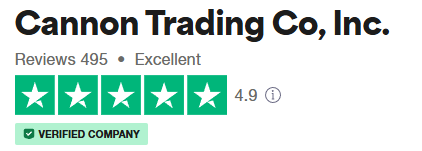
With a 5 out of 5-star rating on TrustPilot, Cannon Trading has earned the trust of its clients. Positive reviews consistently highlight the firm’s exceptional customer service, knowledgeable futures brokers, and commitment to transparency.
Established in 1988, Cannon Trading boasts decades of experience in the futures markets. Their team of seasoned professionals understands the intricacies of futures trading and offers personalized guidance to clients.
Cannon Trading maintains an exemplary reputation with regulatory bodies like the National Futures Association (NFA) and the Commodity Futures Trading Commission (CFTC). Traders can trust that their funds and transactions are handled with the utmost integrity.
Silver futures trading offers a unique blend of opportunities and challenges. Understanding historical price trends, leveraging advantages like hedging and liquidity, and navigating the risks of volatility and leverage are essential for success. With its extensive experience, top-rated platforms, and stellar reputation, Cannon Trading Company is an excellent choice for anyone looking to trade futures contracts. Whether you are an experienced futures trader or new to the world of trading futures, Cannon Trading provides the tools and support necessary to navigate the complexities of the futures markets confidently.
For more information, click here.
Ready to start trading futures? Call us at1(800)454-9572 – Int’l (310)859-9572 (International), or email info@cannontrading.com to speak with one of our experienced, Series-3 licensed futures brokers and begin your futures trading journey with Cannon Trading Company today.
Disclaimer: Trading Futures, Options on Futures, and retail off-exchange foreign currency transactions involve substantial risk of loss and are not suitable for all investors. Past performance is not indicative of future results. Carefully consider if trading is suitable for you in light of your circumstances, knowledge, and financial resources. You may lose all or more of your initial investment. Opinions, market data, and recommendations are subject to change at any time.
Important: Trading commodity futures and options involves a substantial risk of loss. The recommendations contained in this article are opinions only and do not guarantee any profits. This article is for educational purposes. Past performances are not necessarily indicative of future results.
This article has been generated with the help of AI Technology and modified for accuracy and compliance.
Follow us on all socials: @cannontrading
Coffee futures, a type of futures contract trading, have long been a staple in the soft commodities market. They allow traders to speculate on the price movements of coffee, one of the most widely consumed beverages globally. Futures contracts for coffee were introduced to provide price stability for producers and consumers. Over time, they evolved into a tool for futures traders seeking profits from price volatility.
The origins of coffee futures trace back to the early 20th century when coffee-producing countries sought ways to stabilize the volatile coffee market. In the 1920s, Brazil, the world’s largest coffee producer, played a pivotal role in developing mechanisms to manage price fluctuations. This effort laid the groundwork for coffee’s introduction to the global futures market.
Coffee futures provide a transparent pricing mechanism influenced by global supply and demand dynamics. This transparency benefits futures traders by offering clear entry and exit points for trades. Additionally, coffee futures markets, such as those on the Intercontinental Exchange (ICE), are highly liquid, enabling traders to execute large trades without significantly impacting prices.
Futures trading offers robust hedging opportunities. Coffee producers can lock in future prices to mitigate risks associated with fluctuating market conditions. Similarly, companies reliant on coffee as a raw material can hedge against rising prices to protect profit margins. For instance, a coffee shop chain might use futures contracts to secure a stable cost of coffee for a year, ensuring predictable operating expenses.
The volatility inherent in coffee prices makes it an attractive asset for speculative trading. Factors such as weather conditions, geopolitical events, and currency fluctuations can cause significant price swings, presenting futures traders with opportunities to profit.
While volatility can be advantageous for speculative futures trading, it also poses substantial risks. Price swings driven by unpredictable factors like droughts, floods, or political instability can lead to significant losses. For example, a futures trader who goes long on coffee futures during a predicted supply shortage may face unexpected losses if a bumper crop suddenly boosts supply.
Futures contract trading is inherently complex and requires a deep understanding of market dynamics. Leverage amplifies both gains and losses, making it possible to lose more than the initial investment. Novice traders often underestimate these risks, leading to financial distress.
Soft commodities like coffee are vulnerable to market manipulation. Large market participants can influence prices, potentially disadvantaging smaller futures traders. For instance, coordinated efforts by major players to stockpile coffee can artificially inflate prices, impacting futures contract values.
One of the most notable events in the history of coffee futures was the 1975 Brazilian frost. A severe freeze wiped out a significant portion of Brazil’s coffee crop, leading to a dramatic price surge. Futures traders who anticipated the frost’s impact reaped substantial profits, while those caught on the wrong side of the trade suffered heavy losses. This event highlighted the importance of weather monitoring in coffee futures trading.
Imagine a medium-sized coffee roaster anticipating a rise in coffee prices due to projected adverse weather conditions in Colombia. The company enters into a futures contract to buy 10,000 pounds of coffee at $1.50 per pound, locking in the price. When the market price later rises to $2.00 per pound, the roaster avoids the increased cost, saving $5,000. This hypothetical example underscores how futures trading can protect businesses from price volatility.
Sarah, a novice futures trader, started trading futures contracts in 2015. She initially faced challenges understanding the nuances of soft commodities like coffee. After attending a seminar by Cannon Trading Company, she gained insights into advanced trading strategies and risk management. By leveraging the educational resources and top-performing trading platforms provided by Cannon Trading, Sarah transitioned from learning lessons to confident, informed trading within two years.
Cannon Trading Company has established itself as a trusted partner for traders of all experience levels. With decades of experience in the futures markets, it offers an exemplary combination of technology, expertise, and customer support. Let’s explore why this firm stands out:
Cannon Trading provides a wide selection of trading platforms tailored to different trading styles and experience levels. Whether you are a beginner seeking user-friendly tools or an advanced futures trader requiring sophisticated analytics, their platforms cater to all needs. For instance, their Sierra Chart platform offers advanced charting tools and algorithmic trading capabilities.
Cannon Trading’s team of experienced futures brokers is committed to providing personalized support. From onboarding new clients to offering market insights, their proactive approach ensures traders feel supported at every step of their journey.
With a 5 out of 5-star rating on TrustPilot and an exemplary reputation with regulatory bodies, Cannon Trading demonstrates a commitment to transparency and ethical practices. This trustworthiness is crucial for traders seeking a reliable partner in the volatile world of futures trading.
Technical analysis is a cornerstone of futures trading. Traders use tools like moving averages, Fibonacci retracements, and candlestick patterns to predict price movements. For example, a trader identifying a bullish flag pattern on a coffee futures chart might decide to go long, anticipating a price increase.
Understanding the fundamentals driving coffee prices is equally important. Futures traders must stay informed about weather patterns, geopolitical developments, and economic trends. For instance, a report forecasting lower coffee yields in Vietnam, the second-largest coffee producer, could signal an impending price increase.
Effective risk management is critical for successful futures trading. Strategies like setting stop-loss orders, diversifying positions, and limiting leverage help mitigate potential losses. A seasoned futures trader might risk only 1-2% of their capital on a single trade, ensuring long-term sustainability.
John, an experienced futures trader, notices that coffee inventories are at a 10-year low, and weather forecasts predict drought conditions in Brazil. He enters a long position in coffee futures at $1.40 per pound. Two months later, prices rise to $1.80 per pound due to supply constraints. John exits the trade, earning a profit of $4,000 on a 10,000-pound contract.
Maria, a futures trader with a focus on macroeconomic trends, anticipates a strengthening U.S. dollar, which typically pressures coffee prices. She sells short a coffee futures contract at $1.60 per pound. As the dollar strengthens, coffee prices fall to $1.40 per pound. Maria closes her position, securing a $2,000 profit.
As global coffee consumption continues to grow, the importance of coffee futures in the trading landscape is likely to increase. Emerging technologies, such as AI-driven analytics and blockchain-based supply chain tracking, promise to revolutionize futures trading. For futures traders, staying ahead of these trends will be key to capitalizing on future opportunities.
Coffee futures represent a dynamic and rewarding segment of the futures market. With the right strategies and tools, futures traders can harness the advantages of trading futures contracts in this volatile yet lucrative commodity. Cannon Trading Company’s combination of top-performing trading platforms, experienced futures brokers, and a stellar reputation makes it an ideal partner for trading futures.
Whether you are new to futures trading or an experienced futures trader, leveraging the resources provided by trusted future brokers like Cannon Trading can significantly enhance your trading journey. By staying informed, managing risks, and continuously honing your skills, you can navigate the complexities of trading futures with confidence.
For more information, click here.
Ready to start trading futures? Call us at 1(800)454-9572 – Int’l (310)859-9572 (International), or email info@cannontrading.com to speak with one of our experienced, Series-3 licensed futures brokers and begin your futures trading journey with Cannon Trading Company today.
Disclaimer: Trading Futures, Options on Futures, and retail off-exchange foreign currency transactions involve substantial risk of loss and are not suitable for all investors. Past performance is not indicative of future results. Carefully consider if trading is suitable for you in light of your circumstances, knowledge, and financial resources. You may lose all or more of your initial investment. Opinions, market data, and recommendations are subject to change at any time.
Important: Trading commodity futures and options involves a substantial risk of loss. The recommendations contained in this article are opinions only and do not guarantee any profits. This article is for educational purposes. Past performances are not necessarily indicative of future results.
This article has been generated with the help of AI Technology and modified for accuracy and compliance.
Follow us on all socials: @cannontrading
Introduced in April 1982 by the Chicago Mercantile Exchange (CME), the S&P 500 Futures Contract represented a turning point in financial markets. Before its debut, traders had limited tools to hedge or speculate on the broader U.S. equity market. The S&P 500 index, comprising 500 of the largest publicly traded companies in the U.S., was already a key benchmark of market performance. By creating a derivative tied to the index, the CME provided traders and institutions with a liquid, leveraged way to manage risk or profit from market movements.
This new financial instrument quickly gained traction. Unlike individual stocks, S&P 500 Futures Contracts allowed participants to trade the entire market with a single position. It was a game-changer for portfolio managers, hedge funds, and individual traders alike.
Over the decades, the S&P 500 Futures Contract has undergone significant evolution. Initially, the contract was accessible only to institutional players with deep pockets. The margin requirements and notional value of the contract were high, making it impractical for smaller traders. However, the CME’s introduction of E-mini S&P 500 Futures in 1997 dramatically expanded accessibility.
These smaller contracts mirrored the original S&P 500 Futures Contract but with reduced notional value and margin requirements. Retail traders could now participate in the same market as institutional giants, leveling the playing field and increasing liquidity. The introduction of Micro E-mini S&P 500 Futures in 2019 further democratized futures trading, enabling even smaller trades with minimal financial commitment.
Technological advancements have also played a significant role. The advent of electronic trading platforms in the late 1990s transformed the market, making trading faster, more transparent, and widely accessible. Today, traders around the globe execute futures SP trades with just a few clicks, relying on real-time data and advanced analytics to inform their decisions.
As we approach 2025, the S&P 500 Futures Contract remains a cornerstone of global financial markets. It serves three primary purposes:
In recent years, rising geopolitical tensions, pandemic-related economic shocks, and rapid technological innovation have contributed to heightened market volatility. This volatility has increased the appeal of S&P 500 Futures Contracts, as traders capitalize on swift market movements.
Looking ahead to 2025, several trends are likely to shape the future of the S&P 500 Futures Contract:
For traders looking to capitalize on the opportunities offered by the S&P 500 Futures Contract, choosing the right brokerage is critical. Cannon Trading Company stands out as a premier choice for several compelling reasons.
The S&P 500 Futures Contract offers unparalleled flexibility and potential. Whether you aim to hedge against market risk, speculate on short-term price movements, or diversify your portfolio, this contract is a powerful tool. Partnering with a trusted brokerage like Cannon Trading Company amplifies these advantages, ensuring that you have the resources, support, and technology needed to excel in futures trading.
Trading prowess often hinges on timing, knowledge, and execution. With Cannon Trading Company by your side, you can navigate the complexities of the S&P 500 Futures Contract with confidence, turning market challenges into opportunities for growth.
The journey of the S&P 500 Futures Contract is a testament to the innovation and resilience of global financial markets. From its inception in 1982 to its modern iterations, the contract has continually adapted to the needs of traders and investors. As we approach 2025, its relevance remains stronger than ever, promising new opportunities amid evolving market dynamics.
For traders seeking to unlock the full potential of S&P 500 Futures Contracts, partnering with an experienced and reputable brokerage like Cannon Trading Company is a winning strategy. With its stellar reputation, advanced tools, and commitment to client success, Cannon Trading Company is the ultimate ally for navigating the exciting world of futures trading.
For more information, click here.
Ready to start trading futures? Call us at 1(800)454-9572 – Int’l (310)859-9572 (International), or email info@cannontrading.com to speak with one of our experienced, Series-3 licensed futures brokers and begin your futures trading journey with Cannon Trading Company today.
Disclaimer: Trading Futures, Options on Futures, and retail off-exchange foreign currency transactions involve substantial risk of loss and are not suitable for all investors. Past performance is not indicative of future results. Carefully consider if trading is suitable for you in light of your circumstances, knowledge, and financial resources. You may lose all or more of your initial investment. Opinions, market data, and recommendations are subject to change at any time.
Important: Trading commodity futures and options involves a substantial risk of loss. The recommendations contained in this article are opinions only and do not guarantee any profits. This article is for educational purposes. Past performances are not necessarily indicative of future results.
This article has been generated with the help of AI Technology and modified for accuracy and compliance.
Follow us on all socials: @cannontrading
Commodity brokerage is a cornerstone of the global financial markets, connecting traders to opportunities in futures and options. Among the many players in this competitive industry, Cannon Trading Company has emerged as a trusted name, celebrated for its enduring commitment to excellence, innovation, and client success. Established in 1988, Cannon Trading’s journey reflects the evolution of the futures markets and exemplifies why it continues to stand out as a top-tier choice for traders.
Cannon Trading Company began its journey in Los Angeles in 1988, founded with the vision of empowering traders to access the dynamic world of futures and options markets. From its inception, the firm was committed to delivering exceptional customer service and personalized guidance—a philosophy that remains at the heart of its operations today. At a time when commodity brokers were largely confined to traditional office-based interactions, Cannon Trading sought to redefine the client experience by embracing accessibility and transparency.
The 1990s were a transformative decade for the financial industry, as the advent of the internet revolutionized how markets operated. Recognizing the potential of this technological leap, Cannon Trading became an early adopter of online trading. By developing and offering some of the industry’s first online trading platforms, the firm empowered futures traders to execute trades with speed and efficiency, breaking barriers that had previously limited market access.
This pioneering move positioned Cannon Trading as a forward-thinking commodity brokerage, setting it apart from competitors who were slower to adapt. For the first time, traders could manage their portfolios, analyze market data, and execute trades—all from the comfort of their homes. Cannon’s embrace of online trading not only enhanced its reputation as an innovative futures broker but also laid the groundwork for the modern futures trading landscape.
As the futures markets evolved, so did Cannon Trading. Over the decades, the firm has built a reputation as a trusted commodity broker, offering clients access to a wide range of markets, including agricultural commodities, energy products, metals, financial futures, and indices. This breadth of expertise has made Cannon Trading a one-stop solution for traders looking to diversify their portfolios and explore opportunities in multiple asset classes.
Cannon Trading’s team of professional futures brokers brings decades of combined experience to the table, helping clients navigate the complexities of futures trading. Whether a client is new to the markets or an experienced futures trader, Cannon’s brokers provide tailored advice, technical analysis, and risk management strategies to help them achieve their trading goals.
One of the hallmarks of a reliable commodity brokerage is its adherence to industry standards and regulations. Cannon Trading is a proud member of the National Futures Association (NFA) and is registered with the Commodity Futures Trading Commission (CFTC). These affiliations underscore the company’s commitment to maintaining the highest levels of integrity, transparency, and compliance in its operations.
Cannon Trading has also earned a stellar reputation among its clients, reflected in its consistent 5 out of 5-star ratings on TrustPilot. This recognition speaks volumes about the firm’s dedication to client satisfaction and the quality of its services. In an industry where trust is paramount, Cannon Trading has built a legacy of reliability that few commodity brokers can match.
In today’s competitive trading environment, access to robust tools and technology is essential for success. Cannon Trading offers a suite of free trading platforms, catering to the diverse needs of its clients. Whether a trader prefers a user-friendly interface for basic order execution or advanced charting and algorithmic trading capabilities, Cannon’s platforms provide the functionality required to excel in futures trading.
Some of the popular platforms offered by Cannon Trading include:
These platforms are complemented by real-time market data, advanced charting tools, and educational resources, ensuring that Cannon’s clients have everything they need to succeed in trading futures.
Cannon Trading’s success is rooted in its unwavering commitment to its clients. Unlike many commodity brokers who prioritize transactional relationships, Cannon takes a consultative approach, focusing on building long-term partnerships. The firm’s brokers take the time to understand each client’s unique needs, trading style, and risk tolerance, tailoring their recommendations accordingly.
This personalized approach is particularly valuable for new futures traders, who often require guidance to navigate the complexities of the market. Cannon’s brokers provide educational resources, one-on-one consultations, and continuous support, empowering clients to make informed decisions and build their confidence in futures trading.
As the futures markets continue to evolve, Cannon Trading remains at the forefront of innovation. The firm has embraced advancements in algorithmic trading, artificial intelligence, and data analytics, ensuring that its clients have access to the latest tools and strategies. By staying ahead of industry trends, Cannon Trading continues to solidify its position as a leading commodity brokerage.
Cannon’s focus on education is another key factor in its success. The firm regularly publishes market analysis, trading tips, and educational content, helping its clients stay informed about market developments. This commitment to education reflects Cannon’s belief that an informed trader is a successful trader.
With over three decades of experience, Cannon Trading offers a unique combination of expertise, innovation, and client-focused service. Here are some of the key reasons why traders continue to choose Cannon as their futures broker:
Cannon Trading Company has come a long way since its humble beginnings in Los Angeles in 1988. From pioneering online trading in the 1990s to serving as a trusted futures broker in today’s fast-paced markets, Cannon Trading has consistently demonstrated its commitment to innovation, integrity, and client success. Its decades of experience, regulatory excellence, and top-tier client ratings make it an unparalleled choice for traders looking to navigate the exciting world of futures trading.
Whether you’re an experienced futures trader or just starting your journey in trading futures, Cannon Trading offers the expertise, tools, and support you need to achieve your goals. As a leading name in commodity brokerage, Cannon Trading Company stands as a shining example of what a modern commodity broker should be.
The S&P 500 Index Futures, also known as standard & poor’s 500 index futures, is a financial derivative that allows traders to speculate on the future value of the S&P 500 Index, one of the most widely followed stock market indices in the world. These futures contracts serve as a means of managing risk, offering both hedging capabilities and speculative opportunities. The s and p 500 futures contract provides exposure to the U.S. stock market’s performance without requiring traders to hold the actual underlying stocks. This contract’s prominence has made it one of the most traded assets globally, reflecting trends, economic indicators, and market sentiment.
The standard and poor’s 500 futures contract has its roots in the financial markets of the early 1980s. Developed by the Chicago Mercantile Exchange (CME), it was officially introduced for trading in 1982. The concept was initially designed to give institutional and retail investors an efficient way to hedge their portfolios against fluctuations in the S&P 500, which represents approximately 80% of the total U.S. market capitalization.
In the late 1970s, U.S. markets were becoming increasingly volatile due to various economic factors, such as inflation and changes in monetary policy. The S&P 500 index, established decades earlier, had gained a solid reputation for accurately representing the U.S. economy’s performance. As a result, financial professionals and individual investors alike were seeking new ways to protect their investments. The development of spx index futures was a direct response to these demands, providing an innovative tool for managing equity risk.
Since its inception, standard & poor’s 500 index futures have experienced significant price fluctuations, reflecting changes in market sentiment, macroeconomic factors, and global events. Initially, these futures contracts began trading at levels near the index’s value, allowing investors to gain exposure to the market’s performance with minimal capital. Throughout the 1980s and 1990s, the S&P 500 index experienced steady growth as the economy expanded, with notable milestones in the technology and internet boom of the late 1990s.
The early 2000s, however, marked a significant downturn in the market due to the dot-com bubble. This period saw the s and p 500 futures contract decline sharply as technology stocks collapsed. The S&P 500 index futures reached their lowest levels during the early 2000s recession, but the market eventually rebounded due to monetary policy changes and renewed investor confidence. The 2008 global financial crisis led to another significant decline in standard and poor’s 500 futures, reflecting the uncertainty and economic strain at the time. However, aggressive fiscal policies and quantitative easing measures helped stabilize the market, leading to a prolonged recovery.
In the 2010s, the s&p 500 futures index saw remarkable growth, reaching new highs as technology stocks led the way and economic conditions improved. The introduction of automated and algorithmic trading contributed to increased liquidity and trading volume, propelling the futures contracts’ popularity further. Most recently, futures s&p 500 experienced unprecedented volatility due to the COVID-19 pandemic, which led to sharp declines and a rapid recovery as governments and central banks around the world implemented economic stimulus measures. By 2024, the futures sp trades at an impressive level of 5,994, reflecting the resilience and sustained growth of the U.S. economy.
Several factors have influenced the price movement of sp500 index futures, including:
Current Trading Level and Market Position
As of now, futures s&p 500 are trading at approximately 5,994. This level represents years of market growth driven by strong corporate performance, advances in technology, and accommodative monetary policies. The current price level also suggests investor optimism and confidence in the U.S. economy’s resilience, despite recent economic challenges.
Cannon Trading Company stands out as an ideal broker for trading spx index futures due to several key factors:
For traders looking to navigate the complexities of this market, Cannon Trading Company stands as a reliable partner, offering decades of experience, a free trading platform, exceptional customer service, and a stellar regulatory reputation. With Cannon Trading, traders can confidently access the s and p 500 futures contract, making it an excellent choice for those seeking a robust and reputable brokerage.
For more information, click here.
Ready to start trading futures? Call us at 1(800)454-9572 – Int’l (310)859-9572 (International), or email info@cannontrading.com to speak with one of our experienced, Series-3 licensed futures brokers and begin your futures trading journey with Cannon Trading Company today.
Disclaimer: Trading Futures, Options on Futures, and retail off-exchange foreign currency transactions involve substantial risk of loss and are not suitable for all investors. Past performance is not indicative of future results. Carefully consider if trading is suitable for you in light of your circumstances, knowledge, and financial resources. You may lose all or more of your initial investment. Opinions, market data, and recommendations are subject to change at any time.
Important: Trading commodity futures and options involves a substantial risk of loss. The recommendations contained in this article are opinions only and do not guarantee any profits. This article is for educational purposes. Past performances are not necessarily indicative of future results.
This article has been generated with the help of AI Technology and modified for accuracy and compliance.
Follow us on all socials: @cannontrading
|
|
|
|
|
|