|
|
|||||||||||||||||||||||||||||||||||||||||||||||||||||||||||||||||||||||||||||||||||||||||||||||||||||||||||||||||||||||||||||||||||
|
|||||||||||||||||||||||||||||||||||||||||||||||||||||||||||||||||||||||||||||||||||||||||||||||||||||||||||||||||||||||||||||||||||
|
Investment is a game of money of securing future money by taking a risk today. Trading therefore comes with a list of rules to play by. Commodity trading in particular offers tremendous potential for becoming a completely different asset class.
However, before investing in any kind of commodity, you must do an in depth research and also ask your broker as many questions as possible. Through this category archive we provide you as much information and valuable insights into the world of commodity trading.
We at Cannon Trading are here to help you with your commodity trading needs. You as a trader should select your commodity trading advisor only after performing a due diligence on him/her. We in fact do that for you. This way, you get only the best advice to help you with your commodity trading.
We’ve got the information that you might need at every step of commodity trading, and you’ll find it all right here in the commodity trading section of our blog. Read up, and read on to get equipped!
|
|
|||||||||||||||||||||||||||||||||||||||||||||||||||||||||||||||||||||||||||||||||||||||||||||||||||||||||||||||||||||||||||||||||||
|
|||||||||||||||||||||||||||||||||||||||||||||||||||||||||||||||||||||||||||||||||||||||||||||||||||||||||||||||||||||||||||||||||||
|
Futures markets have evolved dramatically over the past several decades. Electronic execution, algorithmic strategies, and institutional-grade analytics have reshaped how traders interact with global derivatives markets.
In this changing environment, futures brokers play a far greater role than simply executing orders. Modern brokerage firms provide infrastructure, research, technology integration, and risk tools that can significantly enhance a trader’s performance.
As markets become increasingly data-driven, choosing the right brokerage partner becomes a strategic decision. The most effective brokers combine cutting-edge platforms with experienced support teams.
Cannon Trading Company has established itself as one of the most respected firms in the industry, helping traders navigate futures markets for decades through technology, education, and execution expertise.
Understanding how brokers support traders in the modern era reveals why strong brokerage relationships remain essential.
The futures industry once relied on open outcry trading pits. Traders shouted orders on exchange floors and relied heavily on human intermediaries.
The introduction of electronic trading platforms changed everything.
According to CME Group historical market development data, electronic futures trading expanded dramatically during the early 2000s and quickly became the dominant execution method.
Modern trading platforms now allow traders to access global futures markets instantly.
Because markets evolve rapidly, futures brokers help traders stay competitive by offering access to the latest technology and execution tools.
Speed and accuracy matter enormously in futures markets. Price movements occur in milliseconds, especially in highly liquid contracts such as E-Mini index futures.
Technology provided by brokerage firms helps traders compete effectively.
For example, modern trading platforms allow traders to monitor multiple markets simultaneously.
Technology also supports better decision-making.
The best futures brokers ensure traders have access to these capabilities without requiring expensive infrastructure.
This democratization of technology has allowed independent traders to compete alongside institutional market participants.
Execution infrastructure is one of the most important services provided by brokerage firms.
When a trader submits an order, that order must travel through secure routing systems to reach exchange matching engines.
Latency, reliability, and data integrity are critical.
These systems ensure trades execute quickly and accurately.
Professional futures brokers maintain these systems so traders do not need to build expensive trading infrastructure themselves.
For many traders, this backend technology represents the difference between efficient trading and costly execution delays.
Data has become the most valuable resource in modern futures trading.
Market participants analyze order flow, volume patterns, volatility structures, and macroeconomic signals.
Brokerage firms help traders access this data efficiently.
High-quality futures platforms offer powerful analytical tools.
Analytics also support strategy development.
Through these services, futures brokers transform raw market data into actionable insights.
This analytical edge is increasingly important as global markets grow more competitive.
Successful futures trading requires strong risk management.
Futures contracts are leveraged instruments, meaning price movements can produce significant gains or losses.
Brokerage platforms help traders control exposure.
These tools protect traders from excessive risk.
Professional futures brokers integrate these systems directly into their trading platforms.
This ensures traders remain aware of their exposure at all times.
Such safeguards are particularly important during volatile market periods.
Algorithmic trading continues to expand across futures markets.
Institutional participants increasingly rely on automated strategies to execute trades efficiently.
Retail traders now have access to similar capabilities through brokerage platforms.
Many platforms supported by brokerage firms allow strategy automation.
With proper support from futures brokers, traders can deploy sophisticated algorithmic systems previously available only to hedge funds.
The democratization of algorithmic tools has significantly expanded trading opportunities.
Technology alone does not guarantee trading success.
Education remains one of the most valuable services offered by professional brokers.
Experienced brokerage firms provide educational resources that help traders understand market dynamics.
Educational guidance from futures brokers helps traders avoid common mistakes and develop disciplined trading approaches.
This guidance is particularly valuable for traders transitioning from equities into derivatives markets.


Cannon Trading Company has built a strong reputation over decades of serving futures traders.
The firm combines deep industry experience with advanced technology access.
Its approach focuses on personalized support and robust trading infrastructure.
Cannon Trading Company also provides connectivity to major exchanges such as CME Group.
Unlike some firms that emphasize automation alone, Cannon Trading combines technology with human expertise.
This hybrid model helps traders navigate complex market environments.
Many traders trust the firm because it has consistently adapted to new market technologies while maintaining personalized client relationships.
Reputation plays a major role when selecting a brokerage partner.
Trust becomes critical when traders rely on a firm to handle funds, orders, and market access.
Platforms such as Trustpilot provide insights into client experiences with brokerage firms.
Reliable futures brokers typically share several common characteristics.
Cannon Trading Company’s decades-long presence in the futures industry reflects its ability to maintain client trust while adapting to new technological demands.
This consistency remains one of the firm’s most valuable strengths.
Technology will continue reshaping futures trading in the coming years.
Artificial intelligence, predictive analytics, and automation are already influencing market behavior.
Brokerage firms will play a central role in making these innovations accessible to traders.
As these tools evolve, futures brokers will continue bridging the gap between advanced financial technology and individual traders.
Brokerage firms that combine innovation with experienced guidance will remain essential to traders seeking an edge in global futures markets.
Cannon Trading Company’s commitment to technology, education, and execution reliability positions it strongly for the next generation of futures trading.
What do futures brokers actually do?
Futures brokers provide traders with access to futures exchanges such as CME Group. They facilitate order execution, provide trading platforms, offer market data, and manage account risk and margin requirements.
Why are futures brokers important for modern trading?
Modern futures markets require fast execution, advanced analytics, and reliable infrastructure. Brokers provide the technology, connectivity, and support that individual traders typically cannot build independently.
What technology do futures brokers provide traders?
Most brokerage firms provide:
These technologies help traders analyze markets and execute strategies efficiently.
Why is Cannon Trading Company considered a top brokerage?
Cannon Trading Company has served futures traders for decades. The firm offers advanced trading platforms, experienced broker support, strong exchange connectivity, and extensive educational resources.
How can technology improve futures trading performance?
Technology improves trading performance by enabling faster execution, better market analysis, improved risk management, and the ability to automate strategies.
Examples include algorithmic trading systems, advanced charting tools, and automated order routing.
Ready to start trading futures? Call us at 1(800)454-9572 (US) or (310)859-9572 (International), or email info@cannontrading.com to speak with one of our experienced, Series-3 licensed futures brokers and begin your futures trading journey with Cannon Trading Company today.
Disclaimer: Trading Futures, Options on Futures, and retail off-exchange foreign currency transactions involve substantial risk of loss and are not suitable for all investors. Past performance is not indicative of future results. Carefully consider if trading is suitable for you in light of your circumstances, knowledge, and financial resources. You may lose all or more of your initial investment. Opinions, market data, and recommendations are subject to change at any time.
Important: Trading commodity futures and options involves a substantial risk of loss. The recommendations contained in this article are opinions only and do not guarantee any profits. This article is for educational purposes. Past performances are not necessarily indicative of future results.
This article has been generated with the help of AI Technology and modified for accuracy and compliance.
Follow us on all socials: @cannontrading

E-Mini futures have become one of the most actively traded derivatives in global markets. Introduced by CME to provide smaller, accessible contracts, E-Mini products opened futures participation to a broader audience while maintaining institutional-grade liquidity.
Understanding the mechanics of E-Mini futures trading is essential for modern traders. Equally important is the role that professional futures brokers play in navigating advanced markets, selecting reliable commodity trading platforms, and building strategies supported by experienced commodities brokers.
Technology continues reshaping futures markets. From faster execution to sophisticated data visualization, traders rely on brokerage infrastructure more than ever. Firms like Cannon Trading Company have built decades of expertise helping traders adapt to this technological evolution.
This guide explains the foundations of E-Mini futures trading and how the right broker partnership can dramatically enhance trading outcomes.
E-Mini futures are electronically traded futures contracts representing a fraction of the value of standard futures contracts. They were created by CME to make futures trading more accessible.
The most widely traded contract is the E-Mini S&P 500.
Because E-Mini contracts are standardized through CME, they offer consistent pricing and transparency. These qualities attract both institutional traders and individual participants.
However, successful participation requires infrastructure. Traders rely on experienced futures brokers to access exchanges, manage risk, and maintain reliable execution.
Modern commodity trading platforms provide depth-of-market tools, real-time charting, and order management systems necessary for active futures trading.
In addition, knowledgeable commodities brokers help traders interpret contract specifications, margin requirements, and settlement procedures.
Since their introduction in the late 1990s, E-Mini futures have transformed derivatives markets.
Originally designed to mirror larger index futures, they quickly gained popularity due to efficiency and lower capital requirements.
These developments changed the role of futures brokers.
Traditional brokerage once focused primarily on order execution. Today, brokers offer integrated trading ecosystems, combining education, technology, and execution.
Modern commodity trading platforms allow traders to analyze order flow, simulate strategies, and automate execution.
At the same time, experienced commodities brokers help traders understand the practical implications of volatility, contract rollover, and margin adjustments.
This combination of technology and human expertise forms the backbone of professional futures trading.
E-Mini futures remain one of the most popular derivative instruments for several reasons.
First, they offer efficient exposure to major financial indexes.
Second, they allow traders to participate in both rising and falling markets.
Third, liquidity is extremely high.
However, trading these contracts effectively still requires professional infrastructure.
Reliable commodity trading platforms ensure that orders reach exchanges quickly and accurately.
Meanwhile, experienced futures brokers help traders maintain proper risk controls and margin compliance.
Professional commodities brokers also provide insights into market structure, contract expiration cycles, and exchange rule changes.
These services become increasingly important as trading technology evolves.
Before trading E-Mini futures, traders must understand several key mechanics.
These fundamentals influence profitability and risk management.
Each element directly affects trading decisions.
For example, tick size determines how price movements translate into profits or losses.
Experienced commodities brokers often walk traders through these details during account setup and onboarding.
Professional futures brokers also provide margin guidance, ensuring traders understand the capital required to maintain positions.
Modern commodity trading platforms display these parameters automatically, helping traders monitor exposure in real time.
Understanding these fundamentals builds the foundation for consistent trading performance.
Technology has become one of the most important factors in modern derivatives trading.
Today’s futures markets operate at extraordinary speed.
Execution latency, data quality, and platform stability all influence trading outcomes.
These tools give traders deeper insights into market behavior.
However, technology alone is not enough.
Experienced futures brokers help traders select appropriate platforms, configure data feeds, and ensure stable connectivity.
Professional commodities brokers also assist in understanding how automated systems interact with market volatility.
As markets become increasingly digital, the collaboration between traders and brokers becomes even more critical.
Professional brokerage support plays a vital role in futures trading success.
Quality futures brokers offer far more than simple order routing.
Many traders underestimate how valuable broker guidance can be.
During periods of extreme volatility, experienced brokers can provide insight into margin adjustments, exchange rule changes, and liquidity shifts.
Professional commodities brokers often serve as strategic advisors, helping traders refine trading plans and avoid costly mistakes.
In addition, brokers ensure traders have access to the most stable commodity trading platforms, minimizing downtime during active market sessions.
This partnership can significantly improve a trader’s long-term consistency.
Platform selection is one of the most important decisions a futures trader makes.
The best commodity trading platforms combine reliability, speed, and analytical tools.
Many traders use multiple commodity trading platforms depending on their strategy.
Scalpers may prefer highly responsive interfaces designed for rapid execution.
Swing traders may prioritize analytical charting environments.
Experienced futures brokers help traders evaluate these differences and determine which platform best fits their strategy.
Meanwhile, knowledgeable commodities brokers often assist in configuring platform settings, ensuring traders understand order types, bracket orders, and automated risk management tools.
Proper platform selection can significantly influence execution efficiency.
Risk management remains the cornerstone of professional futures trading.
Even the best trading strategy can fail without proper risk controls.
Effective risk management involves both discipline and infrastructure.
Professional futures brokers help traders establish margin policies that prevent over-leveraging.
Advanced commodity trading platforms provide real-time monitoring of open positions and account equity.
Meanwhile, experienced commodities brokers help traders interpret volatility changes that may require adjustments to risk parameters.
These safeguards become especially important during major economic announcements or geopolitical events.
By combining technology with professional guidance, traders can manage risk more effectively.
Cannon Trading Company has built a reputation as one of the most respected brokerage firms in the futures industry.
Founded decades ago, the firm has consistently focused on client support, advanced technology, and market expertise.
Several factors contribute to its long-standing reputation.
Cannon Trading Company’s team includes knowledgeable commodities brokers who work closely with traders at every experience level.
These professionals help clients understand market structure, select platforms, and refine risk management practices.
In addition, the firm works with a wide network of futures brokers and technology providers, ensuring traders receive reliable exchange connectivity.
This combination of experience and innovation has helped Cannon Trading Company remain a trusted brokerage partner for decades.
While automation continues transforming financial markets, human expertise remains indispensable.
Trading technology may execute orders instantly, but interpreting market context requires experience.
Experienced commodities brokers understand how macroeconomic factors influence futures markets.
Professional futures brokers also help traders interpret exchange announcements, margin adjustments, and contract changes.
Meanwhile, powerful commodity trading platforms provide the analytical tools necessary to evaluate these developments.
When traders combine technology with experienced brokerage support, they gain both speed and perspective.
This hybrid approach represents the future of successful futures trading.
Mastering E-Mini futures trading requires discipline, education, and the right infrastructure.
Traders who succeed typically combine several key elements.
Professional futures brokers help traders build a structured approach to market participation.
Knowledgeable commodities brokers provide ongoing guidance as market conditions evolve.
At the same time, advanced commodity trading platforms allow traders to analyze market data, execute strategies, and manage positions with precision.
When these components work together, traders gain a significant advantage.
E-Mini futures trading is not simply about placing orders. It is about building a professional trading environment supported by technology, expertise, and disciplined strategy.
Cannon Trading Company has spent decades helping traders build exactly that kind of environment.
What are E-Mini futures?
E-Mini futures are smaller versions of major futures contracts introduced by CME. They provide exposure to major financial indexes while requiring less capital than standard futures contracts.
Why are E-Mini futures popular among traders?
They offer high liquidity, nearly 24-hour trading, efficient margin usage, and transparent pricing through CME electronic markets.
What role do futures brokers play in trading?
Futures brokers provide exchange access, risk management guidance, execution infrastructure, and support for trading technology. Their expertise helps traders navigate complex futures markets.
Why are commodity trading platforms important?
Professional commodity trading platforms provide charting tools, order execution systems, and real-time risk monitoring that allow traders to manage positions effectively.
What do commodities brokers do?
Commodities brokers help traders understand futures contracts, margin requirements, trading strategies, and market structure. They also assist with platform configuration and account management.
Why choose Cannon Trading Company?
Cannon Trading Company offers decades of brokerage experience, access to advanced platforms, competitive commissions, and personalized support from knowledgeable brokerage professionals.
Ready to start trading futures? Call us at 1(800)454-9572 (US) or (310)859-9572 (International), or email info@cannontrading.com to speak with one of our experienced, Series-3 licensed futures brokers and begin your futures trading journey with Cannon Trading Company today.
Disclaimer: Trading Futures, Options on Futures, and retail off-exchange foreign currency transactions involve substantial risk of loss and are not suitable for all investors. Past performance is not indicative of future results. Carefully consider if trading is suitable for you in light of your circumstances, knowledge, and financial resources. You may lose all or more of your initial investment. Opinions, market data, and recommendations are subject to change at any time.
Important: Trading commodity futures and options involves a substantial risk of loss. The recommendations contained in this article are opinions only and do not guarantee any profits. This article is for educational purposes. Past performances are not necessarily indicative of future results.
This article has been generated with the help of AI Technology and modified for accuracy and compliance.
Follow us on all socials: @cannontrading
|
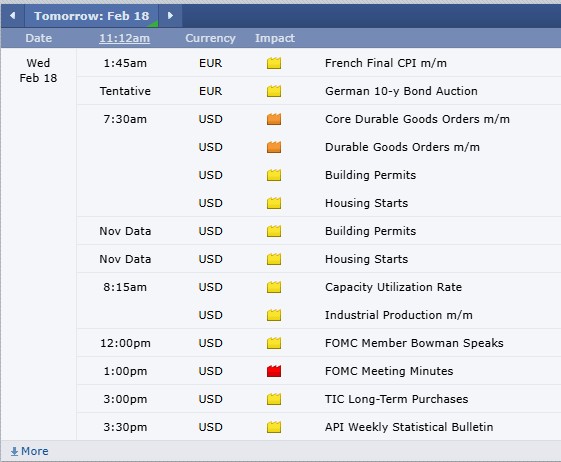
FOMC Approaching!Lunar New Year Holiday Notice – Hong Kong & ChinaPlease note that February 17–19 is a public holiday in Hong Kong and China in observance of the Lunar New Year.We wish all our traders across the Far East a Happy Lunar New Year and a prosperous year ahead. |
|
|
|||||||||||||||||||||||||||||||||||||||||||||||||||
|
|||||||||||||||||||||||||||||||||||||||||||||||||||
|
|
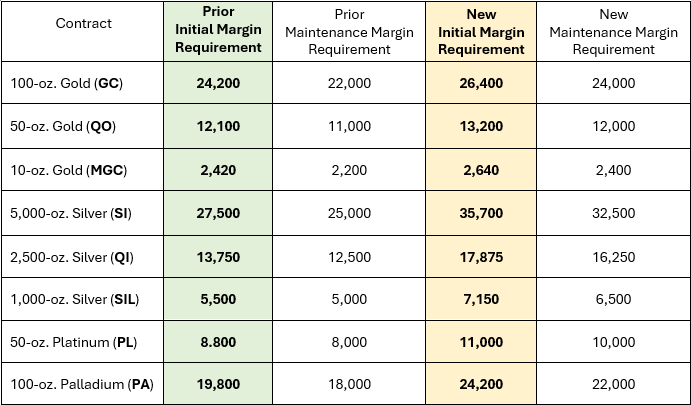
NFP Friday, Margin Increase on MetalsBy Mark O’Brien, Senior Broker |
|
|
|||||||||||||||||||||||||||||||||||||||||||||||||||||||||||||||||||||||||||||||||||||||||||||||||||||||||||||||||||||||||||||||||||||
|
|||||||||||||||||||||||||||||||||||||||||||||||||||||||||||||||||||||||||||||||||||||||||||||||||||||||||||||||||||||||||||||||||||||
|
|
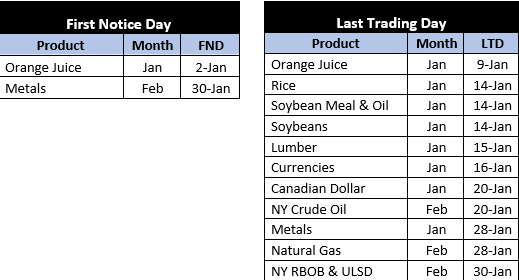
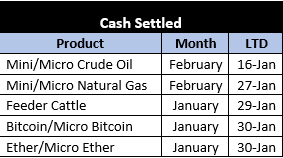
More Cryptocurrency Available for Trading! First Notice/Last Trading Day (FNLT), Cash Settled
|
|
|
|||||||||||||||||||||||||||||||||||||||||||||||||||||||||||||||||||||||||||||||||||||||||||||||||||||||||||||||||||||||||||||||||||||||||
|
|||||||||||||||||||||||||||||||||||||||||||||||||||||||||||||||||||||||||||||||||||||||||||||||||||||||||||||||||||||||||||||||||||||||||
|
|
|
|
|||||||||||||||||||||||||||||||||||||||||||||||||||||||
|
|||||||||||||||||||||||||||||||||||||||||||||||||||||||
|
|
|
|
||||||||||||||||||||||||||||||||||||||||||||||||||||||
|
||||||||||||||||||||||||||||||||||||||||||||||||||||||
|
|
|
Like in trading, Sports and many other endeavors in life…Preparation is sometimes 50% of the battle!
|
|
|
|
|
|
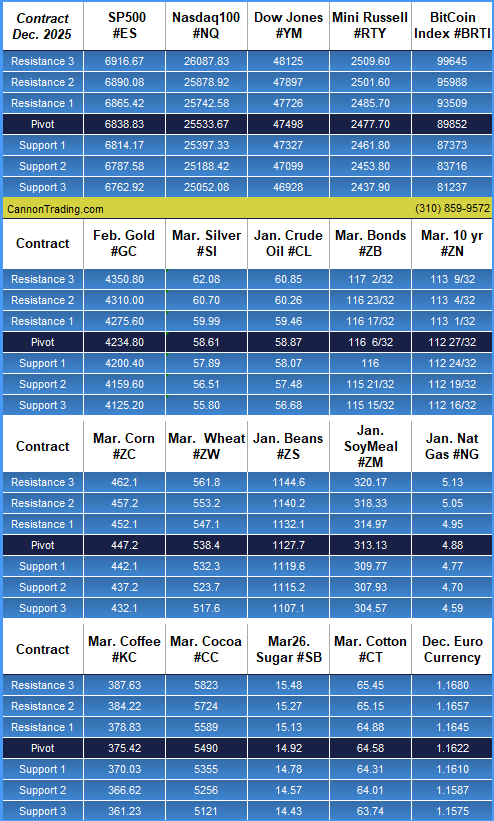
| Instrument | S2 | S1 | Pivot | R1 | R2 | ||
|---|---|---|---|---|---|---|---|
Gold (GC)— Feb(#GC) |
4159.60 | 4200.40 | 4234.80 | 4275.60 | 4310.00 | ||
Silver (SI)— Mar. (#SI) |
56.51 | 57.89 | 58.61 | 59.99 | 60.70 | ||
Crude Oil (CL)— Jan (#CL) |
57.48 | 58.07 | 58.87 | 59.46 | 60.26 | ||
Mar. Bonds (ZB)— Mar (#ZB) |
115 21/32 | 116 | 116 6/32 | 116 17/32 | 116 23/32 |
|
|||||||||||||||||||||||||||||||||||||||||||||||||||||||||||
|
|||||||||||||||||||||||||||||||||||||||||||||||||||||||||||
|