|
|
|
|
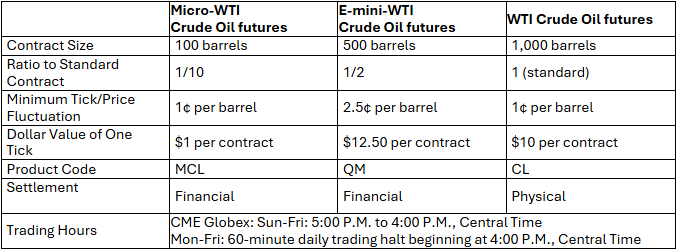
A naturally found substance, crude oil is also one of the most traded commodities. It is crude oil that is further refined so as to make petroleum products. Just like with every other commodity, crude oil too has its specific ticker symbol, contract value and margin.
The margin is variable as it keeps changing as per the volatility in the market as well as according to the current value of the contract. If you are interested in crude oil trading or are already trading in this commodity, it is important for you to know that over the past 50 years the price of this commodity has been denominated in U.S. Dollars.
At Cannon Trading we help you trade crude oil at some of the best day trading margin rates. Our brokers will do their best to keep you aware of the market happenings to help you exercise call and put options carefully. In order to get more information on crude oil and commodities, read this category archive blog. Please feel free to share this information.
|
|
|
|
Silver futures price is a topic of immense importance for futures traders, both novice and experienced. The ability to predict and trade silver futures effectively requires a deep understanding of historical price trends, the dynamics of futures contract trading, and the factors influencing the value of this precious metal. This article delves into the evolution of trading silver, its price fluctuations over time, and the advantages and disadvantages of silver futures trading. To illustrate key points, we include real-life anecdotes, case studies, and hypothetical scenarios. Additionally, we explore why Cannon Trading Company stands out as a top choice for trading futures.
Silver has been traded for centuries, with its value historically tied to its dual role as a monetary asset and an industrial commodity. During the Roman Empire, silver coins were a primary medium of exchange, anchoring economies with a standardized weight and purity. Fast forward to the 19th and early 20th centuries, silver’s role shifted as the gold standard dominated monetary policy. However, silver remained integral to global trade and industrial applications.
The establishment of futures markets in the 19th century transformed silver trading. The Chicago Board of Trade (CBOT) introduced standardized contracts, enabling traders to hedge and speculate on price movements effectively. This innovation made futures trading accessible, offering a regulated platform for trading futures contracts based on silver.
Silver’s price has experienced dramatic fluctuations. For instance, in the late 1970s, the Hunt brothers attempted to corner the silver market, driving prices from $6 per ounce in 1979 to an all-time high of $49.45 in January 1980. This bubble burst shortly after, causing prices to plummet, underscoring the volatility inherent in silver futures trading.
More recently, during the 2008 financial crisis, silver prices dropped to around $9 per ounce as industrial demand waned. However, as investors sought safe-haven assets, prices rebounded to $48 in 2011. These swings highlight the interplay of macroeconomic factors, including inflation fears, currency fluctuations, and industrial demand, that affect silver futures prices.
In the late 1970s, Nelson and William Hunt sought to monopolize the silver market by amassing substantial physical holdings and futures contracts. Initially, their strategy drove prices to record highs, creating immense paper profits. However, regulatory changes, including increased margin requirements, forced the Hunt brothers to liquidate their positions. This led to a catastrophic price crash, resulting in billions of dollars in losses.
This case underscores the importance of understanding regulatory frameworks and using leverage prudently when trading futures.
Consider a futures trader anticipating a short-term spike in silver prices due to geopolitical tensions. The trader buys a December silver futures contract at $24 per ounce, with an initial margin of $5,000. Over the next month, silver prices rise to $26 per ounce. The trader closes the position, realizing a profit of $10,000 (2,000 ounces x $2 price increase).
Now, imagine an alternate scenario where silver prices drop to $22. Without stop-loss orders, the trader incurs a $10,000 loss, highlighting the risks associated with leverage.
Cannon Trading Company is an industry leader in futures trading, offering unparalleled advantages for futures traders of all experience levels. Here’s why it stands out:
Cannon Trading provides access to a wide selection of advanced trading platforms, catering to diverse needs. From user-friendly interfaces for beginners to sophisticated tools for seasoned traders, their platforms enable seamless trading futures.
With a 5 out of 5-star rating on TrustPilot, Cannon Trading has earned the trust of its clients. Positive reviews consistently highlight the firm’s exceptional customer service, knowledgeable futures brokers, and commitment to transparency.
Established in 1988, Cannon Trading boasts decades of experience in the futures markets. Their team of seasoned professionals understands the intricacies of futures trading and offers personalized guidance to clients.
Cannon Trading maintains an exemplary reputation with regulatory bodies like the National Futures Association (NFA) and the Commodity Futures Trading Commission (CFTC). Traders can trust that their funds and transactions are handled with the utmost integrity.
Silver futures trading offers a unique blend of opportunities and challenges. Understanding historical price trends, leveraging advantages like hedging and liquidity, and navigating the risks of volatility and leverage are essential for success. With its extensive experience, top-rated platforms, and stellar reputation, Cannon Trading Company is an excellent choice for anyone looking to trade futures contracts. Whether you are an experienced futures trader or new to the world of trading futures, Cannon Trading provides the tools and support necessary to navigate the complexities of the futures markets confidently.
For more information, click here.
Ready to start trading futures? Call us at1(800)454-9572 – Int’l (310)859-9572 (International), or email info@cannontrading.com to speak with one of our experienced, Series-3 licensed futures brokers and begin your futures trading journey with Cannon Trading Company today.
Disclaimer: Trading Futures, Options on Futures, and retail off-exchange foreign currency transactions involve substantial risk of loss and are not suitable for all investors. Past performance is not indicative of future results. Carefully consider if trading is suitable for you in light of your circumstances, knowledge, and financial resources. You may lose all or more of your initial investment. Opinions, market data, and recommendations are subject to change at any time.
Important: Trading commodity futures and options involves a substantial risk of loss. The recommendations contained in this article are opinions only and do not guarantee any profits. This article is for educational purposes. Past performances are not necessarily indicative of future results.
This article has been generated with the help of AI Technology and modified for accuracy and compliance.
Follow us on all socials: @cannontrading
Copper futures contracts have long been a cornerstone of the commodities market, reflecting the vital role copper plays in global industries, from construction to electronics. The evolution of copper futures and other precious metals futures contracts, such as silver and gold, demonstrates the growing sophistication of futures trading and the vital role these instruments play in global financial markets. This essay explores how these contracts have developed, highlights key real-life examples, provides hypothetical scenarios, and examines why Cannon Trading Company stands out as a premier brokerage for trading copper futures contracts and other precious metals futures.
Copper has been a critical material in human development for thousands of years. Its industrial importance, however, surged during the 19th and 20th centuries with the advent of widespread electrification and urbanization. Recognizing copper’s growing economic significance, financial markets began creating instruments to manage price risks associated with its production and consumption. The introduction of copper futures contracts on the London Metal Exchange (LME) and later on the COMEX (a division of the CME Group) revolutionized the way producers, consumers, and investors interacted with this metal.
Initially, copper futures contracts were primarily used by miners and manufacturers to hedge against price volatility. For instance, a mining company might sell copper futures to lock in a price for its future production, while an electronics manufacturer might buy futures to secure raw materials at a predictable cost. Over time, speculators and institutional investors entered the market, adding liquidity and enabling the development of more complex trading strategies.
The rise of electronic trading in the late 20th century further transformed the landscape of copper futures. Platforms like CME Globex allowed traders worldwide to access copper futures contracts seamlessly, increasing market participation and transparency. These advancements mirrored changes in the silver and gold futures markets, which also transitioned from being dominated by industrial users to attracting diverse participants, including retail traders and hedge funds.
One of the most famous examples of copper futures trading is the Sumitomo Corporation scandal of the 1990s. Yasuo Hamanaka, a trader at Sumitomo, attempted to corner the global copper market by manipulating copper futures prices. Over nearly a decade, Hamanaka’s actions led to massive price distortions, ultimately causing Sumitomo to lose over $2.6 billion when his scheme unraveled. This event highlighted both the power and the risks associated with trading futures and led to stricter regulatory oversight.
In a more positive example, consider the use of copper futures by Tesla, Inc. to manage its costs. As a major consumer of copper for electric vehicle production, Tesla strategically uses futures contracts to hedge against price fluctuations. By locking in copper prices, Tesla can ensure stable production costs, even when market conditions change unexpectedly.
Similar strategies are employed in the gold and silver futures markets. For instance, during the COVID-19 pandemic, many investors turned to gold futures as a safe haven, driving prices to record highs. This shift demonstrated how futures contracts can serve as both risk management tools and speculative opportunities in times of economic uncertainty.
To illustrate the practical application of copper futures contracts, let’s consider a hypothetical scenario involving a construction company. Suppose the company has a major project scheduled to begin in six months, requiring substantial copper supplies. Fearing potential price increases, the company decides to purchase copper futures contracts to lock in current prices. If copper prices rise as expected, the company’s futures position offsets the increased costs of purchasing physical copper, effectively stabilizing its budget.
On the speculative side, imagine an experienced trader analyzing market trends and predicting a decline in copper prices due to an anticipated economic slowdown. The trader might sell copper futures contracts, aiming to profit from the price drop. If the trader’s prediction is correct, they can buy back the contracts at a lower price, pocketing the difference as profit.
The same principles apply to silver and gold futures trading. A jeweler, for instance, might buy silver futures to hedge against rising material costs, while a day trader might speculate on short-term movements in gold prices. These examples underscore the versatility of futures contracts in catering to a wide range of market participants.
Cannon Trading Company has built a stellar reputation as a go-to brokerage for trading copper futures contracts and other precious metals futures. Several factors contribute to its appeal, making it an excellent choice for traders of all experience levels.
Cannon Trading offers access to a broad array of free trading platforms, catering to diverse trading styles and preferences. Whether you’re a beginner looking for user-friendly software or a seasoned trader requiring advanced charting tools, Cannon’s platform selection ensures that you have the resources needed to succeed in the futures market. This flexibility is particularly valuable when trading copper futures contracts, where real-time data and technical analysis can make a significant difference in decision-making.
Cannon Trading’s decades of experience in the futures markets have earned it a 5 out of 5-star rating on TrustPilot, reflecting high customer satisfaction. Moreover, the company’s adherence to strict regulatory standards ensures that traders can trust the integrity of its operations. This commitment to transparency and accountability is crucial in the futures trading industry, where reliability and ethical practices are paramount.
Whether you’re new to futures trading or a seasoned professional, Cannon Trading provides comprehensive support to help you achieve your goals. For beginners, the company offers educational resources and personalized guidance to build confidence in trading copper, silver, and gold futures contracts. Experienced traders benefit from access to advanced tools, competitive commission rates, and expert market insights.
Cannon Trading’s expertise extends beyond copper futures to include silver and gold futures, giving traders the opportunity to diversify their portfolios within the precious metals market. By offering tailored solutions for each metal, Cannon ensures that traders can capitalize on market opportunities while managing risks effectively.
The evolution of copper futures contracts and their counterparts in silver and gold highlights the critical role these instruments play in modern financial markets. Futures trading provides essential benefits, including price discovery, risk management, and market liquidity. For industrial users, futures contracts are indispensable tools for stabilizing costs and ensuring predictable operations. For speculators and investors, they offer opportunities to profit from price movements and hedge against broader economic risks.
The growth of futures trading has been facilitated by technological advancements, regulatory improvements, and increased market access. Today, traders can execute complex strategies with unprecedented speed and efficiency, thanks to platforms like those offered by Cannon Trading Company. These developments have democratized access to futures markets, empowering individuals and institutions alike to participate in global commodity trading.
Copper futures contracts, alongside silver and gold futures, have evolved significantly over the years, reflecting broader changes in the financial markets. From their origins as hedging tools for industrial users to their current status as versatile instruments for a wide range of traders, these contracts have become indispensable components of the global economy. Real-life examples, such as the Sumitomo scandal and Tesla’s hedging strategies, underscore the power and complexity of futures trading.
For traders seeking to navigate the complexities of copper futures contracts and other precious metals futures, Cannon Trading Company stands out as a trusted partner. With its wide selection of free platforms, top-tier reputation, and unwavering commitment to regulatory compliance, Cannon Trading provides the tools and support needed for success in the futures markets. Whether you’re trading copper, silver, or gold, Cannon Trading offers the expertise and resources to help you achieve your financial goals.
For more information, click here.
Ready to start trading futures? Call us at 1(800)454-9572 – Int’l (310)859-9572 (International), or email info@cannontrading.com to speak with one of our experienced, Series-3 licensed futures brokers and begin your futures trading journey with Cannon Trading Company today.
Disclaimer: Trading Futures, Options on Futures, and retail off-exchange foreign currency transactions involve substantial risk of loss and are not suitable for all investors. Past performance is not indicative of future results. Carefully consider if trading is suitable for you in light of your circumstances, knowledge, and financial resources. You may lose all or more of your initial investment. Opinions, market data, and recommendations are subject to change at any time.
Important: Trading commodity futures and options involves a substantial risk of loss. The recommendations contained in this article are opinions only and do not guarantee any profits. This article is for educational purposes. Past performances are not necessarily indicative of future results.
This article has been generated with the help of AI Technology and modified for accuracy and compliance.

The rise of artificial intelligence (AI) has significantly transformed various industries, and futures trading is no exception. From the earliest days of manually shouting orders on bustling trading floors to today’s sophisticated, algorithm-driven systems, the futures markets have undergone a seismic shift. Understanding this evolution sheds light on the advantages and disadvantages of automated and manual trading, while also highlighting why institutions like Cannon Trading Company remain pivotal for traders navigating these dynamic landscapes.
Before the advent of AI, futures trading relied heavily on manual processes. Traders on the floor of exchanges like the Chicago Mercantile Exchange (CME) or the New York Mercantile Exchange (NYMEX) engaged in open outcry trading. Brokers shouted and used hand signals to execute trades in pits, creating a high-energy environment driven by human intuition, relationships, and rapid decision-making.
Manual trading in this era required a deep understanding of market fundamentals, technical analysis, and quick reflexes. For example, during the 1980s, crude oil futures saw dramatic price fluctuations driven by geopolitical tensions. Brokers had to assess global news, client positions, and technical charts almost instantaneously to execute profitable trades. The experience of a seasoned futures trader often made the difference between substantial gains and significant losses.
However, the manual system had its drawbacks. Human error, emotional decision-making, and inefficiencies in communication often resulted in missed opportunities or costly mistakes. As technology advanced, these limitations became apparent, paving the way for more sophisticated methods.
The introduction of computers in the late 20th century marked the beginning of a new era for futures trading. Algorithms capable of processing vast amounts of data at incredible speeds began to replace manual processes. This evolution took a giant leap forward with the advent of AI and machine learning in the 21st century.
AI-driven futures trading systems leverage historical data, real-time market information, and predictive analytics to make split-second decisions. For example, in 2010, high-frequency trading (HFT) accounted for over 60% of all U.S. equity trading volume. These AI algorithms identify patterns and execute trades faster than any human trader could manage.
One notable anecdote involves the 2010 “Flash Crash,” where the Dow Jones Industrial Average plummeted nearly 1,000 points in minutes before quickly rebounding. AI algorithms played a significant role in this event. While their speed and efficiency can create liquidity, their interactions can also exacerbate market volatility. This dual-edged nature of AI trading underscores the importance of regulatory oversight and robust system design.
AI futures trading offers numerous benefits:
Case Study: Renaissance Technologies, a hedge fund founded by mathematician James Simons, has consistently delivered high returns using AI-driven strategies. Their Medallion Fund, which employs machine learning algorithms, is one of the most successful trading funds in history, generating average annual returns of 39% before fees.
Despite its advantages, AI futures trading has its challenges:
Hypothetical Scenario: Imagine an AI system designed to trade soybean futures based on weather data. A sudden, unprecedented weather anomaly—not included in the training data—leads to erroneous predictions and significant losses. This scenario highlights the importance of continuous monitoring and improvement of AI systems.
While AI dominates modern futures trading, manual trading still has its place. Human traders bring intuition, experience, and the ability to adapt to unique market conditions. For example, during the COVID-19 pandemic, some experienced futures brokers successfully navigated unprecedented market turmoil by relying on their deep understanding of fundamentals and client needs.
Advantages of manual trading include:
However, manual trading also has drawbacks:
For traders seeking the best of both worlds, Cannon Trading Company stands out as an ideal partner. Here’s why:
Case Study: A client of Cannon Trading Company reported transitioning from manual trading to a hybrid approach using AI-driven platforms. With Cannon’s support, they successfully implemented an algorithm to trade E-mini S&P 500 futures, achieving consistent returns while retaining the ability to override trades based on market insights.
Looking ahead, the integration of AI in futures trading will only deepen. Innovations like natural language processing (NLP) and reinforcement learning will enable systems to interpret news articles, social media sentiment, and even geopolitical developments to inform trading decisions.
For instance, an AI system analyzing weather patterns and crop reports might predict a supply shortage in wheat, prompting traders to enter long futures contracts. Alternatively, advances in quantum computing could revolutionize the speed and accuracy of predictive models, giving traders an unprecedented edge.
However, as AI continues to evolve, ethical and regulatory considerations will remain critical. Ensuring fairness, transparency, and accountability in AI-driven markets will be paramount to maintaining trust and stability.
The evolution of AI futures trading has revolutionized the industry, offering unparalleled speed, efficiency, and data-driven insights. While automated systems have their advantages, the human touch remains invaluable, particularly in navigating complex or unprecedented market scenarios.
For traders of all experience levels, choosing the right partner is essential. Cannon Trading Company’s combination of advanced platforms, stellar reputation, and personalized support makes it an ideal choice for anyone engaged in futures trading. Whether you’re leveraging cutting-edge AI or relying on the expertise of seasoned futures brokers, Cannon provides the tools and guidance needed to succeed in today’s dynamic markets.
For more information, click here.
Ready to start trading futures? Call us at 1(800)454-9572 – Int’l (310)859-9572 (International), or email info@cannontrading.com to speak with one of our experienced, Series-3 licensed futures brokers and begin your futures trading journey with Cannon Trading Company today.
Disclaimer: Trading Futures, Options on Futures, and retail off-exchange foreign currency transactions involve substantial risk of loss and are not suitable for all investors. Past performance is not indicative of future results. Carefully consider if trading is suitable for you in light of your circumstances, knowledge, and financial resources. You may lose all or more of your initial investment. Opinions, market data, and recommendations are subject to change at any time.
Important: Trading commodity futures and options involves a substantial risk of loss. The recommendations contained in this article are opinions only and do not guarantee any profits. This article is for educational purposes. Past performances are not necessarily indicative of future results.
This article has been generated with the help of AI Technology and modified for accuracy and compliance.
Follow us on all socials: @cannontrading
Introduced in April 1982 by the Chicago Mercantile Exchange (CME), the S&P 500 Futures Contract represented a turning point in financial markets. Before its debut, traders had limited tools to hedge or speculate on the broader U.S. equity market. The S&P 500 index, comprising 500 of the largest publicly traded companies in the U.S., was already a key benchmark of market performance. By creating a derivative tied to the index, the CME provided traders and institutions with a liquid, leveraged way to manage risk or profit from market movements.
This new financial instrument quickly gained traction. Unlike individual stocks, S&P 500 Futures Contracts allowed participants to trade the entire market with a single position. It was a game-changer for portfolio managers, hedge funds, and individual traders alike.
Over the decades, the S&P 500 Futures Contract has undergone significant evolution. Initially, the contract was accessible only to institutional players with deep pockets. The margin requirements and notional value of the contract were high, making it impractical for smaller traders. However, the CME’s introduction of E-mini S&P 500 Futures in 1997 dramatically expanded accessibility.
These smaller contracts mirrored the original S&P 500 Futures Contract but with reduced notional value and margin requirements. Retail traders could now participate in the same market as institutional giants, leveling the playing field and increasing liquidity. The introduction of Micro E-mini S&P 500 Futures in 2019 further democratized futures trading, enabling even smaller trades with minimal financial commitment.
Technological advancements have also played a significant role. The advent of electronic trading platforms in the late 1990s transformed the market, making trading faster, more transparent, and widely accessible. Today, traders around the globe execute futures SP trades with just a few clicks, relying on real-time data and advanced analytics to inform their decisions.
As we approach 2025, the S&P 500 Futures Contract remains a cornerstone of global financial markets. It serves three primary purposes:
In recent years, rising geopolitical tensions, pandemic-related economic shocks, and rapid technological innovation have contributed to heightened market volatility. This volatility has increased the appeal of S&P 500 Futures Contracts, as traders capitalize on swift market movements.
Looking ahead to 2025, several trends are likely to shape the future of the S&P 500 Futures Contract:
For traders looking to capitalize on the opportunities offered by the S&P 500 Futures Contract, choosing the right brokerage is critical. Cannon Trading Company stands out as a premier choice for several compelling reasons.
The S&P 500 Futures Contract offers unparalleled flexibility and potential. Whether you aim to hedge against market risk, speculate on short-term price movements, or diversify your portfolio, this contract is a powerful tool. Partnering with a trusted brokerage like Cannon Trading Company amplifies these advantages, ensuring that you have the resources, support, and technology needed to excel in futures trading.
Trading prowess often hinges on timing, knowledge, and execution. With Cannon Trading Company by your side, you can navigate the complexities of the S&P 500 Futures Contract with confidence, turning market challenges into opportunities for growth.
The journey of the S&P 500 Futures Contract is a testament to the innovation and resilience of global financial markets. From its inception in 1982 to its modern iterations, the contract has continually adapted to the needs of traders and investors. As we approach 2025, its relevance remains stronger than ever, promising new opportunities amid evolving market dynamics.
For traders seeking to unlock the full potential of S&P 500 Futures Contracts, partnering with an experienced and reputable brokerage like Cannon Trading Company is a winning strategy. With its stellar reputation, advanced tools, and commitment to client success, Cannon Trading Company is the ultimate ally for navigating the exciting world of futures trading.
For more information, click here.
Ready to start trading futures? Call us at 1(800)454-9572 – Int’l (310)859-9572 (International), or email info@cannontrading.com to speak with one of our experienced, Series-3 licensed futures brokers and begin your futures trading journey with Cannon Trading Company today.
Disclaimer: Trading Futures, Options on Futures, and retail off-exchange foreign currency transactions involve substantial risk of loss and are not suitable for all investors. Past performance is not indicative of future results. Carefully consider if trading is suitable for you in light of your circumstances, knowledge, and financial resources. You may lose all or more of your initial investment. Opinions, market data, and recommendations are subject to change at any time.
Important: Trading commodity futures and options involves a substantial risk of loss. The recommendations contained in this article are opinions only and do not guarantee any profits. This article is for educational purposes. Past performances are not necessarily indicative of future results.
This article has been generated with the help of AI Technology and modified for accuracy and compliance.
Follow us on all socials: @cannontrading
As financial markets continue to experience unprecedented levels of volatility, futures brokers in the USA play an increasingly critical role in helping traders navigate the complexities of futures trading. Heading into 2025, the unpredictability of global economic conditions, geopolitical events, and shifting monetary policies underscore the need for strategic intervention by futures brokers. Traders face unique challenges and opportunities in these conditions, making the guidance of experienced professionals more valuable than ever.
In this article, we will examine how futures brokers in the USA can assist their clients in managing volatility, offering ten actionable techniques supported by real-life trades, case studies, and hypotheticals. We will also explore why Cannon Trading Company, a leading futures broker with a stellar reputation, is an exceptional choice for traders seeking stability in turbulent times.
One of the primary ways futures brokers help clients manage volatility is through hedging. By taking opposing positions in the futures market, traders can protect themselves against adverse price movements in underlying assets. For example:
Through personalized hedging strategies, futures brokers in the USA provide peace of mind to clients worried about market swings.
Another effective technique is trading options on futures contracts. These instruments provide traders the right, but not the obligation, to buy or sell futures at a specific price. For instance:
Options on futures trading offer traders a way to benefit from volatility while managing risk.
Spread trading, which involves taking offsetting positions in related contracts, is another volatility management tool. Examples include calendar spreads (trading futures with different expiration dates) and intercommodity spreads.
This strategy reduces exposure to absolute price volatility and focuses on relative price movements.
Stop-loss orders are a critical tool for managing downside risk in volatile markets. A futures broker can work with clients to establish stop-loss levels tailored to their risk tolerance.
Stop-loss orders ensure disciplined trading futures even in chaotic market conditions.
Futures brokers often provide clients with advanced charting tools and technical analysis to identify key market levels. These insights help traders execute informed decisions.
By leveraging technical analysis, futures brokers in the USA empower clients to act decisively.
Diversification is a time-tested approach to mitigating risk. Futures brokers can guide traders in creating portfolios with exposure to various asset classes, such as commodities, equities, and currencies.
This strategy minimizes reliance on a single market segment.
Modern futures brokers in the USA offer access to real-time data and expert commentary to help clients anticipate and respond to market moves.
Access to accurate, up-to-date information is a cornerstone of successful trading futures.
Effective execution can make or break a trade during periods of high volatility. Experienced futures brokers employ smart order routing and execution algorithms to reduce slippage.
Top-tier execution is an often-underestimated advantage provided by reputable futures brokers in the USA.
Education is vital for empowering traders to manage risk. Many futures brokers, including Cannon Trading, provide webinars, market reports, and one-on-one consultations.
Educational resources ensure traders are equipped to make informed decisions in volatile markets.
In a fast-paced environment, the right trading platform can be the difference between success and failure. Leading futures brokers in the USA provide clients with access to state-of-the-art platforms tailored to their needs.
The ability to trade seamlessly across markets enhances resilience in volatile times.
Cannon Trading Company is a standout in the crowded field of futures brokers in the USA, offering unmatched experience, client support, and technological resources. Here’s why Cannon is an excellent choice for traders concerned about market volatility:
For traders seeking a reliable partner in futures trading, Cannon Trading delivers expertise, technology, and trustworthiness.
As we approach 2025, market volatility is likely to remain a defining feature of financial markets. Futures brokers in the USA play an indispensable role in helping traders navigate these challenges through hedging, diversification, advanced execution, and education. From stop-loss orders to real-time insights, the techniques outlined above demonstrate the breadth of strategies available to clients.
With a proven track record, comprehensive platform offerings, and a commitment to client success, Cannon Trading Company is uniquely positioned to assist traders in managing risk and capitalizing on opportunity in the world of futures trading. By leveraging the resources and expertise of leading futures brokers, traders can approach market volatility with confidence and resilience.
For more information, click here.
Ready to start trading futures? Call us at 1(800)454-9572 – Int’l (310)859-9572 (International), or email info@cannontrading.com to speak with one of our experienced, Series-3 licensed futures brokers and begin your futures trading journey with Cannon Trading Company today.
Disclaimer: Trading Futures, Options on Futures, and retail off-exchange foreign currency transactions involve substantial risk of loss and are not suitable for all investors. Past performance is not indicative of future results. Carefully consider if trading is suitable for you in light of your circumstances, knowledge, and financial resources. You may lose all or more of your initial investment. Opinions, market data, and recommendations are subject to change at any time.
Important: Trading commodity futures and options involves a substantial risk of loss. The recommendations contained in this article are opinions only and do not guarantee any profits. This article is for educational purposes. Past performances are not necessarily indicative of future results.
This article has been generated with the help of AI Technology and modified for accuracy and compliance.
Follow us on all socials: @cannontrading
|
|
|
|
Day trading DJIA futures offers an exciting opportunity to participate in one of the world’s most liquid and influential financial markets. DJIA futures, or Dow Jones futures, are derivatives that allow traders to speculate on the movement of the Dow Jones Industrial Average (DJIA). This article delves into the nuances of day trading DJIA futures, provides essential tips, lists key facts about the contracts, and highlights the services of Cannon Trading Company as a reliable futures trading partner.
DJIA futures contracts are standardized agreements to buy or sell the Dow Jones Industrial Average at a predetermined price on a specific future date. These contracts are traded on the Chicago Mercantile Exchange (CME) and offer high liquidity, making them a popular choice for traders looking to capitalize on short-term price movements.
Cannon Trading Company stands out in the trading futures industry for several reasons:
A trader monitors the DJIA futures market during a Federal Reserve announcement. Spotting a bullish trend after dovish comments, they enter a long position at 34,500 and exit at 34,520, gaining $100 per contract. Important: Trading commodity futures and options involves a substantial risk of loss. The recommendations contained in this article are opinions only and do not guarantee any profits. This article is for educational purposes. Past performances are not necessarily indicative of future results.
A day trader notices a double-bottom pattern on the 15-minute chart. They enter a long position at 34,300 with a stop-loss at 34,280 and a target at 34,350. The trade hits the target, netting a $250 profit per contract.
Day trading DJIA futures requires a blend of market knowledge, technical skill, and disciplined execution. Understanding the contract specifications, mastering risk management, and choosing a reliable trading partner like Cannon Trading Company are critical for success. With a robust platform selection, decades of expertise, and exceptional customer reviews, Cannon Trading offers the tools and support traders need to thrive in the competitive Dow futures market.
For more information, click here.
Ready to start trading futures? Call us at 1(800)454-9572 – Int’l (310)859-9572 (International), or email info@cannontrading.com to speak with one of our experienced, Series-3 licensed futures brokers and begin your futures trading journey with Cannon Trading Company today.
Disclaimer: Trading Futures, Options on Futures, and retail off-exchange foreign currency transactions involve substantial risk of loss and are not suitable for all investors. Past performance is not indicative of future results. Carefully consider if trading is suitable for you in light of your circumstances, knowledge, and financial resources. You may lose all or more of your initial investment. Opinions, market data, and recommendations are subject to change at any time.
Important: Trading commodity futures and options involves a substantial risk of loss. The recommendations contained in this article are opinions only and do not guarantee any profits. This article is for educational purposes. Past performances are not necessarily indicative of future results.
This article has been generated with the help of AI Technology and modified for accuracy and compliance.
Follow us on all socials: @cannontrading
The NQ futures contract, also known as the Nasdaq-100 futures contract or the E-mini Nasdaq-100 futures contract, is a cornerstone of modern futures trading. Representing 100 of the largest non-financial companies listed on the Nasdaq stock exchange, this contract is highly favored for its liquidity, volatility, and utility in both speculative and hedging strategies. In this article, we delve into the origins, evolution, and impact of the NQ futures contract, exploring its top historical turning points, contract size evolution, hedging applications, and why Cannon Trading Company stands out as a premier choice among futures brokers.
At its inception, the Nasdaq-100 futures contract was designed with a larger notional value, making it suitable primarily for institutional investors. With the introduction of the E-mini Nasdaq-100 futures contract, the size was reduced to 20 times the index’s value, significantly increasing accessibility.
Today, traders can choose from multiple contract sizes:
This tiered structure ensures that traders of all scales—from retail investors to institutional hedgers—can find a product that aligns with their risk tolerance and trading objectives.
The NQ futures contract is not just for speculation—it’s a powerful hedging tool. For investors with significant exposure to Nasdaq-listed equities, trading the NQ futures contract or its options can mitigate potential losses during market downturns.
Example 1: Protecting a Technology-Heavy Portfolio
Imagine an investor with a $500,000 portfolio heavily concentrated in technology stocks like Apple, Microsoft, and Nvidia. If the investor anticipates a short-term decline in the tech sector, they can sell NQ futures contracts to offset potential losses. A single E-mini Nasdaq-100 futures contract moves in $20 increments for each point change in the index, offering precise risk management.
Example 2: Using Options on NQ Futures
Options on the Nasdaq-100 futures contract provide additional flexibility. For example:
Options on E-mini Nasdaq-100 futures contracts are particularly popular due to their smaller contract size and manageable margin requirements, making them an excellent tool for hedging Nasdaq exposure.
When trading Nasdaq-100 futures contracts, selecting the right futures broker is critical. Cannon Trading Company consistently earns accolades from traders for several compelling reasons:
The NQ futures contract has evolved from its origins as a tool for institutional hedging to a versatile instrument accessible to all levels of traders. From the introduction of the Nasdaq-100 index to the launch of Micro E-mini contracts, the product’s history is marked by innovation and adaptation to market needs. Today, the combination of diverse contract sizes, robust hedging applications, and user-friendly platforms makes the Nasdaq-100 futures contract a cornerstone of futures trading.
For those seeking a reliable futures broker to navigate this dynamic market, Cannon Trading Company stands out. With its free trading platform, 5-star TrustPilot ratings, experienced brokers, and commitment to regulatory excellence, Cannon Trading offers unparalleled support for traders of E-mini Nasdaq-100 futures contracts and beyond. Whether hedging a portfolio or exploring speculative opportunities, partnering with a trusted broker like Cannon Trading ensures a seamless and rewarding trading experience.
For more information, click here.
Ready to start trading futures? Call us at 1(800)454-9572 – Int’l (310)859-9572 (International), or email info@cannontrading.com to speak with one of our experienced, Series-3 licensed futures brokers and begin your futures trading journey with Cannon Trading Company today.
Disclaimer: Trading Futures, Options on Futures, and retail off-exchange foreign currency transactions involve substantial risk of loss and are not suitable for all investors. Past performance is not indicative of future results. Carefully consider if trading is suitable for you in light of your circumstances, knowledge, and financial resources. You may lose all or more of your initial investment. Opinions, market data, and recommendations are subject to change at any time.
Important: Trading commodity futures and options involves a substantial risk of loss. The recommendations contained in this article are opinions only and do not guarantee any profits. This article is for educational purposes. Past performances are not necessarily indicative of future results.
This article has been generated with the help of AI Technology and modified for accuracy and compliance.

Follow us on all socials: @cannontrading
|
|