|
|

|
|
|
|
|
|
The wheat future contract has been a cornerstone of the agricultural futures market for centuries, allowing producers, processors, and investors to hedge against price fluctuations in a volatile global market. Today, futures trading has evolved into a sophisticated financial tool supported by cutting-edge technology and regulatory frameworks. This article will explore the evolution of wheat futures and other farm crop contracts, providing real-life anecdotes, case studies, and hypothetical trading scenarios to illustrate their significance. Additionally, we’ll delve into why Cannon Trading Company, with its decades of experience, stellar reputation, and wide selection of free platforms, stands out as a premier choice for trading wheat and other agricultural futures like class 3 milk futures and the corn futures contract.
The origins of wheat future contracts date back to the mid-19th century with the establishment of the Chicago Board of Trade (CBOT) in 1848. Farmers and grain merchants needed a system to protect themselves from unpredictable price swings caused by weather, supply chain issues, and geopolitical events. Enter the futures market: a standardized contract to buy or sell wheat at a predetermined price on a specific future date.
Over time, the concept expanded to include other farm crop contracts, such as the corn futures contract and class 3 milk futures. Initially, futures trading was dominated by local farmers and merchants. However, the advent of electronic trading in the late 20th century democratized access, attracting institutional investors, hedge funds, and individual traders from around the globe.
Technological advancements have played a pivotal role in this evolution. Today, platforms like those offered by Cannon Trading Company provide traders with real-time market data, advanced charting tools, and risk management features, making futures trading more accessible and efficient than ever before.
One of the most dramatic examples of volatility in the wheat market occurred in 2008. Global wheat prices skyrocketed due to poor harvests, rising demand from emerging markets, and export restrictions imposed by major producing countries. For farmers in the U.S. Midwest, this presented both challenges and opportunities.
A Kansas wheat farmer, for example, used wheat future contracts to lock in a sale price of $12 per bushel in March 2008, months before harvesting. By the time his crop was ready, spot prices had dropped to $8 per bushel due to improved weather conditions and easing supply concerns. His decision to hedge through futures saved his business from significant losses, highlighting the value of futures trading for risk management.
In the 2010s, a small hedge fund based in Illinois recognized the interconnectedness of farm crop contracts. By analyzing weather patterns, they predicted a poor corn harvest in the Midwest, leading them to short corn futures contracts while going long on wheat future contracts due to substitution effects in animal feed markets. Their calculated bets paid off handsomely, yielding a 35% return for the year and showcasing how futures can be used for speculative gains as well as hedging.
Imagine a dairy processor who relies on milk as a primary input. Concerned about rising costs, they decide to trade class 3 milk futures to secure a stable price for the next six months. By locking in a price of $17.50 per hundredweight, they mitigate the risk of price spikes caused by fluctuating feed costs for dairy cattle. Meanwhile, a speculator on the other side of the trade takes on the risk, hoping to profit from price movements. This mutually beneficial arrangement demonstrates the dual nature of futures markets: risk transfer and price discovery.
Cannon Trading Company has established itself as a trusted partner for traders of all experience levels. Its wide selection of free platforms, including advanced tools for analyzing wheat future contracts, class 3 milk futures, and the corn futures contract, makes it an excellent choice for anyone engaged in futures trading. Here’s why:
Trading wheat future contracts offers several advantages:
While futures trading offers significant opportunities, it’s not without risks. Leverage can magnify losses as well as gains, and market movements can be unpredictable. However, with the right tools and strategies—like those provided by Cannon Trading Company—traders can navigate these challenges effectively.
As climate change and geopolitical tensions continue to impact agricultural markets, the role of farm crop contracts like wheat future contracts, class 3 milk futures, and the corn futures contract will only grow in importance. Technological innovations, such as blockchain-based smart contracts and AI-driven market analysis, promise to further revolutionize futures trading, making it more transparent and efficient.
The journey of wheat future contracts and other farm crop contracts from their humble beginnings to today’s sophisticated markets is a testament to the resilience and adaptability of the agricultural sector. Real-life examples and hypothetical scenarios illustrate the value of these contracts for hedging and speculation alike. For traders seeking a reliable partner in this dynamic market, Cannon Trading Company stands out with its top-rated platforms, extensive experience, and commitment to customer success.
Whether you’re trading wheat future contracts, class 3 milk futures, or the corn futures contract, Cannon Trading provides the tools and support you need to succeed. By leveraging their expertise and resources, you can navigate the complexities of futures trading with confidence.
For more information, click here.
Ready to start trading futures? Call us at 1(800)454-9572 – Int’l (310)859-9572 (International), or email info@cannontrading.com to speak with one of our experienced, Series-3 licensed futures brokers and begin your futures trading journey with Cannon Trading Company today.
Disclaimer: Trading Futures, Options on Futures, and retail off-exchange foreign currency transactions involve substantial risk of loss and are not suitable for all investors. Past performance is not indicative of future results. Carefully consider if trading is suitable for you in light of your circumstances, knowledge, and financial resources. You may lose all or more of your initial investment. Opinions, market data, and recommendations are subject to change at any time.
Important: Trading commodity futures and options involves a substantial risk of loss. The recommendations contained in this article are opinions only and do not guarantee any profits. This article is for educational purposes. Past performances are not necessarily indicative of future results.
This article has been generated with the help of AI Technology and modified for accuracy and compliance.
|
|
|
|
The NQ futures contract, also known as the Nasdaq-100 futures contract or the E-mini Nasdaq-100 futures contract, is a cornerstone of modern futures trading. Representing 100 of the largest non-financial companies listed on the Nasdaq stock exchange, this contract is highly favored for its liquidity, volatility, and utility in both speculative and hedging strategies. In this article, we delve into the origins, evolution, and impact of the NQ futures contract, exploring its top historical turning points, contract size evolution, hedging applications, and why Cannon Trading Company stands out as a premier choice among futures brokers.
At its inception, the Nasdaq-100 futures contract was designed with a larger notional value, making it suitable primarily for institutional investors. With the introduction of the E-mini Nasdaq-100 futures contract, the size was reduced to 20 times the index’s value, significantly increasing accessibility.
Today, traders can choose from multiple contract sizes:
This tiered structure ensures that traders of all scales—from retail investors to institutional hedgers—can find a product that aligns with their risk tolerance and trading objectives.
The NQ futures contract is not just for speculation—it’s a powerful hedging tool. For investors with significant exposure to Nasdaq-listed equities, trading the NQ futures contract or its options can mitigate potential losses during market downturns.
Example 1: Protecting a Technology-Heavy Portfolio
Imagine an investor with a $500,000 portfolio heavily concentrated in technology stocks like Apple, Microsoft, and Nvidia. If the investor anticipates a short-term decline in the tech sector, they can sell NQ futures contracts to offset potential losses. A single E-mini Nasdaq-100 futures contract moves in $20 increments for each point change in the index, offering precise risk management.
Example 2: Using Options on NQ Futures
Options on the Nasdaq-100 futures contract provide additional flexibility. For example:
Options on E-mini Nasdaq-100 futures contracts are particularly popular due to their smaller contract size and manageable margin requirements, making them an excellent tool for hedging Nasdaq exposure.
When trading Nasdaq-100 futures contracts, selecting the right futures broker is critical. Cannon Trading Company consistently earns accolades from traders for several compelling reasons:
The NQ futures contract has evolved from its origins as a tool for institutional hedging to a versatile instrument accessible to all levels of traders. From the introduction of the Nasdaq-100 index to the launch of Micro E-mini contracts, the product’s history is marked by innovation and adaptation to market needs. Today, the combination of diverse contract sizes, robust hedging applications, and user-friendly platforms makes the Nasdaq-100 futures contract a cornerstone of futures trading.
For those seeking a reliable futures broker to navigate this dynamic market, Cannon Trading Company stands out. With its free trading platform, 5-star TrustPilot ratings, experienced brokers, and commitment to regulatory excellence, Cannon Trading offers unparalleled support for traders of E-mini Nasdaq-100 futures contracts and beyond. Whether hedging a portfolio or exploring speculative opportunities, partnering with a trusted broker like Cannon Trading ensures a seamless and rewarding trading experience.
For more information, click here.
Ready to start trading futures? Call us at 1(800)454-9572 – Int’l (310)859-9572 (International), or email info@cannontrading.com to speak with one of our experienced, Series-3 licensed futures brokers and begin your futures trading journey with Cannon Trading Company today.
Disclaimer: Trading Futures, Options on Futures, and retail off-exchange foreign currency transactions involve substantial risk of loss and are not suitable for all investors. Past performance is not indicative of future results. Carefully consider if trading is suitable for you in light of your circumstances, knowledge, and financial resources. You may lose all or more of your initial investment. Opinions, market data, and recommendations are subject to change at any time.
Important: Trading commodity futures and options involves a substantial risk of loss. The recommendations contained in this article are opinions only and do not guarantee any profits. This article is for educational purposes. Past performances are not necessarily indicative of future results.
This article has been generated with the help of AI Technology and modified for accuracy and compliance.
Follow us on all socials: @cannontrading
|
|
The S&P 500 Index Futures, also known as standard & poor’s 500 index futures, is a financial derivative that allows traders to speculate on the future value of the S&P 500 Index, one of the most widely followed stock market indices in the world. These futures contracts serve as a means of managing risk, offering both hedging capabilities and speculative opportunities. The s and p 500 futures contract provides exposure to the U.S. stock market’s performance without requiring traders to hold the actual underlying stocks. This contract’s prominence has made it one of the most traded assets globally, reflecting trends, economic indicators, and market sentiment.
The standard and poor’s 500 futures contract has its roots in the financial markets of the early 1980s. Developed by the Chicago Mercantile Exchange (CME), it was officially introduced for trading in 1982. The concept was initially designed to give institutional and retail investors an efficient way to hedge their portfolios against fluctuations in the S&P 500, which represents approximately 80% of the total U.S. market capitalization.
In the late 1970s, U.S. markets were becoming increasingly volatile due to various economic factors, such as inflation and changes in monetary policy. The S&P 500 index, established decades earlier, had gained a solid reputation for accurately representing the U.S. economy’s performance. As a result, financial professionals and individual investors alike were seeking new ways to protect their investments. The development of spx index futures was a direct response to these demands, providing an innovative tool for managing equity risk.
Since its inception, standard & poor’s 500 index futures have experienced significant price fluctuations, reflecting changes in market sentiment, macroeconomic factors, and global events. Initially, these futures contracts began trading at levels near the index’s value, allowing investors to gain exposure to the market’s performance with minimal capital. Throughout the 1980s and 1990s, the S&P 500 index experienced steady growth as the economy expanded, with notable milestones in the technology and internet boom of the late 1990s.
The early 2000s, however, marked a significant downturn in the market due to the dot-com bubble. This period saw the s and p 500 futures contract decline sharply as technology stocks collapsed. The S&P 500 index futures reached their lowest levels during the early 2000s recession, but the market eventually rebounded due to monetary policy changes and renewed investor confidence. The 2008 global financial crisis led to another significant decline in standard and poor’s 500 futures, reflecting the uncertainty and economic strain at the time. However, aggressive fiscal policies and quantitative easing measures helped stabilize the market, leading to a prolonged recovery.
In the 2010s, the s&p 500 futures index saw remarkable growth, reaching new highs as technology stocks led the way and economic conditions improved. The introduction of automated and algorithmic trading contributed to increased liquidity and trading volume, propelling the futures contracts’ popularity further. Most recently, futures s&p 500 experienced unprecedented volatility due to the COVID-19 pandemic, which led to sharp declines and a rapid recovery as governments and central banks around the world implemented economic stimulus measures. By 2024, the futures sp trades at an impressive level of 5,994, reflecting the resilience and sustained growth of the U.S. economy.
Several factors have influenced the price movement of sp500 index futures, including:
Current Trading Level and Market Position
As of now, futures s&p 500 are trading at approximately 5,994. This level represents years of market growth driven by strong corporate performance, advances in technology, and accommodative monetary policies. The current price level also suggests investor optimism and confidence in the U.S. economy’s resilience, despite recent economic challenges.
Cannon Trading Company stands out as an ideal broker for trading spx index futures due to several key factors:
For traders looking to navigate the complexities of this market, Cannon Trading Company stands as a reliable partner, offering decades of experience, a free trading platform, exceptional customer service, and a stellar regulatory reputation. With Cannon Trading, traders can confidently access the s and p 500 futures contract, making it an excellent choice for those seeking a robust and reputable brokerage.
For more information, click here.
Ready to start trading futures? Call us at 1(800)454-9572 – Int’l (310)859-9572 (International), or email info@cannontrading.com to speak with one of our experienced, Series-3 licensed futures brokers and begin your futures trading journey with Cannon Trading Company today.
Disclaimer: Trading Futures, Options on Futures, and retail off-exchange foreign currency transactions involve substantial risk of loss and are not suitable for all investors. Past performance is not indicative of future results. Carefully consider if trading is suitable for you in light of your circumstances, knowledge, and financial resources. You may lose all or more of your initial investment. Opinions, market data, and recommendations are subject to change at any time.
Important: Trading commodity futures and options involves a substantial risk of loss. The recommendations contained in this article are opinions only and do not guarantee any profits. This article is for educational purposes. Past performances are not necessarily indicative of future results.
This article has been generated with the help of AI Technology and modified for accuracy and compliance.
Follow us on all socials: @cannontrading
The Dow Jones Industrial Average (DJIA), commonly known as the Dow, has long served as a benchmark for American stock market performance, capturing the movement of 30 prominent U.S. companies across various sectors. Since the inception of DJIA Index Futures, often referred to as Dow futures or Dow Jones futures, traders have had unique opportunities to speculate on the index’s movements, providing a way to manage risk and potentially earn profits based on the future value of the Dow. As the futures market evolved, DJIA Index Futures established themselves as some of the most versatile tools in a trader’s portfolio.
This article explores why DJIA Index Futures have remained a mainstay in the futures market, the key players involved in the development of the Dow Jones futures contract, and why Cannon Trading Company is an excellent brokerage for trading these futures contracts. With decades of expertise in futures trading and a reputation for exceptional customer service, Cannon Trading Company has earned its place as a premier option for traders looking to invest in DJIA Index Futures and emini Dow futures.
DJIA Index Futures have demonstrated remarkable versatility since their introduction to the market. This versatility stems from several key factors:
The idea of creating futures contracts based on major stock indices emerged in response to increased demand for risk management tools in the 1980s. The Chicago Board of Trade (CBOT) was instrumental in bringing this concept to life. The late Leo Melamed, a visionary in financial futures and a key figure at the Chicago Mercantile Exchange (CME), recognized the potential of introducing futures on financial indices. Working alongside industry pioneers, Melamed helped to popularize index futures as a way for investors to protect their portfolios from adverse movements in stock prices.
The initial success of the S&P 500 futures contract set the stage for further innovation in the market. The creation of DJIA Index Futures was a natural progression. In 1997, the CBOT launched the DJIA Index Futures contract, providing investors a means to speculate or hedge on the movements of one of the most well-known indices in the world. This product allowed for a diversified approach to futures trading, as it reflected the performance of the Dow Jones Industrial Average, a cornerstone of American financial markets.
While Melamed was a pivotal figure, the development and launch of DJIA Index Futures were collaborative efforts that involved input from regulators, financial institutions, and industry experts. Their goal was to create a futures product that mirrored the Dow Jones index and offered accessible, transparent, and efficient trading for institutions and retail investors alike.
With its reputation for excellence and over three decades of experience in futures trading, Cannon Trading Company has become a trusted broker for traders interested in DJIA Index Futures. Known for its high ratings on platforms like TrustPilot, where it maintains a 5-star rating, Cannon Trading Company has earned a solid reputation for customer service and reliability. Here’s why Cannon Trading Company is a standout choice for trading DJIA Index Futures and other futures contracts.
In addition to standard DJIA Index Futures, the introduction of emini Dow futures has expanded accessibility for retail traders. These miniaturized contracts represent a fraction of the size of traditional Dow futures, allowing traders with smaller capital to participate in Dow Jones futures trading. Emini Dow futures retain many of the features of standard contracts, including liquidity, leverage, and round-the-clock trading. Cannon Trading Company provides access to emini Dow futures, enabling retail traders to benefit from the versatility of Dow Jones futures without the large financial commitment of full-sized contracts.
As a futures trading instrument, DJIA Index Futures offer several advantages that make them popular among traders worldwide:
Since their inception, DJIA Index Futures have proven to be a valuable asset in the futures trading landscape. These contracts offer traders a unique combination of leverage, liquidity, and flexibility, making them suitable for a wide range of strategies, including hedging, speculation, and arbitrage. The versatility of Dow futures, combined with their close association with the U.S. stock market, has made them a go-to choice for traders seeking exposure to the American economy.
Cannon Trading Company’s dedication to providing a top-tier trading experience, combined with its 5-star TrustPilot rating, extensive experience, and regulatory compliance, makes it a highly recommended broker for trading DJIA Index Futures. With access to advanced trading platforms, educational resources, and high-quality customer service, Cannon Trading Company empowers traders to capitalize on opportunities in DJIA Index Futures and emini Dow futures with confidence.
Whether you’re a seasoned futures trader or just starting your journey with Dow Jones futures, the support and expertise offered by Cannon Trading Company make it a trustworthy partner for achieving your trading goals. DJIA Index Futures, with their unique attributes and market appeal, remain an indispensable tool for futures traders worldwide.
For more information, click here.
Ready to start trading futures? Call us at 1(800)454-9572 – Int’l (310)859-9572 (International), or email info@cannontrading.com to speak with one of our experienced, Series-3 licensed futures brokers and begin your futures trading journey with Cannon Trading Company today.
Disclaimer: Trading Futures, Options on Futures, and retail off-exchange foreign currency transactions involve substantial risk of loss and are not suitable for all investors. Past performance is not indicative of future results. Carefully consider if trading is suitable for you in light of your circumstances, knowledge, and financial resources. You may lose all or more of your initial investment. Opinions, market data, and recommendations are subject to change at any time.
Important: Trading commodity futures and options involves a substantial risk of loss. The recommendations contained in this article are opinions only and do not guarantee any profits. This article is for educational purposes. Past performances are not necessarily indicative of future results.
This article has been generated with the help of AI Technology and modified for accuracy and compliance.
Follow us on all socials: @cannontrading
|
|
|
|

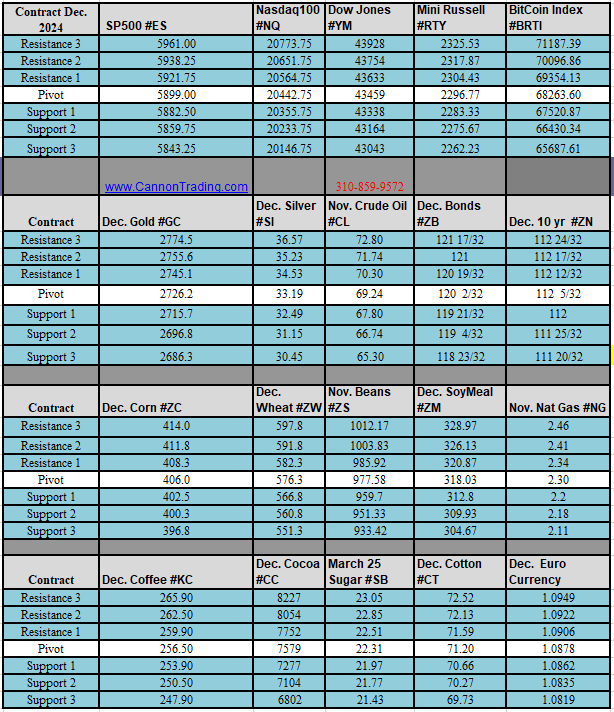
In this issue:
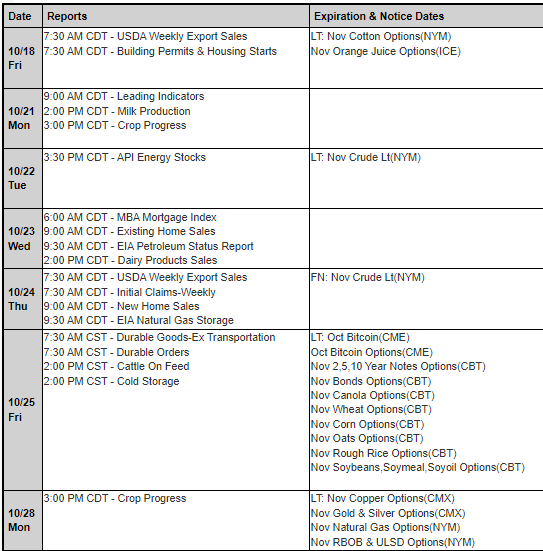
Important Notices – Next Week Highlights:
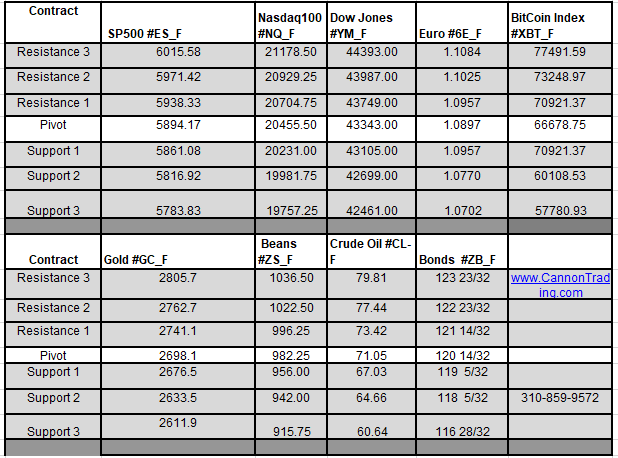
The Week Ahead
By John Thorpe, Senior Broker
A fair amount of Speakers, Data and Earnings .
Just 2 ½ weeks to the U.S. Presidential Election. Nov 5th.
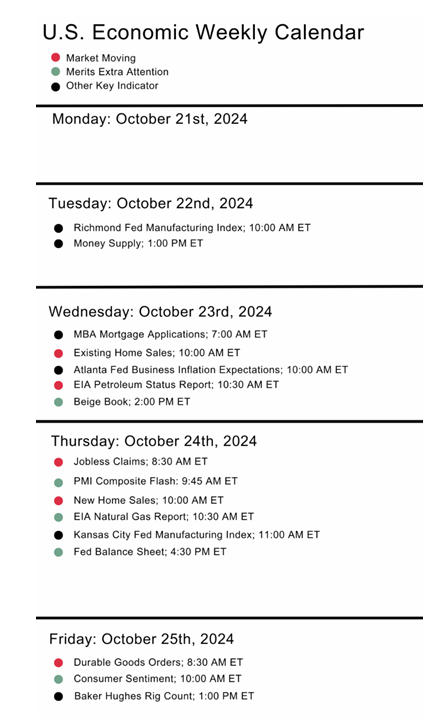
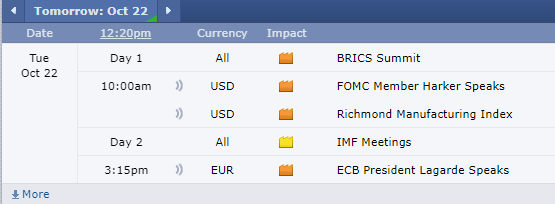
Economic Data:
Mon. CB Leading Indicators
Tue. Redbook, Richmond Fed
Wed. Mortgage Index
Thu. Chicago Fed Activity Index, Weekly Initial Jobless Claims, New Home Sales
Fri. Durable Goods, Michigan Consumer Sentiment.
Fed and ECB Speakers:
Mon. Logan, Kashkari, Schmid
Tue. 9A.M. Central ECB President Lagarde, Harker
Wed. Bowman, LaGarde 9 A.M. Central, Barkin
Thu. Hammack
Fri. quiet
Earnings: 608 3rd QTR. Reports this week
Prominent Companies reporting
Wed. Tesla, IBM, Coca-Cola
|
|
|
“Trading Around Key Economic Reports” FREE SHORT Course you will learn:



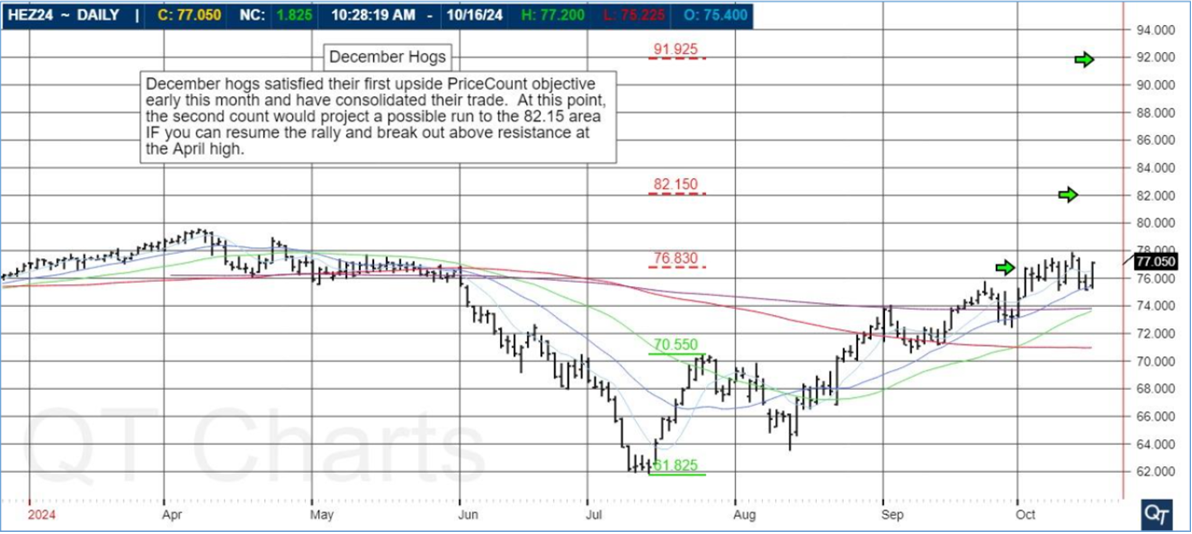
Hot market of the week is provided by QT Market Center, A Swiss army knife charting package that’s not just for Hedgers, Cooperatives and Farmers alike but also for Spread traders, Swing traders and shorter time frame application for intraday traders with a unique proprietary indicator that can be applied to your specific trading needs.
December Hogs
December hogs satisfied their first upside PriceCount objective early this month and have consolidated their trade. At this point, the second count would project a possible run to the 82.15 area IF you can resume the rally and break out above resistance at the April high.
PriceCounts – Not about where we’ve been , but where we might be going next!
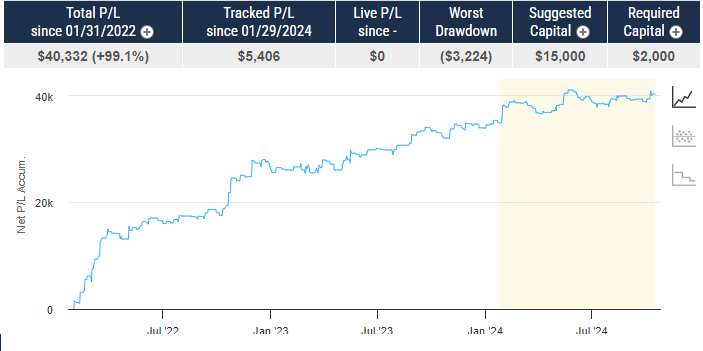
With algorithmic trading systems becoming more prevalent in portfolio diversification, the following system has been selected as the broker’s choice for this month.
MVA 998 RTY 208
PRODUCT
RTY – Mini Russell 2000
SYSTEM TYPE
Day Trading
Recommended Cannon Trading Starting Capital
$10,000
COST
USD 80 / monthly

Get access to proprietary indicators and trading methods, consult with an experienced broker at 1-800-454-9572.
Explore trading methods. Register Here
* This is not a solicitation of any order to buy or sell, but a current market view provided by Cannon Trading Inc. Any statement of facts here in contained are derived from sources believed to be reliable, but are not guaranteed as to accuracy, nor they purport to be complete. No responsibility is assumed with respect to any such statement or with respect to any expression of opinion herein contained. Readers are urged to exercise their own judgement in trading.