Book Map Trading

Book Map trading has revolutionized how traders visualize market data and execute trades in real time. As the financial markets continue evolving, advanced tools like Book Map—also stylized as Bookmap—have become indispensable. Designed for high-performance futures trading, Book Map is more than just a charting tool. It presents an intricate, live display of order flow, heat maps, liquidity zones, and market depth, enabling professional and novice traders alike to make better-informed decisions.

This detailed article explores how the Book Map futures trading platform serves both traders and brokers. We’ll delve into how brokers can guide responsible trade execution, the platform’s unique features, and why Cannon Trading Company stands out as a premier brokerage partner—recognized as one of the best futures brokers with numerous five-star TrustPilot reviews.

Try a FREE Demo!

Part I: How Book Map Trading Empowers Traders

Real-Time Order Flow Visualization

One of the standout features of Book Map trading is its ultra-real-time data visualization. Unlike traditional candlestick charts or DOM (Depth of Market) ladders, Book Map gives traders an interactive heat map that represents historical and live liquidity. This allows traders to view the evolution of limit orders over time, helping them anticipate potential reversals or breakouts.

This deep insight into the order book is critical for futures trading, where split-second decisions can define success or failure. With Book Map, traders can read the “pulse” of the market, watching as large buy or sell walls emerge and dissolve, offering a strategic edge in fast-paced trading environments.

Increased Confidence in Execution

Book Map’s visual clarity gives traders enhanced confidence when executing trades. By seeing where major liquidity pools exist and how they behave around key price levels, traders gain insight that traditional tools cannot provide. This edge is particularly crucial for short-term futures contract trading and scalping strategies, where microstructure analysis is essential.

Book Map trading enables users to “see the unseen” by exposing hidden liquidity and spoofing behavior. These insights are invaluable for avoiding false breakouts and making high-probability entries and exits.

A Platform Built for All Skill Levels

Whether you’re new to trading futures or a seasoned algorithmic trader, Book Map accommodates various experience levels. Beginners appreciate the intuitive interface and tutorials, while experienced traders benefit from add-ons like imbalance indicators, volume dots, and the ability to overlay custom algorithms.

The platform’s extensive customization also allows for plug-ins and third-party integrations, making it ideal for developing, testing, and deploying advanced trading strategies. It has become a vital component in the trading toolkit for anyone serious about mastering futures contract trading.

Part II: How Book Map Serves Brokers and Their Clients

Enhanced Client Support Tools

Brokers play a crucial role in helping their clients trade responsibly on Book Map. Through broker-admin dashboards, they can monitor activity, set custom limits, and review trading patterns. This oversight ensures that clients adhere to sound risk management principles, particularly in volatile futures markets.

Many brokers integrate Book Map’s backend analytics to offer proactive support, helping clients avoid overleveraging and impulsive behavior. Features like trade history analysis, session summaries, and daily P&L reviews help brokers maintain transparent and supportive relationships with their clients.

Education and Onboarding Assistance

Brokers often serve as the first point of contact for traders entering the world of Book Map trading. The best futures brokers invest heavily in education—offering webinars, platform walkthroughs, and personalized training sessions.

This educational support helps traders understand how to interpret Book Map’s unique visuals, such as volume dots, heat maps, and iceberg orders. A well-trained trader is a more confident and responsible trader, making it a win-win for both brokers and clients.

Encouraging Risk Management

Responsible trading is built on robust risk management, and brokers can use Book Map to reinforce this. For example, brokers may set predefined trading limits based on client experience and capital or guide traders on how to use Book Map’s volume-based stop-loss and take-profit indicators.

Furthermore, tools like cumulative volume delta and order imbalance detectors assist traders in making rational, data-backed decisions instead of emotional trades. Brokers who actively promote these features help reduce client risk and protect their own reputations as responsible partners in the futures trading ecosystem.

Part III: Unique Features That Set Book Map Apart

Heat Map Visualization of Liquidity

The heat map is arguably Book Map’s crown jewel. It color-codes price levels based on the intensity of limit orders, allowing traders to see where market participants are placing their bets. This level of transparency is unparalleled among futures trading platforms.

This feature turns the invisible into visible—traders can see where support or resistance is likely to form before the price even reacts. No other platform provides this granular level of insight into market microstructure, especially in the context of trading futures.

Volume Dots and Order Book Imbalance

Book Map visualizes each trade with color-coded volume dots that reflect aggressiveness and size. This real-time insight into order flow helps traders detect momentum shifts, buyer/seller exhaustion, and potential reversals.

In addition, Book Map calculates order book imbalance—showing whether buyers or sellers dominate a particular price level. These cues are essential for making precise entries and exits during futures contract trading.

High-Speed Data Processing and API Integration

Book Map supports ultra-low latency data feeds from top data providers, ensuring lightning-fast updates. For algorithmic and high-frequency traders, this speed is non-negotiable.

Book Map also features an open API, enabling tech-savvy traders to create custom indicators, trading bots, or plug-ins. This flexibility makes Book Map not just a trading platform, but an innovation hub for the futures trading community.

Replay Mode for Trade Review

Unlike many platforms that simply log trades, Book Map lets users replay entire market sessions tick by tick. This is invaluable for both self-review and broker-client coaching sessions. By walking through trades in replay mode, traders can better understand what went right—or wrong—and refine their strategies accordingly.

Try a FREE Demo!

Part IV: Why Cannon Trading Company is a Great Futures Broker for Book Map Users

Book Map Trading

Book Map Trading

A Legacy of Excellence in Futures Trading

Cannon Trading Company is no newcomer to the scene. With over 35 years of experience in the futures industry, the firm has cultivated a stellar reputation as a top-tier brokerage. This longevity translates to deep industry knowledge, client trust, and a rich understanding of market dynamics—making Cannon a beacon for traders seeking reliability and innovation.

Top Ratings on TrustPilot

Book Map Trading

Cannon Trading’s track record is reflected in its numerous 5 out of 5-star ratings on TrustPilot, a platform known for honest and rigorous customer feedback. As one of the best futures brokers TrustPilot has consistently praised, Cannon stands out not just for performance, but for transparency and customer service.

These reviews highlight the firm’s dedication to client satisfaction, timely support, platform education, and above all, trustworthiness. In an industry where credibility is everything, Cannon Trading’s TrustPilot reputation is a badge of honor.

Regulatory Integrity and Compliance

Cannon Trading Company maintains a spotless record with both federal regulators and independent futures industry organizations. The firm complies with all CFTC (Commodity Futures Trading Commission) and NFA (National Futures Association) regulations, ensuring that its clients operate within a safe and legal framework.

This compliance framework offers peace of mind to traders and reassures them that they are partnering with a brokerage that values ethics, transparency, and responsibility.

A Broker for All Skill Levels

Whether you’re just starting with Book Map or you’re a seasoned futures trader, Cannon Trading Company offers tailored services that meet you where you are. The firm provides multiple account types, dedicated account managers, and access to a wide selection of futures trading platforms—making it easy to find a perfect fit.

Their educational offerings include platform training, futures market analysis, daily trade ideas, and access to webinars hosted by industry veterans. Such extensive support ensures that every client, regardless of skill level, can thrive in the dynamic world of futures contract trading.

Book Map and Cannon: A Powerful Combination

When you combine Book Map’s cutting-edge technology with Cannon Trading’s brokerage expertise, you get a powerful trading solution. Cannon offers seamless integration with the Book Map trading platform, including data feed compatibility, platform configuration support, and custom onboarding assistance.

This synergy between platform and broker enhances execution quality, risk management, and ultimately, profitability. It’s why so many traders consider Cannon Trading not just a broker, but a long-term trading partner.

Book Map trading represents the cutting edge of data-driven futures trading. Its ability to visualize order flow, track liquidity in real time, and empower traders with actionable insights sets it apart from conventional platforms. But the platform’s potential is only fully realized when paired with the right brokerage.

Cannon Trading Company, recognized as one of the best futures brokers with top TrustPilot ratings, a strong regulatory record, and unmatched experience, is uniquely positioned to help traders maximize the benefits of Book Map. From onboarding and education to trade execution and support, Cannon delivers value at every stage of the trading journey.

In an era of increasingly complex financial markets, tools like Book Map and firms like Cannon Trading ensure that traders don’t just survive—they thrive.

Try a FREE Demo!

Ready to start trading futures? Call us at 1(800)454-9572 (US) or (310)859-9572 (International), or email info@cannontrading.com to speak with one of our experienced, Series-3 licensed futures brokers and begin your futures trading journey with Cannon Trading Company today.

Disclaimer: Trading Futures, Options on Futures, and retail off-exchange foreign currency transactions involve substantial risk of loss and are not suitable for all investors. Past performance is not indicative of future results. Carefully consider if trading is suitable for you in light of your circumstances, knowledge, and financial resources. You may lose all or more of your initial investment. Opinions, market data, and recommendations are subject to change at any time.

Important: Trading commodity futures and options involves a substantial risk of loss. The recommendations contained in this article are opinions only and do not guarantee any profits. This article is for educational purposes. Past performances are not necessarily indicative of future results.

This article has been generated with the help of AI Technology and modified for accuracy and compliance.

Follow us on all socials: @cannontrading

MultiCharts

MultiCharts

In the fast-paced world of futures trading, where milliseconds can mean the difference between profit and loss, traders need robust, agile, and highly customizable tools. One such platform that continues to stand out is the MultiCharts futures platform. Known for its precision, speed, and deep technical analysis capabilities, MultiChartshas solidified its place among top-tier institutional trading platforms.

In this comprehensive piece, we will explore what makes the MultiCharts trading platformunique in the increasingly crowded market of futures trading platforms. We’ll examine how the right futures broker, particularly one as distinguished as Cannon Trading Company, can help maximize your success when trading on MultiCharts. We’ll also take a forward-looking perspective on what traders can expect from MultiCharts during the second half of the 2020s.

Try a FREE Demo!

What Is MultiCharts?

MultiCharts is a professional-grade futures trading platform that caters to retail, institutional, and algorithmic traders alike. Launched with the vision of delivering high-performance charting, backtesting, and automated trading capabilities, the platform has evolved into a powerhouse favored by traders worldwide. It supports a wide range of data feeds and broker connections, including Rithmic, CQG, Interactive Brokers, and more.

Whether you’re engaged in futures contract trading, emini trading, or deploying custom indicators and strategies, MultiCharts provides a flexible, powerful framework that delivers consistent results. It’s not just another charting platform—it’s a complete trading environment.

What Makes MultiCharts Unique Among Futures Trading Platforms?

  1. Advanced Charting and Analytics
    At the core of the MultiCharts futures platform is its advanced charting system. With support for multi-timeframe analysis, hundreds of built-in indicators, and user-customizable chart types, traders can gain a highly detailed and nuanced view of the markets. Time-based, volume-based, and tick-based charts are all available.The MultiCharts trading platform also supports Renko, Kagi, Point and Figure, and Range bars—tools highly valued by discretionary and systematic traders alike.
  2. PowerLanguage Scripting
    MultiCharts includes PowerLanguage, a powerful scripting language similar to EasyLanguage. This feature empowers users to create custom indicators, strategies, and alerts tailored to their trading style. Whether you’re building a mean-reversion system or trend-following strategy for emini contracts, the platform adapts seamlessly.
  3. Institutional-Grade Performance
    Unlike some retail platforms, MultiCharts is built with institutional trading platform quality in mind. It allows for high-frequency order execution, low-latency data processing, and robust server integration. Traders who require real-time responsiveness for trading futures—especially in volatile emini markets—can count on MultiCharts to deliver.
  4. Multi-Broker and Multi-Data Feed Support
    The platform offers broad compatibility with top data feeds and brokers. This interoperability is crucial for serious futures trading, especially for traders diversifying their strategies across platforms like Rithmic, CQG, and others.
  5. Strategy Backtesting and Optimization
    MultiCharts supports both historical and real-time backtesting. The optimization engine lets traders fine-tune parameters using a range of algorithms—including genetic and brute-force optimization. This is a game-changer for trading futures using algorithmic methods, especially across futures contract trading portfolios.
  6. One-Click Trading and DOM Interface
    For scalpers and intraday traders focused on emini trading, the one-click trading interface and DOM (Depth of Market) ladder are indispensable. These tools allow for ultra-fast entries and exits, an essential feature in high-speed markets.

Try a FREE Demo!

How a Futures Broker Helps You Trade with MultiCharts

Having access to a high-powered platform like MultiCharts is only part of the equation. The other half lies in choosing the right futures broker to help you execute efficiently, securely, and competitively.

Here’s how a quality futures broker like Cannon Trading Company enhances the MultiCharts experience:

  1. Seamless Integration
    Cannon Trading offers native support for MultiCharts, ensuring that your platform connects effortlessly with data feeds and order routing systems. Whether you’re using CQG, Rithmic, or other feeds, the integration is plug-and-play.
  2. Professional Support and Setup
    Getting the most out of the MultiCharts futures platform often requires guidance—especially during initial setup. Cannon’s technical support team offers one-on-one help, platform tutorials, and troubleshooting for both new and experienced users.
  3. Institutional-Level Data Feeds
    High-quality data is critical for futures contract trading, and Cannon Trading offers direct access to premium data feeds. This is especially important for real-time analysis, scalping, and emini trading, where delays can be costly.
  4. Regulatory Protection and Transparency
    As a broker with nearly 40 years of history and a sterling reputation with the CFTC and NFA, Cannon Trading Company provides a layer of trust and accountability that is essential for serious futures trading.
  5. Variety of Account Options
    Whether you are trading a self-directed account, running automated systems, or managing money for clients, Cannon offers customized solutions that align with your trading style and goals on the MultiCharts trading platform.

The Future of the MultiCharts Trading Platform: 2025 and Beyond

As the financial markets continue to evolve rapidly—driven by artificial intelligence, quantum computing, and decentralized technologies—MultiCharts is well-positioned to remain at the forefront of institutional trading platforms.

  1. AI-Driven Enhancements
    We anticipate that MultiCharts will integrate machine learning modules into its core platform by the late 2020s. These tools will help traders automate pattern recognition, anomaly detection, and adaptive strategies—especially useful for futures contract trading across multiple markets.
  2. Greater Cloud Integration
    Expect to see MultiCharts embrace hybrid cloud functionality. This will allow traders to backtest on high-performance servers, store strategies remotely, and run simulations on-demand—all without taxing their local machines.
  3. Expanded Data Partnerships
    To maintain its edge, the MultiCharts futures platform is likely to expand its partnerships with emerging data providers, including sentiment analysis tools, blockchain-based market data, and alternative datasets.
  4. Enhanced Mobile and Web Interfaces
    While MultiCharts is currently desktop-centric, there are clear indications that mobile and web-based modules are on the roadmap. This will cater to modern traders who demand flexibility and access anytime, anywhere.
  5. User-Driven Feature Development
    MultiCharts maintains a strong community of users who actively contribute to platform evolution. As this community grows, expect more trader-driven innovations—from strategy repositories to open-source indicator libraries.

Why Cannon Trading Company Is the Ideal Brokerage for MultiCharts Users

MultiCharts

MultiCharts

Selecting a futures broker isn’t just about low commissions—it’s about trust, technology, support, and reputation. Cannon Trading Company excels in all these areas and is particularly well-suited for traders using the MultiCharts futures platform.

  1. TrustPilot-Rated 5 Stars by Thousands of Satisfied Clients
    Cannon’s customer reviews speak volumes. With countless 5-star ratings on TrustPilot, it’s clear that traders—from novice to professional—feel valued, supported, and empowered.
  2. Nearly 40 Years of Proven Experience
    Founded in 1988, Cannon Trading has weathered every major financial storm of the past four decades. This institutional knowledge is priceless, especially when you’re involved in volatile markets like emini trading or futures contract trading.
  3. Wide Range of Supported Platforms
    While this article focuses on MultiCharts, Cannon supports a wide array of platforms, including CQG, RTrader, TradingView, MotiveWave, Bookmap, and more. This means you can diversify strategies and access different tools as your trading journey evolves.
  4. Regulatory Excellence
    Cannon maintains exemplary relationships with key regulators like the CFTC and NFA. This assures traders that their funds are secure, transactions are transparent, and ethics are never compromised.
  5. Personalized Service
    Whether you’re an algorithmic trader executing complex futures contract trading strategies or a beginner dipping into emini trading, Cannon assigns dedicated professionals to assist you every step of the way.
  6. Deep Educational Resources
    With blogs, webinars, daily trading tips, and platform tutorials, Cannon goes above and beyond to educate its clients. This level of commitment is rare in the futures broker space.

MultiCharts and Cannon Trading: A Winning Combination for All Traders

The synergy between the MultiCharts trading platform and Cannon Trading Company offers a complete solution for modern futures trading. Together, they provide cutting-edge technology, trustworthy execution, and personalized support that suits traders of all levels.

Whether you’re backtesting a new strategy, scalping e mini contracts in volatile markets, or deploying fully automated systems across asset classes, you’ll find everything you need with MultiCharts and Cannon Trading.

In a landscape filled with promises and pitfalls, these two industry leaders stand as pillars of innovation, reliability, and trader empowerment. The second half of the 2020s will undoubtedly bring rapid change, but one thing remains clear: partnering with a world-class broker and using a professional-grade institutional trading platform like MultiCharts is a strategic decision that can elevate your trading outcomes to new heights.

The MultiCharts futures platform stands apart as one of the most dynamic, powerful, and future-ready tools for professional futures trading. Combined with the expert services of Cannon Trading Company, traders are equipped not just to survive but to thrive in today’s markets and tomorrow’s innovations.

From technical precision to broker-backed execution, from real-time analytics to future-facing upgrades, this combination is tailor-made for traders who demand more.

Metal, Bitcoin, September Copper; Your 3 Important Need-To-Knows for Trading Futures on July 10th, 2025

9dc1e02e d5f7 4ff4 abf7 1df60775f196

Metals & Bitcoin Dominate

metal

By Mark O’Brien, Senior Broker

Metals:

August gold futures traded on both side of $3,300 per ounce today as investors continue to watch the evolving U.S. tariff policy with optimism grew that trade deals between U.S. and its trading partners would continue to weighed on safe-haven flows.

Copper futures fell on COMEX today as traders and investors continued to sift through President Trump’s latest tariff threats. Yesterday, President Trump announced a surprisingly large 50% tariff on copper that could kick in by Aug. 1 or sooner prompting the front-month September copper futures contract to rise ± 50 cents per pound / ±10% – a ±$12,500 per contract move – to an all-time high near $5.50/pound yesterday. Today, the contract eased down ±15 cents/±2.5%.

Crypto:

The three-year pattern of midyear volume dips for Bitcoin futures continues as June marks a sharp month-over-month decline. Total Bitcoin futures volume for the month of June recorded a ±20% month-over-month decline.

For context, over the first five months of 2025, Bitcoin futures volume averaged $1.93 trillion per month. This puts June’s figure roughly 20% below the year-to-date monthly average with just ±$1.55 trillion in total Bitcoin futures volume this month. Even so, July Bitcoin futures closed above 112,000 and within striking range of its May 22 all time high close of 112,905.

S
eb23d89b a6ee 494c a74a 38b5f4e886e7

September Copper

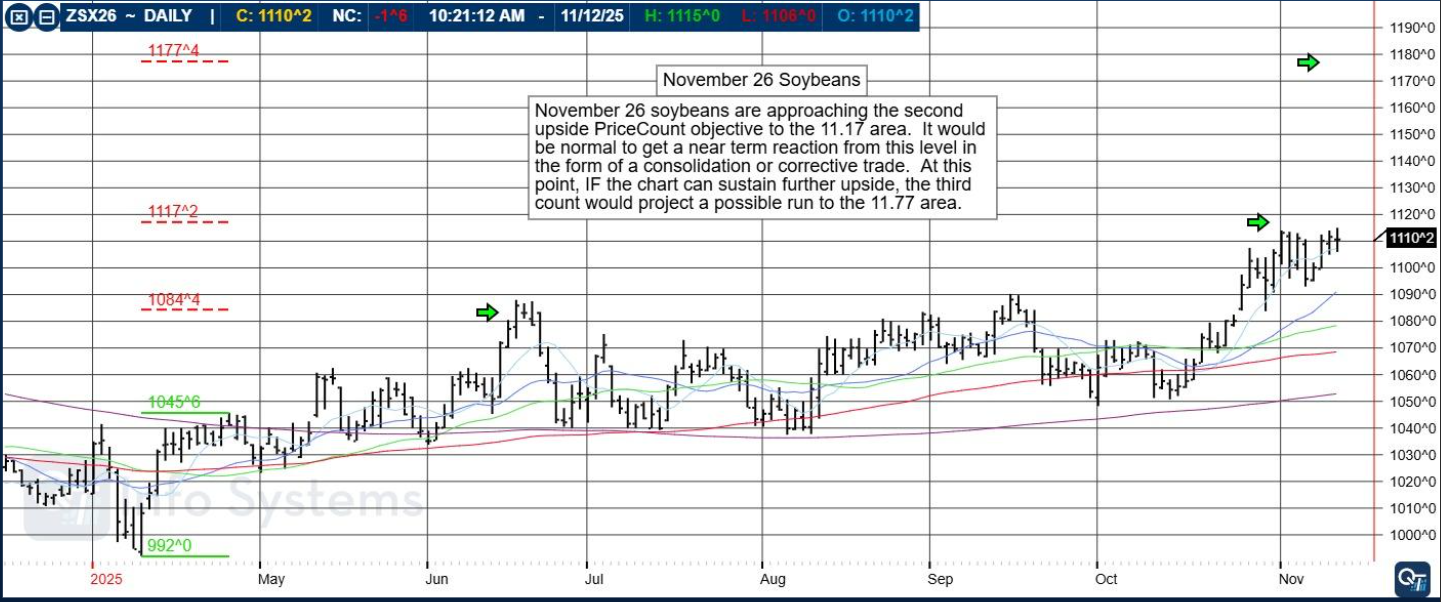
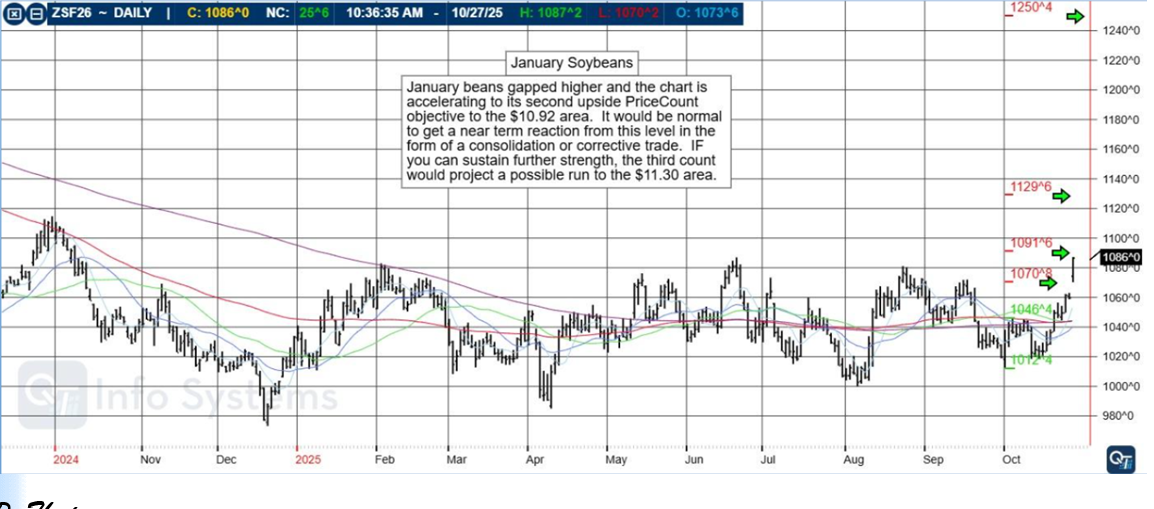
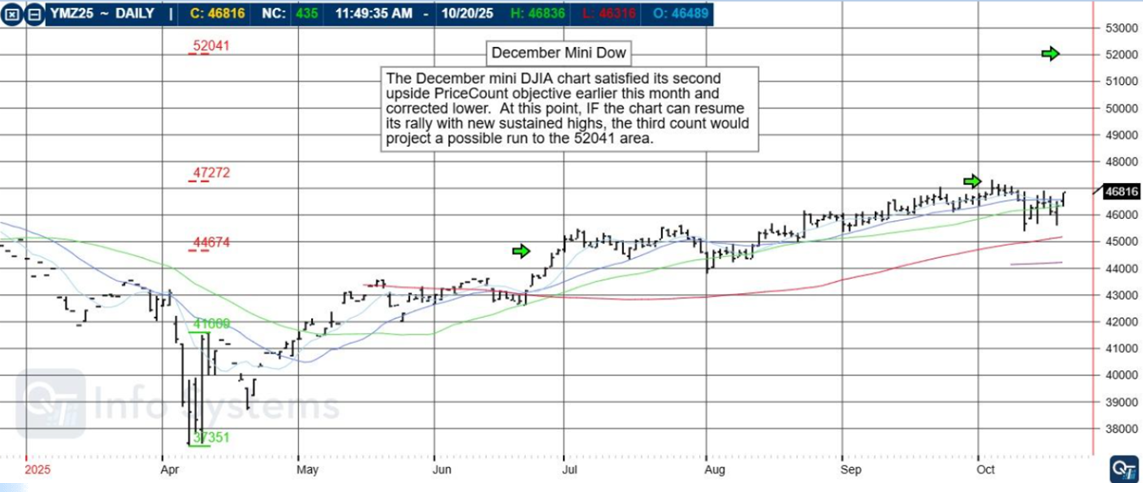
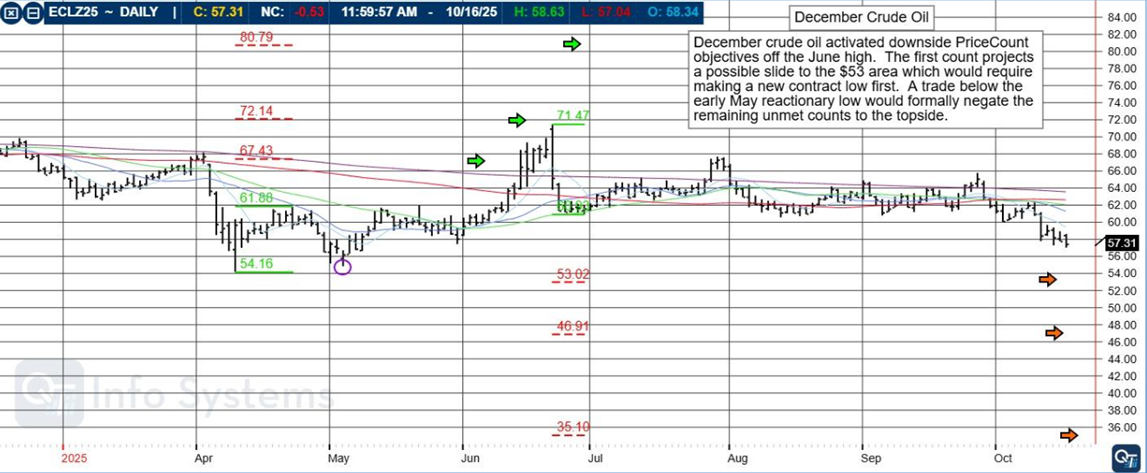
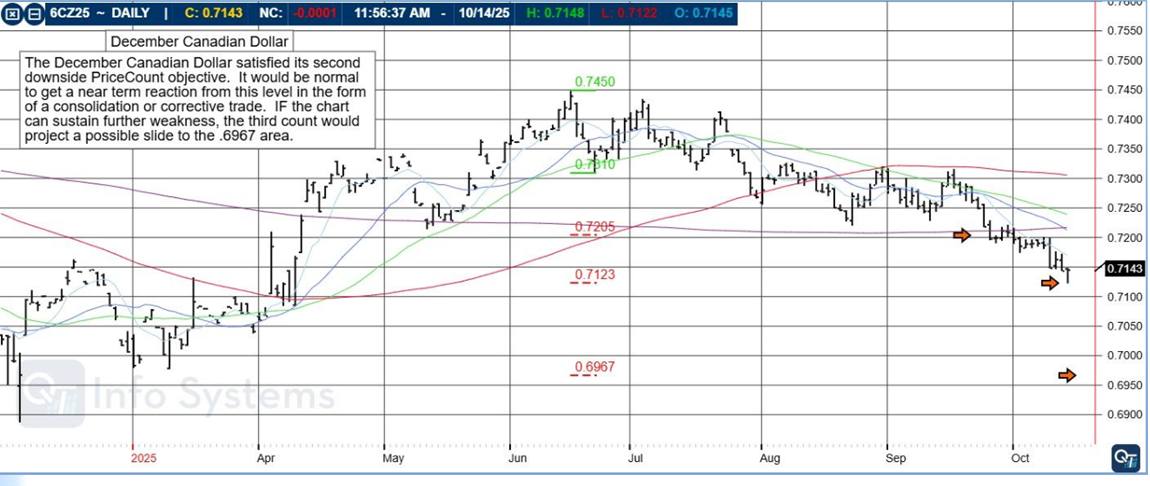
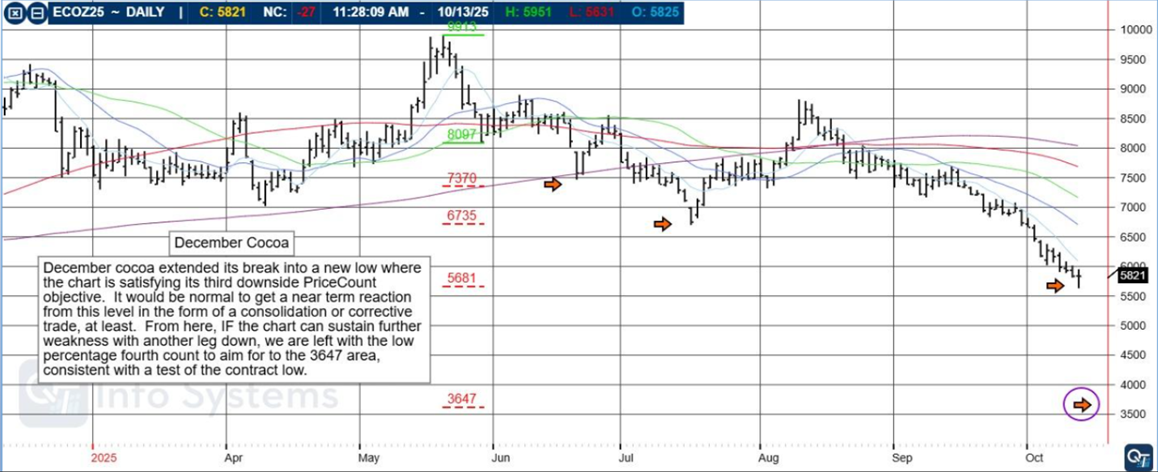
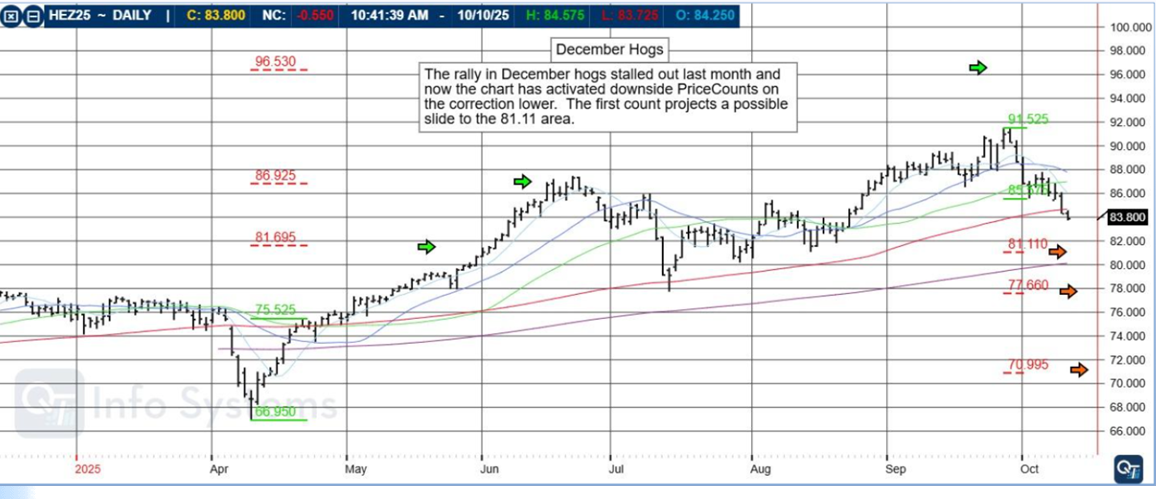
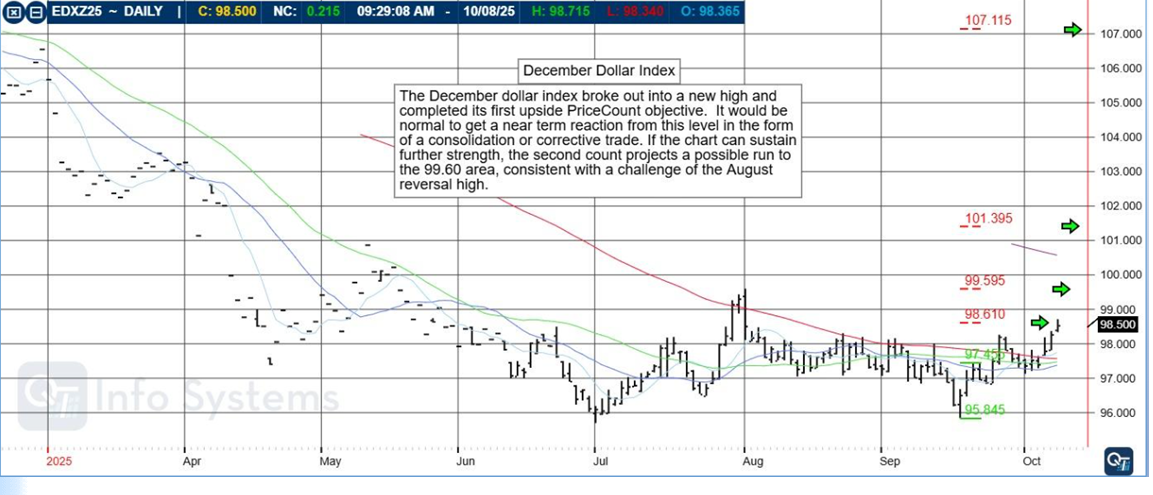
September copper accelerated its rally into a new contract high where the chart satisfied its third upside PriceCount objective. It would be normal to see a near term reaction from this level in the form of a consolidation or corrective trade, at least. At this point, IF you could sustain another leg to the topside, the low percentage fourth count projects a possible run to the 7.22 area.

7419d0a9 e6dd 4aaf afc4 ca1087d3ad5f

The PriceCount study is a tool that can help to project the distance of a move in price. The counts are not intended to be an ‘exact’ science but rather offer a target area for the four objectives which are based off the first leg of a move with each subsequent count having a smaller percentage of being achieved.

It is normal for the chart to react by correcting or consolidating at an objective and then either resuming its move or reversing trend. Best utilized in conjunction with other technical tools, PriceCounts offer one more way to analyze charts and help to manage your positions and risk.

Learn more at www.qtchartoftheday.com

Trading in futures, options, securities, derivatives or OTC products entails significant risks which must be understood prior to trading and may not be appropriate for all investors.

Past performance of actual trades or strategies is not necessarily indicative of future results.

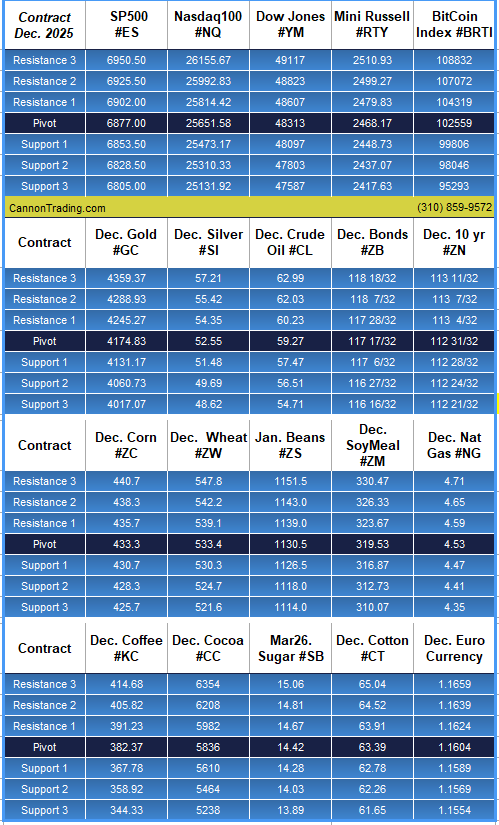
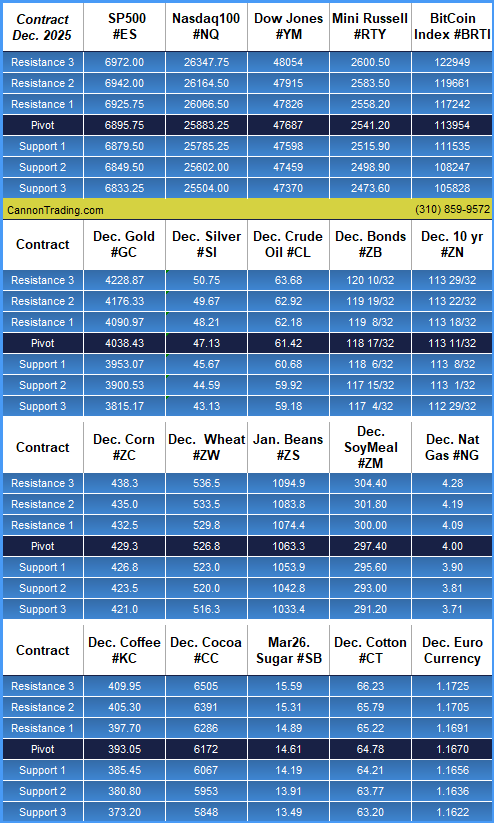
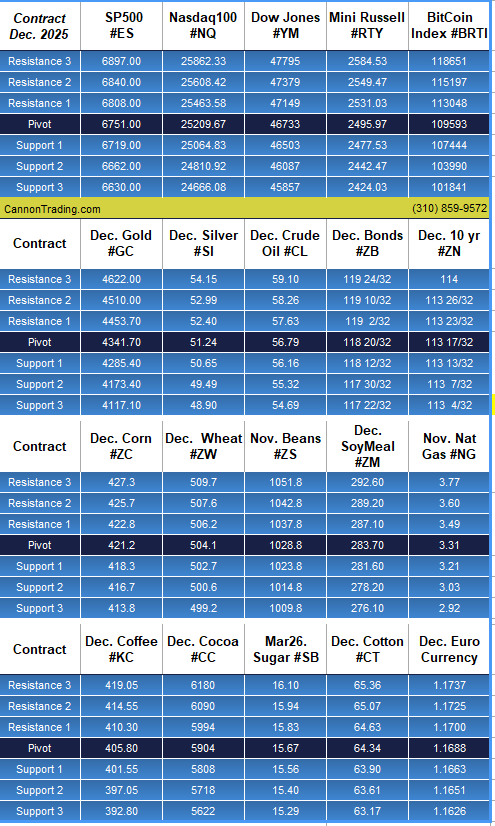
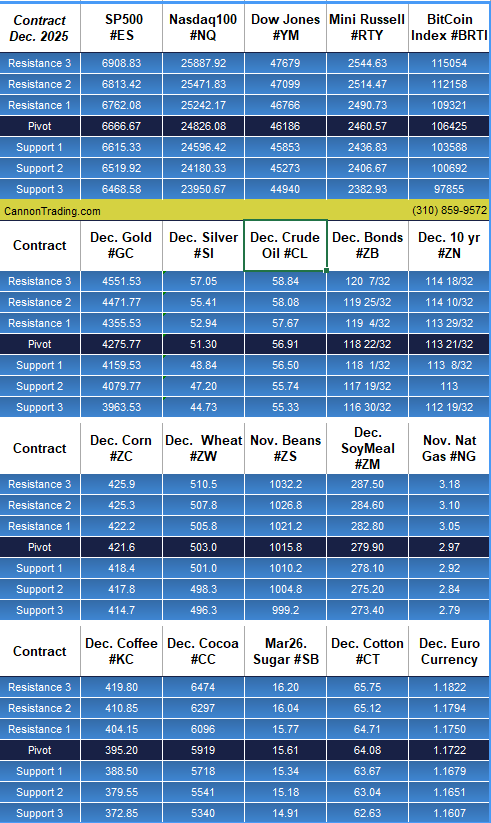
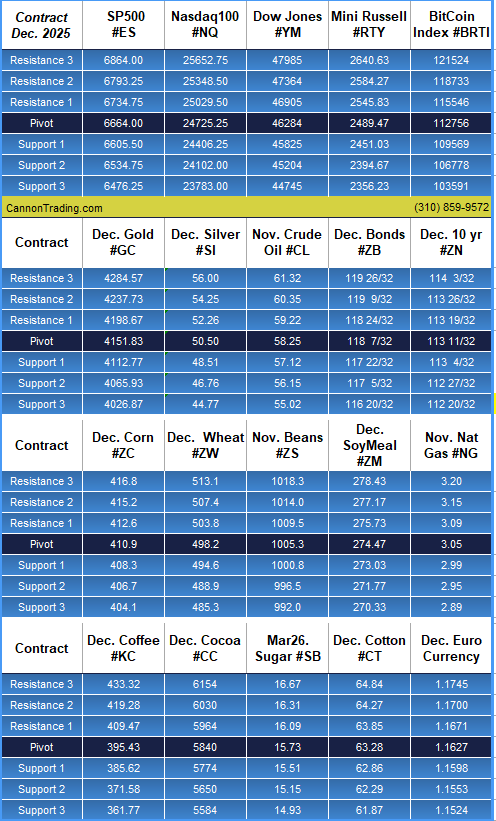
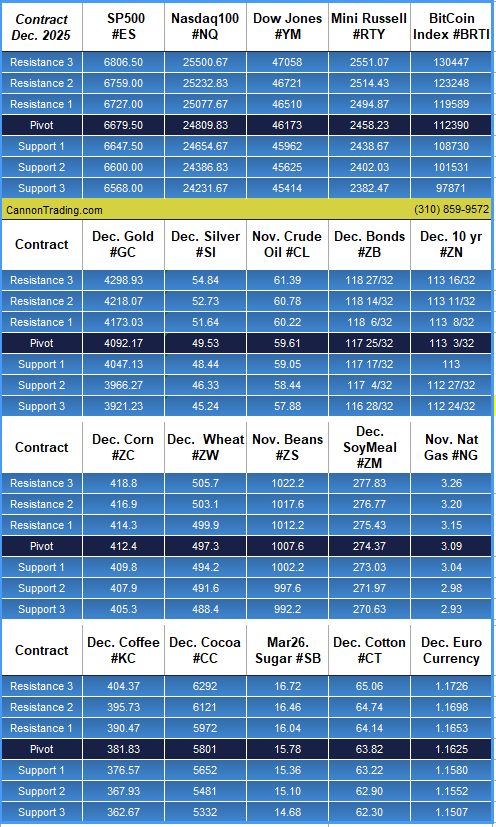
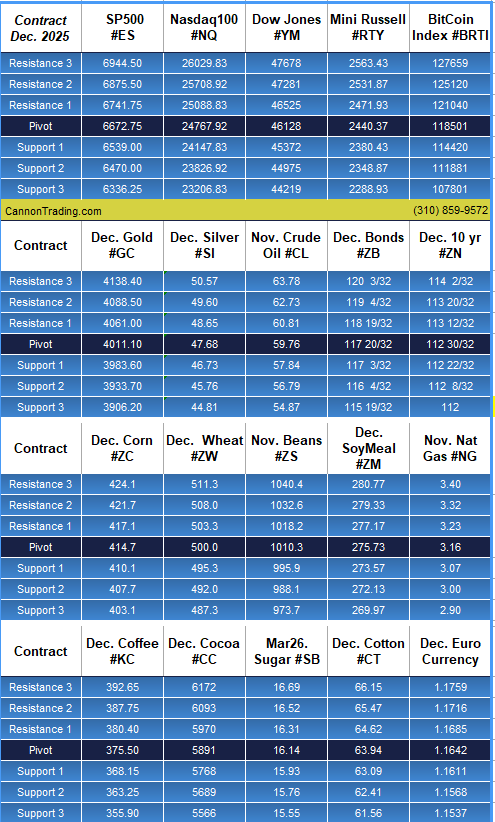
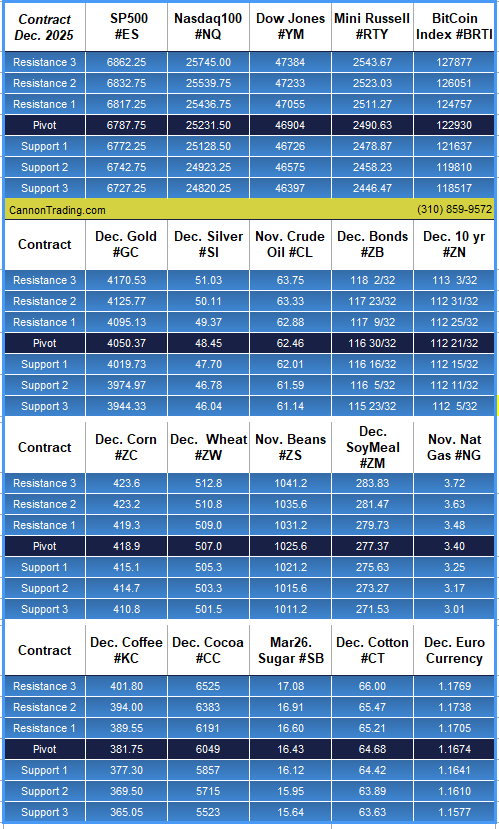
Daily Levels for July 10th, 2025

20383ed9 1205 4d29 8c45 ac8fc2d10853

Want to feature our updated trading levels on your website? Simply paste a small code, and they’ll update automatically every day! 

Click here for quick and easy instructions.

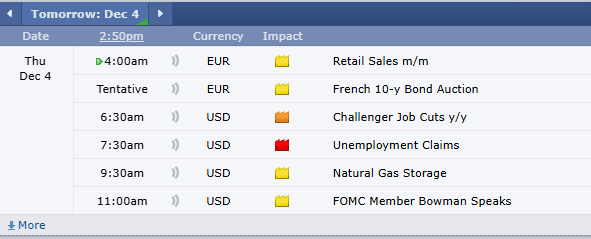
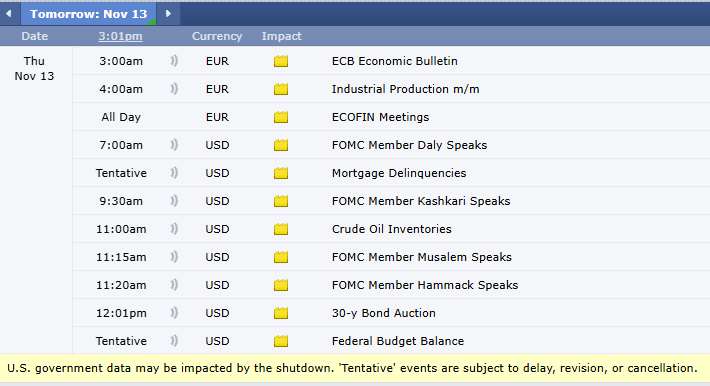
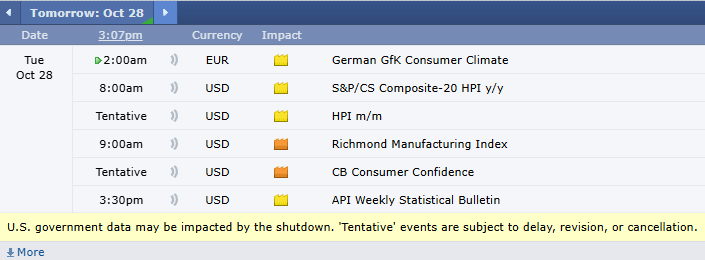
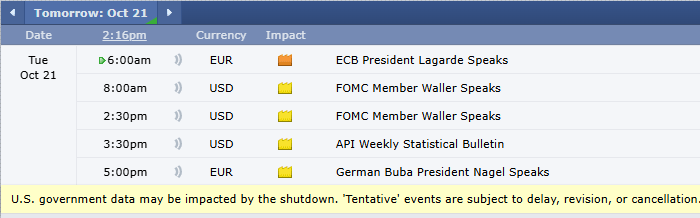
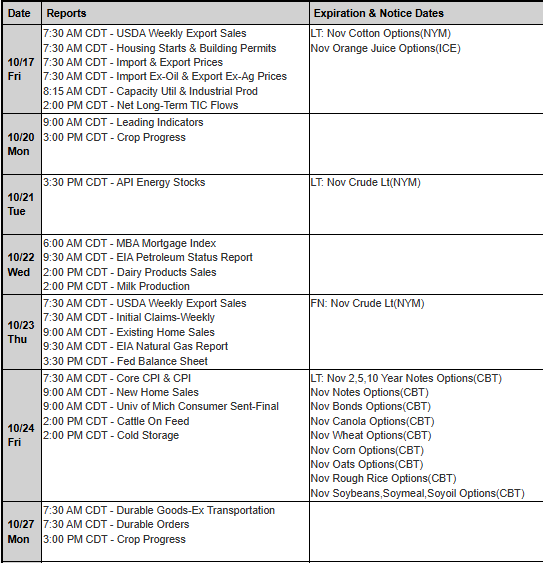
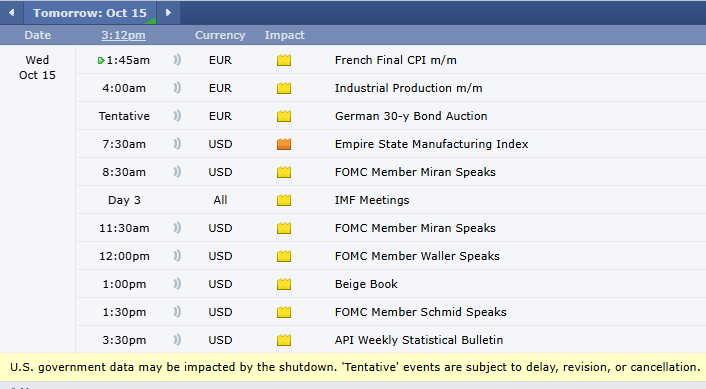
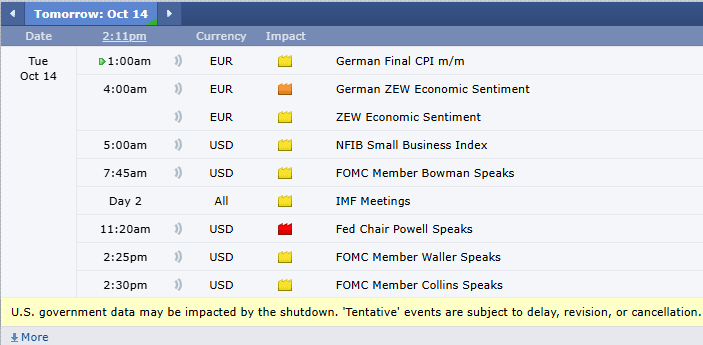
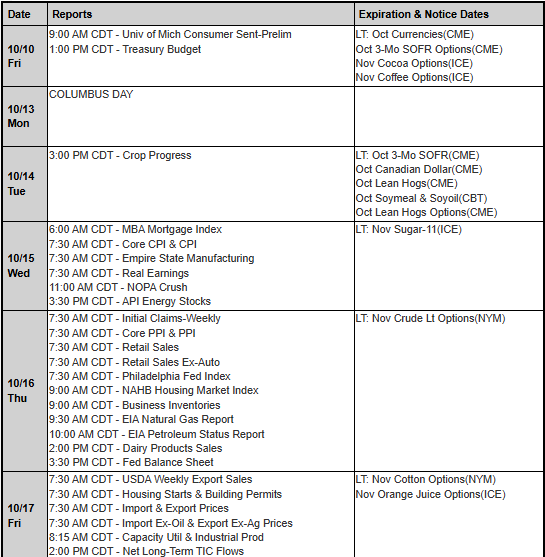
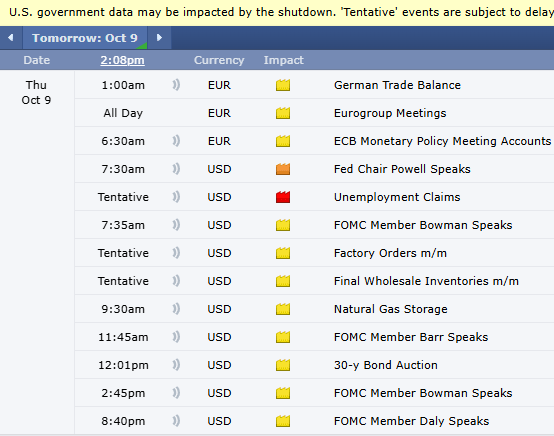
Economic Reports

provided by: ForexFactory.com

All times are Eastern Time ( New York)

3d5b2105 3678 4f98 a5fb 3e554a55d2b6

Find us on Trustpilot

stars

Trading Futures, Options on Futures, and retail off-exchange foreign currency transactions involves substantial risk of loss and is not suitable for all investors. You should carefully consider whether trading is suitable for you in light of your circumstances, knowledge, and financial resources. You may lose all or more of your initial investment. Opinions, market data, and recommendations are subject to change at any time.

Join our Private Facebook group

Subscribe to our YouTube Channel

Listen to our podcast: Subscribe on AppleSpotify, Amazon

or wherever you listen to podcasts!

S
Facebook  Instagram  LinkedIn
S
ef3ab1c9 8d6d 4e60 a3f1 af5d9d4ecbb3
Services
Software
Tools
Community
Contact

A Fresh Quarter! Independence Day, BBB, Non-Farm Payrolls, FND/LTD for July, September 10-Year Treasury Notes; Your 5 Important Need-To-Knows for Trading Futures on July 2nd, 2025

9dc1e02e d5f7 4ff4 abf7 1df60775f196

New Quarter!

By John Thorpe, Senior Broker

A Fresh Quarter! Independence Day, BBB, Non-Farm Payrolls a day early.

quarter

Day one of Quarter number 3 in the U.S. is behind us. What trends continue and which ones appear to be reversing? Below is a list of contracts whose trends continued for at least the past 2 weeks.

Markets heading Lower, still! Corn, Hogs, Feeder and Live Cattle, Natural Gas, U.S. Dollar, Sugar, Coffee, Soymeal.

Markets going Sideways, still! Crude Oil, Heating Oil, Unleaded Gasoline, Gold, Silver, Canadian Dollar.

Markets going Higher, still! S&P, Dow 30, Nasdaq 100, U.S 30yr Bonds, 10yr Notes, Palladium, Platinum, Copper, Euro, Assie $, B. Pound, S. Franc

Markets Reversing, Rough Rice lower, Oats higher.

This week we have abbreviated trading sessions on both Thursday and Friday. Subdued Volatility, for the moment, conflicts and trade deals have relaxed for the near term.

Although Friday is the 4th of July holiday you may be as surprised as we were when we saw the trading schedule for this upcoming week. In addition to market hour changes we also have the All-important Non-Farm Payrolls report, ordinarily released on the first Friday of the month, the release will occur on Thursday this month @ 7:30 am CDT. If you are an index trader, the markets will have abbreviated hours on Both Thursday and Friday.

Regular hours on Thursday for all other futures contracts with many of the AG’s closed until Monday morning; Metals, Energies, Interest Rates, Currencies and indices will have early closings on the 4th itself.

Tomorrow:

Econ Data:  ADP Employment Change, EIA Crude oil stocks, New Home Sales

FED Quiet the rest of the week

Earnings: Unifirst Corporation

Tariff news: Anything goes!

S

FND/LTD:

Below are the contracts which are entering First Notice or Last Trading Day for July.

Be advised, for contracts that are deliverable, it is requested that all LONG positions be exited two days prior to First Notice and ALL positions be exited the day prior to Last Trading Day

d652124d b3be 4609 9317 d948d1a136f3
af55e47e fe62 4b6a b328 b73836745c2b
eb23d89b a6ee 494c a74a 38b5f4e886e7

Sept. 10 Year Treasury Notes

The September 10 year treasury notes completed a second upside PriceCount objective this spring and after a correction lower, spent time consolidating with a sideways trade. IF the chart can resume its rally with new sustained highs, the third count would project a possible run to the 115^27 area.

f68967dd 43e6 472f 9374 436ba8245ee0

The PriceCount study is a tool that can help to project the distance of a move in price. The counts are not intended to be an ‘exact’ science but rather offer a target area for the four objectives which are based off the first leg of a move with each subsequent count having a smaller percentage of being achieved.

It is normal for the chart to react by correcting or consolidating at an objective and then either resuming its move or reversing trend. Best utilized in conjunction with other technical tools, PriceCounts offer one more way to analyze charts and help to manage your positions and risk.

Learn more at www.qtchartoftheday.com

Trading in futures, options, securities, derivatives or OTC products entails significant risks which must be understood prior to trading and may not be appropriate for all investors.

Past performance of actual trades or strategies is not necessarily indicative of future results.

Daily Levels for July 2nd, 2025

e1d35283 1ee0 4437 a09b ca4a366b4b72

Want to feature our updated trading levels on your website? Simply paste a small code, and they’ll update automatically every day! 

Click here for quick and easy instructions.

Economic Reports

provided by: ForexFactory.com

All times are Eastern Time ( New York)

6c5f9e41 92da 474b 80c0 02f4bb3a87fd

Find us on Trustpilot

stars

Trading Futures, Options on Futures, and retail off-exchange foreign currency transactions involves substantial risk of loss and is not suitable for all investors. 

You should carefully consider whether trading is suitable for you in light of your circumstances, knowledge, and financial resources.

You may lose all or more of your initial investment.

Opinions, market data, and recommendations are subject to change at any time.

Join our Private Facebook group

Subscribe to our YouTube Channel

Listen to our podcast: Subscribe on AppleSpotify, Amazon

or wherever you listen to podcasts!

S
Facebook  Instagram  LinkedIn
S
ef3ab1c9 8d6d 4e60 a3f1 af5d9d4ecbb3
Services
Software
Tools
Community
Contact

FOMC Wednesday, E Mini S&P; Your 2 Important Need-To-Knows for Trading Futures on June 18th, 2025

9dc1e02e d5f7 4ff4 abf7 1df60775f196


FOMC Tomorrow!

By John Thorpe, Senior Broker

fomc

FOMC

Tomorrow, we have FOMC with rate decision at 1 PM Central and statement at 1:30 pm Central.

Trading stock index futures on FOMC days calls for a measured, highly selective approach. The market tends to drift into a low volume “vacuum” in the hours leading up to the announcement, where exaggerated price moves can occur without conviction. This is not the time to force entries—no trade is better than a bad trade.

It’s critical to anticipate these zigzag patterns and avoid being lured into false signals. Reducing trading size is one of the smartest ways to manage risk on these days—volatility spikes can magnify both gains and losses, and scaling down helps preserve capital and composure.

Once the FOMC statement hits the wire, the real storm begins. Price action can whipsaw violently as traders digest the language and implications for interest rates. This is when patience pays off. Choosing entry points wisely—often by waiting for post-announcement patterns to stabilize—can mean the difference between catching a favorable trend and getting caught in the chop.

Discipline is everything: tight setups, controlled size, and a willingness to sit on your hands if conditions aren’t ideal can make all the difference. The FOMC isn’t a lottery—it’s a test of focus and restraint.

S
thumbnail?url=https%3A%2F%2Fi.ytimg.com%2Fvi%2FYtPVB bS fA%2Fhqdefault
eb23d89b a6ee 494c a74a 38b5f4e886e7

Sept. Mini SP 500

The September Emini S&P satisfied its first upside PriceCount objective last month and is consolidating with a sideways trade. At this point, IF the chart can resume its rally, it would have to contend with contract highs before it could potentially take aim at the second count to the 6480 area.

afe107f2 6879 45fd 852d 67bf5b5921bf

The PriceCount study is a tool that can help to project the distance of a move in price. The counts are not intended to be an ‘exact’ science but rather offer a target area for the four objectives which are based off the first leg of a move with each subsequent count having a smaller percentage of being achieved.

It is normal for the chart to react by correcting or consolidating at an objective and then either resuming its move or reversing trend. Best utilized in conjunction with other technical tools, PriceCounts offer one more way to analyze charts and help to manage your positions and risk. Learn more at www.qtchartoftheday.com

Trading in futures, options, securities, derivatives or OTC products entails significant risks which must be understood prior to trading and may not be appropriate for all investors. Past performance of actual trades or strategies is not necessarily indicative of future results.

Daily Levels for June 18th, 2025

587c4819 0076 4e1c 8347 3f7caec16981

Want to feature our updated trading levels on your website? Simply paste a small code, and they’ll update automatically every day! 

Click here for quick and easy instructions.

Economic Reports

provided by: ForexFactory.com

All times are Eastern Time ( New York)

7d7e5f0a e756 439c 9c2f cc2f4cbb1559

Find us on Trustpilot

stars

Trading Futures, Options on Futures, and retail off-exchange foreign currency transactions involves substantial risk of loss and is not suitable for all investors. 

You should carefully consider whether trading is suitable for you in light of your circumstances, knowledge, and financial resources. You may lose all or more of your initial investment.

Opinions, market data, and recommendations are subject to change at any time.

Join our Private Facebook group

Subscribe to our YouTube Channel

Listen to our podcast: Subscribe on AppleSpotify, Amazon

or wherever you listen to podcasts!

S
Facebook  Instagram  LinkedIn
S
ef3ab1c9 8d6d 4e60 a3f1 af5d9d4ecbb3
Services
Software
Tools
Community
Contact

Iran, Rollover, Bitcoin, July Unleaded; Your 4 Important Need-To-Knows for Trading Futures the week of June 16th, 2025

7cfe5b36 db9f 4933 824a 7f264613e7fe

Cannon Futures Weekly Letter

In Today’s Issue #1246

  • The Week Ahead – Israel – Iran, Rollover and Juneteenth

  • Futures 102 – Why Trade Bitcoin Futures?

  • Hot Market of the Week – August Unleaded

  • Broker’s Trading System of the Week – Live Cattle Swing Trading System

  • Trading Levels for Next Week
  • Trading Reports for Next Week

Important Notices: The Week Ahead

By John Thorpe, Senior Broker

iran

Iran

Can the market withstand the civil unrest planned for this weekend in our country? How about the situation in the Middle East with Israel striking Iran nuclear facilities? Stay tuned…

Equity Rollover, FOMC, Juneteenth Holiday and the longest day of the year in the northern hemisphere!

Rollover

Roll the Equity Index contracts to September (U) for Monday trading.

Roll your equity index contracts to September (U) e.g., ESU25 or EPU25, also this week, due to the Juneteenth holiday, some markets will have reduced hours and others will be closed.

Reduced hours include the Equities, Metals, Energies. Since Juneteenth falls on a Thursday, the regularly scheduled EIA Weekly Natural Gas storage report will be released a day earlier: Wed. at the same time as the FOMC rate announcement. 1PM CT.

Remember that current market drivers for Equities are hard data on Jobs, Inflation, Trump tweets and Geopolitics, clearly the Israel/Iran conflict jumps to the top of the list here.

Continued volatility to come as next week all markets will be reacting to whatever comes out of the Israel/Iran conflict, The FRB, U.S. Govt leadership relating to conflicts cessation and trade deals.

Therefore, increased volatility expectations with periodic choppiness as the administration Vs the Courts seem to also be in the middle innings of their tariff battle.

Earnings Next Week:

  • Mon. Lennar Corp
  • Tue. Jabil Inc
  • Wed. Korn Ferry
  • Thu. Empire LTD
  • Fri. Accenture, Kroger (impending strike in California)

FED SPEECHES: (all time CDT)

  • Mon.     FED
  • Tues.     Black OUT
  • Wed.     FOMC Rate Decision 1:00pm CT Powell@1:30 pm CT
  • Thu.      Quiet
  • Fri.       Quiet

Economic Data week:

  • Mon. NY Empire State Manufacturing index,
  • Tue. Retail Sales, RedBook, Capacity Utilization, Business inventories, NAHB Housing market Index
  • Wed. Building Permits, EIA Crude oil stocks, Housing Starts, Initial Jobless Claims, EIA Weekly Nat Gas Storage @ 1:00 pm CT FOMC Rate decision @ 1:00 pmCT, FOMC Economic Projections,
  • Thur. JUNETEENTH Natl Holiday
  • Fri. Philly Fed, CB Leading indicators
eb23d89b a6ee 494c a74a 38b5f4e886e7

Why Trade Bitcoin Futures?

Watch Video Now 

thumbnail?url=https%3A%2F%2Fi.ytimg.com%2Fvi%2FtQSPiEDjKkc%2Fhqdefault

Hot Market of the Week

Hot market of the week is provided by QT Market Center, A Swiss army knife charting package that’s not just for Hedgers, Cooperatives and Farmers alike but also for Spread traders, Swing traders and shorter time frame application for intraday traders with a unique proprietary indicator that can be applied to your specific trading needs.

Free Trial Available

August Unleaded

August unleaded gasoline accelerated to the topside and satisfied the first upside PriceCount objective. It would be normal to get a near term reaction from this level in the form of a consolidation or corrective trade. IF the chart can sustain further strength, the second count would project a possible run to the 2.40 area which would represent a new contract high.

4b4df855 6fce 4e3e a296 0f59056887be

The PriceCount study is a tool that can help to project the distance of a move in price. The counts are not intended to be an ‘exact’ science but rather offer a target area for the four objectives which are based off the first leg of a move with each subsequent count having a smaller percentage of being achieved.

It is normal for the chart to react by correcting or consolidating at an objective and then either resuming its move or reversing trend. Best utilized in conjunction with other technical tools, PriceCounts offer one more way to analyze charts and help to manage your positions and risk. Learn more at www.qtchartoftheday.com

Trading in futures, options, securities, derivatives or OTC products entails significant risks which must be understood prior to trading and may not be appropriate for all investors. Past performance of actual trades or strategies is not necessarily indicative of future results.

Brokers Trading System of the Week

Live Cattle Lee Swing Trading System

Markets Traded:   LE – Live Cattle

System Type: Swing Trading

Risk per Trade: varies

Trading Rules: Partially Disclosed

Suggested Capital: $15,000

Developer Fee per contract: $25.00 Monthly Subscription

Get Started

Learn More

1e8536dd 945a 457c abe0 127935f9c283
Disclaimer The risk of trading can be substantial and each investor and/or trader must consider whether this is a suitable investment. Past performance is not necessarily indicative of future results.

IMPORTANT RISK DISCLOSURE

Futures trading is complex and carries the risk of substantial losses. It is not suitable for all investors. The ability to withstand losses and to adhere to a particular trading program in spite of trading losses are material points which can adversely affect investor returns.

The returns for trading systems listed throughout this website are hypothetical in that they represent returns in a model account. The model account rises or falls by the average single contract profit and loss achieved by clients trading actual money pursuant to the listed system’s trading signals on the appropriate dates (client fills), or if no actual client profit or loss available – by the hypothetical single contract profit and loss of trades generated by the system’s trading signals on that day in real time (real-time) less slippage, or if no real time profit or loss available – by the hypothetical single contract profit and loss of trades generated by running the system logic backwards on backadjusted data (backadjusted).

Please read carefully the CFTC required disclaimer regarding hypothetical results below. HYPOTHETICAL PERFORMANCE RESULTS HAVE MANY INHERENT LIMITATIONS, SOME OF WHICH ARE DESCRIBED BELOW.

NO REPRESENTATION IS BEING MADE THAT ANY ACCOUNT WILL OR IS LIKELY TO ACHIEVE PROFITS OR LOSSES SIMILAR TO THOSE SHOWN; IN FACT, THERE ARE FREQUENTLY SHARP DIFFERENCES BETWEEN HYPOTHETICAL PERFORMANCE RESULTS AND THE ACTUAL RESULTS SUBSEQUENTLY ACHIEVED BY ANY PARTICULAR TRADING PROGRAM.

ONE OF THE LIMITATIONS OF HYPOTHETICAL PERFORMANCE RESULTS IS THAT THEY ARE GENERALLY PREPARED WITH THE BENEFIT OF HINDSIGHT.

IN ADDITION, HYPOTHETICAL TRADING DOES NOT INVOLVE FINANCIAL RISK, AND NO HYPOTHETICAL TRADING RECORD CAN COMPLETELY ACCOUNT FOR THE IMPACT OF FINANCIAL RISK OF ACTUAL TRADING.

FOR EXAMPLE, THE ABILITY TO WITHSTAND LOSSES OR TO ADHERE TO A PARTICULAR TRADING PROGRAM IN SPITE OF TRADING LOSSES ARE MATERIAL POINTS WHICH CAN ALSO ADVERSELY AFFECT ACTUAL TRADING RESULTS. THERE ARE NUMEROUS OTHER FACTORS RELATED TO THE MARKETS IN GENERAL OR TO THE IMPLEMENTATION OF ANY SPECIFIC TRADING PROGRAM WHICH CANNOT BE FULLY ACCOUNTED FOR IN THE PREPARATION OF HYPOTHETICAL PERFORMANCE RESULTS AND ALL WHICH CAN ADVERSELY AFFECT ACTUAL TRADING RESULTS.

Please read full disclaimer HERE.

Would you like to get weekly updates on real-time, results of systems mentioned above?

Trading Levels for Next Week

Daily Levels for June 16th, 2025

57a68ec4 6de0 42ac a6ce 6945e9da1dc3

Would you like to receive daily support & resistance levels?

Trading Reports for Next Week

First Notice (FN), Last trading (LT) Days for the Week:

www.mrci.com

3479c101 e48e 4906 afef 418326427b7a

Find us on Trustpilot

stars

Trading Futures, Options on Futures, and retail off-exchange foreign currency transactions involves substantial risk of loss and is not suitable for all investors. 

You should carefully consider whether trading is suitable for you in light of your circumstances, knowledge, and financial resources. You may lose all or more of your initial investment.

Opinions, market data, and recommendations are subject to change at any time.

Join our Private Facebook group

Subscribe to our YouTube Channel

Listen to our podcast: Subscribe on AppleSpotify, Amazon

or wherever you listen to podcasts!

S
Facebook  Instagram  LinkedIn
S
ef3ab1c9 8d6d 4e60 a3f1 af5d9d4ecbb3
Services
Software
Tools
Community
Contact

CPI, Crude Oil, July Heating Oil, Soybeans; Your 4 Important Need-To-Knows for Trading Futures on June 12th, 2025

9dc1e02e d5f7 4ff4 abf7 1df60775f196

CPI Came and Gone

By Mark O’Brien, Senior Broker

cpi

General:

Consumer Price Index (CPI)

May’s Consumer Price Index (CPI) report showed inflation pressures eased on a monthly basis despite investor concerns that President Trump’s tariffs would accelerate the pace of price increases.

The latest data from the Bureau of Labor Statistics showed that the Consumer Price Index (CPI) increased 0.1% month over month, below April’s 0.2% rise and lower than economists’ estimates of a 0.2% monthly gain in prices.

Energies:

Crude Oil

West Texas crude oil futures rallied to pre-“Liberation Day” levels as the U.S. and China tentatively reached a trade agreement. More consequentially, doubts grew that the U.S. and Iran were close to reaching a nuclear deal.

President Trump said he was losing confidence that a nuclear deal would be agreed upon, and Iran’s defense minister said his country would target U.S. military bases in the region if conflict broke out with the United States.

Amid those threats, the United States is evacuating diplomatic personnel from Iraq, a State Department official told the Middle East independent news Al-Monitor this afternoon.

Momentum likely also drew from this morning’s EIA’s report of a bigger-than-expected 3.6-million-barrel draw in U.S. crude stocks.

Grains:

Soybean, Corn

Conversely, Chicago Board of Trade soybean and corn futures drifted lower into the close of trading as uncertainty grew on a lack of specifics about agricultural goods in the framework of those same U.S. / China trade negotiations. China is the world’s biggest soybean importer, while the U.S. is the No. 2 exporter of the oilseed.

S
eb23d89b a6ee 494c a74a 38b5f4e886e7

July Heating Oil


July heating oil is attempting to break out above the May high and resume its rally. New sustained highs would project a possible run to the first upside PriceCount objective to the 2.29 area. This target is consistent with a challenge of the April high and gap objective.

df0703ee a066 4432 b24b 5d8b8ba287be

The PriceCount study is a tool that can help to project the distance of a move in price. The counts are not intended to be an ‘exact’ science but rather offer a target area for the four objectives which are based off the first leg of a move with each subsequent count having a smaller percentage of being achieved.

It is normal for the chart to react by correcting or consolidating at an objective and then either resuming its move or reversing trend. Best utilized in conjunction with other technical tools, PriceCounts offer one more way to analyze charts and help to manage your positions and risk. Learn more at www.qtchartoftheday.com

Trading in futures, options, securities, derivatives or OTC products entails significant risks which must be understood prior to trading and may not be appropriate for all investors. Past performance of actual trades or strategies is not necessarily indicative of future results.

Daily Levels for June 12th, 2025

190477ea f7fa 4431 a82b d4c74a294c64

Want to feature our updated trading levels on your website? Simply paste a small code, and they’ll update automatically every day! 

Click here for quick and easy instructions.

Economic Reports

provided by: ForexFactory.com

All times are Eastern Time ( New York)

e5e9ba6a bb1a 40a4 9b53 44713b39826a

Find us on Trustpilot

stars

Trading Futures, Options on Futures, and retail off-exchange foreign currency transactions involves substantial risk of loss and is not suitable for all investors. 

You should carefully consider whether trading is suitable for you in light of your circumstances, knowledge, and financial resources. You may lose all or more of your initial investment.

Opinions, market data, and recommendations are subject to change at any time.

Join our Private Facebook group

Subscribe to our YouTube Channel

Listen to our podcast: Subscribe on AppleSpotify, Amazon

or wherever you listen to podcasts!

S
Facebook  Instagram  LinkedIn
S
ef3ab1c9 8d6d 4e60 a3f1 af5d9d4ecbb3
Services
Software
Tools
Community
Contact

Juneteenth 2025 Trading Schedule – Your Important Info for Trading Futures during the 3-day Juneteenth Window

9dc1e02e d5f7 4ff4 abf7 1df60775f196

Juneteenth 2025 Trading Schedule

juneteenth

Trading Futures, Options on Futures, and retail off-exchange foreign currency transactions involves substantial risk of loss and is not suitable for all investors. 

You should carefully consider whether trading is suitable for you in light of your circumstances, knowledge, and financial resources. You may lose all or more of your initial investment.

Opinions, market data, and recommendations are subject to change at any time.

Facebook  Instagram  LinkedIn
S
ef3ab1c9 8d6d 4e60 a3f1 af5d9d4ecbb3
Services
Software
Tools
Community
Contact
Cannon Trading Co., Inc.

12100 Wilshire Blvd.

Suite 1640

Los Angeles, CA 90025 US

Sierra Charts Futures Platform

When it comes to choosing the best futures trading platform, Sierra Charts stands out as a top-tier solution designed for speed, precision, and customization. Renowned for its professional-grade features, Sierra Chart software caters to a wide range of users—from those just starting to trade futures to seasoned professionals using an institutional trading platform. With extensive capabilities, the Sierra Charts futures platform is your gateway to superior charting, fast execution, and deep market insight.

At Cannon Trading Company, traders using Sierra Charts benefit from a brokerage with more than 35 years of expertise in futures trading. Cannon Trading offers tailored solutions, expert support, and access to multiple elite platforms. For those exploring trading futures seriously, the partnership between Cannon Trading and Sierra Charts provides a great platform option.

What Makes Sierra Charts Great:

Sierra Charts software is a low-latency, high-performance platform built for futures trading. Designed to support high volume trading with hot keys. The platform is equally accessible to retail traders who also want to have some of the best tools for trading and charting.

Key Benefits of the Sierra Charts Platform:

  • Real-time Data: Capture every market movement with real-time and historical tick data—ideal for precise trading futures analysis. Only platform at Cannon Trading that offers free real-time market data through Teton
  • Custom Charting Options: Hundreds of technical studies and custom script capabilities built into the Sierra Charts futures trading platform.
  • Order Flow Mastery: Use TPO- volume profiles, footprint charts, and a deeply configurable DOM to visualize market activity.
  • Lightning-Fast Execution: Direct connectivity and server-side OCO/OSO orders make Sierra Chart software one of the most agile platforms for futures trading.

With support for a wide range of data feeds and brokers, Sierra Charts is more than a charting tool—it’s a comprehensive trading platform that adapts to the way you work.

Try a FREE Demo!

10 Tips to Master Sierra Charts for Trading Futures

Maximize your experience with these expert strategies tailored for the Sierra Charts desktop demo or live environment:

  1. Study-Based Alerts: Use subgraphs to trigger alerts based on technical criteria—perfect for real-time decision-making in trading futures.
  2. Chartbook Management: Organize chartbooks by asset class to streamline performance on your Sierra Charts platform.
  3. Global Drawing Tools: Annotate symbols across all charts—crucial when analyzing multiple timeframes using Sierra Chart software.
  4. Spreadsheet Systems: Build automated strategies without coding using Sierra’s spreadsheet features—a key strength of the Sierra Charts futures platform.
  5. Volume-by-Price Analysis: Uncover high-volume price zones with insights only found on a true institutional trading platform.
  6. Custom DOM Views: Fine-tune your DOM layout to suit scalping or swing strategies—only possible with Sierra Charts.
  7. Replay Mode: Review historical trades to sharpen your edge using the Sierra Charts desktop demo tools.
  8. Attached Orders: Implement advanced order logic such as OCO and OSO to protect your trades on the best futures trading platform.
  9. Hotkey Execution: Set up order entry/exit shortcuts to save time in volatile markets—ideal for high-speed futures trading.
  10. Auto Backup: Prevent data loss with auto-saved chartbooks and settings in Sierra Chart software.

These tips apply whether you’re testing strategies with a Sierra Charts demo or executing trades live via the full Sierra Charts futures trading platform.

Cannon Trading Company: Your Premier Sierra Charts Partner

Sierra Charts Futures Platform

Sierra Charts Futures Platform
Choosing the right broker is just as critical as choosing the right platform. Cannon Trading Company is a top Broker in the industry

✅ Why Cannon Trading Stands Out:

  • Decades of Trust: With over 35 years in the business Cannon Trading has withstood the greatest test-  time
  • Free Access to Sierra Charts: Gain access to Sierra Chart software without platform fees through Cannon’s brokerage solutions. Including free market data through Teton
  • Reputation for Service: Excellent TrustPilot ratings and dedicated broker support enhance your Sierra Charts experience.
  • Regulatory Integrity: Cannon Trading upholds strong compliance standards, creating a safe environment for futures trading. Cannon Trading is registered with the CFTC and NFA
  • Platform Variety: Besides the Sierra Charts platform, Cannon also supports Rithmic, Firetip, CTS T4, and more—solidifying its status as a provider of many of the best futures trading platform options.

Try a FREE Demo!

Combine that with the support of Cannon Trading Company—one of the most experienced names in trading futures—and you have a winning combination. Try the Sierra Charts demo, explore the capabilities of the Sierra Charts desktop demo, and experience firsthand why this platform is repeatedly chosen as the best futures trading platform on the market.

Try a FREE Demo!

Ready to start trading futures? Call us at 1(800)454-9572 (US) or (310)859-9572 (International), or email info@cannontrading.com to speak with one of our experienced, Series-3 licensed futures brokers and begin your futures trading journey with Cannon Trading Company today.

Disclaimer: Trading Futures, Options on Futures, and retail off-exchange foreign currency transactions involve substantial risk of loss and are not suitable for all investors. Past performance is not indicative of future results. Carefully consider if trading is suitable for you in light of your circumstances, knowledge, and financial resources. You may lose all or more of your initial investment. Opinions, market data, and recommendations are subject to change at any time.

Important: Trading commodity futures and options involves a substantial risk of loss. The recommendations contained in this article are opinions only and do not guarantee any profits. This article is for educational purposes. Past performances are not necessarily indicative of future results.

This article has been generated with the help of AI Technology and modified for accuracy and compliance.

Follow us on all socials: @cannontrading

Futures Broker

Futures trading has a rich history that spans continents and centuries, and at the heart of this history is the futures broker. From the early days of open-outcry trading pits to today’s multi-screen electronic trading terminals, futures brokers have continually adapted to new technologies, evolving regulations, and shifting client needs. What began as a niche service for commodity merchants and farmers has grown into a global industry connecting traders to futures markets around the clock. In this paper, we explore the evolution of the future broker from its historical roots to its modern form, incorporating both U.S. and global perspectives. We examine how technology, regulation, services, and client relationships changed the brokerage landscape for futures trading, and we highlight how one firm – Cannon Trading Company – exemplifies this evolution. In a journalistic yet promotional lens, we will see why today’s environment demands the best futures broker to combine cutting-edge platforms, robust compliance, and exemplary customer service in facilitating trading futures.

Historical Roots of Futures Brokers

The concept of futures contracts – agreements to buy or sell a commodity at a set date in the future – has been around for centuries. In fact, the first organized futures exchange is traced back to Japan’s Dojima Rice Exchange, established in 1730 for trading rice futures. Such early markets set the stage globally, demonstrating the value of standardized forward contracts. By the 19th century, futures trading took root in the West. The United States opened its first official commodity exchange in 1848 with the founding of the Chicago Board of Trade (CBOT), where futures brokers matched sellers (often farmers with crops) and buyers (millers, merchants) in contracts for corn, wheat, and other staples. These futures trading intermediaries provided a vital service: they brought liquidity and trust to markets that helped producers hedge against price swings and consumers secure supplies.

In those early days, a futures broker typically operated on the exchange floor. Communication was loud and chaotic – a method known as open outcry where brokers would shout bids and offers and use hand signals in a trading pit. The trading floor (often simply called “the pit”) was the domain of the futures broker for well over a century. It was a physical arena where only those present – members of the exchange and their brokerage representatives – could participate in trading futures contracts. This system had its advantages: brokers on the floor could gauge market sentiment by reading the crowd’s energy and the urgency in others’ voices or gestures. However, it was also limited to those physically present and could be prone to errors or miscommunications in the heat of the moment.

Globally, similar patterns emerged. In London, for example, commodity exchanges developed by the 19th century, with the London Metal Exchange (LME) forming in 1877 to trade metals. The open-outcry tradition was not unique to the U.S. – the “Ring” of the LME, the pits of exchanges in Chicago and New York, and other trading halls in Frankfurt, Tokyo, and Sydney all relied on human brokers to facilitate trades. Futures brokers in these venues were essential intermediaries, arranging deals for clients across oceans and telegraph wires long before the internet. In the early 20th century, as futures markets expanded beyond agriculture into other commodities (like metals and later financial instruments), the role of futures brokers became even more prominent. They were experts not only in executing trades but also in networking – knowing whom to call to find a buyer or seller, and understanding supply and demand dynamics in the underlying markets.

Regulatory Milestones and Their Impact

As futures markets grew, so did the need for oversight. The sometimes volatile and speculative nature of futures trading led to episodes of market manipulation and the notorious “bucket shops” in the early 1900s that gave legitimate futures brokers a bad name. In response, the U.S. government began to enact regulation to protect market integrity and participants. A landmark moment came with the Commodity Exchange Act of 1936, which built on earlier legislation to firmly establish federal oversight of U.S. commodity futures markets. Later, in 1974, amid rising trading volumes and new financial futures products, the U.S. Congress created the Commodity Futures Trading Commission (CFTC) as an independent regulator. This move professionalized the industry; every futures broker now had to register and comply with strict rules aimed at promoting fair, efficient markets and safeguarding customers from fraud and abuse. Notably, the same legislation in 1974 authorized the futures industry to create a self-regulatory organization. This led to the formation of the National Futures Association (NFA), which began operations in 1982, introducing a new layer of accountability for U.S. futures brokers through audits, enforcement of ethical standards, and mandatory licensing exams.

These regulatory milestones transformed how futures brokers operated. Brokers were now required to segregate client funds, maintain adequate capital, report transactions, and adhere to codes of conduct. The era of the freewheeling, handshake-based future broker was over; in its place emerged the highly regulated futures commission merchant and introducing broker model. In practice, this meant greater safety for clients – no more worries that a broker might abscond with funds or that trades wouldn’t be honored. It also meant brokers had to invest in compliance departments and legal oversight, changing the nature of the business. Many embraced this as a positive evolution, knowing that a well-regulated market boosts public confidence. For example, Cannon Trading Company, founded in 1988, came of age in this environment and from the outset aligned itself with top-tier compliance. As a member of the NFA and a firm registered with the CFTC since its inception, Cannon has consistently been held to the highest regulatory standards. This exemplary track record with regulators – no significant infractions over decades of operation – underscores how seriously the company and its peers treat compliance in the modern era. Indeed, Cannon’s exemplary reputation with regulatory bodies is frequently noted as one of its defining strengths. In an industry where a single regulatory misstep can tarnish a firm’s reputation, Cannon Trading’s clean record and cooperative stance with regulators stand out.

Regulatory evolution has not been limited to the United States. Around the world, countries developed their own oversight structures for futures markets: the U.K. eventually folded futures oversight into its Financial Conduct Authority (after earlier bodies in the 1980s), while Japan’s regulators supervise the Tokyo Commodity Exchange and others. International standards have gradually converged, with many jurisdictions emphasizing customer protections, broker transparency in pricing, and prevention of market manipulation. This global regulatory fabric means that a future broker today, whether operating in Chicago or Singapore, must place compliance and ethics at the core of their business model. The best futures broker in any region is often distinguished not just by profits, but by an exemplary reputation for integrity and adherence to the rules – a reputation that Cannon Trading has exemplified through decades of clean audits and proactive compliance measures.

Technological Evolution: From Pits to Platforms

Perhaps the most dramatic change in the world of futures trading over the past half-century has been the rise of electronic trading technology. For most of the 20th century, the open-outcry method reigned. But by the late 1980s and early 1990s, electronic trading systems began to emerge, promising greater speed and wider access. A pivotal moment came in 1992 when the Chicago Mercantile Exchange introduced its Globex electronic trading platform. Initially used alongside the live pits (often after-hours), Globex and similar systems demonstrated that futures could be traded by clicking a mouse rather than shouting in a pit. Traders gradually warmed to these new systems for their speed and efficiency. By entering orders on a computer, a trader could get near-instant confirmation, and a futures broker could service clients across the globe without needing a physical presence on the exchange floo.

The shift from floor to screen was not instantaneous – through the 1990s, many veteran brokers straddled both worlds, placing orders electronically while still gauging the pit’s mood. However, as technology improved, the advantages of electronic trading became undeniable. Orders that once took minutes (a phone call to a broker, who yells it to a pit clerk, who relays it to a floor broker) could now be executed in milliseconds. Moreover, electronic platforms leveled the playing field by offering the same real-time market data and depth of market display to any trader with a computer, something that previously only floor insiders might fully sense. This democratization of information was a game-changer. It allowed trading futures to expand beyond the traditional hubs; a trader in a small town or overseas could participate in the Chicago or London markets with the same immediacy as a trader physically present at the exchange.

By the early 2000s, most major futures exchanges had introduced electronic trading for all or most contracts, and many began phasing out their pits. Today’s futures markets are almost entirely screen-based; as Investopedia succinctly notes, “today’s futures markets are global and fully electronic.”. For futures brokers, this meant reinventing their services. No longer was it sufficient to have a strong set of lungs and sharp elbows on the trading floor. Now a broker needed to offer clients robust futures trading software, reliable network connectivity, and technical support. The brokerage business model shifted from physically executing orders to providing electronic market access and value-added services around it.

Cannon Trading Company serves as an illustrative case of a brokerage that successfully navigated this technological revolution. In the late 1990s, as the Internet began reshaping the financial industry, Cannon Trading embraced online futures trading early. It was a pioneering move at a time when many established brokers were hesitant to change their floor-based, phone-driven operations. Cannon integrated sophisticated online trading platforms for its clients, providing them with direct market access, real-time data, and advanced charting tools that were once available only to institutional traders on Wall Street or in Chicago pits. This forward-thinking step positioned Cannon at the forefront of the industry’s digital transformation. By pioneering online trading when it was still in its infancy, Cannon set a standard among futures brokers – demonstrating that embracing technology could enhance, not diminish, the broker’s role.

Today, the toolkit of a futures broker looks very different than it did decades ago. Brokers offer multiple electronic platforms to cater to different trading styles and needs. For instance, Cannon Trading Company provides a wide selection of trading platforms – including industry-leading software like NinjaTrader, TradingView, Sierra Chart, CQG, and MultiCharts – to ensure that whether a client is a day trader needing low-latency execution or a strategist needing deep analysis and backtesting, they have the right tools. This breadth of platform choice is a direct response to technological evolution: no single interface fits all traders, so the best futures broker now often differentiates itself by supporting an array of technologies. The modern future broker must also invest in cybersecurity and system stability. With trades happening 24/6 (futures markets run nearly around the clock during weekdays), brokers maintain IT infrastructure that can securely handle large volumes of trades from clients worldwide without downtime. Cannon, for example, continuously updates and expands its offerings as trading technology evolves, ensuring its clients have access to the best futures trading experience possible – a trait that has kept many of its customers loyal through the decades of tech change.

Changing Services and Client Relationships

Hand-in-hand with technology and regulation, the services offered by futures brokers and their relationships with clients have significantly evolved. Historically, many futures brokers functioned as order-takers for large commercial clients. A mid-20th-century broker might have spent his day on the phone with grain elevators, food companies, or floor traders, executing instructions and maybe providing the occasional market tip gleaned from the trading floor buzz. Personal relationships were paramount; trust was built over long lunches and frequent calls. If you were a farmer or a corporate hedger, your futures broker was not just a trade executor but often a confidant and advisor who understood your business needs.

As futures trading broadened to include financial investors and, eventually, retail traders in the late 20th century, the client base diversified. By the 2000s, a college student with a few thousand dollars could open an online futures account – a client profile unheard of in earlier decades. This democratization meant that futures brokers had to cater to a wide range of knowledge levels and expectations. Education and customer support became central services. The best futures brokers began offering webinars, trading tutorials, daily market research, and one-on-one consultations. A broker’s value was no longer just in executing a trade cheaply; it was in enhancing the client’s trading experience and success rate.

Moreover, competition among brokers intensified, putting downward pressure on commission fees and raising the bar for service quality. In the U.S., brokers had to differentiate either through superior technology, lower costs, or premium service (or all of the above). Many traditional “full-service” brokers that charged high commissions for personalized advice found themselves disrupted by nimble futures brokers who offered discount commissions alongside free research tools and responsive support. This evolution benefited traders: today even a self-directed retail trader expects prompt, professional customer support and transparency in all dealings.

Cannon Trading Company provides a prime example of excellence in client service in the modern era. With over 35 years in the industry, Cannon has cultivated a client-centric approach that is frequently praised in public reviews. The firm boasts numerous 5 out of 5-star ratings on TrustPilot, a testament to its high customer satisfaction. In fact, Cannon’s TrustPilot reviews often highlight the firm’s exceptional personalized service – clients note the quick and efficient responses from brokers that make every interaction feel personal, and applaud the professionalism and friendliness of the staff. Unlike some large brokers where customers struggle to reach a knowledgeable human being, Cannon ensures that every client can speak to an experienced, Series-3 licensed broker when they call. This level of attention is invaluable, especially in trading futures where market conditions can change in an instant and having a reliable broker on the line can make all the difference.

The range of services that a modern futures broker like Cannon offers goes well beyond trade execution. Cannon provides educational resources for beginners (acknowledging that many new traders enter the futures markets each year), market analysis for seasoned traders, and even supports more complex needs such as automated trading systems and access to managed futures programs. The firm’s adaptability is also evident in how it bridges service models: it capably serves full-service clients who want broker guidance and input, while also catering to discount clients who simply need an efficient platform and low commissions. Cannon’s ability to do both under one roof speaks to how futures brokers have evolved to become multi-faceted service providers. They must wear many hats – tech support, educator, risk manager, and sometimes even coach or psychologist during volatile markets – to build strong, long-term client relationships.

Finally, an important aspect of modern broker-client relationships is transparency. With information ubiquitous, traders demand to know all the costs and risks upfront. Hidden fees or murky margin policies are not tolerated. The best futures brokers openly publish their commission rates and margins and keep clients informed of any changes. Cannon Trading, for example, prides itself on competitive commissions and transparent pricing, ensuring traders know exactly what they pay for. This transparency fosters trust, which in turn strengthens the client relationship. In the long run, the evolution of the future broker has been towards a partnership model – brokers and clients working together to navigate the markets, rather than the old transactional model. Cannon’s decades-long client retention and glowing testimonials suggest that this partnership approach, built on service, trust, and mutual respect, is a winning formula in the modern era of futures trading.

Global Expansion and International Perspectives

While the evolution of futures brokers in the United States is a compelling story, it is important to recognize that similar transformations have occurred worldwide, sometimes in parallel and sometimes in unique local ways. In the latter half of the 20th century, futures markets expanded rapidly across Europe and Asia, introducing new exchanges and brokers to cater to region-specific needs. For instance, Europe saw the rise of the London International Financial Futures Exchange (LIFFE) in the 1980s and Germany’s Deutsche Terminbörse (DTB) in 1990 – the latter launching as an all-electronic exchange from the start. These developments meant that a futures broker in London or Frankfurt had to adapt to electronic trading even earlier in some cases than their American counterparts. In Asia, exchanges like the Tokyo Commodity Exchange and the Singapore Exchange (which launched SIMEX in 1984, one of the first Asian financial futures markets) created a demand for skilled futures brokers fluent in local market dynamics and global trends.

One notable aspect of globalization is that it broke down barriers for investors. A trader sitting in London could just as easily trade Chicago grain futures or Tokyo Nikkei index futures, provided their broker had access. This led to many brokers forming international partnerships or using omnibus clearing arrangements to offer clients a menu of global markets. Today, leading futures brokers position themselves as gateways to the world. It’s not unusual for a client of a U.S. broker like Cannon Trading Company to be trading crude oil futures on a New York exchange one moment, and the FTSE 100 index futures on a London exchange the next. This global reach requires brokers to understand and comply with multiple regulatory regimes and exchange rules, and to operate nearly 24 hours a day to service clients across time zones.

Cannon Trading has leveraged its strong reputation and technology to attract a worldwide clientele. The company proudly serves traders from various countries, reflecting the universal appeal of its brokerage services. Reviews and feedback indicate that international clients value Cannon’s reliable trade infrastructure and English-language support in navigating U.S. futures markets (which remain among the deepest and most liquid in the world). In turn, Cannon’s brokers stay abreast of global market news – whether it’s an overnight policy change by the European Central Bank or a sudden movement in Asian markets – because such events can influence all traders. In essence, the future broker in today’s context must be globally aware and equipped. The evolution here is from being a domestic intermediary to being a global facilitator of trading futures.

The global perspective also highlights different paces of change. Some exchanges, like those in emerging markets, clung to floor trading longer or only recently underwent electronic transition, meaning brokers in those locales experienced a compressed, intense period of change. Others had regulatory evolutions at different times (for example, China’s futures markets only took off in the 1990s and 2000s under state oversight). Yet, despite these differences, a common trend emerges: technology and transparency uplifted brokerage standards everywhere. Whether a client walks into a brokerage office in Chicago, Mumbai, or London today, they expect a modern trading platform, adherence to strong regulations, and excellent service. The phrase best futures broker has a global connotation now – it implies a firm that can compete on an international stage, offering top-notch service and access. Cannon Trading’s decades of experience and adaptation have allowed it to be part of that elite group, recognized not just in the U.S. but by traders worldwide who seek out a stable, reputable partner for their futures trading endeavors.

Cannon Trading Company: A Case Study in Evolution

Throughout this paper, Cannon Trading Company has been cited as an example of a brokerage that personifies the industry’s evolution. Indeed, Cannon’s journey from a small Los Angeles-based futures brokerage in 1988 to a globally recognized firm today mirrors many of the broader changes in the sector – and in some cases, Cannon was ahead of the curve. It was founded at a time when the industry was on the cusp of seismic shifts. Over the ensuing decades, Cannon not only weathered those changes but leveraged them to build a stronger enterprise, all while maintaining the core principles that define the best futures brokers: integrity, customer service, and innovation.

Cannon Trading

Cannon Trading 1
From a historical standpoint, Cannon Trading started when open-outcry was still king. New brokers in the late 1980s needed to establish credibility and relationships in a somewhat clubby industry. Cannon did so by emphasizing client respect and transparency from day one. While some competitors might have cut corners or chased quick profits during the wild swings of commodity markets in the 1980s and 90s, Cannon took a longer view, prioritizing its reputation and client trust. This approach paid off as the firm steadily grew its client base. By the time electronic trading rose to prominence, Cannon had already built a legacy of excellence and was well-positioned to invest in new technologies that would serve its clients’ interests.

One of the defining moments for Cannon was its early adoption of online trading in the 1990s. Recognizing that the future of the futures brokerage business would be digital, Cannon committed resources to develop its online presence and technical capabilities. It was even featured as the subject of the first “online brokers review” by Futures Magazine in those early days of internet trading – a clear acknowledgment that Cannon was among the pioneers pushing the envelope. This forward-thinking stance won Cannon a loyal following of tech-savvy traders and earned it accolades, such as a Readers’ Choice Award from Trader Planet in later years. By embracing change rather than resisting it, Cannon helped shape what a modern future broker should be.

Cannon’s strengths today reflect both its rich history and its adaptability. The firm boasts decades of experience in futures markets, which gives clients confidence that they are dealing with seasoned professionals who have seen all types of market conditions. This experience is not just about longevity; it translates into practical market wisdom that brokers at Cannon impart to clients, whether it’s guidance on managing risk during a sudden price spike or insights into historical trends. Moreover, Cannon’s commitment to compliance – being in good standing with regulators like NFA and CFTC for nearly four decades – means clients can trade with peace of mind, knowing their broker operates with the highest integrity and oversight. In an era when a few high-profile futures broker failures (due to misconduct at those firms) made headlines, Cannon’s spotless record shines. The company’s exemplary reputation with regulators isn’t merely a plaque on the wall; it’s a day-to-day operational philosophy.

On the technology and service front, Cannon Trading truly exemplifies the modern futures broker. The wide selection of trading platforms it offers ensures that clients have choice – a novice might opt for a simple, user-friendly interface, while a veteran might use a professional-grade platform with advanced charting. Cannon’s brokers are well-versed in all these platforms, guiding users to the one that best fits their strategy. This is a far cry from the one-size-fits-all approach of decades past. Additionally, Cannon pairs technology with a human touch. Its customer service is frequently lauded as among the best in the industry; the firm’s numerous 5-star TrustPilot reviews attest that traders feel “heard” and supported by their Cannon brokers at every step. Whether it’s a question about a margin call in the middle of the night or help with setting up an automated strategy, Cannon’s team provides prompt, personalized assistance. This blend of cutting-edge technology with old-fashioned customer care is perhaps the ultimate hallmark of a best futures broker in today’s landscape.

In promotional terms, it’s fair to say Cannon Trading Company has not only kept pace with the evolution of the futures brokerage industry – it has often led the way. With its strong foundation, Cannon continues to innovate (recently exploring integration of AI tools for trading and expanding educational content) to remain a futures broker of choice for the next generation of traders. Few firms can claim a legacy dating back to the late 1980s and still be on the forefront of industry developments. Cannon’s story thus serves as both inspiration and blueprint: it shows that adapting to change, while holding onto core values of customer service and compliance, is the key to longevity in the world of futures trading.

The evolution of futures brokers from the open-outcry era to the modern digital age is a testament to the financial industry’s capacity for innovation and adaptation. Historically rooted in facilitating trades for agricultural and industrial markets, the future broker has transformed into a high-tech service provider operating in a fast-paced, global marketplace. This research journey has highlighted how technological breakthroughs, from telephones to internet trading platforms, revolutionized the way brokers connect clients to markets. We have seen how regulatory frameworks tightened to make futures trading safer and more transparent, raising the standards for all futures brokers. Services expanded from basic trade execution to a holistic offering encompassing education, strategy support, and personalized client care, reflecting a deeper, more enduring broker-client relationship model.

From a global perspective, the once U.S.-centric concept of the futures broker has spread and standardized across continents, so that excellence in brokerage is recognized and expected worldwide. And within this narrative, Cannon Trading Company stands out as a compelling example of a brokerage that not only navigated every phase of this evolution but helped shape it. With decades of experience, a forward-looking embrace of technology, unwavering regulatory compliance, and top-rated customer service, Cannon embodies many qualities of the best futures broker in the industry. It has successfully bridged the old and the new – from the traditions of the trading pit to the innovations of algorithmic futures trading – all while maintaining the trust of its clients and peers.

As we conclude, it’s evident that the role of a futures broker will continue to evolve. The future likely holds even more advanced trading algorithms, perhaps AI-driven market analysis, and an increasingly global pool of traders. Yet, the core principles that have guided the evolution thus far will remain crucial. Technology must be balanced with a human touch, innovation must go hand-in-hand with integrity, and brokers must always champion their clients’ best interests. The story of futures brokers is ultimately about enabling traders to participate in markets effectively and confidently. In that regard, modern brokers like Cannon Trading Company are not just survivors of change – they are leaders setting the pace for what comes next in trading futures.

For more information, click here.

Ready to start trading futures? Call us at 1(800)454-9572 (US) or (310)859-9572 (International), or email info@cannontrading.com to speak with one of our experienced, Series-3 licensed futures brokers and begin your futures trading journey with Cannon Trading Company today.

Disclaimer: Trading Futures, Options on Futures, and retail off-exchange foreign currency transactions involve substantial risk of loss and are not suitable for all investors. Past performance is not indicative of future results. Carefully consider if trading is suitable for you in light of your circumstances, knowledge, and financial resources. You may lose all or more of your initial investment. Opinions, market data, and recommendations are subject to change at any time.

Important: Trading commodity futures and options involves a substantial risk of loss. The recommendations contained in this article are opinions only and do not guarantee any profits. This article is for educational purposes. Past performances are not necessarily indicative of future results.

This article has been generated with the help of AI Technology and modified for accuracy and compliance.

Follow us on all socials: @cannontrading