OIL
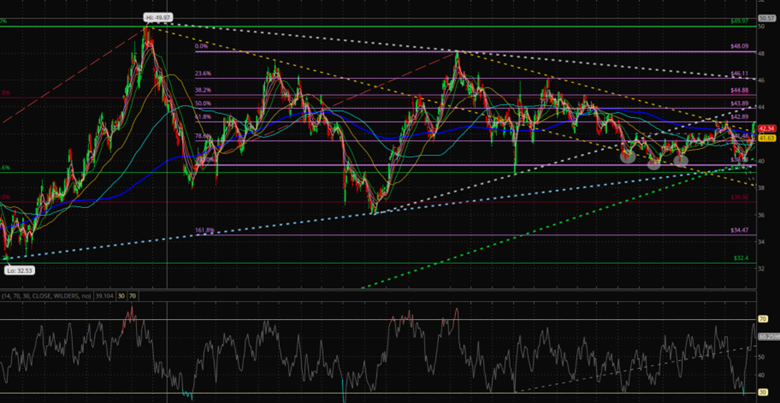
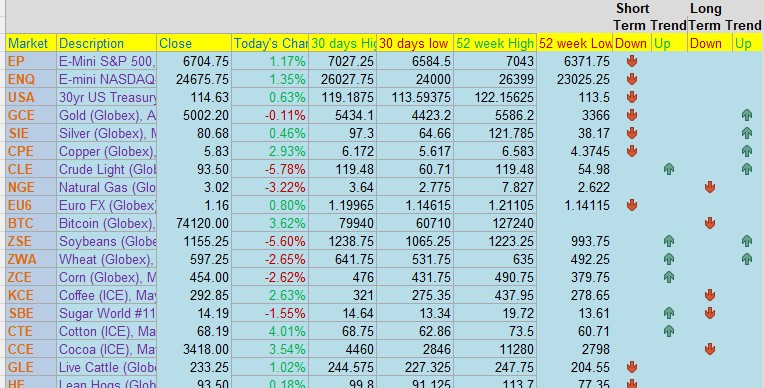
Oil remains the most important chart to watch. Last week we saw extreme volatility — Brent crude touched $119.50 per barrel early in the week, up from around $70 before the U.S.-Israeli attacks on Iran, before declining back toward the $90 range. By Friday, WTI crude futures settled at $98.71 per barrel and Brent settled above $103, closing above $100 for the first time since August 2022.
The reason for the continued pressure is straightforward: Iran borders the Strait of Hormuz, the most important passageway for global energy, carrying 20–25% of the world’s oil and liquid natural gas. The Strait has been effectively closed since fighting started, and despite the U.S. offering to provide ships safety and insurance guarantees, shipping companies may still believe it’s too risky for transit.
The degree and duration question I raised last week is becoming clearer, and it is not encouraging. Analysts note that the lost Gulf supply could reach 11–16 million barrels per day, raising doubts about whether emergency stockpiles can fully offset the deficit. The IEA has cut its forecast for global oil demand growth in 2026 by roughly 25% to 640,000 barrels per day, reflecting weaker economic activity and higher fuel costs.
On the consumer side, Wells Fargo has calculated that sustained oil prices at $130 per barrel — a 100% increase from the pre-conflict baseline — would result in back-to-back contractions in quarterly personal consumption, materially raising the risk of recession. We are not there yet, but we are watching the direction closely.
There were two significant turns in sentiment during the week. On Monday, markets opened sharply lower — the Dow was down nearly 900 points at its session low and the Nasdaq COMPX dipped below its 200-day moving average for the first time since May 2025 — before a remarkable reversal. President Trump told a CBS News reporter that “the war is very complete, pretty much,” adding that Iran “has no navy, no communications, no Air Force,” and markets bounced hard, with the S&P 500 closing up 0.83% and the Nasdaq jumping 1.38%.
By Thursday, a second catalyst emerged: U.S. Treasury Secretary Scott Bessent said the administration was taking concrete steps to try to cap surging oil prices, sparking a strong Friday rally in equities and crypto alike. Despite these intraday bounces, the trend for the week remained down. The S&P 500 posted a 1.6% loss on the week, notching its first three-week losing streak in about a year. The Dow slid about 2%, while the Nasdaq fell 1.3%.
Stagflation Risk Grows
The big story from Friday was the GDP revision. Q4 2025 GDP was revised sharply down to just 0.7% annualized growth from the initial estimate of 1.4%, well below the 2.5% economists had originally expected. At the same time, core PCE inflation for January came in at 3.1% year-over-year — still well above the Fed’s 2% target — with core PCE rising 0.4% on the month.
As one analyst put it, “the big downward revision in GDP is a gut check going into this energy crunch, increasing the risk of stagflation.” The economy entered this oil shock weaker than many realized.
Midweek, the February CPI report offered a brief respite. The headline CPI rose 0.3% for the month, putting the 12-month inflation rate at 2.4%. Core CPI posted a 0.2% monthly reading and a 2.5% annual rate — both in line with Wall Street estimates. However, the market largely looked through that print. Stocks slumped and Treasury yields spiked after the release, as traders were focused on the oil price surge and what it will mean for March and April data.
“CPI inflation for February was along expectations but this is the calm before the storm,” said Carson Group’s chief macro strategist. Economists estimate that if crude oil averages around $100 per barrel for the rest of the year, CPI inflation could rise to 3.5% by year-end, and gasoline prices could hit nearly $5 per gallon in the second quarter.
The Fed Is in a Bind
As I noted last week, the Fed is in a tough spot. Markets have largely abandoned expectations of rate cuts this year, with several Wall Street economists including TD Securities, Barclays, and Goldman Sachs pushing back the timing of their expected next cut.
The probability of a cut at this week’s meeting has almost disappeared, and markets are now pricing around 20 basis points of easing for all of 2026 — less than one full 25-basis-point cut. The FOMC decision comes Wednesday, March 19.
No rate change is expected, but the updated dot plot and Chair Powell’s press conference will be closely scrutinized for any signals about the path ahead — particularly any hint that hikes could come back on the table if oil-driven inflation persists.
Russell 2000
Small caps continued to underperform, and for the same reasons as last week. Higher oil raises input costs and compresses margins, while elevated Treasury yields make financing more expensive for smaller companies that rely more heavily on debt. The 10-year Treasury yield climbed 14 basis points on the week to 4.28%, and the 30-year rose 14 basis points to 4.90%. Until we see a reversal in oil and yields, we can see the Russell to continue lagging the large-cap indices.
Private Credit
Private credit continued to generate headlines. Last week Blackstone’s BCRED hit record redemption requests; this week BlackRock said it is limiting withdrawals from one of its private credit funds following a surge in redemption requests — investors sought roughly $1.2 billion in redemptions but only $620 million was paid out. I continue to monitor bond prices of private credit issuers as a leading stress indicator. This is a slow-developing story but one that warrants close attention.
AI Buildout
Deutsche Bank upgraded software to overweight and raised its rating on tech overall to neutral from overweight, citing software stocks’ outperformance last week — even amid the broader turmoil — as a sign that the group may have finally bottomed after months of AI disruption concerns weighing on valuations. I continue to watch the bonds and stocks of the major AI infrastructure investors as a barometer of confidence in the buildout thesis. Such as ORCL and Softbank.
Cryptocurrency
Bitcoin was a standout performer this week, showing meaningful relative strength against equities. Bitcoin rose about 8.5% this week and more than 13% since the Middle East conflict escalated, outperforming tech stocks, gold, and U.S. equities. U.S. spot Bitcoin ETFs recorded roughly $1.3 billion in net inflows so far in March, potentially marking the first positive month for flows since October.
A notable milestone: on March 9, the Bitcoin network mined its 20 millionth coin, leaving only 1 million BTC to be issued over the next 114 years.
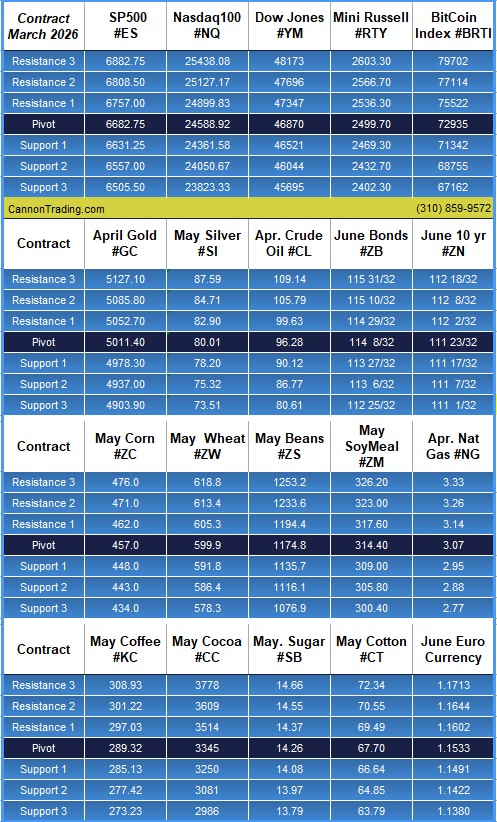
Technically, Bitcoin is approaching a key level. BTC is trading around $73,000, and a decisive move above $74,000 on strong volume could trigger a rally toward $80,000, a former support level. On the downside, $65,000 — roughly the network’s estimated production cost — remains the first key support, followed by $60,000. The Fed meeting on Wednesday is the next macro event that could move crypto meaningfully in either direction.
Any hawkish surprise from Powell would likely hit risk assets including Bitcoin hard.
The Week Ahead: March 16–20, 2026
The highlight of the week is the FOMC decision Wednesday, March 19. No rate change is expected (current target range 3.50%–3.75%), but the updated Summary of Economic Projections — the dot plot — and Powell’s press conference will be the most closely watched events of the week.
Nvidia’s annual Global Technology Conference (GTC) kicks off Monday and runs through Thursday. Nvidia CEO Jensen Huang will likely deliver several AI-related headlines, which could have an impact on tech stocks.
There will also be several monetary policy meetings from global central banks–the U.S. Federal Reserve (Tue-Wed), the Bank of Japan (Wed-Thur), and the European Central Bank (ECB) (Thur). On Wednesday after the bell, we’ll also get an earnings report from memory and storage specialist Micron Technology, which has been one of the best-performing stocks over the past year.
Economic:
- Monday (Mar. 16): Capacity Utilization, Empire State Manufacturing, Industrial Production
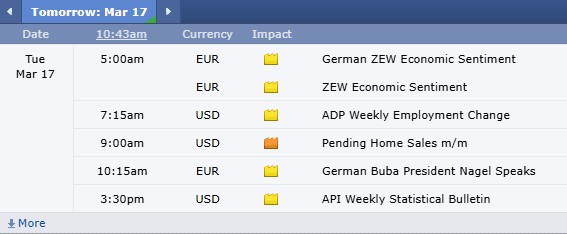
- Tuesday (Mar. 17): Building Permits, Housing Starts, NAHB Housing Market Index, Pending Home Sales
- Wednesday (Mar. 18): Federal Open Market Committee (FOMC) Rate Decision, Producer Price Index (PPI), EIA Crude Oil Inventories, Mortgage Applications Index, Net Long-Term TIC, BOJ starts two-day Monetary Policy Meeting
- Thursday (Mar. 19): ECB Governing Council monetary policy meeting, Continuing Claims, EIA Natural Gas Inventories, Initial Claims, New Home Sales, Philadelphia Fed Index, Wholesale Inventories
- Friday (Mar. 20): no reports
Earnings:
- Monday (Mar. 16): Annexon Inc. (ANNX), Dollar Tree Inc. (DLTR), Forgent Power Solutions Inc. (FPS), Ke Holdings Inc. (BEKE), MBX Biosciences Inc. MBX), Oruka Therapeutics Inc. (ORKA), Science Applications International Corp. (SAIC), Semtech Corp. (SMTC), VinFast Auto Ltd. (VFS)
- Tuesday (Mar. 17): Academy Sports and Outdoors Inc. (ASO), Alour Lifestyle Holdings Ltd. (ATAT), Corporacion America Airports SA (CAAP), DocuSign Inc. (DOCU), Elbit Systems Ltd. (ESLT), GDS Holdings Ltd. (GDS), Lululemon Athletica Inc. (LULU), New Gold Inc. (NGD), Oklo Inc. (OKLO), Tencent Music Entertainment Group (TME)
- Wednesday (Mar. 18): Dlocal Ltd. (DLO), Equipmentshare.com Inc. (EQPT), Five Below Inc. (FIVE), General Mills Inc. (GIS), H World Group Ltd. (HTHT), Jabil Inc. (JBL), Macy’s Inc. (M), Micron Technology Inc. (MU), Williams-Sonoma Inc. (WSM)
- Thursday (Mar. 19): Accenture PLC (ACN), Alibaba Group Holding Ltd. (BABA), Carnival Corp. (CCL), Darden Restaurants Inc. (DRI), Erasca Inc. (ERAS), FedEx Corp. (FDX), PDD Holdings Inc. (PDD), Planet Labs (PL), Signet Jewelers Ltd. (SIG)
- Friday (Mar. 20): SANUWAVE Health Inc. (SNWV), Xpeng Inc. (XPEV)
Disclaimer: Trading Futures, Options on Futures, and retail off-exchange foreign currency transactions and other financial instruments involve substantial risk of loss and are not suitable for all investors. Past performance is not indicative of future results. Carefully consider if trading is suitable for you in light of your circumstances, knowledge, and financial resources.
You may lose all or more of your initial investment. Opinions, market data, and recommendations are subject to change at any time. I am registered solely as a commodities broker. Any references, recommendations & information contained in this article are of opinion only, should not be considered investment advice, and do not guarantee any profits. |