|
|||||||||||||||||||||||||||||||||||||||||||||||||||||||||
|
|||||||||||||||||||||||||||||||||||||||||||||||||||||||||
|
- Bitcoin Futures (114)
- Charts & Indicators (310)
- Commodity Brokers (594)
- Commodity Trading (849)
- Corn Futures (64)
- Crude Oil (234)
- Currency Futures (103)
- Day Trading (659)
- Day Trading Webinar (61)
- E-Mini Futures (164)
- Economic Trading (166)
- Energy Futures (128)
- Financial Futures (184)
- Future Trading News (3,168)
- Future Trading Platform (327)
- Futures Broker (666)
- Futures Exchange (347)
- Futures trade copier (1)
- Futures Trading (1,268)
- futures trading education (446)
- Gold Futures (113)
- Grain Futures (101)
- Index Futures (271)
- Indices (233)
- Metal Futures (144)
- Nasdaq (79)
- Natural Gas (40)
- Options Trading (191)
- S&P 500 (145)
- Trading Guide (434)
- Trading Webinar (60)
- Trading Wheat Futures (45)
- Uncategorized (26)
- Weekly Newsletter (225)
Tag: futures trading
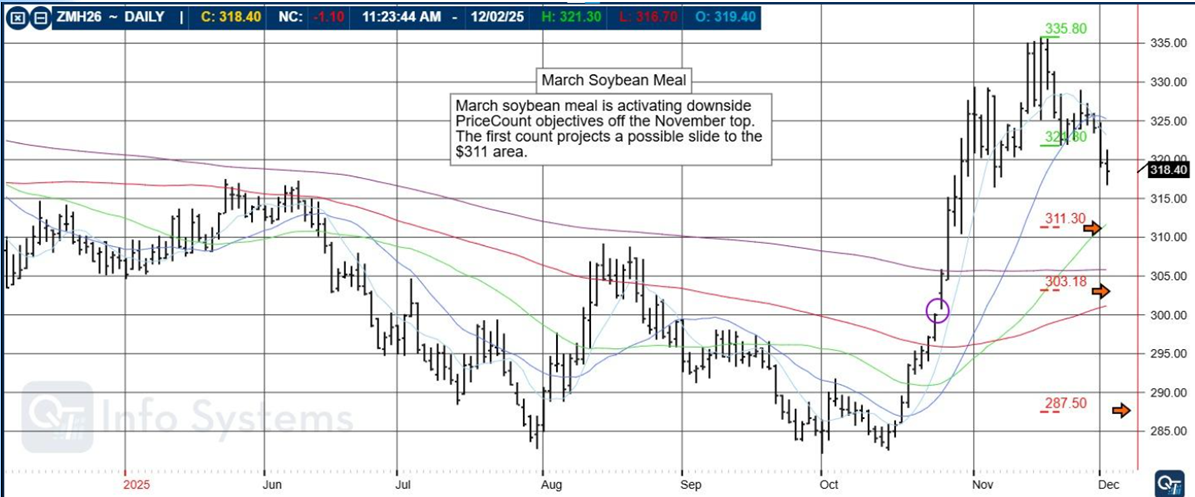
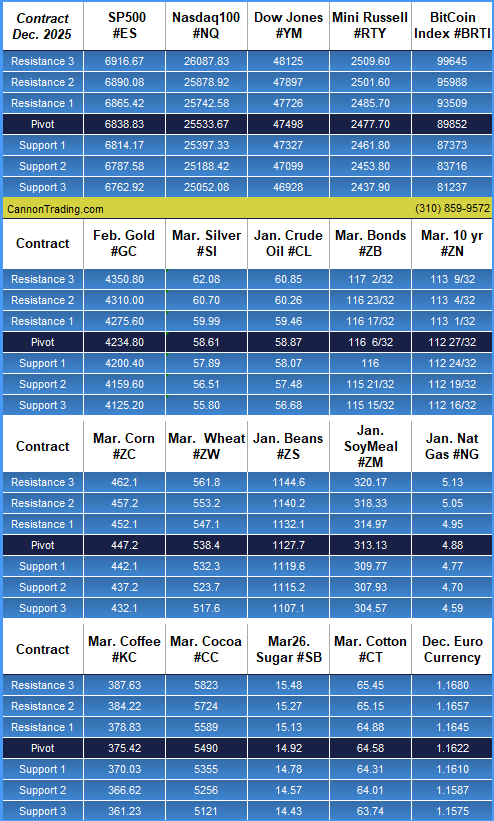
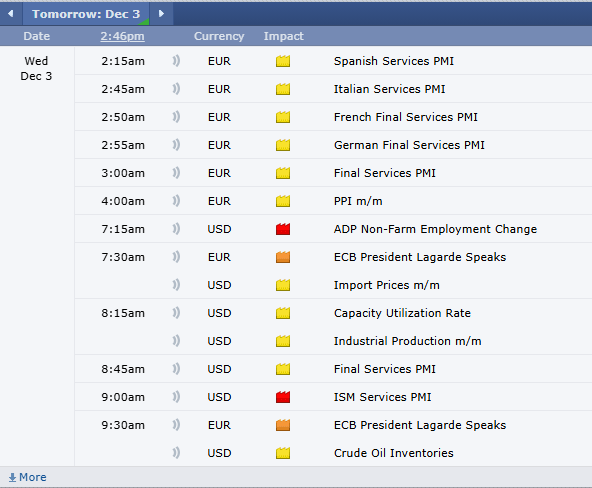
Range Bound Trading Strategies, NEW Trading Contest, March Soybean Meal, Levels, Reports; Your 5 Important Can’t-Miss Need-To-Knows for Trading Futures on December 3rd, 2025
|
|
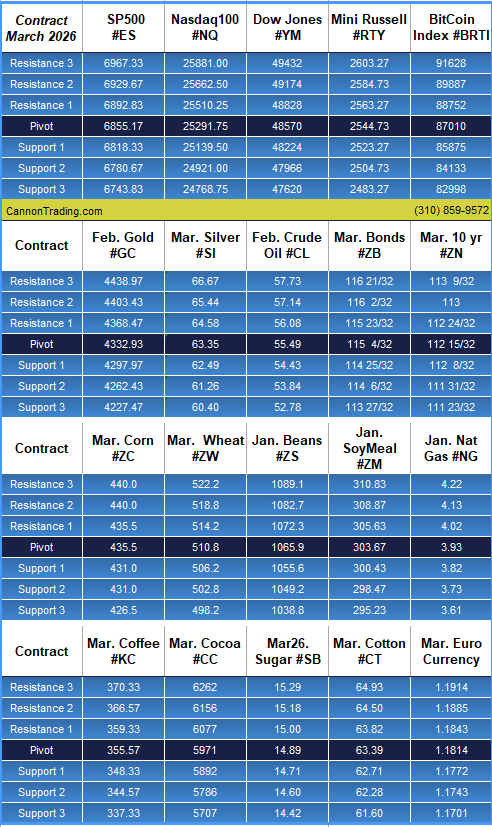
At-a-Glance Levels
| Instrument | S2 | S1 | Pivot | R1 | R2 | ||
|---|---|---|---|---|---|---|---|
Gold (GC)— Feb(#GC) |
4159.60 | 4200.40 | 4234.80 | 4275.60 | 4310.00 | ||
Silver (SI)— Mar. (#SI) |
56.51 | 57.89 | 58.61 | 59.99 | 60.70 | ||
Crude Oil (CL)— Jan (#CL) |
57.48 | 58.07 | 58.87 | 59.46 | 60.26 | ||
Mar. Bonds (ZB)— Mar (#ZB) |
115 21/32 | 116 | 116 6/32 | 116 17/32 | 116 23/32 |
|
||||||||||||||||||||||||||||||||||||||||||||||||||||
|
||||||||||||||||||||||||||||||||||||||||||||||||||||
|
Happy Thanksgiving, Traders! Possible market moves, Levels, Reports; Your Important Need-To-Knows for Trading Futures during the Thanksgiving Weekend, 2025
|
|
||||||||||||||||||||||||||||||||||||||||||||||||||||||||||||
|
||||||||||||||||||||||||||||||||||||||||||||||||||||||||||||
|
Bull Markets hanging in there amid 200-day SMA, December Bean Oil, Levels, Reports (!); Your 4 Important Can’t-Miss Need-To-Knows for Trading Futures on November 19th, 2025
|
|
At-a-Glance Levels
Bulls are surviving…. For now. |
|
|
Quick Historical Examples
Bottom LineThe 200-day SMA is not magic, but because so many large players watch it and trade it, it has become one of the most important price levels on the chart. For the S&P 500 right now (November 2025), staying above ≈6,150–6,200 keeps the long-term bull market intact. A sustained break below would be a major warning signal that the character of the market has changed. Where is the 200 Day today?As of November 18, 2025 (using the most recent market close on November 17, 2025, as markets are closed over the weekend), the 200-day simple moving average (SMA) for the S&P 500 index is 6,151.63. This value reflects a slight increase of +3.16 (+0.05%) from the prior day, driven by the index’s ongoing bull market momentum. For context:
Mini SP daily chart with the 200 simple moving average below for review! Plan your trade, trade your plan! |
|
|
|
|
|
Want to feature our updated trading levels on your website? Simply paste a small code, and they’ll update automatically every day!
Click here for quick and easy instructions.
|
||||||||||||||||||||||||||||||||||
|
||||||||||||||||||||||||||||||||||
|
Zero-DTE Options: Pros v. Cons, January Lumber, Levels, Reports; Your 5 Important, Can’t-Miss Need-To-Knows for Trading Futures on November 18th, 2025
|
|
At-a-Glance Levels
| Instrument | S2 | S1 | Pivot | R1 | R2 | ||
|---|---|---|---|---|---|---|---|
Gold (GC)— Dec (GCZ5) |
3950.57 | 3995.13 | 4051.37 | 4095.93 | 4152.17 | ||
Silver (SI)— Dec (SIZ5) |
48.38 | 49.17 | 50.14 | 50.94 | 51.91 | ||
Crude Oil (CL)— Dec (CLZ5) |
58.65 | 58.18 | 59.74 | 60.27 | 60.83 | ||
Dec. Bonds (ZB)— Dec (ZBZ5) |
116 | 116 11/32 | 116 22/32 | 117 1/32 | 117 12/32 |
Zero-DTE Options: Leveraging CME Liquidity in Volatile Markets
Recent volatility and sharp intraday swings in stock index futures and metals have created unique opportunities for active traders – possibly as an alternative for using futures with a stop loss. One increasingly popular tool for navigating these conditions is Zero-DTE (Zero Days to Expiration) options, available on CME Group’s deep and liquid markets.
What Are Zero-DTE Options?
Zero-DTE options are contracts that expire on the same day they are traded. CME Group offers same-day expiring options on major benchmarks like E-mini S\&P 500, Nasdaq-100, and key metals futures. These instruments allow traders to capitalize on short-term price action while avoiding overnight risk.
Advantages of Using CME Zero-DTE Options
- Access to Benchmark Liquidity: CME Group provides unmatched liquidity in index and metals options, ensuring efficient execution even during volatile sessions.
- Defined Risk Profiles for LONG options: LONG Options allow traders to manage exposure with clear maximum loss, unlike outright futures positions.
- Strategic Flexibility: Ideal for intraday hedging, directional plays, or advanced strategies like spreads and iron condors.
- Capital Efficiency: Lower upfront cost compared to futures, with margin benefits when combined with CME futures positions.
Key Considerations
- Rapid Time Decay: With only hours to expiration, options lose value quickly if the market doesn’t move as anticipated.
- Gamma Sensitivity: Price changes in the underlying can lead to significant swings in option value.
- Execution Discipline: Liquidity is strong, but spreads can widen near expiration—precision matters.
- Risk Management: Fast-moving markets require a clear plan and strict controls.
Consult with a Broker
Zero-DTE options on CME Group products can be powerful tools for active traders, but they require knowledge and discipline. Our experienced brokers can help you evaluate strategies, manage risk, and take full advantage of CME’s liquidity and product depth. Contact us today to learn more.
✅ Schedule a one on one No Obligation Broker Consultation
|
|||||||||||||||||||||||||||||||||||||||||||||||
|
|||||||||||||||||||||||||||||||||||||||||||||||
|
Every Major Type of Futures Trading Explained: From Day Trading to Algorithmic Strategies

Futures Trading


Futures markets are dynamic arenas where traders speculate, hedge, and invest across commodities, indices, currencies, and more. The approaches to futures trading are as diverse as the markets themselves — ranging from fast-paced day trading to long-term position trading, and from discretionary methods to cutting-edge algorithmic systems.
In this article, we’ll explore every major type of futures trading in detail — what defines each, how they work, and which styles suit different trader profiles. Whether you’re just starting trading in futures or already deep into advanced automation, understanding these approaches can help refine your strategy and results.
1. Day Trading Futures
Definition:
Day trading in futures is all about capitalizing on intraday price movements. Traders buy and sell contracts within the same session, closing all positions before the market ends.
Core Features:
- Positions are opened and closed within minutes or hours.
- Traders rely heavily on real-time technical analysis and order flow.
- High-frequency decision-making and execution speed are critical.
Common Methods:
- Scalping: Executing numerous small trades to profit from tiny price moves.
- Momentum trading: Entering trades during strong directional pushes.
- Breakout trading: Acting when prices breach key levels of support or resistance.
Advantages:
- No overnight risk from global market gaps.
- Highly liquid markets like E-mini S&P 500, crude oil, and gold offer tight spreads.
Risks:
- Requires precision and emotional discipline.
- Frequent trades can lead to higher commissions and fatigue.
Ideal for: Traders who thrive in fast-paced environments and use advanced platforms for futures trading execution.
2. Swing Trading Futures
Definition:
Swing traders hold futures positions for several days or weeks, seeking to capture short- to mid-term trends rather than intraday volatility.
Core Features:
- Combines technical and fundamental analysis.
- Positions last long enough to benefit from established market swings.
- Traders use stop-loss and profit targets wider than those of day traders.
Techniques:
- Trend-following with moving averages.
- Retracement or reversal entries using Fibonacci levels.
- Chart patterns like triangles or head-and-shoulders setups.
Advantages:
- Fewer trades and less screen time.
- Potential to capture larger percentage moves in price.
Risks:
- Overnight gaps can affect performance.
- Requires patience and strong risk management.
Ideal for: Professionals who cannot monitor markets constantly but still want meaningful participation in trading in futures.
3. Position Trading Futures
Definition:
Position trading involves holding futures contracts for weeks, months, or even longer — targeting large, fundamental price trends.
Core Features:
- Focus on macroeconomic factors, such as interest rates, supply-demand cycles, and global sentiment.
- Traders often “roll over” expiring contracts to maintain exposure.
Techniques:
- Fundamental trend analysis using global data.
- COT (Commitment of Traders) reports for institutional sentiment.
- Seasonal trading in commodities (e.g., grains, natural gas).
Advantages:
- Big reward potential from major market cycles.
- Less emotional decision-making due to long-term perspective.
Risks:
- High margin requirements.
- Prolonged exposure to market and policy shifts.
Ideal for: Investors and institutions involved in strategic futures trading over macroeconomic cycles.
4. Algorithmic (Algo) Futures Trading
Definition:
Algorithmic trading, or “algo trading,” uses computer programs to automatically execute trades based on coded strategies.
Core Features:
- Removes emotional bias and executes trades at machine speed.
- Can scan multiple markets simultaneously.
- Commonly used by funds and proprietary firms.
Popular Models:
- Trend-following algos: Ride sustained market momentum.
- Mean reversion systems: Bet on prices reverting to their average.
- Arbitrage algorithms: Exploit price discrepancies across exchanges.
Advantages:
- High accuracy and backtesting capability.
- Round-the-clock monitoring of global markets.
Risks:
- Model errors or faulty data can trigger rapid losses.
- Requires technical expertise and system maintenance.
Ideal for: Quantitative traders, developers, and firms embracing automation in trading futures.
5. Systematic Futures Trading
Definition:
Systematic trading relies on a set of predetermined rules and quantitative models to generate trade signals. It’s the foundation for most professional futures trading systems.
Core Features:
- Fully rule-based decision-making process.
- Can be executed manually or automatically.
Examples of Systems:
- Moving average crossovers.
- Volatility breakout strategies.
- Trend channel trading.
Advantages:
- Removes emotion from trading.
- Backtestable and easy to scale across instruments.
Risks:
- Performance can deteriorate when markets shift regimes.
- Requires periodic optimization and review.
Ideal for: Traders seeking long-term consistency and structure in trading in futures.
6. Discretionary Futures Trading
Definition:
Discretionary traders use experience, intuition, and interpretation rather than fixed systems to make trading decisions.
Core Features:
- Combines technical setups, market news, and sentiment analysis.
- Entry and exit decisions are made manually.
Advantages:
- Highly flexible; allows adaptation to unique market conditions.
- Intuitive recognition of patterns beyond algorithmic logic.
Risks:
- Emotional decisions may lead to inconsistency.
- Hard to backtest or delegate.
Ideal for: Experienced individuals who have mastered their emotional discipline and chart interpretation.
7. Spread Trading Futures
Definition:
Spread trading involves taking offsetting long and short positions in related futures contracts to profit from price differentials rather than outright price direction.
Common Types:
- Calendar spreads: Buying one month’s contract and selling another.
- Inter-market spreads: Trading two correlated commodities (e.g., long corn, short wheat).
- Inter-exchange spreads: Arbitrage between exchanges.
Advantages:
- Lower volatility than directional trades.
- Smaller margin requirements.
Risks:
- Narrow profit potential.
- Spread relationships can widen unexpectedly.
Ideal for: Intermediate traders who prefer lower-risk strategies in futures trading.
8. High-Frequency Futures Trading (HFT)
Definition:
HFT uses ultra-fast algorithms and low-latency connections to capture small price inefficiencies in milliseconds.
Core Features:
- Focused on microstructure of markets.
- Executes thousands of trades per day.
Advantages:
- Tiny profits magnified by massive volume.
- Minimal human involvement.
Risks:
- High infrastructure costs.
- Dependent on technological edge and regulation.
Ideal for: Institutional participants and prop firms equipped with advanced connectivity.
9. Hedging Futures Trading
Definition:
Hedging uses futures contracts to protect against unfavorable price movements in physical assets or investment portfolios.
Examples:
- A farmer sells corn futures to lock in harvest prices.
- A fund buys S&P 500 futures to hedge equity exposure.
Advantages:
- Reduces risk and stabilizes returns.
- Allows better financial planning.
Risks:
- Limits upside potential.
- Requires accurate hedge ratio calculation.
Ideal for: Commercial entities and portfolio managers mitigating exposure through trading futures.
10. Quantitative Futures Trading
Definition:
Quantitative trading combines mathematics, statistics, and machine learning to design predictive trading models.
Core Features:
- Data-driven; uses historical and real-time data for optimization.
- Often overlaps with algorithmic and systematic strategies.
Advantages:
- Objective, scalable, and research-based.
- Enables diversification across markets.
Risks:
- Models can fail in extreme volatility or low liquidity.
- Requires continuous validation.
Ideal for: Data scientists and institutional desks focused on predictive futures trading models.
11. News-Based Futures Trading
Definition:
News-based traders act on price volatility triggered by economic releases, earnings, or geopolitical events.
Core Features:
- Short-term trading around announcements (like CPI, FOMC, or inventory data).
- Relies on fast execution and market awareness.
Advantages:
- High potential during volatility bursts.
- Can be automated for event-based responses.
Risks:
- Slippage and widening spreads can occur.
- Requires speed and timing precision.
Ideal for: Traders with access to fast data feeds and economic calendars.
12. Arbitrage Futures Trading
Definition:
Arbitrage exploits pricing inefficiencies between related instruments or markets to generate low-risk profits.
Examples:
- Cash-and-carry arbitrage: Buying spot and selling futures when futures trade above fair value.
- Statistical arbitrage: Pair trading correlated instruments.
Advantages:
- Low directional exposure.
- Reliable when opportunities exist.
Risks:
- Execution delay can erase profit margin.
- Rare opportunities in highly efficient markets.
Ideal for: Institutional or quantitative traders with robust execution infrastructure.
13. Social and Copy Futures Trading
Definition:
A modern trend in trading in futures, social or copy trading allows users to replicate trades of experienced professionals through integrated brokerage platforms.
Core Features:
- Leverages collective insights.
- Provides learning opportunities for beginners.
Advantages:
- Easier entry point for new traders.
- Real-time exposure to proven strategies.
Risks:
- Over-reliance on others’ decisions.
- Results depend entirely on chosen signal providers.
Ideal for: New traders looking to learn futures trading while participating in live markets.
Choosing the Right Futures Trading Style
Each method of trading futures comes with distinct benefits and challenges. The key is matching your capital, risk tolerance, and lifestyle to the right approach.
|
Trading Style |
Holding Period | Main Tools | Best For |
|---|---|---|---|
| Day Trading | Minutes–Hours | Charts, order flow | Active traders |
| Swing Trading | Days–Weeks | Technical + Fundamental | Balanced traders |
| Position Trading | Weeks–Months | Macroeconomics | Long-term investors |
| Algorithmic / Systematic | Milliseconds–Days | Data models | Quant traders |
| Discretionary | Variable | Experience + Intuition | Veteran traders |
| Spread / Hedging | Weeks–Months | Correlation analysis | Risk managers |
| Arbitrage / Quantitative | Seconds–Days | Statistical models |
Institutions |
The best strategy often blends multiple approaches — for example, combining systematic entry rules with discretionary exits, or using algo-driven signals to refine swing trades. The diversity of trading in futures strategies is what makes the market both challenging and rewarding.
The Power of Strategy in Futures Trading
Success in futures trading doesn’t come from predicting every market move but from developing a structured plan and following it with consistency. The type of strategy you choose defines your routine, tools, and mindset.
Whether you prefer the adrenaline of day trading, the structure of systematic models, or the depth of position trading, remember that risk management and discipline are the true foundations of profitable trading in futures.
Start Trading Futures with Cannon Trading Company


For over 35 years, Cannon Trading Company has been a trusted name in the U.S. futures industry — offering access to powerful platforms, transparent pricing, and personalized support. Whether you’re exploring algorithmic trading, discretionary trading in futures, or professional futures trading for hedging and speculation, Cannon Trading’s experienced brokers and platform variety help you trade smarter and safer.
Explore the next level of trading futures with tailored brokerage solutions, competitive margins, and dedicated customer service — all under one roof.
Open a Futures Trading Account with Cannon Trading Company and experience the difference that expertise and technology make.
Ready to start trading futures? Call us at 1(800)454-9572 (US) or (310)859-9572 (International), or email info@cannontrading.com to speak with one of our experienced, Series-3 licensed futures brokers and begin your futures trading journey with Cannon Trading Company today.
Disclaimer: Trading Futures, Options on Futures, and retail off-exchange foreign currency transactions involve substantial risk of loss and are not suitable for all investors. Past performance is not indicative of future results. Carefully consider if trading is suitable for you in light of your circumstances, knowledge, and financial resources. You may lose all or more of your initial investment. Opinions, market data, and recommendations are subject to change at any time.
Important: Trading commodity futures and options involves a substantial risk of loss. The recommendations contained in this article are opinions only and do not guarantee any profits. This article is for educational purposes. Past performances are not necessarily indicative of future results.
This article has been generated with the help of AI Technology and modified for accuracy and compliance.
Follow us on all socials: @cannontrading
FNDLTD! First Notice Last Trading Days, December Wheat, NEW WEBINAR, Levels, Reports; Your 5 Important Must-Knows for Trading Futures on November 4th, 2025
|
|
|
|||||||||||||||||||||||||||||||||||||||||||||||||||||||||||||||||||||||||||||||||||||||||||||||||||||
|
|||||||||||||||||||||||||||||||||||||||||||||||||||||||||||||||||||||||||||||||||||||||||||||||||||||
|
Trading Classification for Beginners, December Dollar Index, NEW Webinar Nov. 12th, Levels, Reports; Your 5 Important Must-Knows for Trading Futures on October 31st, 2025
|
|
|
|||||||||||||||||||||||||||||||||||||||||||||||||||||||||||||||||||||||||||||||||||||||||||||||||
|
|||||||||||||||||||||||||||||||||||||||||||||||||||||||||||||||||||||||||||||||||||||||||||||||||
|
Second Interest Rate Cut, December Cotton, Levels, Reports; Your 4 Critical Need-To-Knows for Trading Futures on October 30th, 2025
|
|
At-a-Glance Levels
| Instrument | S2 | S1 | Pivot | R1 | R2 | ||
|---|---|---|---|---|---|---|---|
Gold (GC)— Dec (GCZ5) |
3861.93 | 3910.07 | 3978.13 | 4026.27 | 4094.33 | ||
Silver (SI)— Dec (SIZ5) |
46.01 | 46.69 | 47.60 | 48.28 | 49.19 | ||
Crude Oil (CL)— Dec (CLZ5) |
59.02 | 59.67 | 60.34 | 60.99 | 61.66 | ||
Dec. Bonds (ZB)— Dec (ZBZ5) |
117 7/32 | 117 20/32 | 118 13/32 | 118 26/32 | 119 19/32 |

Interest Rates
It wasn’t even apparent during Chair Jerome Powell’s post-announcement news conference what triggered the price jolts in several of the futures markets this afternoon – including a ±50-point decline in the E-mini S&P 500 and a ±200-point decline in the E-mini Nasdaq in the span of eight minutes, or the ±$40 sell-off in gold in the span of two minutes.
Regardless of the cause, they served as the latest real-world examples of why it’s so important for traders of all types to assess the risks of their trades – before you enter into them – and have a plan to manage that risk. Day traders and position traders alike should be aware of important planned events – just like FOMC announcements and press conferences – and anticipate the potential risks to those events (these days it’s wise to include occasions when the U.S. president speaks, considering his ongoing involvement and influence in global trade relations).
These events certainly create opportunities for traders – outsize moves can also result in outsize favorable outcomes – but the most important aspect to trading – is always to manage risk.
General – Interest Rates:
Day 29 of the U.S Government shut-down, now the second-longest on record.
The Federal Reserve cut interest rates by a quarter of a percentage point today – its second consecutive rate cut, lowering the Fed’s benchmark interest rate to a range of 3.75 to 4 percent, its lowest level in three years.
Stock Index Futures:
We’re amidst earning season for the third quarter. Moving into full swing, all eyes were on Microsoft, Google-parent Alphabet and Facebook-owner Meta today– all releasing their latest earnings results after the closing bell.
Tomorrow:
Apple and Amazon
|
||||||||||||||||||||||||||||||||||||||||||||||||||||
|
||||||||||||||||||||||||||||||||||||||||||||||||||||
|
FOMC Tomorrow, December Live Cattle, Levels, Reports; Your 4 Important Need-To-Knows for Trading Futures on October 29th, 2025
|
|
|
||||||||||||||||||||||||||||||||||||||||||||||||||||||||||
|
||||||||||||||||||||||||||||||||||||||||||||||||||||||||||
|
- March 2026
- February 2026
- January 2026
- December 2025
- November 2025
- October 2025
- September 2025
- August 2025
- July 2025
- June 2025
- May 2025
- April 2025
- March 2025
- February 2025
- January 2025
- December 2024
- November 2024
- October 2024
- September 2024
- August 2024
- July 2024
- June 2024
- May 2024
- April 2024
- March 2024
- February 2024
- January 2024
- December 2023
- November 2023
- October 2023
- September 2023
- August 2023
- July 2023
- June 2023
- May 2023
- April 2023
- March 2023
- February 2023
- January 2023
- December 2022
- November 2022
- October 2022
- September 2022
- August 2022
- July 2022
- June 2022
- May 2022
- April 2022
- March 2022
- February 2022
- January 2022
- December 2021
- November 2021
- October 2021
- September 2021
- August 2021
- July 2021
- June 2021
- May 2021
- April 2021
- March 2021
- February 2021
- January 2021
- December 2020
- November 2020
- October 2020
- September 2020
- August 2020
- July 2020
- June 2020
- May 2020
- April 2020
- March 2020
- February 2020
- January 2020
- December 2019
- November 2019
- October 2019
- September 2019
- August 2019
- July 2019
- June 2019
- May 2019
- April 2019
- March 2019
- February 2019
- January 2019
- December 2018
- November 2018
- October 2018
- September 2018
- August 2018
- July 2018
- June 2018
- May 2018
- April 2018
- March 2018
- February 2018
- January 2018
- December 2017
- November 2017
- October 2017
- September 2017
- August 2017
- July 2017
- June 2017
- May 2017
- April 2017
- March 2017
- February 2017
- January 2017
- December 2016
- November 2016
- October 2016
- September 2016
- August 2016
- July 2016
- June 2016
- May 2016
- April 2016
- March 2016
- February 2016
- January 2016
- December 2015
- November 2015
- October 2015
- September 2015
- August 2015
- July 2015
- June 2015
- May 2015
- April 2015
- March 2015
- February 2015
- January 2015
- December 2014
- November 2014
- October 2014
- September 2014
- August 2014
- July 2014
- June 2014
- May 2014
- April 2014
- March 2014
- February 2014
- January 2014
- December 2013
- November 2013
- October 2013
- September 2013
- August 2013
- July 2013
- June 2013
- May 2013
- April 2013
- March 2013
- February 2013
- January 2013
- December 2012
- November 2012
- October 2012
- September 2012
- August 2012
- July 2012
- June 2012
- May 2012
- April 2012
- March 2012
- February 2012
- January 2012
- December 2011
- November 2011
- October 2011
- September 2011
- August 2011
- July 2011
- June 2011
- May 2011
- April 2011
- March 2011
- February 2011
- January 2011
- December 2010
- November 2010
- October 2010
- September 2010
- August 2010
- July 2010
- June 2010