Equities get legs on back-to-back days.
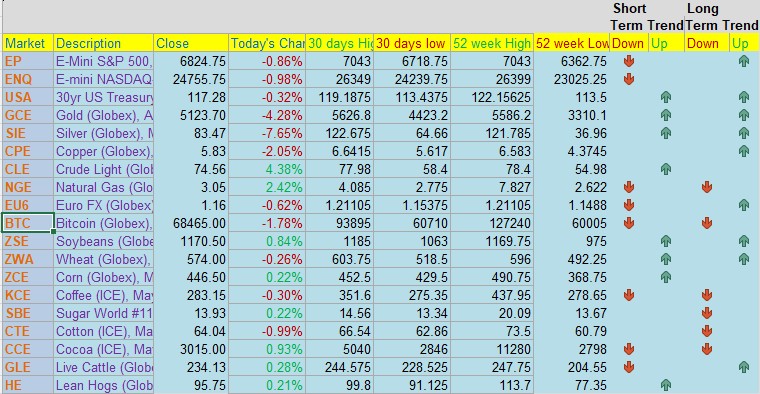
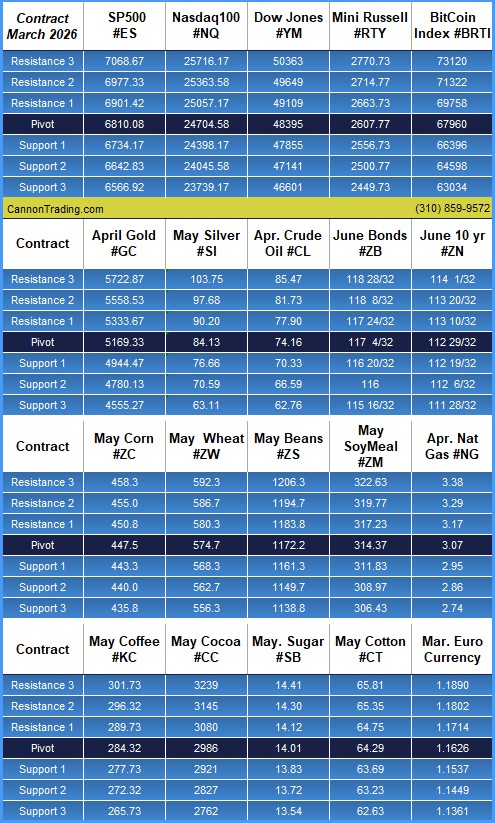
After a strong case that can be made for the S&P index completing the Elliot Wave 5th wave that began in November, the 6750 .00 price level has, so far, proven to be resilient. In the face of global uncertainty, it seems inertia has levitated the index just when it looked like the price was going to breakdown and violate the 200 day moving average on a closing basis in the mid 6700’s.
On each of the past two days, the index has rallied off it’s early session lows, flirting with the MA.
Crude Oil and energy by-products on a run to the upside
As of March 3, 2026,
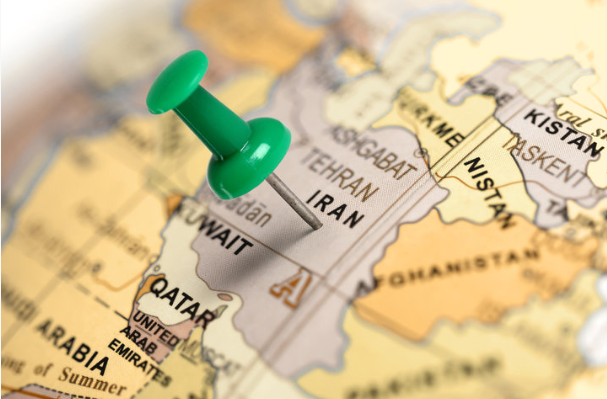
The Strait of Hormuz is currently in a state of de facto closure. While it remains technically and legally open as an international waterway, it is effectively impassable for most commercial shipping due to extreme security risks and the withdrawal of insurance coverage.
On Truth Social, Pres. Trump recently addressed this “If necessary, the United States Navy will begin escorting tankers through the Strait of Hormuz, as soon as possible.
No matter what, the United States will ensure the FREE FLOW of ENERGY to the WORLD. The United States’ ECONOMIC and MILITARY MIGHT is the GREATEST ON EARTH — More actions to come,” in a retort to the IRGC threatening to attack any ship in the strait, hours before.
Current Status & Conflicting Claims
- Iran’s Position: Senior officials from Iran’s Islamic Revolutionary Guard Corps (IRGC) officially declared the strait “closed” on March 2, 2026. They have issued radio warnings stating they will “set ablaze” any ship attempting to cross.
- U.S. Position: U.S. Central Command (CENTCOM) continues to maintain that the strait is not closed and remains a protected international waterway.
- Operational Reality: Despite the legal dispute, maritime traffic has slowed to a crawl. Major shipping firms like Hapag-Lloyd, CMA CGM, and MSC have suspended all transits through the region to protect their crews and vessels.
Key Factors Driving the Disruption
- Insurance Withdrawal: Most maritime insurers have withdrawn war-risk coverage for the Persian Gulf, making it economically unviable for ship owners to enter the area.
- Physical Attacks: Several tankers have reportedly been struck or damaged by Iranian fire and drone attacks over the past few days, leading to a “critical” risk assessment for the region.
- Global Impact: Approximately 20% of global oil and gas supply passes through this chokepoint. The current disruption has caused a sharp spike in energy prices, with Brent crude opening significantly higher this week.
- Diplomatic Pressure: China, the largest importer of oil passing through the strait, is reportedly pressuring Iran to keep the waterway open to safeguard its energy security.
Response:
OPEC’s main response so far has been to signal a modest production increase while publicly downplaying panic about supply, even as members leave room to adjust if the crisis worsens.
Production decisions
- OPEC+ has agreed to boost output quotas by about 206,000 barrels per day starting in April, a slightly larger hike than the earlier plan of roughly 137,000 bpd.
- The group frames this as a continuation of its gradual unwinding of past cuts, not an emergency surge, and says it retains “flexibility” to change the pace depending on market conditions.
Official messaging
- In public statements and leaks via delegates, OPEC+ cites a “steady” global economic outlook and “healthy” market fundamentals, avoiding direct reference to the Iran war even though the timing is clearly linked.
- Key Gulf producers have warned privately that military action against Iran could push prices above 100 dollars, signaling to Washington and others that the conflict poses serious risks despite the small quota hike.
Constraints and limits
- Analysts note that only a few members (mainly Saudi Arabia and the UAE) hold significant spare capacity, so any OPEC+ increase beyond a couple of hundred thousand bpd would be hard to deliver in practice.
- Several experts argue the announced 206,000 bpd increase cannot fully offset a prolonged disruption through the Strait of Hormuz, since the main bottleneck is now logistics and transit risk rather than wellhead production.
Practical behavior by key members
- Saudi Arabia, Iraq, Kuwait, and the UAE had already been nudging exports higher in the run‑up to and immediately after the strikes, anticipating tighter balances and higher prices.
- Russia and other members in the voluntary “V8” subgroup joined the announced adjustment, signaling a coordinated move to show responsiveness without flooding the market.
Plan your trades and trade your plans
|