|
|


|
|
A naturally found substance, crude oil is also one of the most traded commodities. It is crude oil that is further refined so as to make petroleum products. Just like with every other commodity, crude oil too has its specific ticker symbol, contract value and margin.
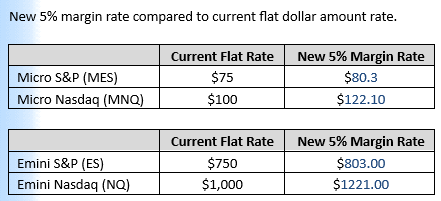
The margin is variable as it keeps changing as per the volatility in the market as well as according to the current value of the contract. If you are interested in crude oil trading or are already trading in this commodity, it is important for you to know that over the past 50 years the price of this commodity has been denominated in U.S. Dollars.
At Cannon Trading we help you trade crude oil at some of the best day trading margin rates. Our brokers will do their best to keep you aware of the market happenings to help you exercise call and put options carefully. In order to get more information on crude oil and commodities, read this category archive blog. Please feel free to share this information.
|
|
|
|
Day trading DJIA futures offers an exciting opportunity to participate in one of the world’s most liquid and influential financial markets. DJIA futures, or Dow Jones futures, are derivatives that allow traders to speculate on the movement of the Dow Jones Industrial Average (DJIA). This article delves into the nuances of day trading DJIA futures, provides essential tips, lists key facts about the contracts, and highlights the services of Cannon Trading Company as a reliable futures trading partner.
DJIA futures contracts are standardized agreements to buy or sell the Dow Jones Industrial Average at a predetermined price on a specific future date. These contracts are traded on the Chicago Mercantile Exchange (CME) and offer high liquidity, making them a popular choice for traders looking to capitalize on short-term price movements.
Cannon Trading Company stands out in the trading futures industry for several reasons:
A trader monitors the DJIA futures market during a Federal Reserve announcement. Spotting a bullish trend after dovish comments, they enter a long position at 34,500 and exit at 34,520, gaining $100 per contract. Important: Trading commodity futures and options involves a substantial risk of loss. The recommendations contained in this article are opinions only and do not guarantee any profits. This article is for educational purposes. Past performances are not necessarily indicative of future results.
A day trader notices a double-bottom pattern on the 15-minute chart. They enter a long position at 34,300 with a stop-loss at 34,280 and a target at 34,350. The trade hits the target, netting a $250 profit per contract.
Day trading DJIA futures requires a blend of market knowledge, technical skill, and disciplined execution. Understanding the contract specifications, mastering risk management, and choosing a reliable trading partner like Cannon Trading Company are critical for success. With a robust platform selection, decades of expertise, and exceptional customer reviews, Cannon Trading offers the tools and support traders need to thrive in the competitive Dow futures market.
For more information, click here.
Ready to start trading futures? Call us at 1(800)454-9572 – Int’l (310)859-9572 (International), or email info@cannontrading.com to speak with one of our experienced, Series-3 licensed futures brokers and begin your futures trading journey with Cannon Trading Company today.
Disclaimer: Trading Futures, Options on Futures, and retail off-exchange foreign currency transactions involve substantial risk of loss and are not suitable for all investors. Past performance is not indicative of future results. Carefully consider if trading is suitable for you in light of your circumstances, knowledge, and financial resources. You may lose all or more of your initial investment. Opinions, market data, and recommendations are subject to change at any time.
Important: Trading commodity futures and options involves a substantial risk of loss. The recommendations contained in this article are opinions only and do not guarantee any profits. This article is for educational purposes. Past performances are not necessarily indicative of future results.
This article has been generated with the help of AI Technology and modified for accuracy and compliance.
Follow us on all socials: @cannontrading
The NQ futures contract, also known as the Nasdaq-100 futures contract or the E-mini Nasdaq-100 futures contract, is a cornerstone of modern futures trading. Representing 100 of the largest non-financial companies listed on the Nasdaq stock exchange, this contract is highly favored for its liquidity, volatility, and utility in both speculative and hedging strategies. In this article, we delve into the origins, evolution, and impact of the NQ futures contract, exploring its top historical turning points, contract size evolution, hedging applications, and why Cannon Trading Company stands out as a premier choice among futures brokers.
At its inception, the Nasdaq-100 futures contract was designed with a larger notional value, making it suitable primarily for institutional investors. With the introduction of the E-mini Nasdaq-100 futures contract, the size was reduced to 20 times the index’s value, significantly increasing accessibility.
Today, traders can choose from multiple contract sizes:
This tiered structure ensures that traders of all scales—from retail investors to institutional hedgers—can find a product that aligns with their risk tolerance and trading objectives.
The NQ futures contract is not just for speculation—it’s a powerful hedging tool. For investors with significant exposure to Nasdaq-listed equities, trading the NQ futures contract or its options can mitigate potential losses during market downturns.
Example 1: Protecting a Technology-Heavy Portfolio
Imagine an investor with a $500,000 portfolio heavily concentrated in technology stocks like Apple, Microsoft, and Nvidia. If the investor anticipates a short-term decline in the tech sector, they can sell NQ futures contracts to offset potential losses. A single E-mini Nasdaq-100 futures contract moves in $20 increments for each point change in the index, offering precise risk management.
Example 2: Using Options on NQ Futures
Options on the Nasdaq-100 futures contract provide additional flexibility. For example:
Options on E-mini Nasdaq-100 futures contracts are particularly popular due to their smaller contract size and manageable margin requirements, making them an excellent tool for hedging Nasdaq exposure.
When trading Nasdaq-100 futures contracts, selecting the right futures broker is critical. Cannon Trading Company consistently earns accolades from traders for several compelling reasons:
The NQ futures contract has evolved from its origins as a tool for institutional hedging to a versatile instrument accessible to all levels of traders. From the introduction of the Nasdaq-100 index to the launch of Micro E-mini contracts, the product’s history is marked by innovation and adaptation to market needs. Today, the combination of diverse contract sizes, robust hedging applications, and user-friendly platforms makes the Nasdaq-100 futures contract a cornerstone of futures trading.
For those seeking a reliable futures broker to navigate this dynamic market, Cannon Trading Company stands out. With its free trading platform, 5-star TrustPilot ratings, experienced brokers, and commitment to regulatory excellence, Cannon Trading offers unparalleled support for traders of E-mini Nasdaq-100 futures contracts and beyond. Whether hedging a portfolio or exploring speculative opportunities, partnering with a trusted broker like Cannon Trading ensures a seamless and rewarding trading experience.
For more information, click here.
Ready to start trading futures? Call us at 1(800)454-9572 – Int’l (310)859-9572 (International), or email info@cannontrading.com to speak with one of our experienced, Series-3 licensed futures brokers and begin your futures trading journey with Cannon Trading Company today.
Disclaimer: Trading Futures, Options on Futures, and retail off-exchange foreign currency transactions involve substantial risk of loss and are not suitable for all investors. Past performance is not indicative of future results. Carefully consider if trading is suitable for you in light of your circumstances, knowledge, and financial resources. You may lose all or more of your initial investment. Opinions, market data, and recommendations are subject to change at any time.
Important: Trading commodity futures and options involves a substantial risk of loss. The recommendations contained in this article are opinions only and do not guarantee any profits. This article is for educational purposes. Past performances are not necessarily indicative of future results.
This article has been generated with the help of AI Technology and modified for accuracy and compliance.
Follow us on all socials: @cannontrading
|
|
The oil market is one of the most significant and dynamic global markets, with crude oil futures representing one of the most actively traded commodities worldwide. For both new and experienced traders, understanding how to trade oil futures is key to gaining exposure to the oil market, which is impacted by a multitude of factors, from geopolitics to technological advancements. In this guide, we’ll explore the history of crude oil futures trading, why they are so popular, and the advantages and disadvantages for various types of traders, including retail traders, institutional traders, and hedgers. We’ll conclude with an analysis of oil price forecasts for the end of the year, addressing relevant factors that may impact these predictions.
Oil, often referred to as “black gold,” has been a critical resource in the global economy since its discovery as a fuel source. The journey of oil from its early use to becoming a dominant global commodity on the futures trading market is complex. Originally, oil was traded in physical markets, where buyers and sellers would negotiate contracts for delivery. However, as global energy demand grew, especially in the 20th century, oil became an essential commodity, fueling industries, economies, and transport systems worldwide.
To facilitate oil trading and address the volatility in oil prices, crude oil futures were introduced in the 1980s, allowing for price stabilization and hedging. The New York Mercantile Exchange (NYMEX) launched the first crude oil futures contract in 1983, followed by similar offerings from the Intercontinental Exchange (ICE) and other exchanges. These contracts allowed market participants to buy or sell oil at a predetermined price on a future date, bringing a significant degree of predictability and security to the volatile oil market.
Crude oil futures are among the most popular futures contracts, and there are several reasons why traders are drawn to crude oil futures trading:
To successfully engage in crude oil futures trading, traders should familiarize themselves with the trading process, understand market terminology, and stay informed on global events. Below are key steps for how trade oil futures:
Advantages:
Disadvantages:
Advantages:
Disadvantages:
Advantages:
Disadvantages:
The price of crude oil futures heading into the end of the year is likely to be influenced by several critical factors, including global demand recovery, OPEC+ production decisions, and geopolitical issues.
Based on current market conditions, analysts predict that oil prices could remain relatively high through the end of the year, with potential spikes if any supply disruptions occur. Crude oil futures may see increased buying pressure, but price sensitivity to unforeseen disruptions could cause fluctuations. Retail and institutional traders, as well as hedgers, should remain vigilant, monitoring relevant indicators and adjusting their strategies accordingly. Given these factors, how to trade oil futures effectively will require a close watch on economic reports, OPEC announcements, and geopolitical developments.
Understanding how to trade oil futures requires a grasp of market mechanics, key influences, and the reasons behind the popularity of crude oil futures trading. With high liquidity, volatility, and a strong influence from global factors, oil futures present unique opportunities and risks for traders of all kinds. For retail traders, the potential for high returns is met with significant risk. Institutional traders benefit from data and scale, but face regulatory challenges, while hedgers achieve price stability at the cost of flexibility.
The outlook for crude oil futures remains complex, with oil prices predicted to face various pressures that may drive prices higher or, conversely, cause corrections. As oil remains essential to the global economy, futures trading in this sector will continue to be a focal point for market participants. For anyone engaging in crude oil futures trading, maintaining a strategic approach and staying informed of global events are essential for navigating the unpredictable and profitable world of oil futures.
For more information, click here.
Ready to start trading futures? Call us at 1(800)454-9572 – Int’l (310)859-9572 (International), or email info@cannontrading.com to speak with one of our experienced, Series-3 licensed futures brokers and begin your futures trading journey with Cannon Trading Company today.
Disclaimer: Trading Futures, Options on Futures, and retail off-exchange foreign currency transactions involve substantial risk of loss and are not suitable for all investors. Past performance is not indicative of future results. Carefully consider if trading is suitable for you in light of your circumstances, knowledge, and financial resources. You may lose all or more of your initial investment. Opinions, market data, and recommendations are subject to change at any time.
Important: Trading commodity futures and options involves a substantial risk of loss. The recommendations contained in this article are opinions only and do not guarantee any profits. This article is for educational purposes. Past performances are not necessarily indicative of future results.
This article has been generated with the help of AI Technology and modified for accuracy and compliance.
Follow us on all socials: @cannontrading

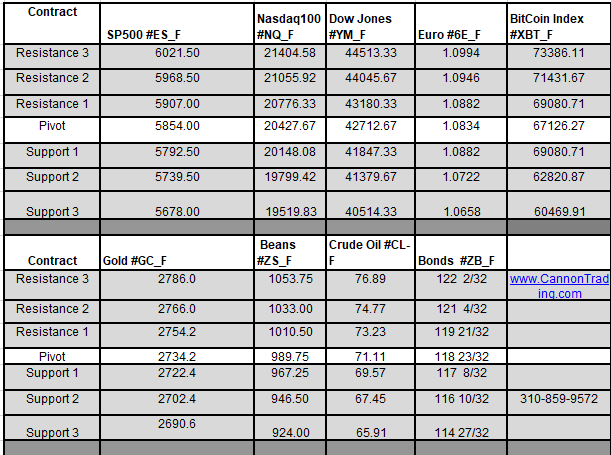
In this issue:
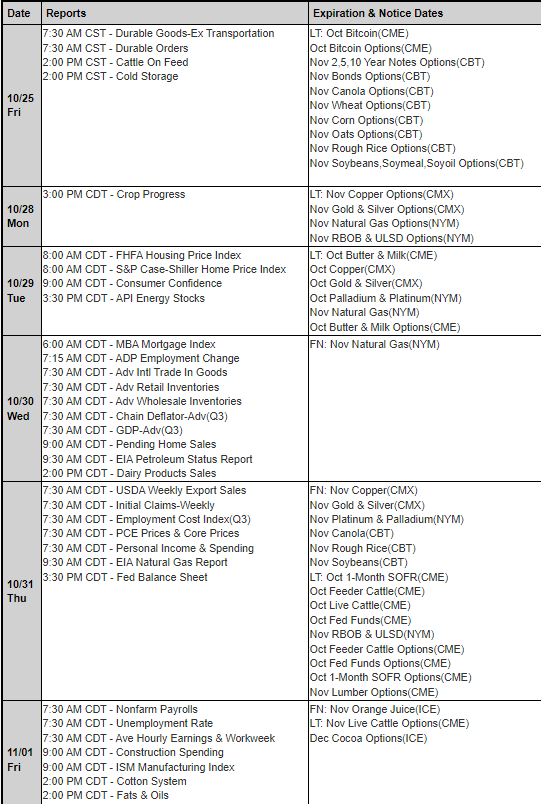
Important Notices – Next Week Highlights:
The Week Ahead
By Mark O’Brien, Senior Broker
We’re a week away from the Labor Dept.’s release of its monthly Non-farm payrolls report. It’s widely considered to be one of the most important and influential measures of the U.S. economy. The report is released at 7:30 A.M., Central Time on the first Friday of the month.
U.S. Election Day (Nov. 5th) countdown: 11 days
Next week’s earnings include some of the largest U.S. companies by market cap.:
Apple, Microsoft, Alphabet (Google), Amazon, Meta (old Facebook), Berkshire Hathaway, Visa, Exxon Mobile, Chevron, Merck, McDonalds, Caterpillar, Uber
Apple and Microsoft each boast a market cap. of over $3 trillion. That’s 3,000,000,000,000. Google and Amazon come in at about $2 trillion.
Tuesday, Oct. 29th:
9:00: Consumer Confidence
Wednesday, Oct 30th:
7:30: Gross Domestic Product (3rd qtr.)
ADP Employment
Thursday, Oct. 31st:
7:30: Personal Income / Spending
7:30: Personal Consumption & Expenditures – Index & year-over-year
8:45: Chicago Purchasing Managers Index
Friday, Nov. 1st:
Non-Farm Payrolls / U.S. Unemployment Report
|
What is an Ascending Triangle Futures Chart Pattern?
An ascending triangle is a bullish futures pattern that can indicate a breakout in the upwards direction.
How do I Recognize an Ascending Triangle Futures Chart Pattern?
An ascending triangle is formed when resistance remains flat and support rises.
What Does a Ascending Triangle Chart Pattern Mean?
The price will rise and fall within the triangle until support and resistance converge. At that point, the apex, breakout occurs, usually upwards.



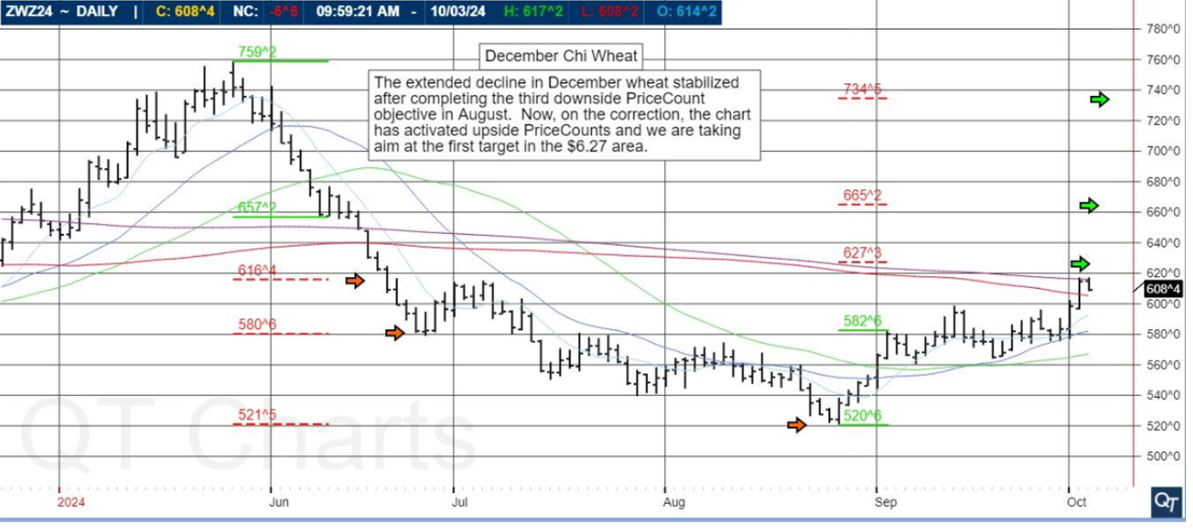
Hot market of the week is provided by QT Market Center, A Swiss army knife charting package that’s not just for Hedgers, Cooperatives and Farmers alike but also for Spread traders, Swing traders and shorter time frame application for intraday traders with a unique proprietary indicator that can be applied to your specific trading needs.
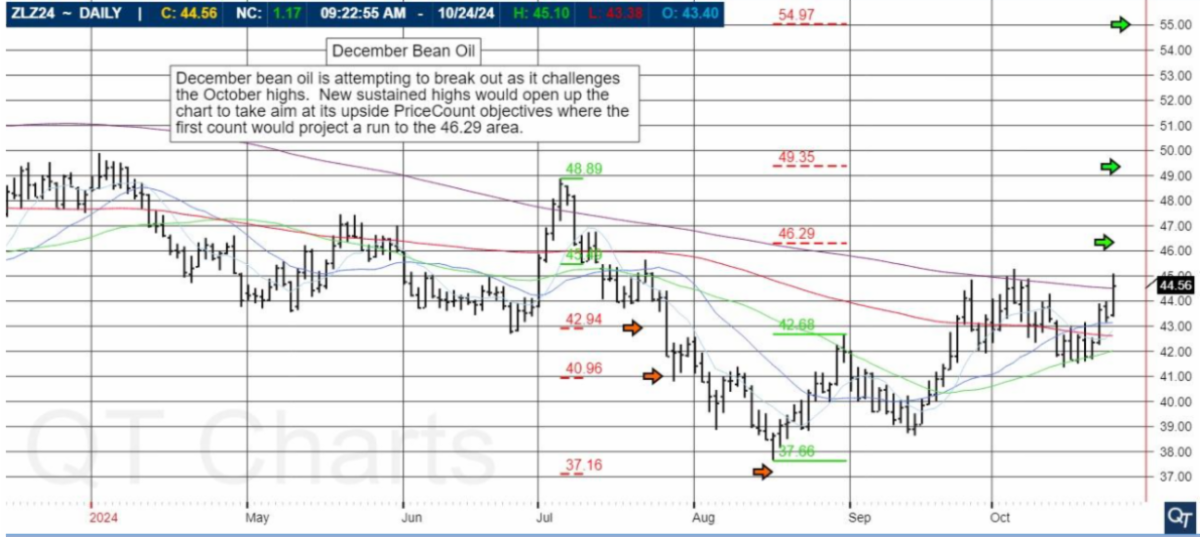
December Bean Oil
December bean oil is attempting to break out as it challenges the October highs. New sustained highs would open up the chart to take aim at its upside PriceCount objectives where the first count would project a run to the 46.29 area.
PriceCounts – Not about where we’ve been , but where we might be going next!
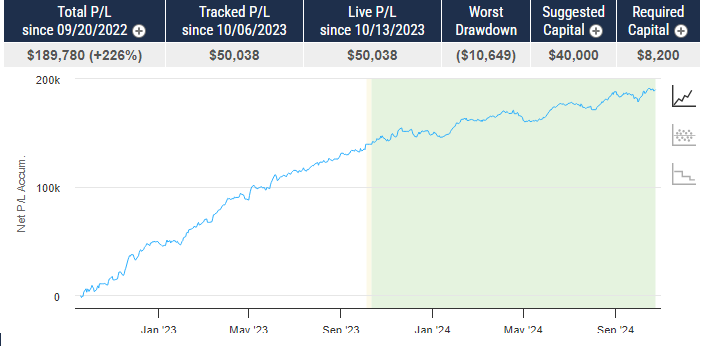
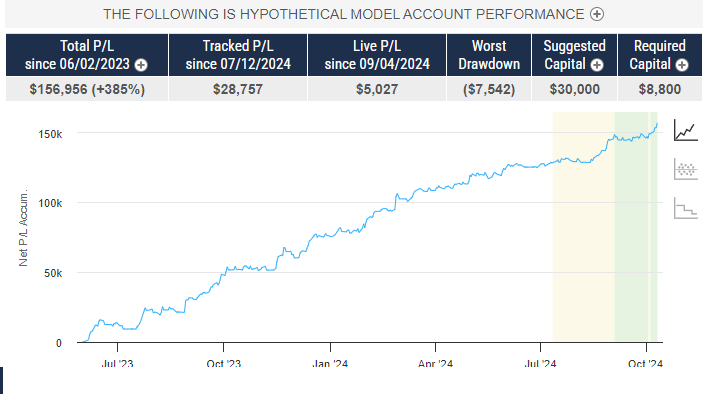
With algorithmic trading systems becoming more prevalent in portfolio diversification, the following system has been selected as the broker’s choice for this month.
Position Trading Cont v.22 _ CRUDE
PRODUCT
CL – Crude Oil
SYSTEM TYPE
Swing Trading
Recommended Cannon Trading Starting Capital
$25,000
COST
USD 165 / monthly

Get access to proprietary indicators and trading methods, consult with an experienced broker at 1-800-454-9572.
Explore trading methods. Register Here
* This is not a solicitation of any order to buy or sell, but a current market view provided by Cannon Trading Inc. Any statement of facts here in contained are derived from sources believed to be reliable, but are not guaranteed as to accuracy, nor they purport to be complete. No responsibility is assumed with respect to any such statement or with respect to any expression of opinion herein contained. Readers are urged to exercise their own judgement in trading.
|
|
|
|

In this issue:
Important Notices – Next Week Highlights:
The Week Ahead
By John Thorpe, Senior Broker
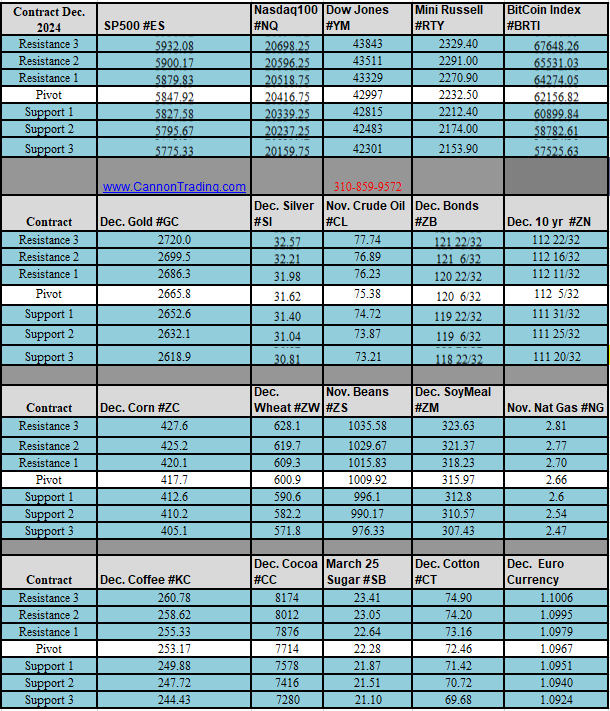
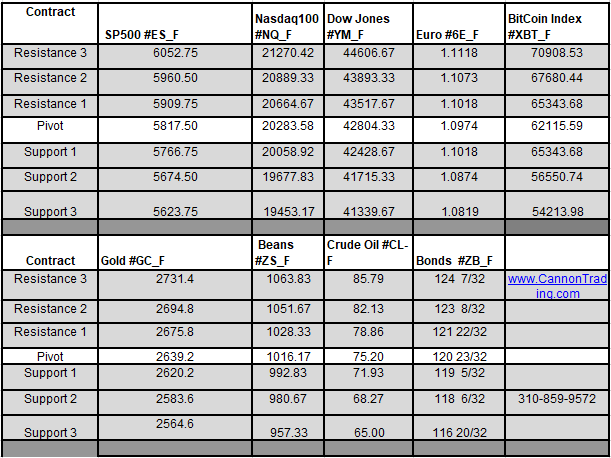
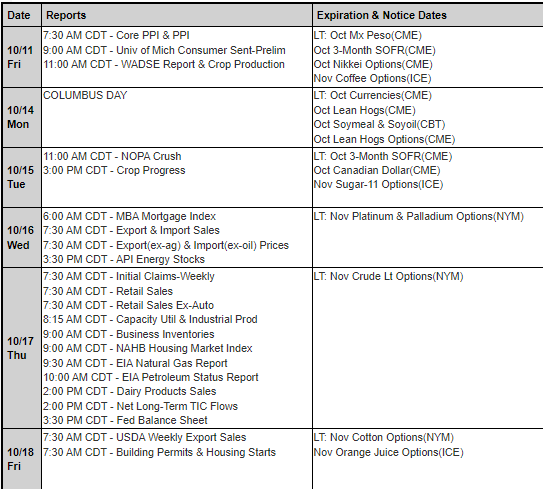
A relatively Quiet Data week next week, Geopolitics may be the only driver of volatility. One Caveat: the Fed Speakers dialogue may be given much more weight by investors as there will be a lot less noise in the form of Economic Data and earnings from prominent “Magnificent Seven” stocks to drive market volatility.
Prominent Earnings this Week:
FED SPEECHES:
Big Economic Data week:

Would you like to have access to research like shown above and MORE?
Here is what you will receive DAILY:
To sign up and get two weeks FULL access, start by requesting the free trial below.
Hot market of the week is provided by QT Market Center, A Swiss army knife charting package that’s not just for Hedgers, Cooperatives and Farmers alike but also for Spread traders, Swing traders and shorter time frame application for intraday traders with a unique proprietary indicator that can be applied to your specific trading needs.
December Heating Oil
December heating oil Rallied to its second upside PriceCount objective before correcting. At this point if the chart can resume its rally with new sustained highs, the 3rd count would project a possible run into the 2.59 area
PriceCounts – Not about where we’ve been , but where we might be going next!
With algorithmic trading systems becoming more prevalent in portfolio diversification, the following system has been selected as the broker’s choice for this month.
Swing61B Cont v.3 _ RBOB Gasoline
PRODUCT
RB – RBOB ( unleaded gasoline)
SYSTEM TYPE
Swing Trading
Recommended Cannon Trading Starting Capital
$25,000
COST
USD 160 / monthly
Get access to proprietary indicators and trading methods, consult with an experienced broker at 1-800-454-9572.
Explore trading methods. Register Here
* This is not a solicitation of any order to buy or sell, but a current market view provided by Cannon Trading Inc. Any statement of facts here in contained are derived from sources believed to be reliable, but are not guaranteed as to accuracy, nor they purport to be complete. No responsibility is assumed with respect to any such statement or with respect to any expression of opinion herein contained. Readers are urged to exercise their own judgement in trading.

Bullet Points, Highlights, Announcements
by Mark O’Brien, Senior Broker
General:
Futures traders with positions in deliverable futures contracts keep an eye on the calendar for important dates at the end of the month. First Notice Day (FND) and Last Trading Day (LTD) for many futures contracts are close at hand. Make sure you steer safely clear of receiving delivery notices for physical commodities (FND), or greatly reduced liquidity (LTD). If you’re unsure, contact your Cannon Trading Co. broker.
The economic calendar for the rest of the week is scarce with Thursday’s Q1 GDP report taking center stage.
Prospects for a fed rate cut announcement at the Fed’s 4/30-5/1 meeting, as well as its mid-June meeting have all but evaporated and many Fed watchers expect the central bank to keep its “higher for longer” mantra in place for most and possibly all of 2024.
Worries over a wider Middle East conflict have subsided and traders are discounting the risk of further escalations. Case in point, June gold lost ±67 per ounce (±2%) yesterday after posting its latest all-time record high close of $2,413.80/ounce on Friday. Iran downplayed Israel’s retaliatory drone strike against it, in what appeared to be a move aimed at averting regional escalation.
Energies:

Softs:
May Cocoa futures declined sharply yesterday and today, down nearly $1,300/ton (a $13,000 per contract move) marking its worst two-day slump since February. This after a 3-day / Wed.-Fri. rally of $1,635/ton to its all-time record high close of 11,878/ton on Friday. ICE U.S. has set the initial margin requirement to $11,260 per contract.


Get access to proprietary indicators and trading methods, consult with an experienced broker at 1-800-454-9572.
Explore trading methods. Register Here
* This is not a solicitation of any order to buy or sell, but a current market view provided by Cannon Trading Inc. Any statement of facts here in contained are derived from sources believed to be reliable, but are not guaranteed as to accuracy, nor they purport to be complete. No responsibility is assumed with respect to any such statement or with respect to any expression of opinion herein contained. Readers are urged to exercise their own judgement in trading.