|
|
|
||||||||||||||||||||||||||||||||||||||||||||||||||||||
|
||||||||||||||||||||||||||||||||||||||||||||||||||||||
|
As a high risk trading type, futures trading is not for someone who is faint-hearted. Though there are a number of different ways of investing in futures , it is important to stick to what you know. Treading into unknown waters is not something that you should do when dealing in futures.
From managing margins to ordering trades to doing market analysis and more if you want to, you can do that all by yourself – but you may betaking double the risk. Therefore, when trading in futures, it may be better to seek advice from a professional trader.
Professional trading experts at Cannon Trading can help you with your futures trading. We are also there to keep you updated with the latest on futures trading and market news. All the news and latest articles on futures trading are published on our site under the category Archive Futures Trading News, which you are currently browsing through. Read more and the latest here and keep updated.
|
|

|

||||||||||||||||||||||||||||||||||||||||||||||||||||||
|
||||||||||||||||||||||||||||||||||||||||||||||||||||||
|
|
|
|
|||||||||||||||||||||||||||||||||||||||||||||||||||||||||
|
|||||||||||||||||||||||||||||||||||||||||||||||||||||||||
|
|
|
|
|||||||||||||||||||||||||||||||||||||||||||||||||||||
|
|||||||||||||||||||||||||||||||||||||||||||||||||||||
|
|
| Instrument | S2 | S1 | Pivot | R1 | R2 | ||
|---|---|---|---|---|---|---|---|
Gold (GC)— Feb(#GC) |
4180.37 | 4200.63 | 4224.27 | 4244.53 | 4268.17 | ||
Silver (SI)— Mar. (#SI) |
57.14 | 57.80 | 58.44 | 59.10 | 59.74 | ||
Crude Oil (CL)— Jan (#CL) |
57.66 | 58.25 | 59.28 | 59.87 | 60.90 | ||
Mar. Bonds (ZB)— Mar (#ZB) |
114 13/32 | 114 25/32 | 115 8/32 | 115 20/32 | 116 3/32 |
|
||||||||||||||||||||||||||||||||||||||||||||||||||||||||
|
||||||||||||||||||||||||||||||||||||||||||||||||||||||||
|


API futures trading has moved from a niche practice among quant desks to a mainstream toolset used by independent traders, prop firms, hedge funds, and broker clients. If you’ve ever wondered how trading bots place orders on CME or ICE without touching a mouse, or how a risk engine can cancel hundreds of orders in milliseconds, the answer is usually the same: an application program interface that lets software talk directly to a broker or exchange.
This guide explains what api trading means in the futures world, where it came from, who uses it, and how it has reshaped modern market structure. Along the way, it highlights practical workflows, real examples, and the specific advantages and risks that come with automation.
What Is API Futures Trading?
At its simplest, api futures trading is the practice of trading futures contracts through code that connects to a trading venue via an application program interface (often shortened to API). The “interface” part matters: it’s a standardized set of rules that allows one program (your trading system) to request data and send instructions to another program (your broker’s or platform’s servers).
When you use api trading, you are not clicking “buy” in a charting window. Instead, your code sends an order message: contract symbol, side, quantity, price, order type, time-in-force, and any special flags. The broker or platform validates it, routes it to the exchange, and streams execution reports back to your software. The same interface can also stream live prices, market depth, historical bars, account balances, and positions.
In practice, the most common futures APIs are offered by:
All of these are designed to give you programmatic control over the “three pillars” of futures operations: market data, order entry, and account/risk management.
Key Components of an Application Program Interface for Futures
A futures-focused application program interface typically exposes several categories of endpoints or message types:
Understanding these pieces helps explain why api trading is so powerful: it is not only about sending orders faster, but also about designing a complete automated trading lifecycle.
Origins: How API Trading Emerged in Futures Markets
To understand api futures trading today, you need a quick tour of how futures moved from pit trading to screens.
The open-outcry era
For most of the 20th century, futures trading was physical. Traders stood in exchange pits, shouting bids and offers, using hand signals, and relying on runners to carry order tickets. Speed mattered, but “speed” meant walking faster or having a better spot in the pit.
Early electronic markets
In the 1970s–1990s, exchanges began experimenting with electronic systems. Chicago exchanges developed early matching engines, and Europe’s LIFFE and Eurex went electronic earlier than some U.S. venues. These systems needed standardized electronic order messages. At first, they were proprietary protocols used by member firms, not public APIs. Still, this was the seed of modern api trading: a machine-readable order book and a documented message format.
FIX and the first “interfaces”
The Financial Information eXchange (FIX) protocol, introduced in the early 1990s, allowed brokers and institutions to communicate orders and fills across systems. Fix wasn’t futures-only, but it became a backbone for multi-asset connectivity. Many futures brokers still support FIX gateways, and for some firms, FIX was their first real application program interface for algorithmic execution.
Direct market access and co-location
Late 1990s and early 2000s brought direct market access (DMA), where buy-side firms could send orders straight to exchanges through broker risk filters. Co-location—placing servers inside or near exchange data centers—reduced latency dramatically. APIs evolved to reduce overhead, using binary protocols rather than text-based messaging. This is where api futures trading started to diverge based on user type: ultra-low-latency APIs for HFT, more flexible APIs for systematic and discretionary traders.
Retail APIs
By the 2010s, retail futures traders wanted automation too. Brokers and platform vendors began offering documented APIs, sample code, and developer communities. This democratized api trading, letting small teams build strategies that previously required institutional infrastructure.
In short, api futures trading is the product of four decades of market electrification: once the pit became an engine, interfaces became inevitable.
Evolution Into Today’s API Futures Trading Ecosystem
Modern api futures trading sits at the intersection of high-speed execution, cloud computing, and data science. Here are the biggest evolutionary steps.
From manual “rules” to full algorithmic systems
Early users might have coded a simple auto-trader: “If price crosses moving average, buy one contract.” Today, strategies can span dozens of instruments, multiple timeframes, and portfolio-level risk constraints. APIs now support complex order types, server-side triggers, and conditional workflow management. The interface is no longer an accessory; it’s the trading venue itself.
Better data and event-driven design
Early APIs pushed snapshots of prices every few seconds. Today they stream tick-by-tick events and full depth updates. That shift made event-driven architectures standard: rather than polling for data, strategies react instantly to new information.
Interoperability and language support
Python became common for research; C++ and Java stayed dominant in execution; C# and JavaScript rose for platform scripting. Brokers began offering SDKs across languages, plus websocket or REST layers for lighter use. This “stack” approach is why api trading is now accessible without a PhD in networking.
More robust risk tooling
After crashes like 2010’s Flash Crash, exchanges and brokers tightened risk controls. Most futures APIs now include throttles, order-rate limits, and protective checks. Kill switches are built into gateways. That means api futures trading can scale without turning into a runaway-order disaster.
Cloud and containerization
Teams now deploy strategies on Kubernetes, serverless functions, or managed cloud VMs. Some brokers allow cloud-hosted connections; others require on-prem or co-located stacks for latency. Either way, APIs are built to support distributed, resilient execution.
Shift toward “smart order routing” and multi-venue access
Futures are mostly centralized per contract, but spreads, options, and cross-exchange products benefit from intelligent routing. Platforms use APIs to pull in liquidity from multiple venues and manage legged orders automatically.
These steps together created today’s environment: API-first trading where software defines the edge.
Who Uses API Futures Trading the Most?
Different trader profiles gravitate to api trading for different reasons.
High-frequency trading (HFT) and market makers
These firms care about microseconds. Their application program interface is usually binary, low-level, and co-located. They perform:
Systematic macro and trend funds
CTAs and quant macro funds use api futures trading to execute large, diversified portfolios. They tend to trade:
Proprietary trading firms
Prop firms use APIs to standardize execution for many traders. They blend discretionary signals with automated risk and order placement, often running:
Advanced retail and semi-pro traders
A growing base of individuals uses api trading to automate repeatable ideas:
Corporate hedgers and commercial users
Large commodity producers and consumers use application program interface links to hedge exposures automatically. Instead of calling a broker, their treasury systems can:
How API Trading Has Changed the Futures Industry
API connectivity didn’t just change how individual traders operate; it changed futures market structure.
Faster price discovery
When many participants trade through software, information is absorbed quickly. Arbitrage loops (cash-futures, inter-commodity, inter-exchange) tighten spreads. While that can reduce some discretionary opportunities, it improves overall efficiency.
Thinner “human” liquidity, deeper algorithmic liquidity
Open-outcry provided deep liquidity via human judgment. In electronic markets, most displayed depth comes from algorithms that can cancel quickly. API-driven quoting creates liquidity that is real but more fleeting, which is why futures order books can appear deep yet move abruptly during stress.
Rise of complex spreads and synthetic products
Calendar spreads, inter-commodity spreads, and options-on-futures combos are now often traded through automated legging algorithms. APIs allow rapid creation and management of multi-leg positions, which increased volume in spreads and reduced execution friction.
Democratization and competition
Retail-access APIs reduced barriers to entry. Talented small teams can now compete with larger firms in some strategy classes (not HFT), especially in medium-frequency and swing horizons. That pushed brokers to innovate on fees, latency, and API tooling.
More emphasis on risk controls and surveillance
Since API errors can scale fast, brokers and exchanges invested heavily in pre-trade risk checks, messaging limits, and post-trade surveillance. The industry became more “systems-engineering” oriented.
New forms of alpha
As basic patterns got automated away, alpha shifted toward:
Benefits of API Futures Trading
These advantages explain why api trading keeps spreading across the futures landscape.
Risks and Challenges
API access is powerful, but not magic. Key challenges include:
Good api futures trading includes engineering discipline, not just clever signals.
A Practical Picture: Typical API Trading Workflow
Here’s how many traders implement api trading in futures:
The best systems treat execution as part of the strategy, not an afterthought.
The Future of API Futures Trading
Looking ahead, api futures trading will likely evolve in a few directions:
The core idea will stay the same: an application program interface is the bridge between human intent and machine execution.
FAQ: API Trading and Futures Automation
Is api trading legal for futures?
Yes. Futures exchanges and brokers explicitly support api trading, though users must comply with exchange rules, order-rate limits, and any registration requirements for advisory services.
Do I need to be a programmer to use api futures trading?
You need some coding ability, but many platforms provide templates and visual strategy builders that still rely on an application program interface behind the scenes. Learning basic Python or C# is often enough to start.
What strategies work best with API futures trading?
Strategies that benefit from consistent execution and rapid order handling do well: trend-following systems, mean reversion, spread trading, and automated trade management. Ultra-low-latency HFT requires specialized infrastructure.
How do I manage risk when using api trading?
Use broker-side risk limits, add a kill switch, cap daily loss, and monitor messaging rates. Always test in simulation first.
What’s the difference between REST and websocket APIs for futures?
REST is request/response and better for account queries or slower workflows. Websockets stream events continuously and are preferred for live prices and order updates in api futures trading.
Can api futures trading be used for hedging rather than speculation?
Absolutely. Commercial firms automate hedges and rolls using an application program interface connected to their broker.
What are common mistakes new API traders make?
They ignore latency, overfit backtests, skip monitoring, or trade too large too soon. Start small and treat the system like mission-critical software.
Ready to start trading futures? Call us at 1(800)454-9572 (US) or (310)859-9572 (International), or email info@cannontrading.com to speak with one of our experienced, Series-3 licensed futures brokers and begin your futures trading journey with Cannon Trading Company today.
Disclaimer: Trading Futures, Options on Futures, and retail off-exchange foreign currency transactions involve substantial risk of loss and are not suitable for all investors. Past performance is not indicative of future results. Carefully consider if trading is suitable for you in light of your circumstances, knowledge, and financial resources. You may lose all or more of your initial investment. Opinions, market data, and recommendations are subject to change at any time.
Important: Trading commodity futures and options involves a substantial risk of loss. The recommendations contained in this article are opinions only and do not guarantee any profits. This article is for educational purposes. Past performances are not necessarily indicative of future results.
This article has been generated with the help of AI Technology and modified for accuracy and compliance.
Follow us on all socials: @cannontrading
|
|
|
|||||||||||||||||||||||||||||||||||||||||||||||||||||||||||||||||||||||||||||||||||||||||||||||||||
|
|||||||||||||||||||||||||||||||||||||||||||||||||||||||||||||||||||||||||||||||||||||||||||||||||||
|
|
|
|
||||||||||||||||||||||||||||||||||||||||||||||||||||||||||
|
||||||||||||||||||||||||||||||||||||||||||||||||||||||||||
|
|

|
|
|

Futures Brokers

The futures market is an arena defined by precision, timing, and trust. Whether trading commodities, stock indices, or digital assets, traders rely heavily on futures brokers to execute trades, manage risk, and connect them to the complex web of exchanges and clearinghouses that keep the global markets moving. Yet, not all brokers are the same. From recommending brokers and those catering to high-net-worth clients to simple order-taker brokers and API-driven specialists, the landscape of futures brokers is diverse and rapidly evolving.
In this detailed guide, we explore the types of futures brokers, how they differ in service and specialization, and how traders can choose the right futures broker based on their goals, capital, and trading style. We’ll also highlight which trading futures brokers stand out for superior customer service—especially those praised on platforms like Trustpilot.
1. Understanding Futures Brokers and Their Role in Modern Markets
A futures broker is an intermediary who facilitates the buying and selling of futures contracts between traders and exchanges. They ensure that orders are transmitted correctly, margin requirements are met, and compliance standards are maintained. But beyond that, today’s futures brokers have become partners in strategy, offering technological infrastructure, risk analysis, and educational resources.
There are several key categories of trading futures brokers, each with a unique purpose and target clientele. Some provide recommendations and advice, others serve sophisticated investors with large portfolios, while certain brokers focus purely on execution. The rise of digital trading has also introduced a new breed—API-connected brokers designed for automation and algorithmic efficiency.
2. Recommending Brokers: Guiding Traders Through Market Complexity
Among the oldest and most respected categories of futures brokers are the recommending brokers. These professionals offer personalized guidance and insights based on a client’s objectives, experience level, and market conditions. While they do not manage funds like a portfolio manager, their role is consultative and advisory.
A recommending futures broker often provides:
Recommending brokers are particularly valuable for novice traders or those transitioning from equities or forex into futures. They often work through full-service brokerages where human interaction remains an integral part of the trading experience.
Top trading futures brokers that emphasize recommendations often offer hybrid service models—combining personal support with access to robust online trading platforms. These firms maintain dedicated account managers and offer premium research subscriptions, enabling traders to make informed decisions with confidence.
3. Brokers Geared Toward High-Net-Worth Individuals
In the upper echelon of the trading world, futures brokers catering to high-net-worth individuals (HNWIs) occupy a distinct niche. Their clients demand privacy, customization, and institutional-grade execution quality. These futures brokers are not focused merely on trade facilitation but on holistic capital management, where futures serve as tools for diversification, hedging, or speculative opportunity.
Key characteristics of high-net-worth futures brokers include:
These futures brokers often integrate with family offices or wealth management firms, allowing for sophisticated cross-asset risk management. Many HNWI-focused trading futures brokers also provide discretionary trading options, where professionals execute trades within agreed parameters.
For affluent clients, the difference between average and exceptional service often lies in execution speed, personal communication, and trust. Firms that succeed in this segment are those that combine institutional-grade infrastructure with boutique-style attention.
4. Brokers That Are Order Takers: The Execution Specialists
At the opposite end of the service spectrum are the order-taking futures brokers—a category that appeals to experienced traders who prefer full control over their strategies. These brokers execute trades exactly as instructed, without offering advice or intervention. Their value proposition centers on speed, transparency, and low cost.
What Defines an Order-Taker Futures Broker?
In many cases, order-taker futures brokers operate through online platforms, allowing traders to enter, modify, and close positions instantly. They may also offer multiple data feeds, customizable charting, and connectivity to automated trading systems.
Why They Matter
While some traders value guidance, others prefer precision and control. For algorithmic or day traders, an order-taker futures broker eliminates the friction of advisory bureaucracy and ensures immediate market execution. The efficiency and low-cost model of these brokers make them indispensable to the modern digital trading ecosystem.
5. API-Connected Futures Brokers: The Technology Powerhouses
The rise of automation, machine learning, and quantitative trading has revolutionized the brokerage industry. API-connected futures brokers are now central to the infrastructure of professional and institutional trading environments.
What Is an API in Futures Trading?
An API (Application Programming Interface) allows software systems to communicate seamlessly. In futures trading, APIs enable traders to connect their strategies, trading bots, or analytical systems directly to a broker’s order routing network.
Features of API-Focused Futures Brokers
Who Uses API Futures Brokers?
API brokers appeal to a wide audience:
These brokers also cater to developers and fintech innovators creating new trading tools, dashboards, and strategy optimizers. They are often recognized as technology-first trading futures brokers, prioritizing connectivity, uptime reliability, and execution accuracy over traditional advisory features.
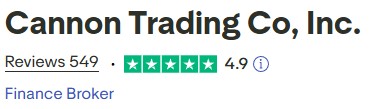
6. Evaluating Customer Service: Trustpilot’s Top-Rated Futures Brokers
Even in the era of automation, customer service remains a defining factor. The futures market operates 24/7 across time zones, and traders require instant support for margin calls, platform errors, or account adjustments. Trustpilot, one of the leading review platforms, offers valuable insights into which futures brokers excel in client satisfaction.
The Importance of Service in Futures Brokerage
Unlike equities or crypto markets, futures involve significant leverage and complex margining rules. A broker with responsive customer service can prevent costly errors or delays. The best customer service futures brokers provide:
Top-Rated Futures Brokers According to Trustpilot


While rankings evolve, as of 2025, several trading futures brokers consistently earn high praise:
Trustpilot’s reviews reveal a clear pattern: traders value brokers who combine technology with humanity. Even in automated trading, the assurance of accessible support builds long-term trust.
7. How to Choose the Right Futures Broker for Your Needs
Selecting among the many futures brokers available requires careful assessment of personal priorities. Every trader’s goals, experience, and technical needs are unique.
Key Criteria to Consider
By aligning these factors, traders can find the futures broker that matches both their financial capacity and psychological comfort.
8. The Future of Futures Brokers: Where Innovation Meets Integrity
The brokerage industry is evolving rapidly. As AI trading, cloud infrastructure, and blockchain settlement mature, futures brokers are adapting to remain relevant and efficient. The most successful firms blend tradition with technology—offering algorithmic compatibility without sacrificing the human connection that underpins trust.
Key Trends Shaping the Next Generation of Brokers
In this landscape, the futures broker is not just a facilitator—it’s a partner in performance. Brokers that combine high-speed infrastructure, data-driven insights, and responsive service will continue to lead the market.
9. Why the Right Futures Broker Makes All the Difference
Every successful trader understands that execution quality, margin management, and platform reliability can make or break profitability. Choosing among the wide array of trading futures brokers is not about finding the cheapest—it’s about finding the most consistent and trustworthy partner.
Whether you’re a retail trader learning the ropes or a high-frequency professional optimizing milliseconds, the right futures broker will align with your style, risk appetite, and long-term objectives.
As Trustpilot’s reviews confirm, the most highly regarded futures brokers are those that blend innovation with integrity—bridging human insight and technological power in equal measure.
In the complex world of futures trading, understanding the different types of futures brokers is essential. From personalized advisory firms and elite wealth-focused operations to execution-only and API-integrated specialists, each category fulfills a vital role in global market participation. The best trading futures brokers are those who not only offer cutting-edge technology but also maintain a steadfast commitment to their clients’ success through responsive service and ethical conduct.
Ultimately, the choice of a futures broker is both strategic and personal. It’s about finding that equilibrium between cost, competence, and care—a balance that empowers traders to navigate the futures markets confidently and profitably.
Frequently Asked Questions (FAQ)
1. What does a futures broker do?
A futures broker acts as an intermediary between traders and futures exchanges, executing buy and sell orders for futures contracts. They also manage account margins, provide access to trading platforms, and ensure compliance with exchange regulations. Depending on the type of broker, services can range from simple order execution to full-service recommendations and analysis.
2. What are the main types of futures brokers?
There are several types of futures brokers, including:
3. What is the difference between a full-service futures broker and a discount broker?
A full-service futures broker provides comprehensive support—research, recommendations, and personal guidance—while a discount broker focuses on low-cost trade execution and access to online platforms. The right choice depends on your trading experience and whether you prefer independent or guided trading.
4. How do API-connected futures brokers work?
API-connected futures brokers allow traders to integrate automated systems or custom software directly with the broker’s trading network. Through APIs, traders can run algorithms, execute trades automatically, access live market data, and manage risk programmatically. This setup is ideal for quantitative and algorithmic traders who rely on speed, precision, and scalability.
5. Which futures brokers have the best customer service?
According to Trustpilot and other review platforms, some of the best futures brokers for customer service include:
Ready to start trading futures? Call us at 1(800)454-9572 (US) or (310)859-9572 (International), or email info@cannontrading.com to speak with one of our experienced, Series-3 licensed futures brokers and begin your futures trading journey with Cannon Trading Company today.
Disclaimer: Trading Futures, Options on Futures, and retail off-exchange foreign currency transactions involve substantial risk of loss and are not suitable for all investors. Past performance is not indicative of future results. Carefully consider if trading is suitable for you in light of your circumstances, knowledge, and financial resources. You may lose all or more of your initial investment. Opinions, market data, and recommendations are subject to change at any time.
Important: Trading commodity futures and options involves a substantial risk of loss. The recommendations contained in this article are opinions only and do not guarantee any profits. This article is for educational purposes. Past performances are not necessarily indicative of future results.
This article has been generated with the help of AI Technology and modified for accuracy and compliance.
Follow us on all socials: @cannontrading
|
|
|
||||||||||||||||||||||||||||||||||||||||||||||||||||||||||||||||||||||||||||||||||||||||||||||||||||||||||||||||||||||||||||||
|
||||||||||||||||||||||||||||||||||||||||||||||||||||||||||||||||||||||||||||||||||||||||||||||||||||||||||||||||||||||||||||||
|