
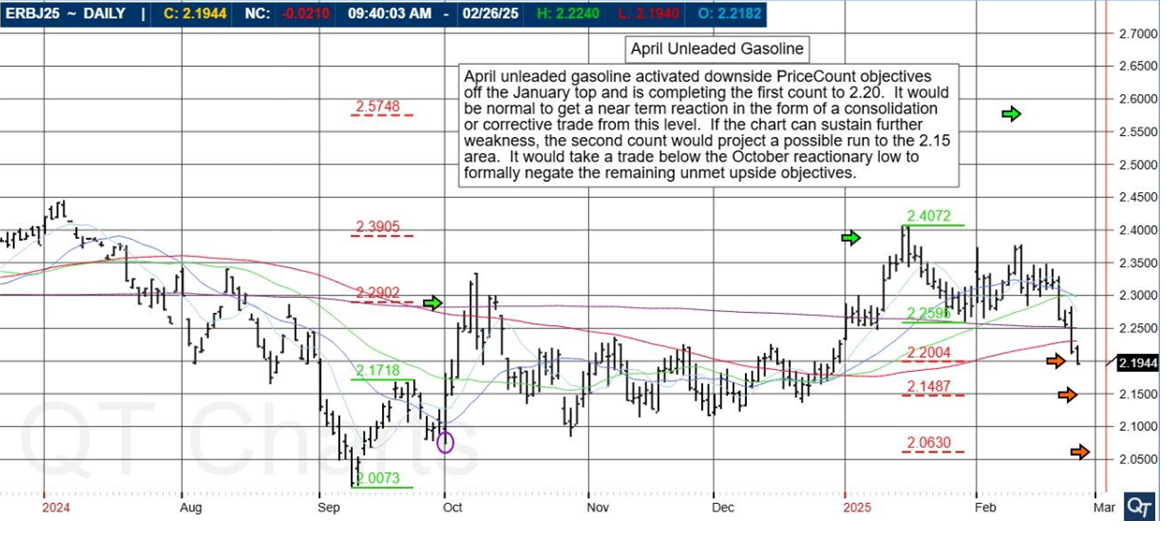
April Unleaded Gasoline takes the spotlight!
Different Markets for Day Trading
|
 |
|
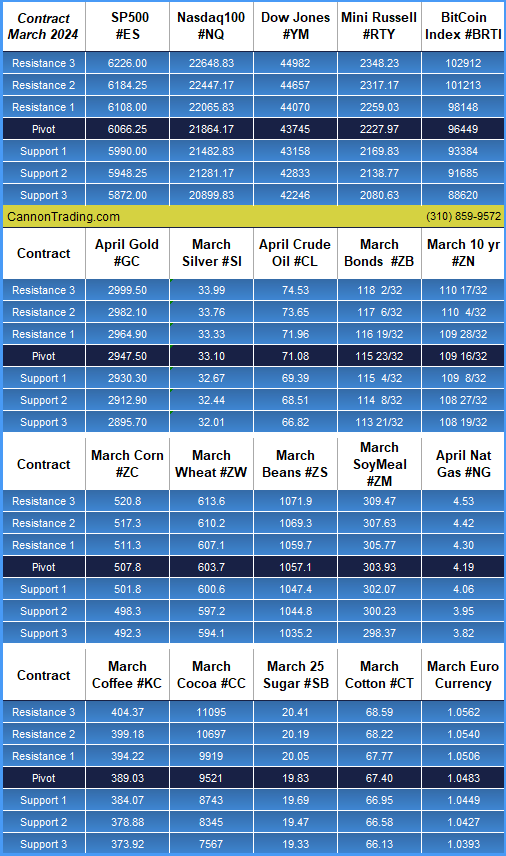
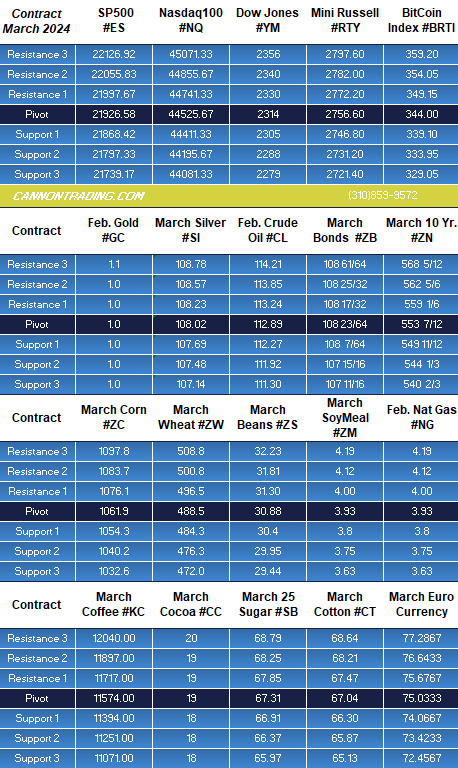
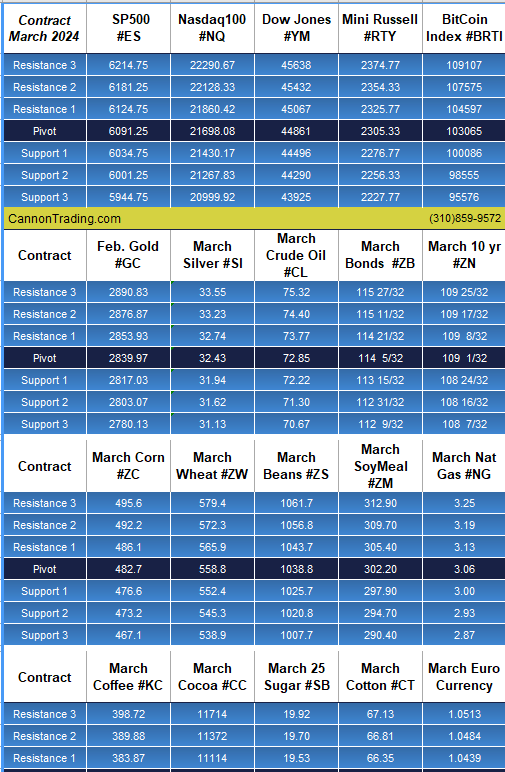
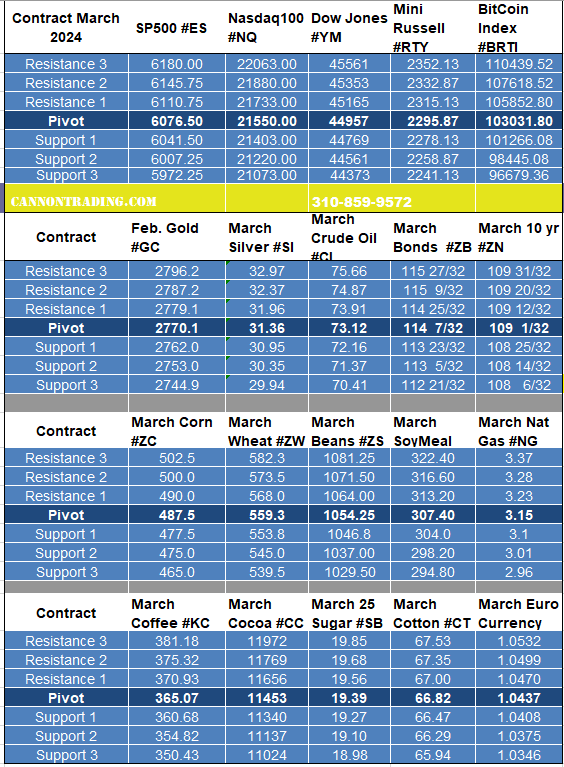
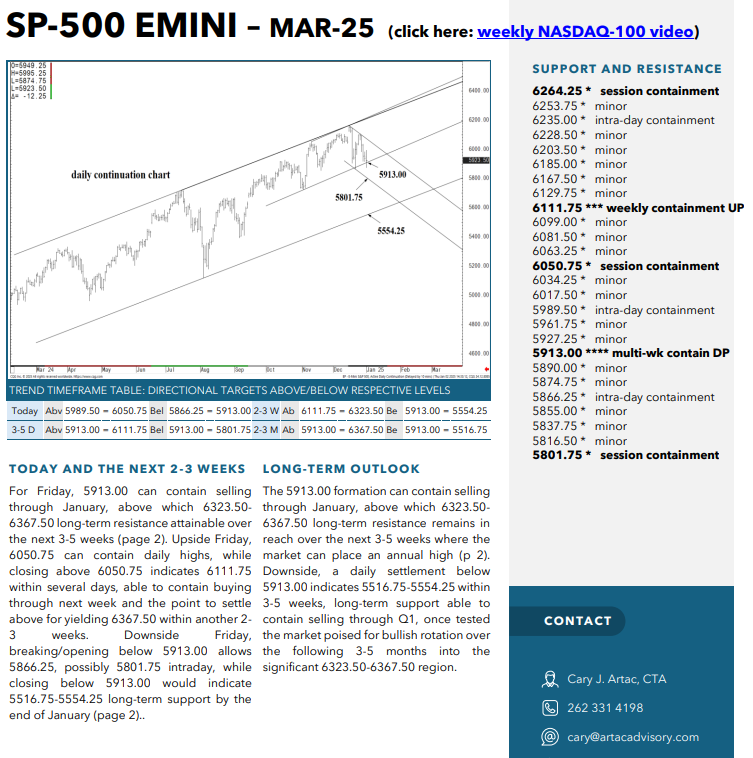
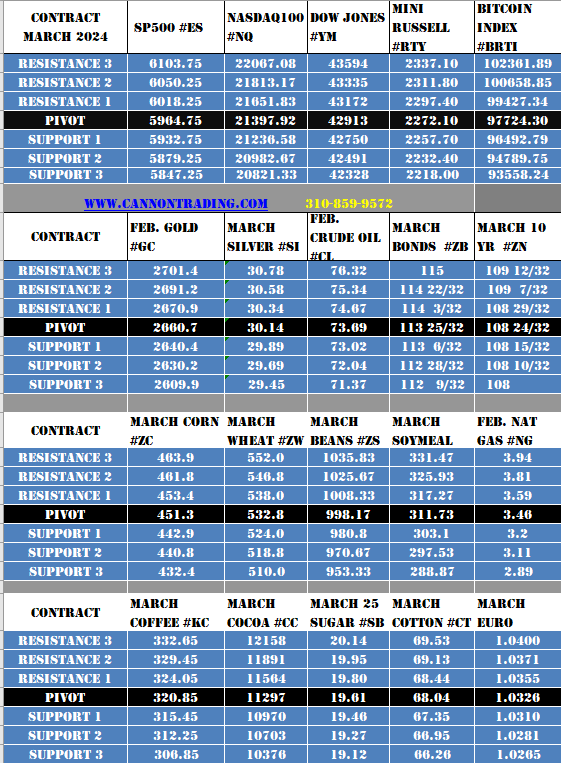
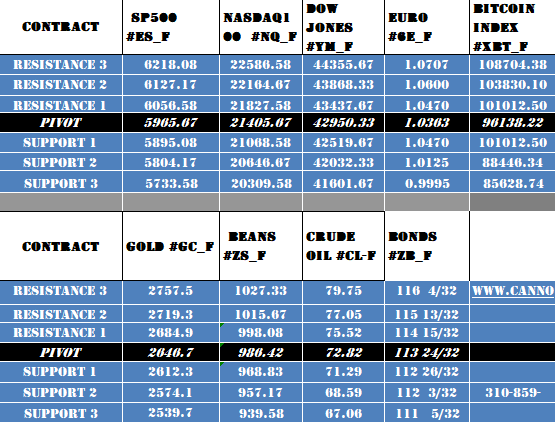
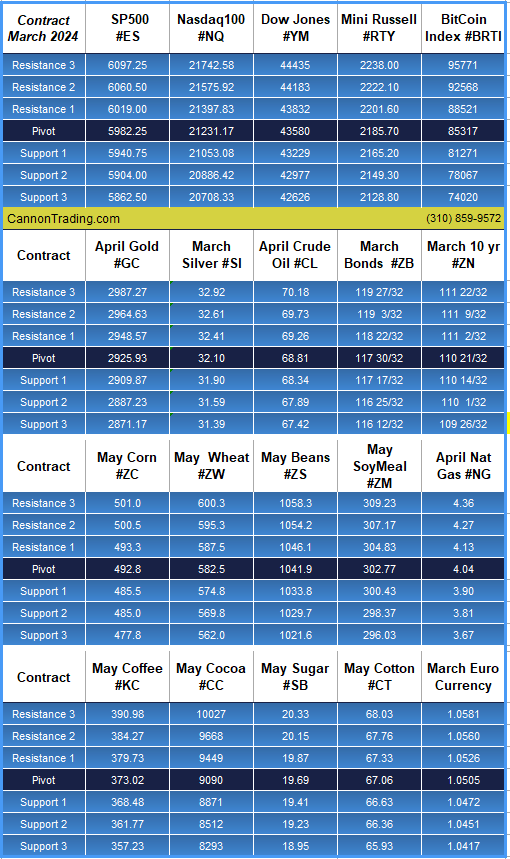
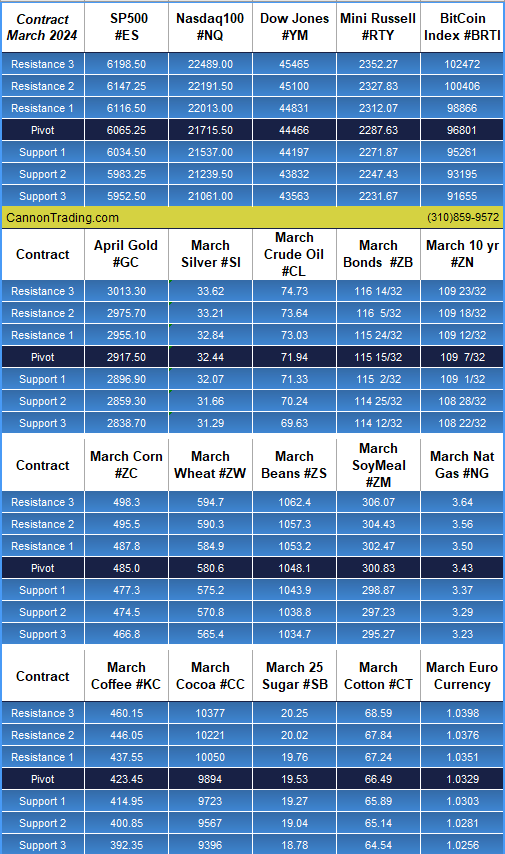
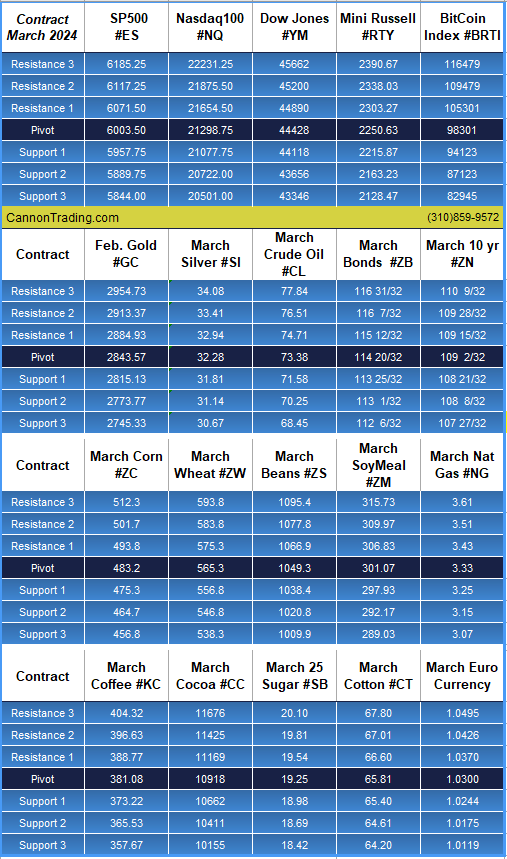
Daily Levels for February 27th, 2025
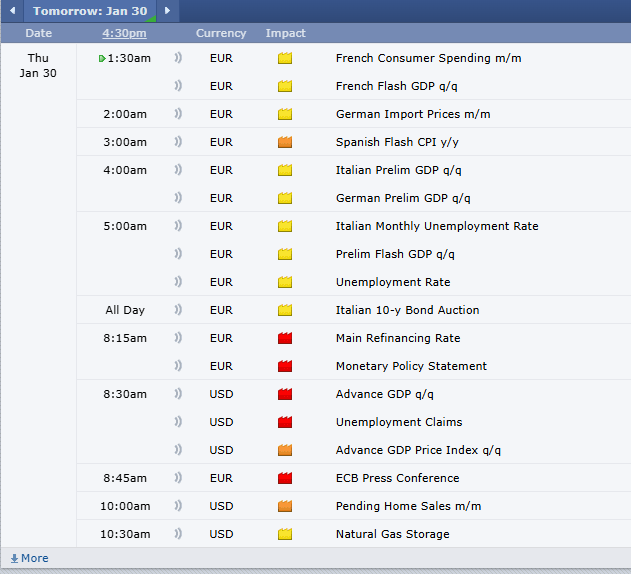
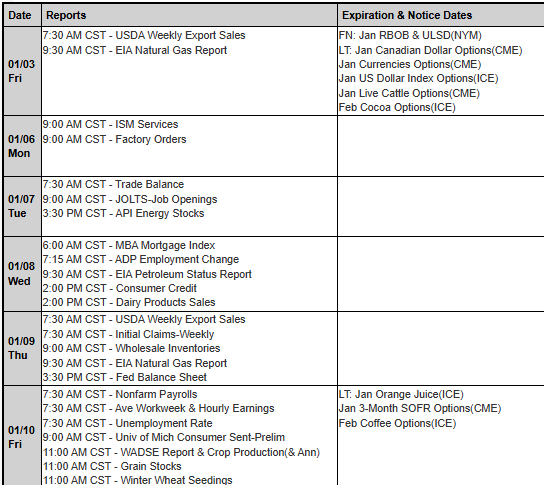
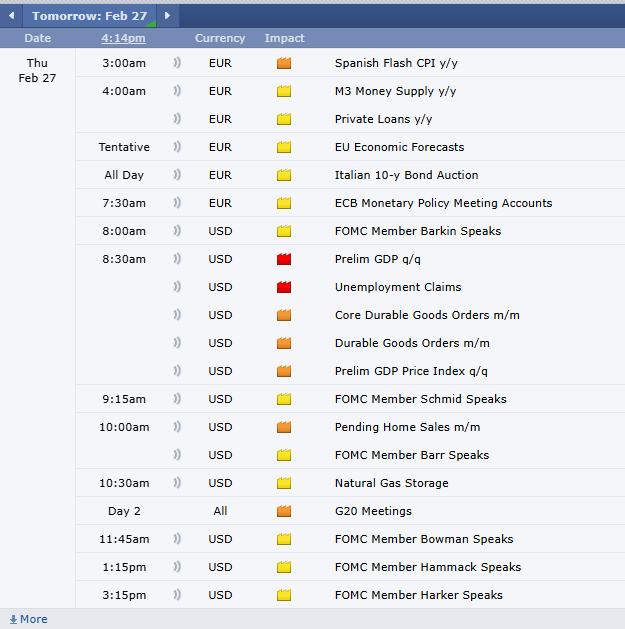
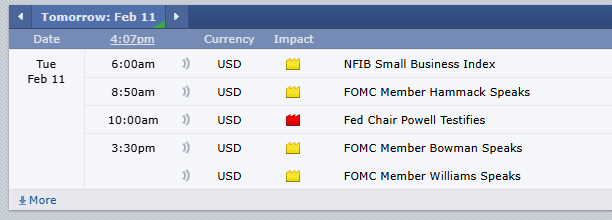
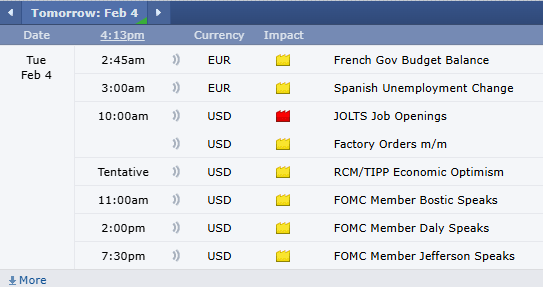
Economic Reports
provided by: ForexFactory.com
All times are Eastern Time (New York)
|
||||||||||||||||||||||||||||
|
||||||||||||||||||||||||||||
|
Different grains are traded on the Index, as commodities. Wheat, corn, soybeans, canola and soybean meal are just a few examples. They can be either a short-hedge or a long-hedge. One of the most traded grain futures is corn.
Basically, buying or selling these forms of futures enables the buyers and sellers to lock in prices of the specified grain today for the items that are to be delivered in the future. Therefore, all those who are interested in grains futures must track the performance of the grain on the demand and supply graph as well as its performance on the index. Though it is not tough to understand grains futures, the calculation of risk and returns is something that an average person may leave for an expert to do.
We at Cannon Trading are there to help you to not just understand the markets well, but to act as your personal advisors when it comes to trading futures. And, that’s something that applies for grain futures as well. However, information and awareness come before anything else. That is why, we want you to read through all of these blogs and articles carefully before you decide whether you want to trade grain futures or not.
|
|
|
provided by: ForexFactory.com
All times are Eastern Time (New York)
|
||||||||||||||||||||||||||||
|
||||||||||||||||||||||||||||
|

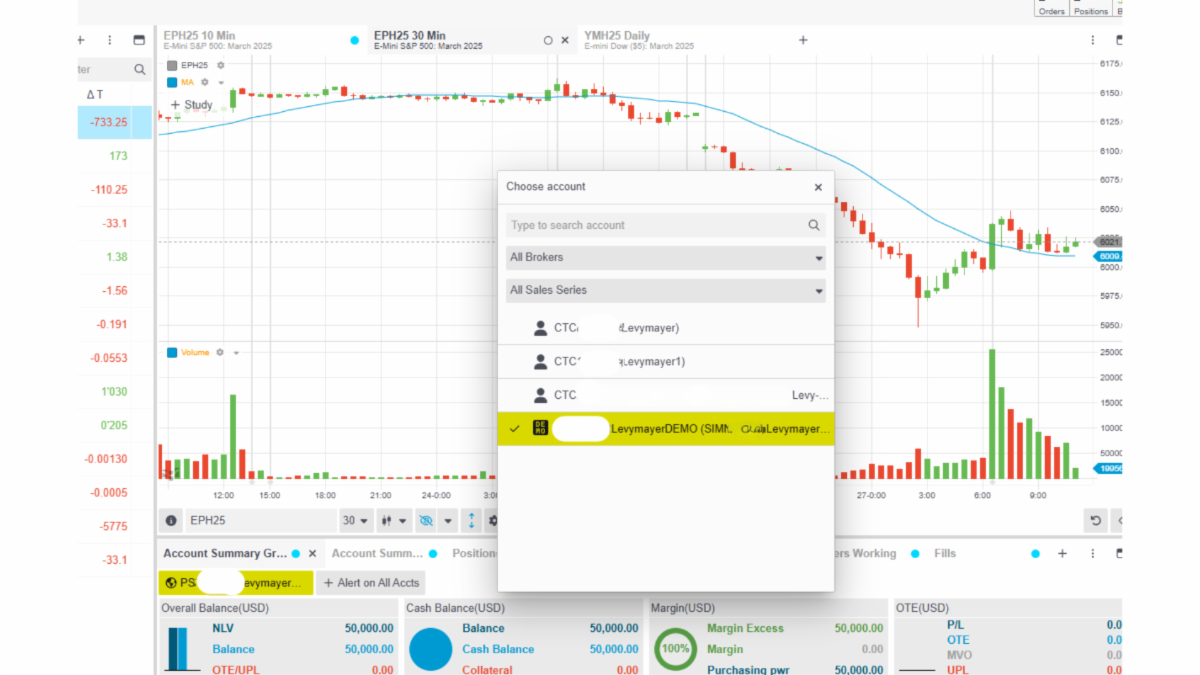
This permanent demo is available to all clients using the StoneX futures ( CQG desktop) platform as long as you have a balance.
If you live account is subscribed to live data, your demo will also have live data.
Demo data will run off the market data subscriptions you have.
See example below:
Login to your live trading account: https://m.cqg.com/stonexfutures
In the upper right corner, you should be able to click on your account number and select the demo account, which will be highlighted in yellow.
|
|
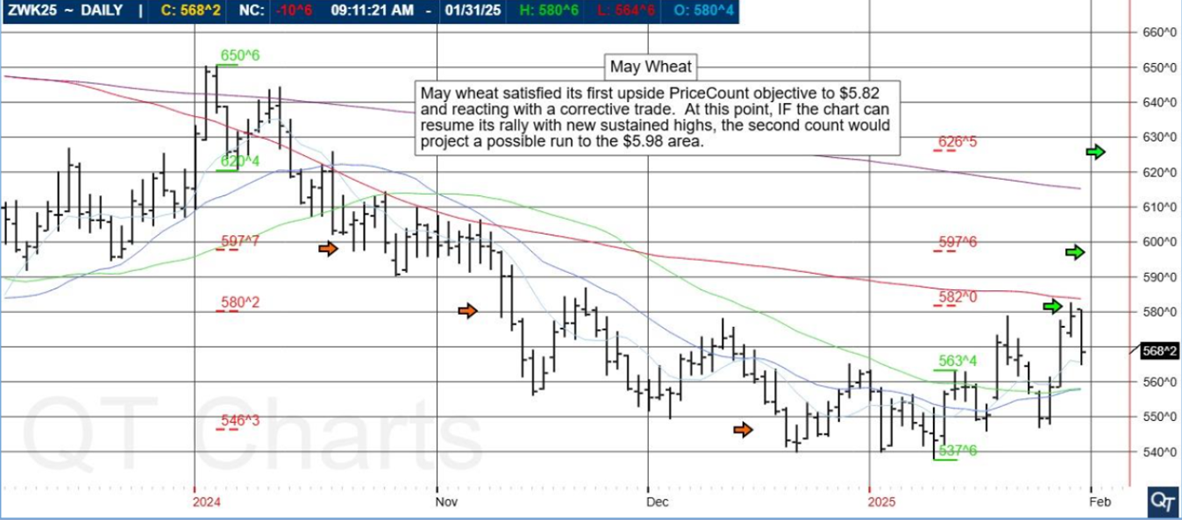
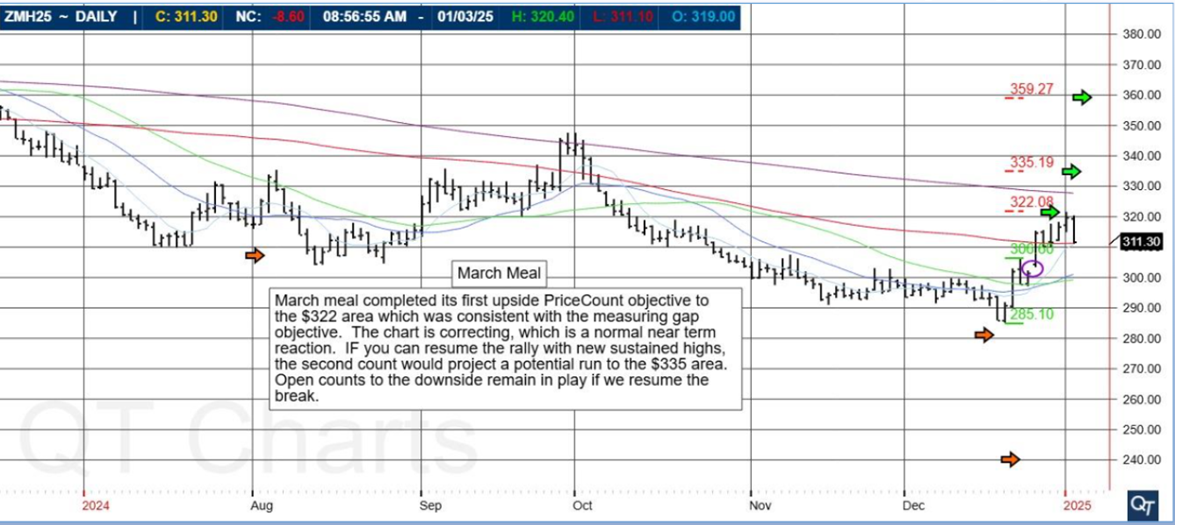
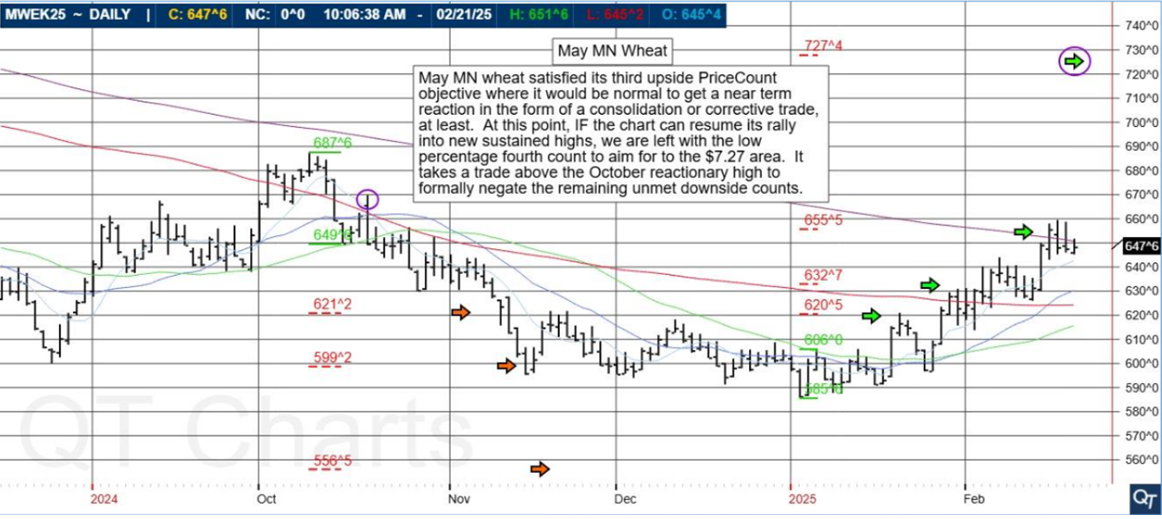
Hot market of the week is provided by QT Market Center, A Swiss army knife charting package that’s not just for Hedgers, Cooperatives and Farmers alike but also for Spread traders, Swing traders and shorter time frame application for intraday traders with a unique proprietary indicator that can be applied to your specific trading needs.
May MN wheat satisfied its third upside PriceCount objective where it would be normal to get a near term reaction in the form of a consolidation or corrective trade, at least. At this point, IF the chart can resume its rally into new sustained highs, we are left with the low percentage fourth count to aim for to the $7.27 area. It takes a trade above the October reactionary high to formally negate the remaining unmet downside counts. That’s May MN Wheat!
PriceCounts – Not about where we’ve been, but where we might be going next!
|
|
|
|
|
|
||||||||||||||||||||||||||||
|
||||||||||||||||||||||||||||
|

|
|
|
provided by: ForexFactory.com
All times are Eastern Time ( New York)
|
||||||||||||||||||||||||||||
|
||||||||||||||||||||||||||||
|
|
|
|
|
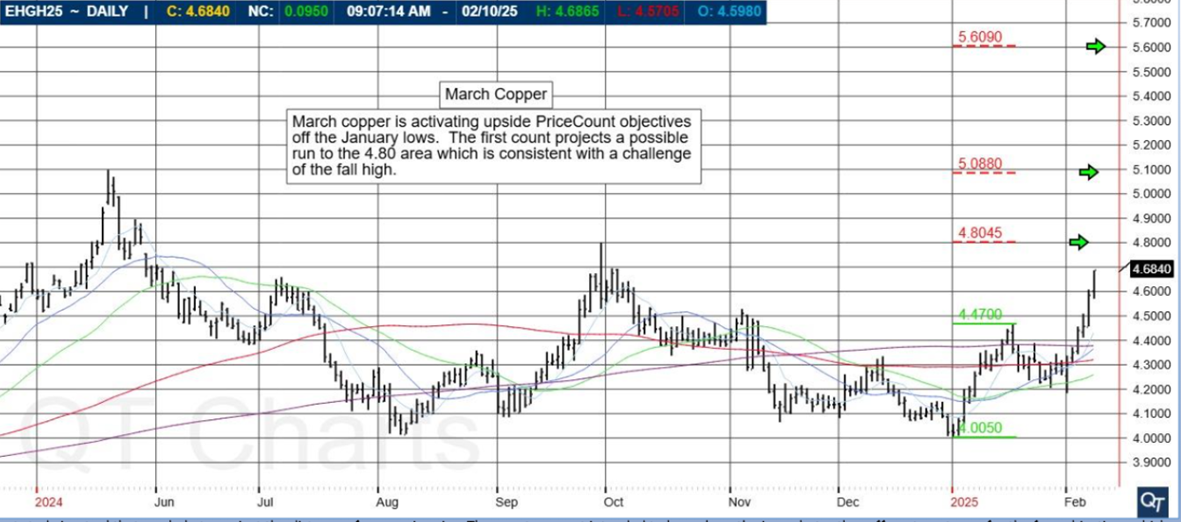
Hot market of the week is provided by QT Market Center, A Swiss army knife charting package that’s not just for Hedgers, Cooperatives and Farmers alike but also for Spread traders, Swing traders and shorter time frame application for intraday traders with a unique proprietary indicator that can be applied to your specific trading and options on futures needs.
December 25 Corn
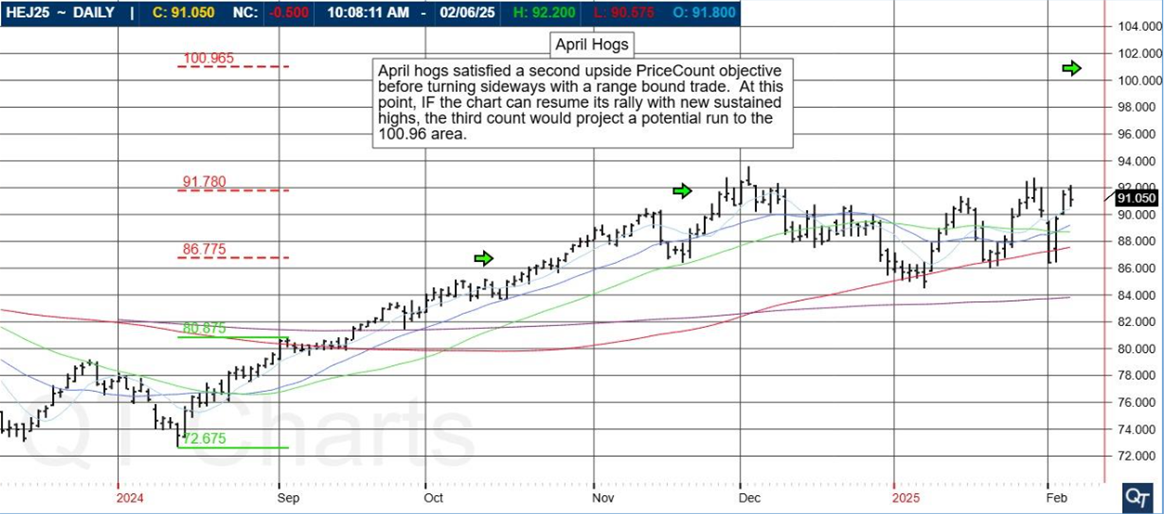
April Hogs satisfied a second upside PriceCount objective before turning sideways with a range bound trade. At this point, IF the chart can resume its rally with new sustained highs, the third count would project a potential run to the 100.96 area.
PriceCounts – Not about where we’ve been, but where we might be going next!
|
|
|
|
|
|
|
||||||||||||||||||||||||||||
|
||||||||||||||||||||||||||||
|
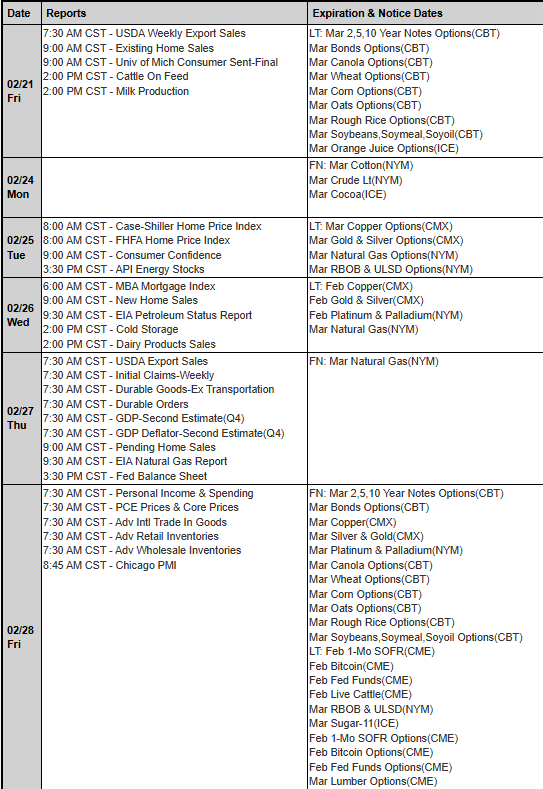
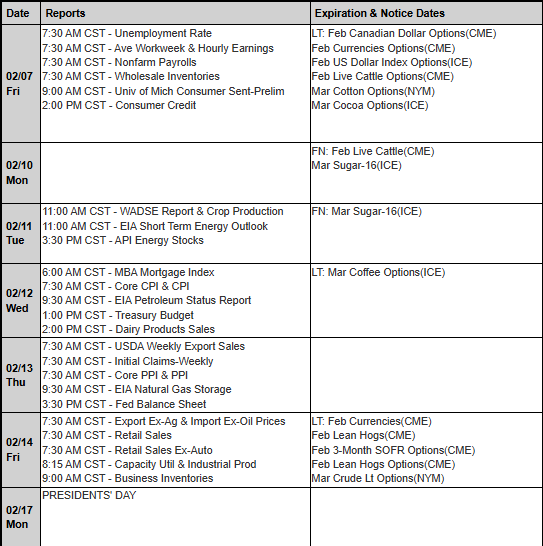
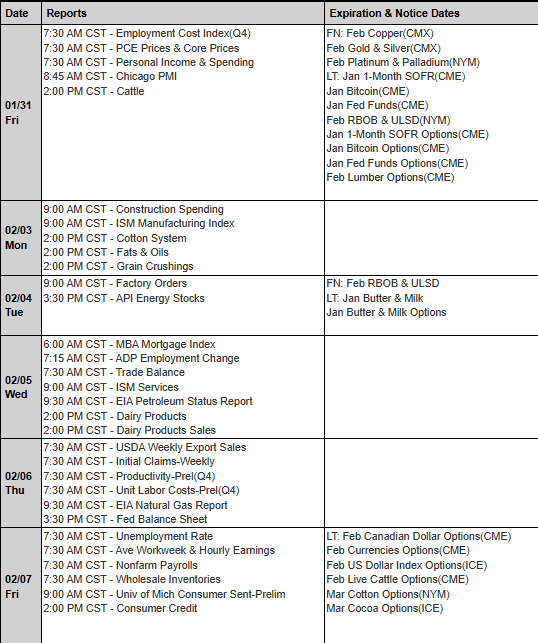
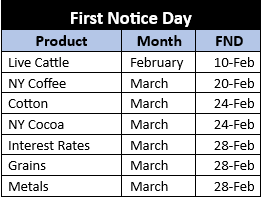
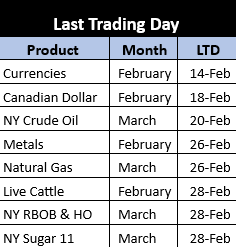
Please see below First Notice and Last Commodity Trading days for February! Make it a disciplined trading month.
Economic Reports
provided by: ForexFactory.com
All times are Eastern Time ( New York)
|
|
|
|
|
|
|
|
|
|
|
|
|
|
Introduced in April 1982 by the Chicago Mercantile Exchange (CME), the S&P 500 Futures Contract represented a turning point in financial markets. Before its debut, traders had limited tools to hedge or speculate on the broader U.S. equity market. The S&P 500 index, comprising 500 of the largest publicly traded companies in the U.S., was already a key benchmark of market performance. By creating a derivative tied to the index, the CME provided traders and institutions with a liquid, leveraged way to manage risk or profit from market movements.
This new financial instrument quickly gained traction. Unlike individual stocks, S&P 500 Futures Contracts allowed participants to trade the entire market with a single position. It was a game-changer for portfolio managers, hedge funds, and individual traders alike.
Over the decades, the S&P 500 Futures Contract has undergone significant evolution. Initially, the contract was accessible only to institutional players with deep pockets. The margin requirements and notional value of the contract were high, making it impractical for smaller traders. However, the CME’s introduction of E-mini S&P 500 Futures in 1997 dramatically expanded accessibility.
These smaller contracts mirrored the original S&P 500 Futures Contract but with reduced notional value and margin requirements. Retail traders could now participate in the same market as institutional giants, leveling the playing field and increasing liquidity. The introduction of Micro E-mini S&P 500 Futures in 2019 further democratized futures trading, enabling even smaller trades with minimal financial commitment.
Technological advancements have also played a significant role. The advent of electronic trading platforms in the late 1990s transformed the market, making trading faster, more transparent, and widely accessible. Today, traders around the globe execute futures SP trades with just a few clicks, relying on real-time data and advanced analytics to inform their decisions.
As we approach 2025, the S&P 500 Futures Contract remains a cornerstone of global financial markets. It serves three primary purposes:
In recent years, rising geopolitical tensions, pandemic-related economic shocks, and rapid technological innovation have contributed to heightened market volatility. This volatility has increased the appeal of S&P 500 Futures Contracts, as traders capitalize on swift market movements.
Looking ahead to 2025, several trends are likely to shape the future of the S&P 500 Futures Contract:
For traders looking to capitalize on the opportunities offered by the S&P 500 Futures Contract, choosing the right brokerage is critical. Cannon Trading Company stands out as a premier choice for several compelling reasons.
The S&P 500 Futures Contract offers unparalleled flexibility and potential. Whether you aim to hedge against market risk, speculate on short-term price movements, or diversify your portfolio, this contract is a powerful tool. Partnering with a trusted brokerage like Cannon Trading Company amplifies these advantages, ensuring that you have the resources, support, and technology needed to excel in futures trading.
Trading prowess often hinges on timing, knowledge, and execution. With Cannon Trading Company by your side, you can navigate the complexities of the S&P 500 Futures Contract with confidence, turning market challenges into opportunities for growth.
The journey of the S&P 500 Futures Contract is a testament to the innovation and resilience of global financial markets. From its inception in 1982 to its modern iterations, the contract has continually adapted to the needs of traders and investors. As we approach 2025, its relevance remains stronger than ever, promising new opportunities amid evolving market dynamics.
For traders seeking to unlock the full potential of S&P 500 Futures Contracts, partnering with an experienced and reputable brokerage like Cannon Trading Company is a winning strategy. With its stellar reputation, advanced tools, and commitment to client success, Cannon Trading Company is the ultimate ally for navigating the exciting world of futures trading.
For more information, click here.
Ready to start trading futures? Call us at 1(800)454-9572 – Int’l (310)859-9572 (International), or email info@cannontrading.com to speak with one of our experienced, Series-3 licensed futures brokers and begin your futures trading journey with Cannon Trading Company today.
Disclaimer: Trading Futures, Options on Futures, and retail off-exchange foreign currency transactions involve substantial risk of loss and are not suitable for all investors. Past performance is not indicative of future results. Carefully consider if trading is suitable for you in light of your circumstances, knowledge, and financial resources. You may lose all or more of your initial investment. Opinions, market data, and recommendations are subject to change at any time.
Important: Trading commodity futures and options involves a substantial risk of loss. The recommendations contained in this article are opinions only and do not guarantee any profits. This article is for educational purposes. Past performances are not necessarily indicative of future results.
This article has been generated with the help of AI Technology and modified for accuracy and compliance.
Follow us on all socials: @cannontrading
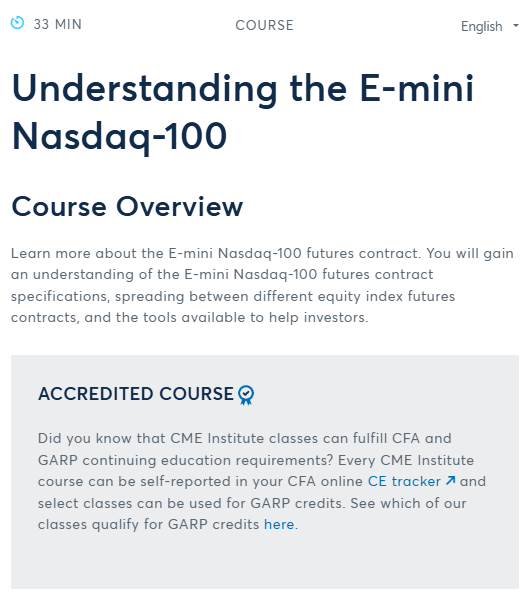
The NQ futures contract, also known as the Nasdaq-100 futures contract or the E-mini Nasdaq-100 futures contract, is a cornerstone of modern futures trading. Representing 100 of the largest non-financial companies listed on the Nasdaq stock exchange, this contract is highly favored for its liquidity, volatility, and utility in both speculative and hedging strategies. In this article, we delve into the origins, evolution, and impact of the NQ futures contract, exploring its top historical turning points, contract size evolution, hedging applications, and why Cannon Trading Company stands out as a premier choice among futures brokers.
At its inception, the Nasdaq-100 futures contract was designed with a larger notional value, making it suitable primarily for institutional investors. With the introduction of the E-mini Nasdaq-100 futures contract, the size was reduced to 20 times the index’s value, significantly increasing accessibility.
Today, traders can choose from multiple contract sizes:
This tiered structure ensures that traders of all scales—from retail investors to institutional hedgers—can find a product that aligns with their risk tolerance and trading objectives.
The NQ futures contract is not just for speculation—it’s a powerful hedging tool. For investors with significant exposure to Nasdaq-listed equities, trading the NQ futures contract or its options can mitigate potential losses during market downturns.
Example 1: Protecting a Technology-Heavy Portfolio
Imagine an investor with a $500,000 portfolio heavily concentrated in technology stocks like Apple, Microsoft, and Nvidia. If the investor anticipates a short-term decline in the tech sector, they can sell NQ futures contracts to offset potential losses. A single E-mini Nasdaq-100 futures contract moves in $20 increments for each point change in the index, offering precise risk management.
Example 2: Using Options on NQ Futures
Options on the Nasdaq-100 futures contract provide additional flexibility. For example:
Options on E-mini Nasdaq-100 futures contracts are particularly popular due to their smaller contract size and manageable margin requirements, making them an excellent tool for hedging Nasdaq exposure.
When trading Nasdaq-100 futures contracts, selecting the right futures broker is critical. Cannon Trading Company consistently earns accolades from traders for several compelling reasons:
The NQ futures contract has evolved from its origins as a tool for institutional hedging to a versatile instrument accessible to all levels of traders. From the introduction of the Nasdaq-100 index to the launch of Micro E-mini contracts, the product’s history is marked by innovation and adaptation to market needs. Today, the combination of diverse contract sizes, robust hedging applications, and user-friendly platforms makes the Nasdaq-100 futures contract a cornerstone of futures trading.
For those seeking a reliable futures broker to navigate this dynamic market, Cannon Trading Company stands out. With its free trading platform, 5-star TrustPilot ratings, experienced brokers, and commitment to regulatory excellence, Cannon Trading offers unparalleled support for traders of E-mini Nasdaq-100 futures contracts and beyond. Whether hedging a portfolio or exploring speculative opportunities, partnering with a trusted broker like Cannon Trading ensures a seamless and rewarding trading experience.
For more information, click here.
Ready to start trading futures? Call us at 1(800)454-9572 – Int’l (310)859-9572 (International), or email info@cannontrading.com to speak with one of our experienced, Series-3 licensed futures brokers and begin your futures trading journey with Cannon Trading Company today.
Disclaimer: Trading Futures, Options on Futures, and retail off-exchange foreign currency transactions involve substantial risk of loss and are not suitable for all investors. Past performance is not indicative of future results. Carefully consider if trading is suitable for you in light of your circumstances, knowledge, and financial resources. You may lose all or more of your initial investment. Opinions, market data, and recommendations are subject to change at any time.
Important: Trading commodity futures and options involves a substantial risk of loss. The recommendations contained in this article are opinions only and do not guarantee any profits. This article is for educational purposes. Past performances are not necessarily indicative of future results.
This article has been generated with the help of AI Technology and modified for accuracy and compliance.
Follow us on all socials: @cannontrading