Futures: Rotation, Not Retreat
By Eli Levy, Senior Analyst & Series 3 Broker
The New Quarter Begins
The new quarter arrived with a jolt. After a first half where the AI and semiconductor trade did much of the heavy lifting, this week saw that same corner of the market hit with selling pressure and real volatility — and notably, it happened even as oil prices eased and yields drifted lower. The pressure wasn’t about the macro backdrop turning hostile; it was about money in motion, rotating out of the most crowded trades and looking for a home elsewhere.
PHLX/KOSPI/SOX
The numbers tell the story. The PHLX Semiconductor Index (SOX) fell roughly 12% over just two sessions, pressured in part by a sharp overnight drop in Korea’s KOSPI, which shed 7.89% in one session. On one side of the coin, this looks like a long-overdue mean reversion: the SOX rallied nearly 100% in the first six months of the year, a parabolic run that arguably needed to cool.
Mircron
Micron’s reaction last week was a tell — the stock traded poorly on massive volume despite reporting, and the optical names tied to the AI build-out have been rolling over alongside it. On the other side of the coin, sharp pullbacks inside a longer-term uptrend have repeatedly turned out to be buying opportunities, and there’s a case that this one proves no different.
Healthcare/Insurance
What’s keeping the mood constructive is where the money is going. Rather than fleeing the market entirely, it’s rotating beneath the surface. Healthcare is breaking out of a five-year trading range, insurance is emerging from an 18-month base, and REITs — flat for the better part of five or six years — are being watched as a possible next leg. As long as capital rotating out of momentum keeps finding a home, the pullback reads as healthy churn rather than a broad unwind. The economic data and growth forecasts remain strong, the broadening looks like it’s still underway, and July seasonality has historically favored the bulls.
US – Iran Relations
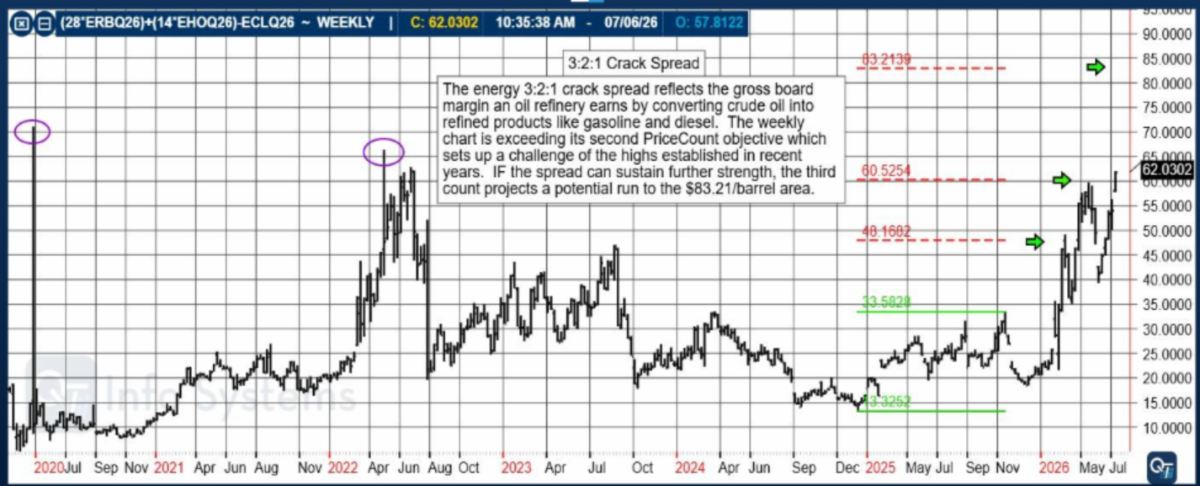
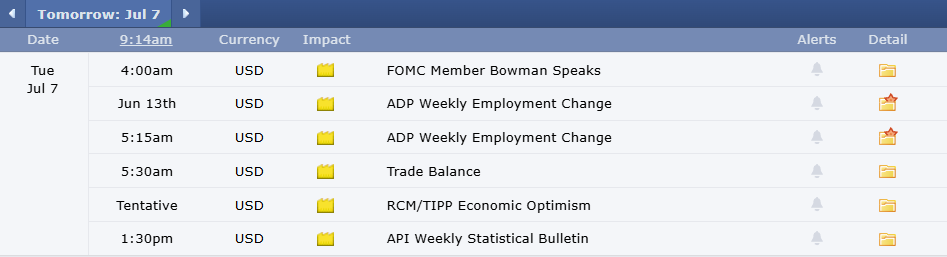
Overseas and in Washington, the picture is mixed but not alarming. The U.S.–Iran ceasefire is not going smoothly, and the status of the Strait of Hormuz remains unclear, yet oil has held below $70 a barrel and markets remain hopeful of a resolution. At the ECB forum, Fed Chair Kevin Warsh stayed tight-lipped on forward guidance while reiterating his commitment to getting inflation back to the 2% target. With next week light on both the economic and earnings calendars, near-term direction can likely be steered by technicals, Middle East headlines, oil, and yields rather than by fresh data.
|