|
||||||||||||||||||||||||||||||||||||||||||||||||||||||||||||||||||||||||||||||||||||||||||
|
||||||||||||||||||||||||||||||||||||||||||||||||||||||||||||||||||||||||||||||||||||||||||
|
- automated futures trading (1)
- Bitcoin Futures (114)
- Charts & Indicators (310)
- Commodity Brokers (596)
- commodity futures (1)
- Commodity Trading (852)
- copper futures contract (3)
- Corn Futures (67)
- Crude Oil (248)
- Currency Futures (103)
- Day Trading (665)
- Day Trading Webinar (61)
- dow jones industrials futures (1)
- E-Mini Futures (165)
- Economic Trading (166)
- Energy Futures (132)
- Financial Futures (189)
- Future Trading News (3,229)
- Future Trading Platform (331)
- Futures Broker (666)
- futures brokers (1)
- Futures Exchange (347)
- Futures trade copier (1)
- Futures Trading (1,274)
- futures trading algo trading systems (1)
- futures trading education (449)
- futures trading indicators (2)
- Gold Futures (114)
- Grain Futures (106)
- Index Futures (271)
- Indices (233)
- institutional futures trading platforms (3)
- Metal Futures (146)
- Nasdaq (79)
- Natural Gas (40)
- Options Trading (196)
- S&P 500 (149)
- trading futures (10)
- Trading Guide (465)
- Trading Webinar (60)
- Trading Wheat Futures (46)
- tradingview trading platform (2)
- Uncategorized (26)
- Weekly Newsletter (240)
- wheat futures (1)
Tag: Risk Management

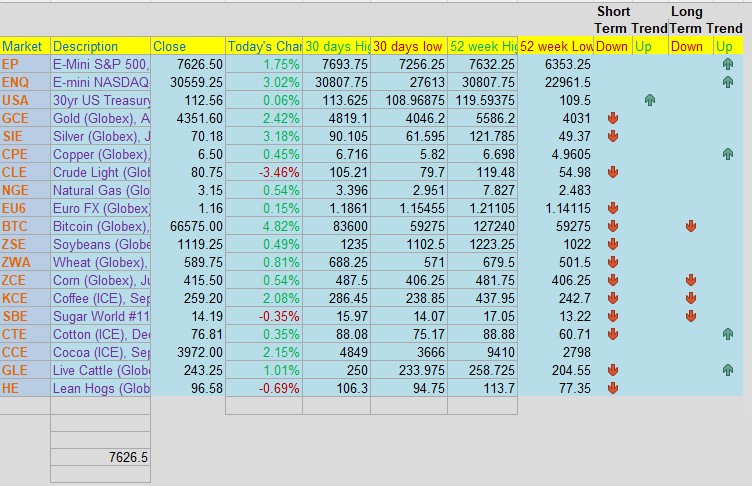
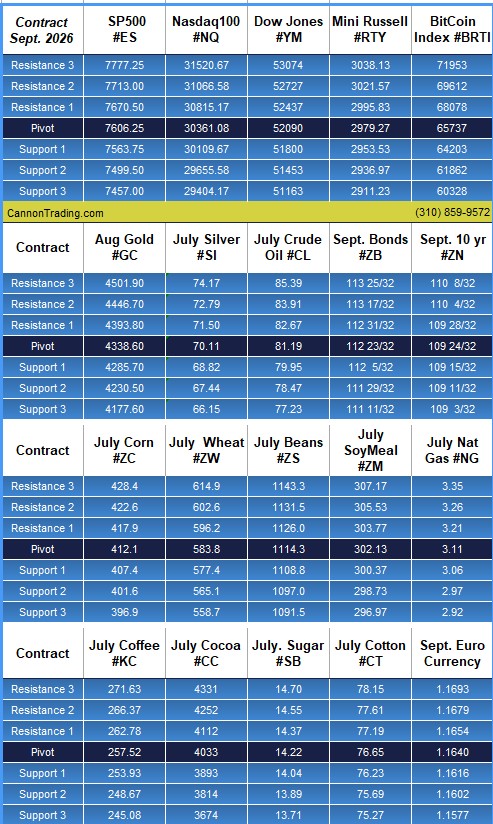
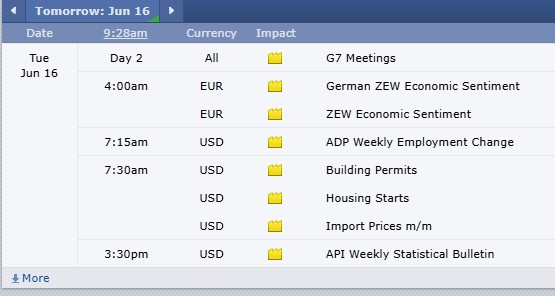






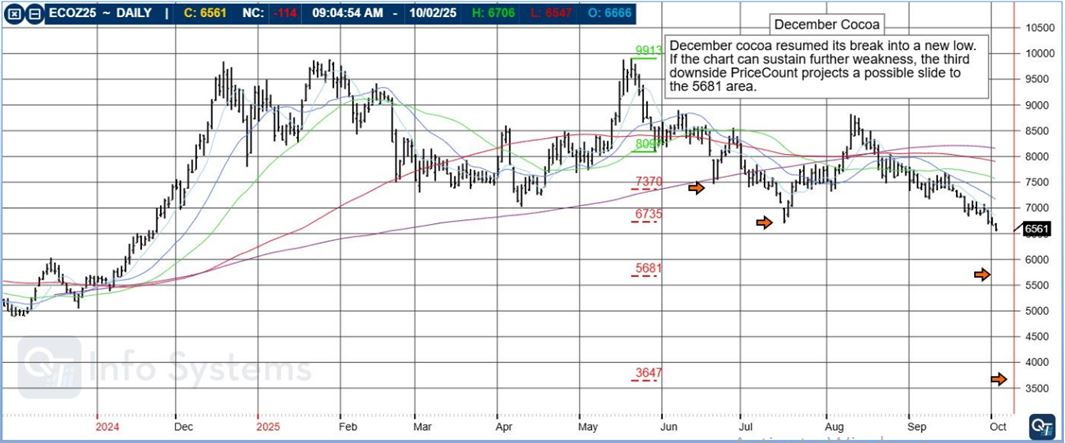
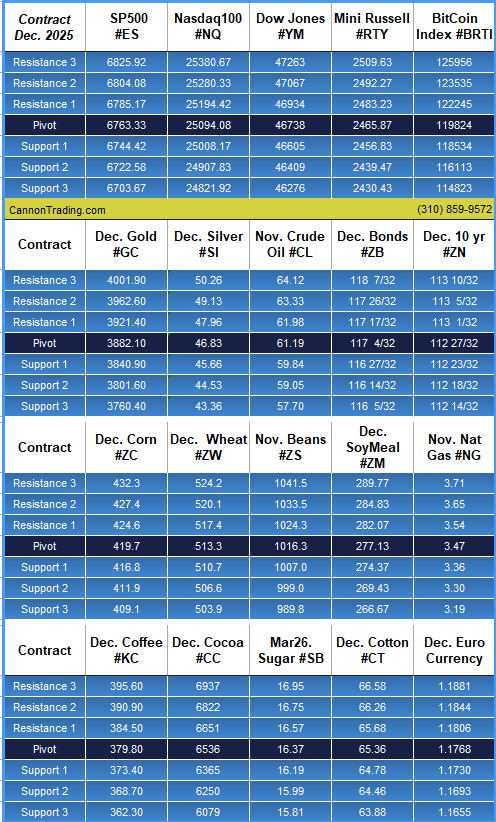
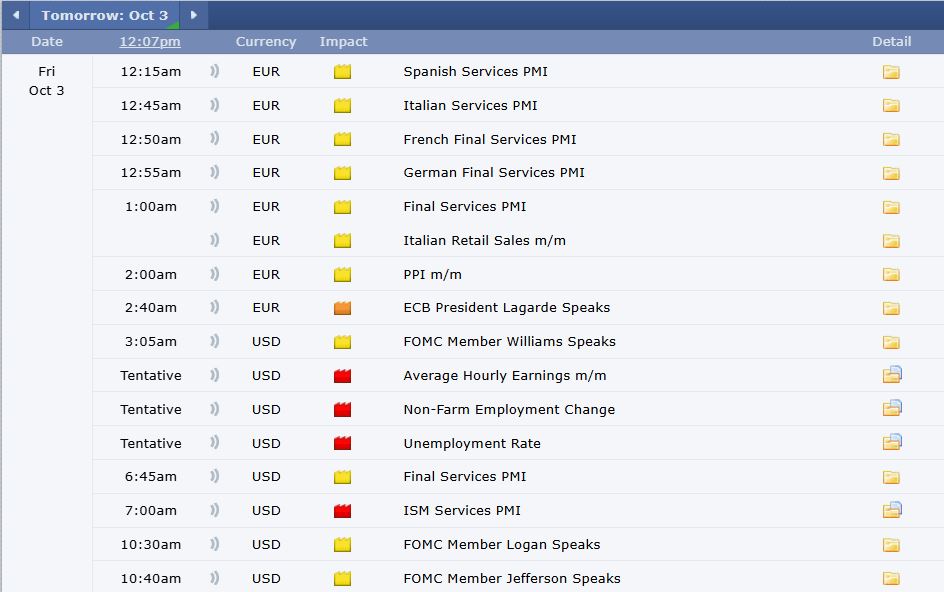
Trade and Risk Management, December Cocoa, Levels, Reports; Your 4 Important Must-Knows for Trading Futures on October 3rd, 2025
|
|
|
|||||||||||||||||||||||||||||||||||||||||||||||||||||||||||||
|
|||||||||||||||||||||||||||||||||||||||||||||||||||||||||||||
|

Risk Management, Trading Psychology, Levels, Reports; Your 4 Expert Need-To-Knows for Trading Futures on July 25th, 2025
Trading Futures – Risk Management & Trading Psychology
By John Thorpe, Senior Broker
|
||||||||||||||||||||||||||||||||||||||||||||||||||||||||||||||||||||
|
||||||||||||||||||||||||||||||||||||||||||||||||||||||||||||||||||||
|

Hedging in Futures
In today’s complex financial environment, hedging in futures stands as one of the most effective tools for managing risk. From multinational corporations to individual traders, futures hedging strategies play a pivotal role in preserving capital, ensuring predictability in uncertain markets, and enhancing portfolio performance. But what does it truly mean to hedge futures? Why should traders care about this centuries-old technique? And how does a trusted brokerage like Cannon Trading Company, backed by five-star TrustPilot ratings and a stellar compliance history, elevate the experience of futures contract trading?
Let’s dive deep into the world of hedging futures, its tangible benefits, drawbacks, historical journey, and what traders can expect moving into the second half of the 2020s.
What Does It Mean to Hedge Futures?
Hedging in futures refers to the strategic use of futures contracts to reduce or eliminate the risk of adverse price movements in an asset. It’s akin to buying insurance—traders or businesses enter into offsetting futures positions to protect their core holdings or future purchases.
Imagine a wheat farmer who anticipates a harvest in three months. Concerned about falling prices, they may hedge futures by selling a wheat futures contract today. If prices decline by harvest time, the loss in the cash market is counterbalanced by the gain in the futures trading position. Conversely, a bakery needing flour might lock in prices via futures contract trading to avoid unexpected cost increases.
This duality—protection against price volatility—is the essence of futures hedging.
How Traders Benefit by Hedging Futures
The advantages of hedging in futures stretch across industries and trader profiles. Let’s examine some of the most impactful benefits:
- Risk Mitigation
Whether you’re a commodity producer, institutional investor, or individual speculator, futures hedging offers a buffer against unfavorable price shifts. Energy companies, for instance, often hedge crude oil using emini contracts on energy commodities to stabilize revenue streams. - Profit Preservation
In volatile markets, the profits from core investments can be eroded quickly. By entering futures contract trading positions that move inversely to one’s portfolio, traders can protect gains. - Predictability for Budgeting and Planning
Hedging allows for cost and revenue predictability—especially vital for businesses. Airlines frequently use futures hedging to lock in fuel prices, ensuring their cost structures remain intact even amid market upheavals. - Increased Leverage and Capital Efficiency
Because futures trading allows for high leverage, hedging requires a relatively small upfront margin. This is particularly beneficial for firms managing large inventories or exposures. - Access to Liquid and Transparent Markets
Thanks to institutional-grade exchanges and institutional trading platforms, hedging futures is straightforward, auditable, and liquid. Traders can easily enter or exit positions without concerns about counterparty risk.
Pros and Cons of Hedging in Futures
While futures hedging is powerful, it’s not without challenges. Let’s break down both sides:
✅ Pros
- Risk Reduction: The core advantage, of course, is insulation from market volatility.
- Predictability: Businesses and traders alike benefit from known outcomes, enabling better planning.
- Flexibility: A wide range of futures contract trading options—from e mini indices to metals—allows tailored strategies.
- Cost Effectiveness: Hedging via emini contracts can provide inexpensive protection due to high liquidity and tight spreads.
- Execution Speed: Platforms like those offered by Cannon Trading Company allow rapid execution on global exchanges.
❌ Cons
- No Participation in Favorable Moves: If the market moves in a favorable direction, a hedge might cancel out those potential profits.
- Margin Requirements: Hedging, while cost-efficient, still ties up margin capital.
- Complexity: Misunderstanding how a hedging futures position correlates with the underlying asset can backfire.
- Basis Risk: The hedge may not perfectly align with the actual exposure, particularly with customized or exotic products.
- Opportunity Cost: Committing capital to a hedge may prevent allocation to more profitable ventures.
Despite these drawbacks, the risk-return tradeoff often justifies hedging—especially when executed with a knowledgeable partner.
How Hedging in Futures Has Evolved Over the Years
The roots of futures contract trading trace back to ancient Mesopotamia, where farmers and merchants agreed on prices ahead of time. The modern era of futures trading, however, began with the Chicago Board of Trade in the 19th century. Back then, hedging futures was predominantly used by agricultural producers and processors.
20th Century Innovations
The 1970s brought financial futures—contracts on currencies, interest rates, and later stock indexes. The launch of e mini contracts in the late 1990s revolutionized access, allowing individual traders to hedge and speculate alongside institutions.
The 2000s: Digital Transformation
The rise of online institutional trading platforms in the early 2000s, along with algorithmic execution and real-time analytics, made futures hedging faster, more precise, and accessible to a wider audience. Tools like stop-loss hedging, delta-neutral strategies, and multi-leg spreads became common.
Hedging Futures in the 2020s and Beyond: What’s Next?
As we advance into the second half of the 2020s, several trends are reshaping the futures hedging landscape:
- AI-Powered Hedging Algorithms
Artificial intelligence is optimizing hedging in futures by analyzing historical data, real-time feeds, and macroeconomic indicators. Platforms now offer automated hedge suggestions for retail and institutional users alike.
- Blockchain and Smart Contracts
Smart contracts on blockchain networks are being explored to automate and validate futures contract trading without intermediaries, reducing costs and increasing transparency.
- Micro Futures & E-Mini Evolution
New products such as Micro E-mini contracts have enabled precision futures hedging for smaller portfolios, reducing margin requirements while maintaining effectiveness.
- Environmental, Social, and Governance (ESG) Integration
With ESG concerns rising, trading futures linked to carbon credits, sustainable commodities, and energy transitions is growing. Companies can now hedge not just financial exposure, but environmental compliance risks too.
- Regulatory Enhancements
Post-2020s regulations from entities like the CFTC and NFA have refined risk disclosure and margin policies. Trustworthy brokers like Cannon Trading Company maintain a top-tier compliance track record, crucial for safe futures trading.
Why Cannon Trading Company Is a Leader in Hedging Futures

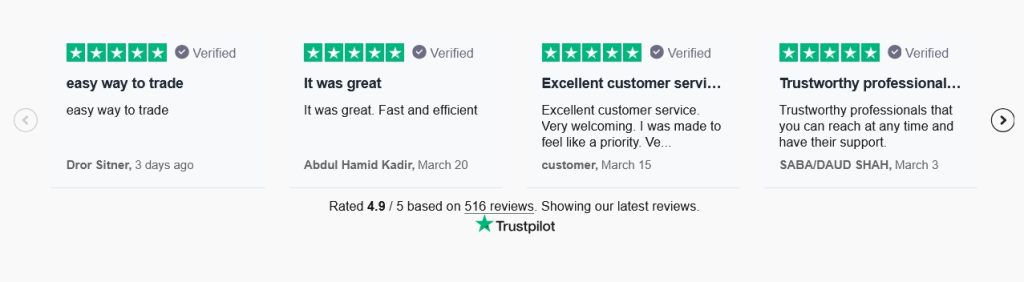
When it comes to selecting a brokerage for futures contract trading, not all brokers are created equal. Here’s why Cannon Trading Company consistently stands out:
- ⭐ Unmatched Industry Reputation
With decades of experience, Cannon Trading boasts a pristine record with federal and independent regulators, including the Commodity Futures Trading Commission (CFTC) and the National Futures Association (NFA). - ⭐Top-Rated TrustPilot Reputation
Numerous five-out-of-five-star reviews on TrustPilot testify to Cannon’s integrity, customer service, and performance in both hedging futures and trading futures executions. - ⭐ Vast Platform Options
From institutional trading platforms like CQG, Rithmic, and Firetip, to user-friendly solutions for beginners and pros alike, Cannon ensures clients can hedge futures effectively, no matter their experience level.
Try a FREE Demo! - ⭐ Custom Hedging Support
Cannon’s expert team provides guidance tailored to individual clients—whether you’re an options trader hedging exposure, a commercial hedger seeking commodity protection, or a retail trader using emini contracts for equity index positions. - ⭐Education and Tools
With robust educational resources, webinars, blog updates, and dedicated account reps, Cannon Trading demystifies futures hedging, empowering clients to make confident, informed decisions.
Real-World Use Cases of Hedging in Futures
Case 1: Equity Portfolio Hedging
An investor with a $1 million stock portfolio might fear a market downturn. They could sell E-mini S&P 500 futures to hedge. If the market drops, the loss in the portfolio is offset by gains in the emini position.
Case 2: Agricultural Hedging
A corn producer facing uncertain prices can sell corn futures contracts during planting season. Come harvest, if prices drop, the futures gain compensates the cash market loss.
Case 3: Corporate Currency Risk
An exporter expecting €5 million in receivables three months from now can sell euro futures contracts to lock in the exchange rate, avoiding surprises from currency fluctuations.
Hedging in futures is not merely a defensive tool—it’s a proactive strategy to stabilize income, reduce uncertainty, and navigate complex markets. While it has risks and requires expertise, the evolution of institutional trading platforms, coupled with sophisticated analytics, has made futures hedging more accessible and impactful than ever before.
As we move further into the 2020s, advancements like AI-driven hedging, ESG-linked products, and decentralized infrastructure will further reshape how traders and institutions hedge futures.
For traders seeking a reliable partner to navigate these changes, Cannon Trading Company stands as a gold standard—offering trusted expertise, five-star service, and cutting-edge platform diversity to support every kind of futures trading journey.
Ready to start trading futures? Call us at 1(800)454-9572 (US) or (310)859-9572 (International), or email info@cannontrading.com to speak with one of our experienced, Series-3 licensed futures brokers and begin your futures trading journey with Cannon Trading Company today.
Disclaimer: Trading Futures, Options on Futures, and retail off-exchange foreign currency transactions involve substantial risk of loss and are not suitable for all investors. Past performance is not indicative of future results. Carefully consider if trading is suitable for you in light of your circumstances, knowledge, and financial resources. You may lose all or more of your initial investment. Opinions, market data, and recommendations are subject to change at any time.
Important: Trading commodity futures and options involves a substantial risk of loss. The recommendations contained in this article are opinions only and do not guarantee any profits. This article is for educational purposes. Past performances are not necessarily indicative of future results.
This article has been generated with the help of AI Technology and modified for accuracy and compliance.
Follow us on all socials: @cannontrading
Futures Hedging
In the volatile and often unpredictable world of financial markets, risk management is not merely a strategy—it is a necessity. For both retail investors and large institutions, one of the most reliable ways to manage that risk is through futures hedging. But what exactly does it mean to hedge with futures? How has this technique evolved over the years? And why is partnering with a seasoned brokerage like Cannon Trading Company a smart move for traders of all levels?
This in-depth article explores the definition, science, pros and cons, evolution, and future outlook of hedging in futures. We’ll also examine why Cannon Trading Company, with its exceptional TrustPilot ratings, regulatory reputation, and vast platform selection, stands out as a premier brokerage for futures contract trading and risk management.
What is Futures Hedging?
Futures hedging refers to the use of futures contracts to reduce or eliminate the risk of price movements in an underlying asset. These contracts obligate the buyer or seller to purchase or sell a specific quantity of an asset at a predetermined price on a specified date in the future.
Imagine a grain farmer concerned about a drop in wheat prices before harvest. By selling wheat futures contracts now, the farmer can lock in a favorable price, ensuring predictable revenue regardless of future market conditions. Conversely, a bread manufacturer worried about rising wheat prices can buy futures to secure today’s price and safeguard against inflationary shocks.
Whether it’s agricultural commodities, precious metals, energy, or financial indices like the E-mini S&P 500, hedging futures is all about protecting profits and stabilizing operations in uncertain times.
The Science Behind Hedging with Futures
At its core, futures hedging is a mathematical and statistical endeavor. Successful hedging in futures requires more than just intuition—it’s about measuring market exposure, understanding correlations, and calculating hedge ratios. Here’s how the science breaks down:
- Understanding the Hedge Ratio
The hedge ratio determines the number of futures contracts required to offset the risk of an existing position. It is often calculated using:
Hedge Ratio = Value of the position being hedged / Value of a single futures contract
This ensures the hedge is proportionate to the exposure. - Correlation and Basis Risk
The effectiveness of a hedge depends on how closely the futures contract correlates with the underlying asset. A high correlation results in lower basis risk—the risk that the price of the asset and the futures contract will not move in tandem.For instance, an investor with exposure to the S&P 500 index might use E-mini contracts to hedge their position. Since E-minis are directly tied to the index, the correlation is strong, making them an efficient hedging tool. - Delta Hedging and Greeks
In more advanced institutional trading platforms, traders use options Greeks such as delta, gamma, and vega in combination with futures to build sophisticated hedge strategies. These calculations enable dynamic hedging that adjusts with market conditions.
Pros of Hedging in Futures
- Risk Mitigation
The primary advantage of hedging futures is risk control. By locking in prices or offsetting exposure, traders and businesses can protect their margins and ensure financial stability. - Liquidity and Market Access
Futures markets are highly liquid, particularly for major contracts like oil, gold, or the E-mini S&P 500. This liquidity ensures low transaction costs and tight spreads, making them ideal for hedging large positions. - Transparency and Regulation
Futures contracts are traded on centralized exchanges, which provide transparency, standardization, and regulatory oversight. This makes futures contract trading a more secure form of hedging compared to over-the-counter derivatives. - Leverage and Capital Efficiency
Although leverage introduces risk, it also allows traders to hedge large positions with relatively small capital outlays. This efficiency makes trading futures a practical choice for managing large portfolios.
Cons of Hedging in Futures
- Opportunity Cost
One downside of hedging is that it can limit potential upside gains. If the market moves favorably, the futures hedge may reduce or negate the benefit of that movement. - Complexity
Successful futures hedging requires an understanding of markets, math, and mechanics. For newer traders, managing hedge ratios, basis risk, and margin requirements can be overwhelming without the right guidance or institutional trading platform. - Costs and Margin Requirements
While futures are generally low-cost, they do involve fees, commissions, and margin requirements. Poorly managed margin can result in margin calls or forced liquidation. - Imperfect Hedges
No hedge is perfect. Unexpected market behavior, regulatory changes, or global events can disrupt even the most carefully planned hedging in futures strategies.
Evolution of Futures Hedging Over the Years
The practice of futures contract trading for hedging goes back centuries, originating in agricultural markets. However, its sophistication and scope have expanded drastically in recent decades:
- From Commodities to Financials
What began as a tool for farmers and grain merchants has evolved into a mainstay for banks, asset managers, and even governments. Today, futures are used to hedge everything from interest rates and currencies to equity indices and carbon emissions. - Rise of the E-mini
The launch of the E-mini S&P 500 contract revolutionized futures trading by offering smaller, more accessible contracts. This enabled retail traders and small hedge funds to adopt professional-grade hedging strategies without massive capital. - Technology and Platforms
Modern institutional trading platforms offer algorithmic trading, real-time risk analysis, and AI-driven strategy optimization. Traders can now simulate various hedging futures scenarios before executing any trades. - Cross-Asset and Global Hedging
With the rise of globalization, investors hedge across borders using a wide range of futures products in different time zones and currencies. Platforms that offer seamless multi-asset trading have become essential tools for 21st-century risk management.
Futures Hedging in the 2nd Half of the 2020s: What’s Ahead?
As we enter the second half of the 2020s, futures hedging is poised for further innovation. Here are some trends shaping its future:
- AI and Predictive Analytics
Machine learning algorithms are increasingly being used to optimize hedge ratios, predict volatility, and adjust strategies in real time. These tools are becoming standard in high-end institutional trading platforms. - Tokenization and Blockchain
Smart contracts on blockchain platforms may soon enable automated futures contract trading, reducing settlement risk and increasing transparency. - ESG and Climate Hedging
As ESG (Environmental, Social, and Governance) investing grows, traders are using futures to hedge exposure to climate-related risks. Carbon futures, weather derivatives, and ESG index futures are new frontiers in hedging futures. - Retail Revolution
Platforms are making trading futures and managing hedges more accessible for retail traders, including mobile apps with educational content, intuitive dashboards, and micro futures contracts for those with smaller accounts.
Why Cannon Trading Company is a Top Partner for Futures Hedging

For traders looking to engage in futures hedging with confidence, experience, and the best tools, Cannon Trading Company stands out as a premier partner. Here’s why:
- 5-Star TrustPilot Ratings
Cannon Trading Company has earned consistent 5 out of 5-star reviews on TrustPilot, reflecting a commitment to customer service, reliability, and value. Traders trust Cannon because they deliver. - Regulatory Excellence
Cannon maintains a clean record with federal and independent futures trading regulators, such as the National Futures Association (NFA) and the Commodity Futures Trading Commission (CFTC). Their compliance-first approach ensures a secure trading environment. - Decades of Expertise
With over 30 years in futures contract trading, Cannon Trading has weathered every market condition and helped clients do the same. Their seasoned brokers offer custom strategies for hedging in futures and portfolio protection. - Platform Versatility
Cannon offers a wide range of top-performing platforms, from high-end institutional trading platforms to mobile apps for active retail traders. This includes access to platforms optimized for E-mini and e mini contracts, as well as tools for advanced charting, risk management, and algorithmic strategies.
Try a FREE Demo! - Personalized Support
Whether you’re new to trading futures or managing a complex institutional book, Cannon Trading provides personal guidance. Their team helps tailor futures hedging strategies that fit your risk profile, goals, and market outlook.
Hedging Futures as a Smart, Modern Strategy
Futures hedging is not just about protection—it’s about precision, foresight, and flexibility. As global markets continue to grow more interconnected and volatile, the ability to control downside while preserving upside is invaluable.
Whether you’re hedging exposure to commodities, equities, interest rates, or environmental risks, hedging in futures offers an efficient, transparent, and powerful toolset. However, like any advanced strategy, it demands the right education, platform, and brokerage.
That’s where Cannon Trading Company delivers. With decades of experience, top-tier platforms, elite customer support, and a reputation backed by 5-star reviews and industry regulators, Cannon is the brokerage partner of choice for traders serious about mastering futures contract trading.
If you’re ready to embrace the future of futures hedging, Cannon Trading Company is ready to help you get there.
Try a FREE Demo!
Ready to start trading futures? Call us at 1(800)454-9572 (US) or (310)859-9572 (International), or email info@cannontrading.com to speak with one of our experienced, Series-3 licensed futures brokers and begin your futures trading journey with Cannon Trading Company today.
Disclaimer: Trading Futures, Options on Futures, and retail off-exchange foreign currency transactions involve substantial risk of loss and are not suitable for all investors. Past performance is not indicative of future results. Carefully consider if trading is suitable for you in light of your circumstances, knowledge, and financial resources. You may lose all or more of your initial investment. Opinions, market data, and recommendations are subject to change at any time.
Important: Trading commodity futures and options involves a substantial risk of loss. The recommendations contained in this article are opinions only and do not guarantee any profits. This article is for educational purposes. Past performances are not necessarily indicative of future results.
This article has been generated with the help of AI Technology and modified for accuracy and compliance.
Follow us on all socials: @cannontrading
Guide to Commodity Futures Trading from a Stock Market Broker

One of the most profitable areas a stock market broker can get into is commodities futures and you can start trading them right now with the right research tools and trading strategy to bet on the future of the market while you’re trading stocks and growing your bank account. Any online brokerage account should have a diversified portfolio with plenty of commodity futures and options trades to go around and pad the investment accounts, whether you’re self-directed or use online brokers. Most online brokers know the importance of investment objectives and can almost always be met with the help of futures and financial advisors are always there to give you an idea of where they’ll be the time your trade goes through.
Active traders have plenty of options when it comes to stock and ETF trades and a stock market broker is going to suggest that every investment portfolio has a few things to hedge your bets and ensure you’re growing your bank account and never losing money with your stock trading. Investment holdings should always include mutual fund trades, stock ETF trades, and commodity futures and every good stock trading platform will have a mobile app that lets you make the most of them. Here’s all the information that active stock traders need to get into commodities and buy stocks that not only cover their account fees but make them money.
Choosing the Right Online Broker
There are interactive brokers and online brokers that will sell stocks and mutual funds for you and take all the work of e-trade away from you so you can sit back and watch your account grow and mature over time and that might be the best option for beginner investors before they start trading. They’ll make all the investment decisions for you and they’ll make a cash bonus when exchange-traded funds get a boost, but you can choose commission-free trades by using a mobile app to do it all by yourself. Active investing takes many research tools and the best online stock brokers will have the educational resources you need to get the most out of trading platforms without using full-service brokers.
Your online brokerage account should come with investment advice and access to mutual funds trading forex trading, and alternative investments that you can look at and decide if you want to get into the same areas that advanced traders are using in their online brokerages. You can start trading right now by setting margin accounts on your online brokerage account and full-service brokers will take over from there, or you can act as your online broker and use trading platforms and brokerage firms for research. There are many financial products to choose from and the decision is yours, but you should ensure you have all the information you need to make the correct one.
What to Consider When Selecting an Online Broker
There are a few things to consider when you want to find the best brokerage accounts to help with your active investing and there are financial products, such as discount brokers, to help you buy stocks with a brokerage account that makes you money and grows your bank account. The best online brokers will have options for active traders as well as access to a full-service broker to take your taxable brokerage account and do all the trading work for you. These online brokers know the stock market and are monitored by the financial industry regulatory authority to keep you and your money safe.
It’s important to consider account minimums on any mobile app you choose to use so you can be sure that your online brokerage platform is something you can comfortably afford until you start to sell stocks and make money through mutual funds and stock and ETF trades. Stock trading platforms are monitored by the Securities and Exchange Commission so your taxable brokerage account is secure and your account minimum is safe. The best online brokerage accounts keep their account fees low so you can buy stocks and make money simply by using a mobile app that supports your active investing decisions.
Types of Online Brokerage Accounts
The best online brokerage platform will have every option available to you, from Morgan self-directed investing to online brokers who trade mutual funds, futures, and commodities for you, based on your long-term goals and the amount of money you’ve given the trading platform to use on your behalf. If you want fully commission-free trading, it’s best to act as your online broker and use the trading platform for information and educational resources that let you make the best decisions for your trades. This is great for advanced traders who know how the market works and want to use the broker’s online trading platform for support rather than a full-service broker.
No matter which type of brokerage account you get, your money will be protected by the Securities Investor Protection Corporation if the firm goes bankrupt for any reason or the stock trading platform gets shut down. The best online broker will have educational resources on a mobile app that you can access to carry out the investment decisions you’ve made. You’ll also have access to interactive brokers and online brokers to do the e-trade work for you so you don’t have to do it all on your own.
Getting Started with Online Brokers
Interactive brokers are easy to find on the right trading platforms and active traders will take your goals and make e-trade decisions based on what you want from brokerage firms and all you have to do is set up an account on a mobile app. Everything from alternative investments to stock ETF trades and options trades will be available to you as soon as you get set up and you’ll have the best online brokers and interactive brokers working for you on your trading platform. Active traders and discount brokers will have your account minimum to work with and you get to watch your investment accounts grow.
Of course, you don’t have to use interactive brokers on any trading platforms if you want to act as your full-service broker and do the e-trade work on your own. Some of the best online brokers are people who do it on their own with self-directed trading platforms and it can be the best commission-free trading that you can get into. Trading stocks in commodities futures can be very lucrative, as long as you have the educational resources it takes to know what’s happening and which moves you should make.
Online Brokerage Account Features
Stock trading platforms are great for active traders because brokerage firms have done the leg work of gathering information on stock trading so you can make self-directed trades without paying online brokers to do it for you. The best online broker platform will have real-time information you can access whenever you need it before you make an e-trade and bet on the future of the commodities of your choosing. Stock and ETF trades should be easy to access and they’ll have charts that show you where a stock has been so you can make an informed decision on where it will be in the future.
Stock trading platforms will have full-service brokers to utilize, as well as self-directed e-trade options that you can choose based on your needs and how you want to go about your options trades. The right stock trading platforms will allow you to add and draw from your account for your money is never locked away from you and you’ll get the same information that brokerage firms and the best online brokers get to use. Interactive brokers will also be available to help you make e-trade decisions so your stock trading and mutual funds always turn profits, just like full-service brokers would be making for you.
Online Brokerage Account Safety and Security
Whether you go with self-directed investing or interactive brokers on a better stock trading platform, your account minimum will always be safe and your information will always be kept as secure as possible, so you can act as your online broker without worrying about it being stolen. Most online brokers and interactive brokers utilize security features on their trading platforms that encrypt your data from end to end so your stock and ETF trades stay safe from outside interference. Your banking and personal information will be secure, and your account minimum will always be there for you.
The Securities Investor Protection Corporation will also insure your money in the event your stock trading platform goes bankrupt or shuts down, just like the money in your bank is protected. It’s also overseen by the financial industry regulatory authority so everything is safe, from mutual funds trades to ETF trades and options trades. No matter what you trade, you’ll always be safe and secure when you use the best brokerage accounts you can find.
Is My Money Insured at a Brokerage Firm?
No matter what kind of brokerage account you have at your brokerage firm, your money is always insured and protected, so you don’t have to worry about it disappearing from the trading platform or your account minimum being taken. The trading platform and online broker will use high security features and everything will be overseen so you can sell stocks and deal in commodities futures with full peace of mind. Every brokerage account gets the same level of security, whether you’re using interactive brokers or simply trading with the account minimum they require you to have.
It makes it easy to choose a brokerage firm that gives you access to commodities futures trading, mutual funds, options trades, and stock ETF trading when you know your money is insured and your information is always kept secure. You can make any investment decisions you want and the best online broker you can get will have your back, no matter what happens. Keep in mind that online brokers are overseen, just like all other brokerage accounts that you can open and manage.
Start Trading Futures Commodities with Online Brokers
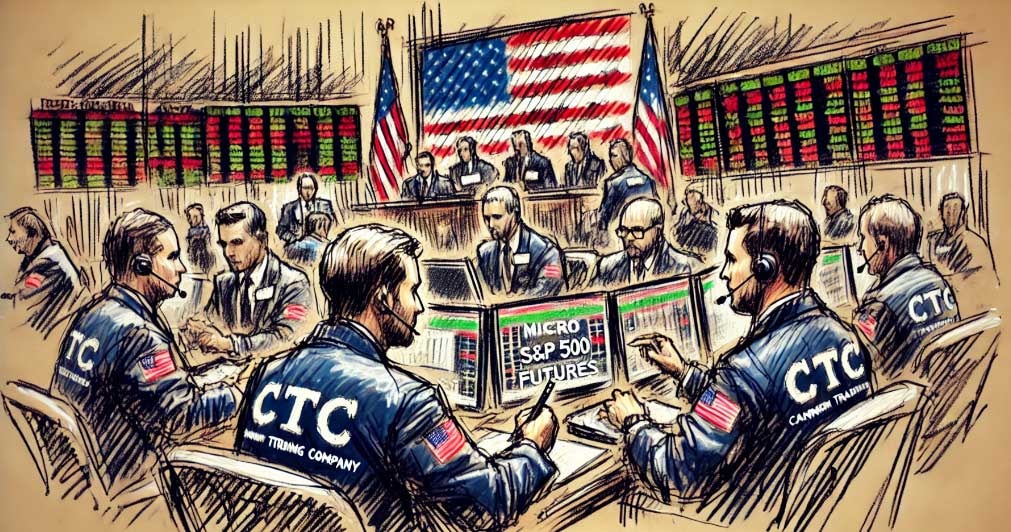
The best online brokers and brokerage accounts are waiting to make futures commodities trading possible right now and you can choose to go with interactive brokers or use the information they’ve collected to be your best online broker on your own, it’s completely up to you and how you want to trade. Commodities futures. stock ETF trades and options trades can be some of the most lucrative moves you can make and there’s an online broker ready to give you the chance to make lots of money off the market. You’ll get information on trends, past activity, and everything else you need to be the best online broker that you can be while you trade on your own behalf and make moves by trading stocks.
There are also active traders who can do the work for you if you don’t have the time it takes to become an expert on commodities futures and financial advisors who know the market and how to carry out the best trading strategy for you and your money. You don’t have to know everything about the stock market to start trading and making money off your investments right now. Just choose the best online broker and you’ll have all the resources you need to turn a profit and benefit from commodities futures.
Weekly Newsletter 1077: Adjust your Trading with Volatility & Futures Levels for the Week Ahead
Cannon Futures Weekly Letter Issue # 1077
Dear Traders,
Like us on FaceBook!
Get Real Time updates and market alerts on Twitter!
Trading 201: Adjust your Trading with Volatility
Unemployment report along with Omicron along with an already “very spicy markets” encouraged me to share some of the following pointers.
Hope it helps.
*While I have no idea were the market is going from day to day, minute to minute, week to week etc. I do know that in the past, some of the sharpest and largest rallies were short covering after a large sell off. More often than not market sell offs and volatility like we are seeing do not end up as V type of action but more like U or W when it is all said and done.
*Expect the unexpected…
* Have an idea of what you are looking to do, keep in mind possible risk and have a game plan. Now more than ever, plan your trade and than trade your plan!
* Think money management, hedging risk while you are still trying to figure out how to profit.
* Know what is going on, reports, current margins, current limits and more.
- Consider short term options instead of futures and/or MICROS
*Trade smaller. The bands are much larger. Watch the VIX.
* DO NOT assume anything…if you are not sure, contact us and we will try our best to assist with the combined, vast experience we have here as a team.
* Wash hands, take this seriously and do your best to stay healthy….
My colleague, John Thorpe, Ex floor broker, contributed the following on the VIX and the VVIX:
We recommend all stock indices intraday traders to keep an eye on the VIX for directional clues and study, many of you have access through other means to view this critical trading barometer, VIX now trades 5 days per week ,23 hours per day. if you need to add the VIX data to your trading platforms , it’s 3 bucks per month, penny wise and pound foolish if you don’t. Contact your broker on how to add the Volatility Index traded through the CBOE to your trading platform
Good Trading
Trading Futures, Options on Futures, and retail off-exchange foreign currency transactions involves substantial risk of loss and is not suitable for all investors. You should carefully consider whether trading is suitable for you in light of your circumstances, knowledge, and financial resources. You may lose all or more of your initial investment. Opinions, market data, and recommendations are subject to change at any time when it comes to Futures Trading.
Futures Trading Levels
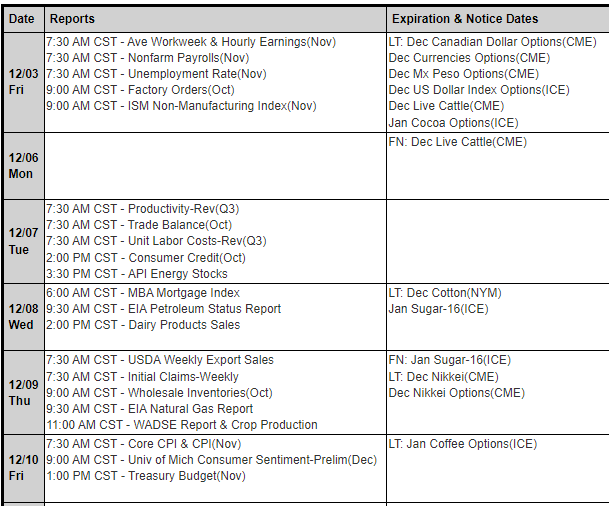
12.05.2021
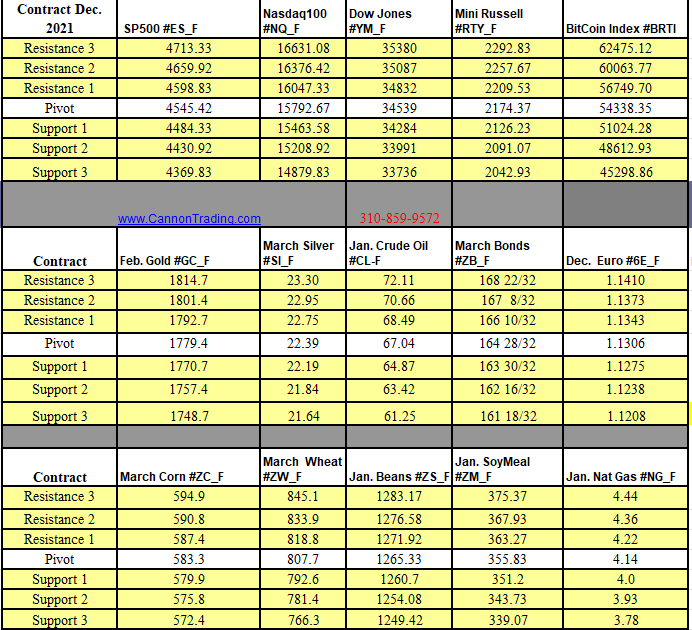
Weekly Levels
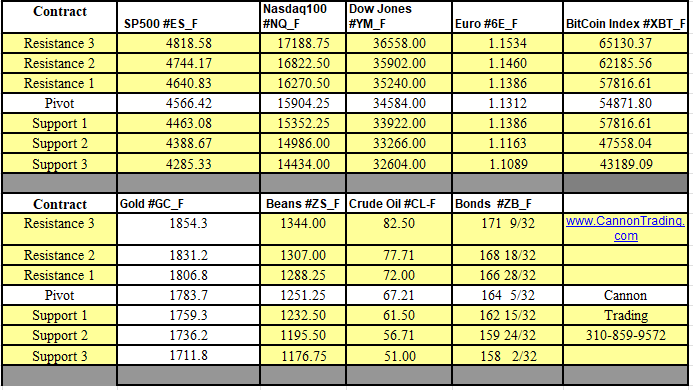
Reports, First Notice (FN), Last trading (LT) Days for the Week:
Date Reports/Expiration Notice Dates
This is not a solicitation of any order to buy or sell, but a current market view provided by Cannon Trading Inc. Any statement of facts here in contained are derived from sources believed to be reliable, but are not guaranteed as to accuracy, nor they purport to be complete. No responsibility is assumed with respect to any such statement or with respect to any expression of opinion herein contained. Readers are urged to exercise their own judgement in trading
New COVID Variant Looms and Markets React w/ Extreme Volatility, Support and Resistance Levels 11.30.2021
Dear Futures Trader,
Get Real Time updates and more on our private FB group!
On Friday, Omicron, the new COVID-19 variant took the oxygen out of newsrooms.
Detected first in South Africa, this mutation is being described as potentially more contagious than the Delta variant. It is unknown whether the currently available vaccines will provide protection from it.
The result was one of the most post Thanksgiving Friday trading session I have seen in over 22 years!
Intraday Volatility in stock index futures is extremely high. Actually across many markets BTC futures leading the volatility but metals, energies ( Natural Gas down 11% today!!) and grains have seen higher volatility.
- Learn to reduce trading size. Perhaps trade smaller contracts like the micros.
- Adjust stops and entries based on volatility ( ATR/ Parabolics).
- Be extra picky on entries without chasing trades.
- Understand that loses are part of trading and this is definitely not a good time to “fight the markets”.
- Focus more on risk management and ways to protect certain positions as needed. Survive to trade another day.
- Consider possibly utilizing short term options rather than futures.
The risk is MUCH GREATER than I have seen, yet some traders look for it.
That is ok, as long as you :
Know the rules, understand current margins, know where the circuit breakers are/ limit moves.
Figure out your max risk.
After you do all that, feel free to trade but jumping in and trying to trade without the basic knowledge above is like jumping into a stormy ocean without a life vest…..At any time, feel free to contact us with questions/feedback/resources.
Good Trading
Trading Futures, Options on Futures, and retail off-exchange foreign currency transactions involves substantial risk of loss and is not suitable for all investors. You should carefully consider whether trading is suitable for you in light of your circumstances, knowledge, and financial resources. You may lose all or more of your initial investment. Opinions, market data, and recommendations are subject to change at any time when it comes to Futures Trading.
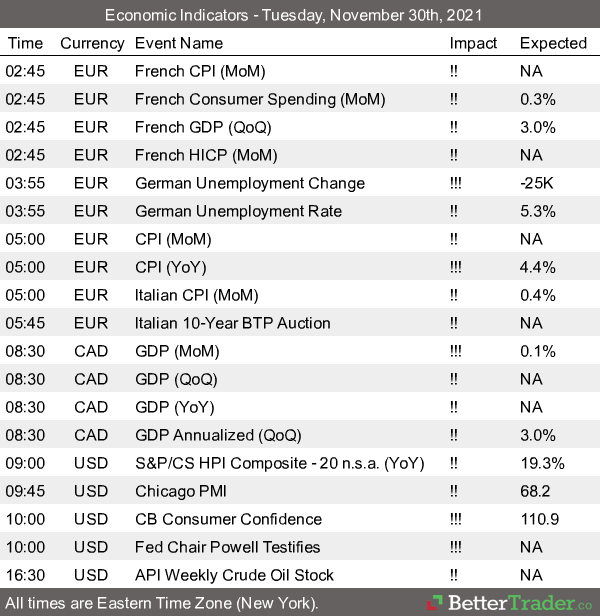
Futures Trading Levels
11-30-2021
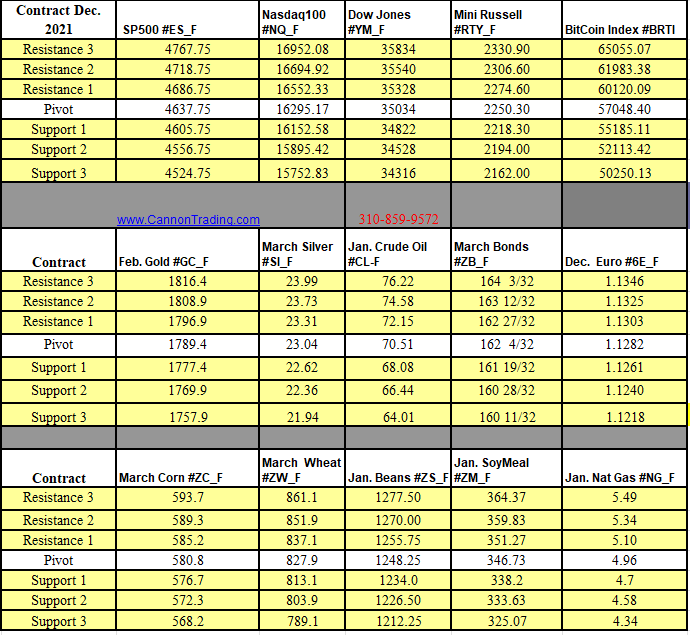
Economic Reports, source:
This is not a solicitation of any order to buy or sell, but a current market view provided by Cannon Trading Inc. Any statement of facts here in contained are derived from sources believed to be reliable, but are not guaranteed as to accuracy, nor they purport to be complete. No responsibility is assumed with respect to any such statement or with respect to any expression of opinion herein contained. Readers are urged to exercise their own judgement in trading.
Weekly Newsletter 1075: Trading Videos – Indicators used for Trailing Stops & Exits? & Support and Resistance Levels for the Week Ahead
Cannon Futures Weekly Letter Issue # 1075
Dear Traders,
Like us on FaceBook!
Get Real Time updates and market alerts on Twitter!
Trading Videos 101: Curious on an indicator that can help you with EXITS? How about using a certain indicator as a trailing stop?
Watch the latest trading videos we have posted and see if you can pick a tip or two on trading smarter!
In this week’s newsletter we are sharing four videos, each a few minutes long. The videos discuss practical tips for trading and sharing our experience with you
1. Using Bolinger Bands as a possible tool for exiting trades
2. One way you can use the Parabolics study ( also known as PSAR) to manage current positions, possibly as a trailing stop
3. Different ways traders can utilize support and resistance levels in their trading.
4. Entering trades on a stop, using “price confirmation”.
5. Utilizing Range Bar charts for shorter term trading as a way to try and filter out some noise.
Watch the videos instantly by clicking here
Good Trading
Trading Futures, Options on Futures, and retail off-exchange foreign currency transactions involves substantial risk of loss and is not suitable for all investors. You should carefully consider whether trading is suitable for you in light of your circumstances, knowledge, and financial resources. You may lose all or more of your initial investment. Opinions, market data, and recommendations are subject to change at any time when it comes to Futures Trading.
Futures Trading Levels
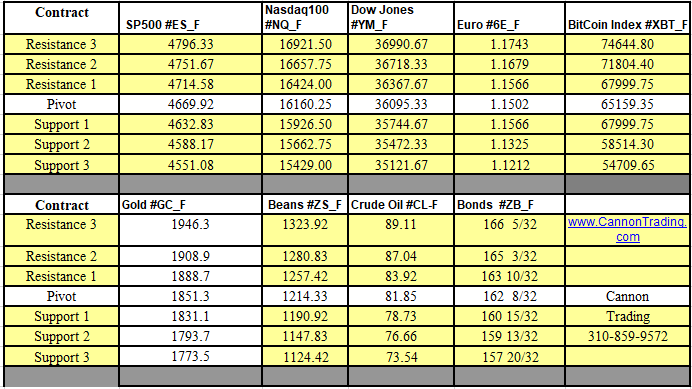
11-15.2021
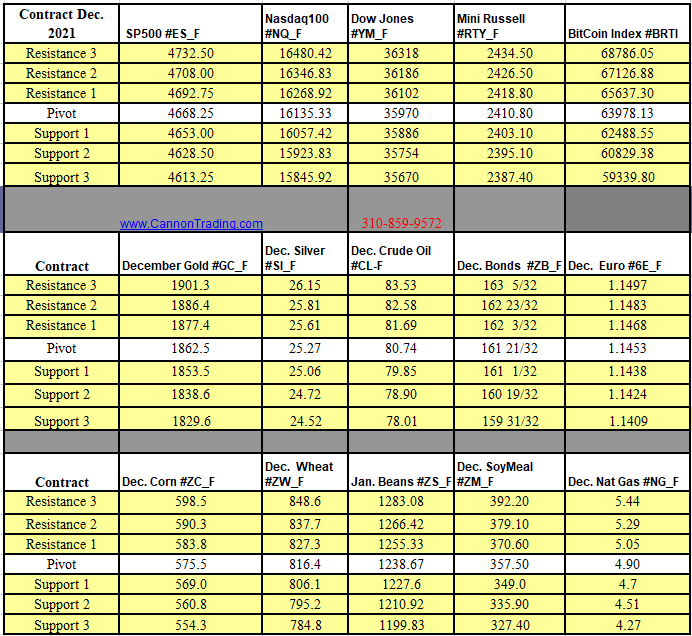
Weekly Levels
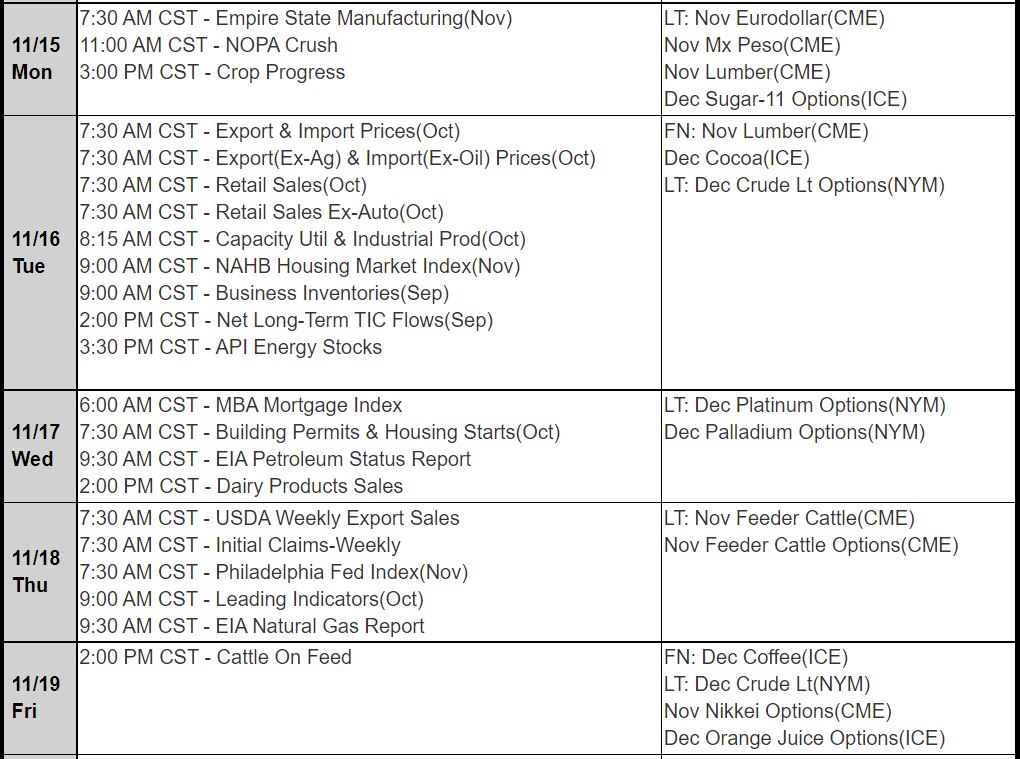
Reports, First Notice (FN), Last trading (LT) Days for the Week:
Date Reports/Expiration Notice Dates
This is not a solicitation of any order to buy or sell, but a current market view provided by Cannon Trading Inc. Any statement of facts here in contained are derived from sources believed to be reliable, but are not guaranteed as to accuracy, nor they purport to be complete. No responsibility is assumed with respect to any such statement or with respect to any expression of opinion herein contained. Readers are urged to exercise their own judgement in trading
How Should We as Traders Confront Risk? & Support and Resistance Levels 10.19.2021
Dear Traders,
Get Real Time updates and more on our private FB group!
🙂
RISK
It is a four letter word. As traders it is something that we thrive on and dread. We chase and fear. We look for and look to avoid. It is RISK. Without it, there is no opportunity for profit. Without it trading lacks potential. With it, failure and heartache are the consequences when it is abused.
Risk itself is not a bad thing. When it is misused by traders, it becomes a problem. Controlled risk presents traders with exciting and profitable opportunities. Uncontrolled, it brings the end to the dreams and careers of many traders.
How should we as traders confront risk? The first step is to respect it. Realize the damage it can do to our account equities when it is abused. The two most important tools that we have to control risk are stops and position size. Oh, I know, you hate stops. We all do. We have all been stopped out at the high or low only to see the market immediately move in the direction that we thought it would. But without using stops on every trade that we enter, disaster will eventually prevail. I have a love/hate relationship with my stop orders. I hate to place them, but love how they save me from large, unacceptable account crushing losses. It is the same for all successful traders. Those foolish enough to trade without stop protection are risking disaster on every trade. Unless you as a trader have developed perfect discipline to exit a losing trade quickly, and according to your pre-entry criteria, stops are mandatory. And admit it, at least to yourself…..do you have perfect discipline? I think not.
The other critical element in controlling risk is position size. By this I mean the percentage of your equity that you are risking per trade. I do not risk more than 3.5% of my equity on any trade. Some traders are comfortable risking 5% of their equity. This amount for me is an amount of risk with which I am comfortable. It allows for aggressive trading, and it allows me to stay in the game ( financially and psychologically) even after a series of losses. This aspect of strategy building is often forgotten by the novice trader. These folks have dreams of “the big hit” or the monster trade that allows their account equity to soar to heights unimagined by mere mortals. The problem is, oops, what if you are wrong? This type of trading/thinking is out of control. It leads to broken dreams and short careers. You must always remember that this is a highly volatile, sophisticated business. Treat it as such. If you want to gamble, jump on an airplane and visit Las Vegas.
The futures markets are highly leveraged, as we all know. Those traders that abuse risk by not respecting its power will eventually join the long list of former futures traders. Risk must be treated like a beautiful, intelligent woman. Treated with respect, wonderful things can happen. But, abuse it, or disrespect it, and suffer the consequences.
As a futures trader you have to embrace taking risk. Understand its impact. Respect it. Stay in control of it. Develop a trading method that makes risk an asset to your account instead of an enemy of your account. Risk/reward analysis is an important part of our everyday lives. Can I make it thru the intersection before the light turns red? Do I need to re-apply my sunscreen? Should I have one more beer before driving home? In trading, always keep in mind your risk versus the reward. A 50% gain in your account is not equal to a 50% loss of equity. A 50% winning trade puts you up by one half. But a 50% loss means that you have to double your equity to get back to your starting point. Respect your risk levels. Trade only using a risk level that you, personally, are comfortable with.
Rome wasn’t built in a day. Neither will your account be built in a day, or a week. Respect risk. Enjoy it’s benefits and your trading in rest of this year and in 2011 will produce profits and satisfaction. Enjoy the ride.
IMPORTANT PLEASE NOTE: TRADING COMMODITY FUTURES AND OPTIONS INVOLVE SUBSTANTIAL RISK OF LOSS. THE RECOMMENDATIONS CONTAINED IN THE LETTER IS OF OPINION AND DOES NOT GUARANTEE ANY PROFITS. THERE IS NOT AN ACTUAL ACCOUNT TRADING THESE RECOMMENDATIONS. THESE ARE RISKY MARKETS AND ONLY RISK CAPITAL SHOULD BE USED. PAST PERFORMANCES ARE NOT NECESSARILY INDICATIVE OF FUTURE RESULTS.
Good Trading
Trading Futures, Options on Futures, and retail off-exchange foreign currency transactions involves substantial risk of loss and is not suitable for all investors. You should carefully consider whether trading is suitable for you in light of your circumstances, knowledge, and financial resources. You may lose all or more of your initial investment. Opinions, market data, and recommendations are subject to change at any time when it comes to Futures Trading.
Futures Trading Levels
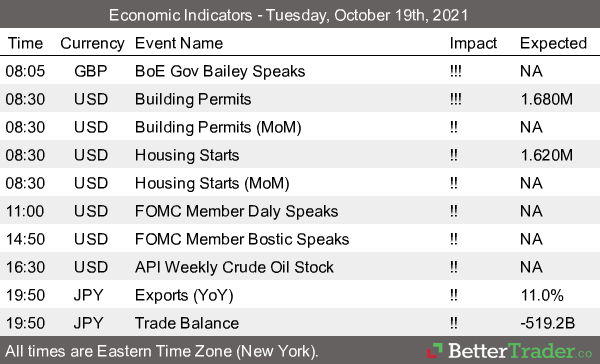
10-19-2020
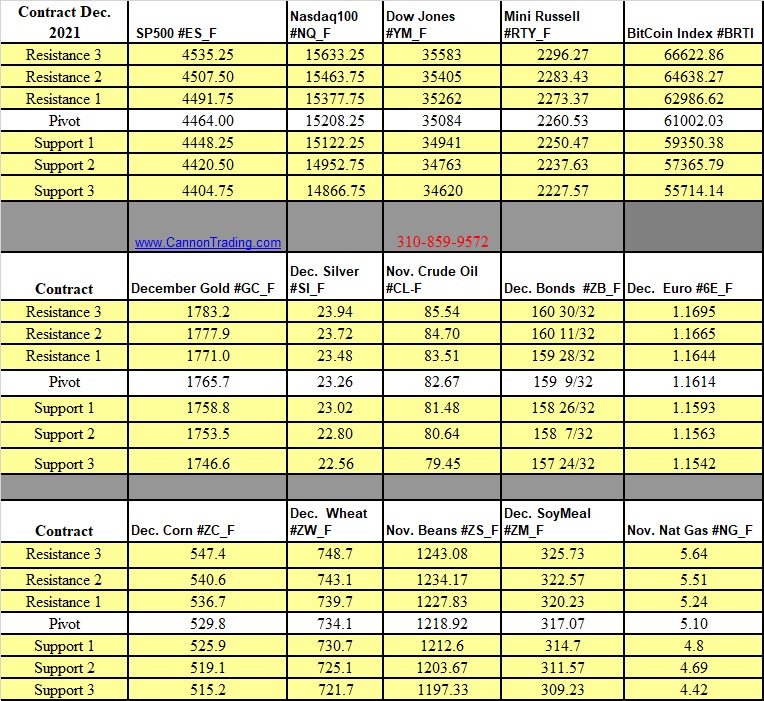
Economic Reports, source:
This is not a solicitation of any order to buy or sell, but a current market view provided by Cannon Trading Inc. Any statement of facts here in contained are derived from sources believed to be reliable, but are not guaranteed as to accuracy, nor they purport to be complete. No responsibility is assumed with respect to any such statement or with respect to any expression of opinion herein contained. Readers are urged to exercise their own judgement in trading.
- July 2026
- June 2026
- May 2026
- April 2026
- March 2026
- February 2026
- January 2026
- December 2025
- November 2025
- October 2025
- September 2025
- August 2025
- July 2025
- June 2025
- May 2025
- April 2025
- March 2025
- February 2025
- January 2025
- December 2024
- November 2024
- October 2024
- September 2024
- August 2024
- July 2024
- June 2024
- May 2024
- April 2024
- March 2024
- February 2024
- January 2024
- December 2023
- November 2023
- October 2023
- September 2023
- August 2023
- July 2023
- June 2023
- May 2023
- April 2023
- March 2023
- February 2023
- January 2023
- December 2022
- November 2022
- October 2022
- September 2022
- August 2022
- July 2022
- June 2022
- May 2022
- April 2022
- March 2022
- February 2022
- January 2022
- December 2021
- November 2021
- October 2021
- September 2021
- August 2021
- July 2021
- June 2021
- May 2021
- April 2021
- March 2021
- February 2021
- January 2021
- December 2020
- November 2020
- October 2020
- September 2020
- August 2020
- July 2020
- June 2020
- May 2020
- April 2020
- March 2020
- February 2020
- January 2020
- December 2019
- November 2019
- October 2019
- September 2019
- August 2019
- July 2019
- June 2019
- May 2019
- April 2019
- March 2019
- February 2019
- January 2019
- December 2018
- November 2018
- October 2018
- September 2018
- August 2018
- July 2018
- June 2018
- May 2018
- April 2018
- March 2018
- February 2018
- January 2018
- December 2017
- November 2017
- October 2017
- September 2017
- August 2017
- July 2017
- June 2017
- May 2017
- April 2017
- March 2017
- February 2017
- January 2017
- December 2016
- November 2016
- October 2016
- September 2016
- August 2016
- July 2016
- June 2016
- May 2016
- April 2016
- March 2016
- February 2016
- January 2016
- December 2015
- November 2015
- October 2015
- September 2015
- August 2015
- July 2015
- June 2015
- May 2015
- April 2015
- March 2015
- February 2015
- January 2015
- December 2014
- November 2014
- October 2014
- September 2014
- August 2014
- July 2014
- June 2014
- May 2014
- April 2014
- March 2014
- February 2014
- January 2014
- December 2013
- November 2013
- October 2013
- September 2013
- August 2013
- July 2013
- June 2013
- May 2013
- April 2013
- March 2013
- February 2013
- January 2013
- December 2012
- November 2012
- October 2012
- September 2012
- August 2012
- July 2012
- June 2012
- May 2012
- April 2012
- March 2012
- February 2012
- January 2012
- December 2011
- November 2011
- October 2011
- September 2011
- August 2011
- July 2011
- June 2011
- May 2011
- April 2011
- March 2011
- February 2011
- January 2011
- December 2010
- November 2010
- October 2010
- September 2010
- August 2010
- July 2010
- June 2010